Posted on

90 Day Plan to Build a Monetized Golf Personal Brand for Creators

Golf creator coaching learner at clinic

Pick your niche, publish one content pillar consistently for 30 days, and choose a single monetization path before you touch a second platform. Golf Blab has watched golfers try to build a personal brand by chasing every trend at once, and the ones who win instead treat the process like a portfolio, stacking a few deliberate income streams instead of gambling on virality. Give yourself 90 days: expect steady follower growth, a rising engagement rate, and your first inbound message from a brand or a student.


TL;DR:

  • Focusing on a narrow, well-defined niche with a specific audience leads to faster trust-building and better chances for sponsorship agreements.
  • Consistent visual branding, including signature apparel and equipment labels, significantly accelerates recognition and improves opportunities for partnerships.
  • Beginning with short-form videos for discovery and long-form content for authority, while repurposing materials, optimizes reach and trust across platforms.
  • Building multiple income streams such as affiliate deals, lessons, events, and product sales reduces dependence on a single revenue source.
  • Protect your brand legally by conducting trademark searches, obtaining permissions at courses and events, and clearly understanding endorsement contract terms.

Table of Contents

Brand foundation: choose your niche, audience, and brand promise

Every recognizable golf brand starts with a decision most golfers skip: who, specifically, are you talking to? A scratch golfer coaching weekend players sounds broad and forgettable. A former mini-tour player who teaches mid-handicappers how to break 90 without changing their swing has a promise people can repeat to a friend.

Evaluate a niche the way you’d evaluate a golf shot: distance versus accuracy. A huge audience (general instruction) gets you reach but drowns you in competition. A narrow audience (left-handed senior golfers fighting the shanks) gets you fewer eyeballs but near-zero competition and faster trust. Golfers who invest in a consistent, visible presentation tend to convert that recognition into sponsorship conversations faster than golfers who post at random.

Once you know your audience, draft a single sentence: “I help [who] do [what] so they can [outcome].” Then pick two or three content pillars that serve that sentence every single time you post. Pillars might include:

  • Swing-fix breakdowns for a specific miss (slice, chunk, thin shot)
  • Course strategy and mental game for weekend competitors
  • Gear reviews and setup tips filtered through your specific playing style
  • Behind-the-scenes access to lessons, events, or tournament rounds

Map the journey from there: a stranger discovers a short clip, follows for the pillar content, then buys a lesson, a product, or a spot at your next event.

Visual identity and voice: signature look, club labels, and posting boundaries

A brand needs a look people recognize before they read your caption. That starts with a signature item, not a wardrobe. Pick one hat, one polo, and a set of custom club labels you wear and show on every round, every clinic, every video thumbnail. Research on golf brand identity shows a consistent visible signature accelerates recognition and shortens the runway to sponsor conversations.

Custom Golf Club Labels

Keep the palette simple: two colors, one wordmark or monogram, one placement style for your labels across your irons and wedges. Consistency, not variety, is what makes a stranger’s brain flag you as “that golfer” on the third scroll past your content.

Voice matters just as much as visuals. Decide now what you will and won’t post: swing flaws, on-course frustration, family, politics, injuries. LPGA player Blair O’Neal has spoken openly about drawing a line between how she dresses off the course and how she presents herself on it, a distinction that protects both her brand and her long-term reputation.

Pro Tip: Write your posting boundaries down as a one-page document before you launch. It’s far easier to hold a line you set on day one than to walk one back after 10,000 followers are watching.

Content & platform strategy: formats that build reach and trust

Treat your channels like a funnel, not a broadcast. Short-form video pulls in strangers who’ve never heard of you; long-form content converts them into people who trust your judgment enough to pay for it. Here’s the sequence that works for most golf creators starting from zero:

  1. Start with short-form verticals. TikTok and Instagram Reels reward discovery over follower count, so a well-timed 30-second swing tip can outperform a channel with 10 times your audience. This is where strangers meet you first.
  2. Build a YouTube channel for authority. Long-form video is where you actually demonstrate expertise: full lesson breakdowns, course vlogs, gear tests. It’s also the format that supports affiliate links, ad revenue, and paid course sales in ways a 30-second clip never will.
  3. Repurpose relentlessly. One 15-minute YouTube lesson can become five to eight short clips, two carousel posts, a podcast-style audio cut, and a newsletter breakdown. You’re not creating five times the content; you’re slicing one piece of content five different ways.
  4. Set a minimum production template. A phone tripod, one light, and your signature polo are enough gear to start. Golf creators who commit to just 10 deliberate, on-brand posts in their first stretch see measurable audience movement before they ever buy a real camera.

Golf podcasts remain an underrated long-form lane too. If video isn’t your strength, audio interviews or solo breakdowns can build the same authority; a look at some of the best golf podcasts shows how varied the format can be while still building real audience trust.

Monetization & portfolio: build multiple income streams that fit your bandwidth

A single income stream is a single point of failure. The golf creators who build sustainable businesses spread revenue across several channels instead of betting everything on brand deals or ad revenue alone.

Consider these paths, roughly in the order most golfers add them:

  • Affiliate and gear partnerships — lowest barrier, good for early momentum
  • Paid lessons or clinics — high margin, limited by your hours
  • Brand partnerships — best pursued once your visual identity and audience are consistent
  • Live events and group outings — higher margin than digital products, and a natural extension of group learning experiences
  • Owned products — apparel, digital guides, or merch tied to your signature look

Golf creators building real businesses balance annual partnerships for baseline income against shorter contracts for flexibility, then layer in-person hosting on top because it pays better per hour than almost anything digital. When you negotiate a partnership, ask for at least one trackable deliverable (a promo code or link) and one longer commitment to stabilize the relationship rather than a single one-off post.

Price in-person work by comparing it to your lesson rate, not your follower count. A strong sponsorship playbook helps you understand what amateurs and semi-pros can realistically charge before you leave money on the table.

90-day launch checklist: tasks, starter costs, and KPIs

A brand doesn’t need months of planning. It needs a sequence.

  1. Week 1: Write your brand promise and pick two content pillars.
  2. Week 1: Choose your signature look, including your hat and polo.
  3. Week 2: Order custom club labels so your equipment matches your on-camera identity.
  4. Weeks 2 to 3: Assemble a minimum kit: phone tripod, one light, basic editing app.
  5. Weeks 3 to 6: Publish 10 pillar-aligned posts, no exceptions on consistency.
  6. Week 6: Build a one-page media kit with your niche, stats, and rates.
  7. Weeks 6 to 8: Reach out to five local businesses or brands aligned with your niche.
  8. Month 2: Launch one paid offer (a lesson package, a clinic, or a small product).
  9. Month 3: Review engagement rate and follower growth weekly; review bookings and leads monthly.
  10. Month 3: Reinvest early revenue into one upgrade, whether that’s gear or a second signature item.

Starter costs stay modest: a tripod and light typically run under $150, a signature polo and hat land in the $60 to $120 range combined, and custom labels are a one-time cost that outlasts several seasons of clubs.

Golf Blab proof points: using products and events to express your brand

A brand identity only works if it’s visible everywhere you show up, and that’s the exact gap Golf Blab was built to close. Personalized equipment and signature apparel give golfers a repeatable visual signature without hiring a designer or guessing at what “on brand” even means.

  • Custom Golf Club Labels turn a bag of clubs into a walking identifier, sparking the kind of “wait, what’s that on your iron?” conversation that starts real relationships with playing partners and potential sponsors.
  • Signature apparel (hats, polos, quarter-zips) creates the consistent on-camera look that audiences learn to recognize within a few posts.
  • Educational content and instructional resources give creators a credible library to point to when a brand asks, “What do you actually know?”
  • Play Golf with a Tour Pro, an event built around access to professional players, offers a fast, tangible way to add authority and content to a growing brand.

Golf Blab’s partnership with LPGA player Mariel Galdiano reflects the same principle driving this whole guide: credibility compounds when your products, your content, and your community-facing events all point in the same direction.

Personal branding mistakes to avoid specifically in golf

The most common mistake golfers make is confusing “posting often” with “posting on brand.” A slice-fix video, a vacation photo, and a rant about slow play might all get views, but they teach your audience nothing consistent about who you are. Every off-pillar post dilutes the recognition you’re trying to build.

The second mistake is copying a bigger creator’s tone instead of finding your own. Golf audiences are unusually good at detecting a manufactured persona, and creators who lean into authenticity instead report lower burnout and longer careers than those performing a version of themselves they can’t sustain.

A third pitfall: ignoring your handicap or skill level in your positioning. A single-digit golfer teaching total beginners without adjusting language creates a credibility gap the audience feels even if they can’t name it. Match your content to your actual playing level, or be transparent about the gap and reframe your value around strategy or mindset instead of ball-striking.

Finally, plenty of golfers wait too long to monetize, treating their brand like a hobby until burnout sets in from unpaid content creation. Structured programs, including LPGA-backed workshops on brand-building, exist precisely because turning presence into income is a skill, not an accident. Build the habit of asking “what does this post lead to?” early, and you’ll avoid months of content with no destination.

Case studies or examples of successful golf personal brands with key takeaways

Blair O’Neal built her brand around a clear boundary between her modeling background and her on-course persona, dressing in golf attire during play while keeping other content separate. That distinction let her sustain a long career without her golf credibility getting overshadowed by unrelated content, a lesson in knowing exactly what your audience came for.

Canadian golfer Mac Boucher took a different route, leaning into authenticity over a polished, corporate-style feed. His approach to social media prioritized being recognizably himself, and that consistency, more than production value, is what built a sustainable career instead of a short-lived spike in attention.

The broader pattern among golf creators who’ve turned an audience into a real business is a refusal to rely on a single channel or a single deal. They treat Instagram as a working resume, using visible follower engagement to convert into higher-margin, in-person opportunities like hosting and presenting, rather than waiting on ad revenue alone.

The takeaway across every example: a golf brand that lasts is built on a boundary, a consistent identity, and more than one way to get paid. Golfers who skip any one of those three tend to plateau early or burn out before the second year.

Trademark protection matters the moment your name or logo starts appearing on merchandise, event flyers, or sponsor materials. A basic trademark search before you commit to a name saves you from rebuilding a following under a different handle later, which happens more often than most golfers expect once a brand grows past a local following.

Image rights deserve equal attention. If you’re filming at a course, club, or event, understand who owns footage that includes other players, staff, or bystanders. Get written permission for anything beyond casual, incidental background presence, especially before using someone else’s likeness in paid promotional content.

Endorsement deals carry their own fine print. Read exclusivity clauses closely: some partnerships lock you out of competing categories for months, which limits your ability to run a true portfolio of income streams. Ask for a defined term, clear deliverables, and a straightforward exit clause before you sign anything tied to your name or image.

Key endorsement contract terms checklist

None of this requires a lawyer on retainer starting out, but a single consultation before your first paid partnership is worth far more than the cost of untangling a bad contract a year later.

Author perspective: authenticity, boundaries, and long-term brand health

A manufactured persona is exhausting to maintain and easy to spot. The golfers who build brands that last treat authenticity as a strategy, not a nice-to-have. Batch your content one day a week, set office hours for outreach, and outsource editing the moment it’s affordable. Try the 90-day plan honestly before you scale anything. If it feels sustainable at month three, it’s built to last.

— Michael Marini

Golf Blab is the shortcut to a visible identity without hiring a designer or waiting months for a following to notice you. Custom club labels give you the signature visual detail people remember, apparel like the Adidas Space Dyed Polo or the quarter-zip pullover builds the consistent on-camera look your audience learns to recognize, and Play Golf with a Tour Pro accelerates the credibility that usually takes years to earn on your own.

Start with the piece that shows up in every photo and every video: order your custom club labels and build your look around them. Not ready to commit to a full kit yet? A Golf Blab e-gift card lets you sample the products before going all in, and every purchase comes backed by Golf Blab’s straightforward return policy if it’s not the right fit.

Sources

Posted on

88/12 Polyester Spandex: Golf Shirt Fabric Specs for Buyers

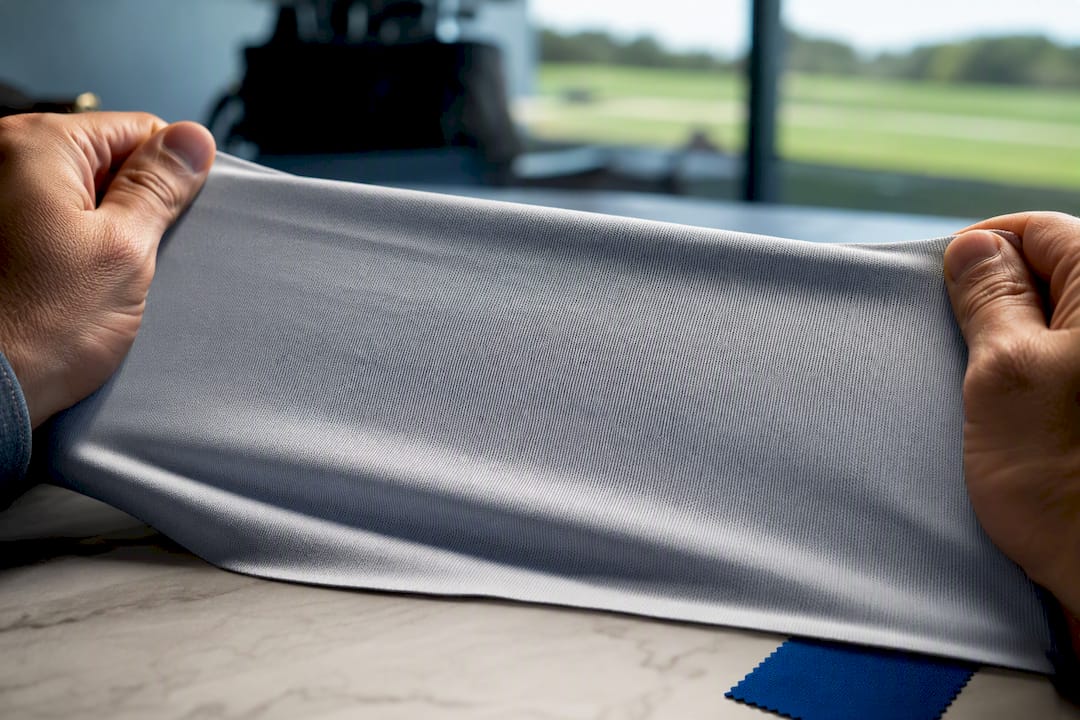
Hands stretching textured golf shirt fabric

For most golfers and merch buyers, an 88/12 polyester-spandex blend is the clear all-around winner. It wicks moisture, moves through the swing, and holds its color through washes without straining budgets. Cotton-pique still earns its place for a classic look, and nylon-spandex blends deliver a softer, more premium hand if cost isn’t the deciding factor.


TL;DR:

  • Polyester-spandex blends, especially 88/12 ratios, offer the best balance of performance, durability, and cost for most golf shirts.
  • Knitting construction, such as warp-knit fabrics, significantly impacts stretch, shape retention, and breathability, beyond fiber content alone.
  • Fabric choice should match the shirt’s purpose, with higher GSM and spandex for performance golf and lighter, textured fabrics for casual or traditional looks.
  • Proper laundering, including cold water washes and air drying, extends the longevity of performance finishes and maintains fabric properties.
  • Suppliers should provide detailed specifications and wash-test data, as performance can vary across dye lots and manufacturing batches.

Table of Contents

What Makes Golf Shirt Fabric Different From a Regular Polo

A golf swing puts more torque through the shoulders and back than almost any other athletic motion a dress shirt or casual polo will ever see. That single fact drives most of the technical choices behind golf shirt fabric, and it separates it from anything you’d wear to the office. The fiber, the knit, and the finish all have to work together to survive four hours of humidity, sun, and rotational stress without bagging out by the back nine.

Polyester: the workhorse fiber

Performance polyester dominates the category for good reason. It wicks moisture efficiently, dries fast, and holds color through repeated washing far better than natural fibers. It’s also the most cost-effective option for bulk apparel orders, which matters enormously for corporate and event merch runs.

  • Polyester-spandex blends are the industry standard for performance polos, and 88/12 is the most commonly cited optimal ratio, balancing four-way stretch against cost and long-term UV durability.
  • Nylon-spandex blends feel noticeably softer against the skin and resist abrasion better, though they typically cost 15% to 25% more than polyester-spandex and can be a touch more UV-sensitive without added finishes.
  • Cotton pique and poly-cotton blends deliver the breathable, textured look golfers associate with tradition, but cotton’s wicking performance lags badly once you’re sweating in humid heat.
  • Recycled polyester (RPET) performs on par with virgin polyester for wicking and quick-dry, and it supports sublimation printing just as well, making it an easy sustainability upgrade with no real performance penalty.

Field comparisons of brand samples back this up: nylon-spandex often wins on hand feel and abrasion resistance, while polyester-spandex wins on value and colorfastness. Neither fiber is universally “better.” The right call depends on whether your buyer prioritizes texture or turnaround cost.

How Knit Construction Changes the Way Fabric Performs

The same fiber can behave completely differently depending on how it’s knitted. Construction is where a lot of buyers get tripped up, assuming fiber content alone tells the whole story.

  1. Warp-knit fabrics provide more even, controlled stretch and superior shape recovery compared to basic circular knits, which is why they’re increasingly preferred for golf apparel that has to survive a full swing without permanently stretching out.
  2. Pique knits create the classic textured surface golfers expect, with small air pockets that improve breathability over a flat jersey.
  3. Interlock knits produce a smooth, double-knit surface favored for a more tailored, corporate-polo aesthetic.
  4. Open-loop mesh and bird-eye constructions maximize airflow for hot-climate play, often used as underarm or side panels on premium polos.

Construction modifies fiber performance more than most buyers realize. A cheap polyester in a poorly engineered circular knit will feel clingy and lose shape fast, while that same fiber in a well-built warp-knit can outperform a “premium” fabric with sloppy construction.

Moisture-Wicking, Stretch, UPF, and Durability Compared

Fabric performance isn’t a single score. It’s a set of trade-offs, and matching fiber, knit, and finish to your climate and budget matters more than chasing one “best” material.

Moisture management works in two stages: wicking pulls sweat off the skin, and quick-dry evaporates it from the fabric surface. Performance polyester does both well; cotton does neither well once you’re sweating heavily in humid conditions.

Stretch and recovery come down largely to spandex content. Higher spandex percentages increase mobility but raise cost and can shorten UV durability over time, which is why spandex content in the 10 to 15% range is standard for athletic cuts while casual polos use closer to 2% to 5%.

UPF protection depends heavily on fabric weight and finish. Tightly knit, higher-GSM fabrics naturally block more UV than loose, sheer knits, and permanent (fiber-integrated) UV treatments hold up far better over the shirt’s life than sprayed-on coatings.

Statistic Callout: Spandex content commonly ranges from lower spandex content, typically around a few percent, is common for casual polos up to 10% to 15% for performance cuts, and industry test protocols like AATCC 61 for colorfastness and ASTM D3512 for pilling resistance are the benchmarks worth requesting from any supplier.

  • Durability is measured through pilling and abrasion resistance, typically tested against AATCC or ASTM standards.
  • Anti-odor treatments built into the fiber itself last far longer than topical sprays applied after knitting.
  • Colorfastness failures usually show up as fading along collar seams and underarms first, a sign of a cheap dye process rather than a fiber problem.

Choosing the Right Fabric for Your Golf Shirt Project

Matching fabric to purpose is where most buying mistakes happen. A shirt built for a weekend member-guest doesn’t need the same spec sheet as one built for a 500-unit corporate order shipping to a hot climate.

  1. Define the use case first. Tournament play in high heat wants lighter GSM and higher spandex; corporate gifting in mixed climates can lean toward a heavier, more structured feel.
  2. Request specific specs, not marketing language. Ask for the blend ratio (88/12 is the benchmark), GSM band, and spandex percentage rather than accepting “performance fabric” as an answer.
  3. Use GSM as your opacity and weight guide. 120 to 140 GSM suits ultralight tournament wear (watch for see-through risk), 150 to 170 GSM balances performance and coverage, and 180 to 200 GSM suits premium, structured polos.
  4. Ask for wash-test data before committing to a bulk order. Colorfastness, pilling, and shrinkage reports catch problems a hand sample never will.

Pro Tip: Never approve a bulk order off a single sample shirt. Ask your supplier for wash-test results across at least three production batches, since fabric performance can drift between dye lots even when the spec sheet stays identical.

If a supplier can’t produce shrinkage or colorfastness data on request, treat that as a red flag rather than an oversight. Golf Blab’s performance apparel guide breaks down these specs further for readers building out a full order.

Choosing the Right Fabric for Your Golf Shirt Project — overview diagram

Caring for Performance Fabric So It Lasts

Finishes fade faster than most golfers expect. Topical anti-odor and UV treatments often wear down within 15 to 40 washes, while fiber-integrated treatments hold their properties much longer.

  • Wash in cold water and skip the fabric softener, which coats fibers and blocks wicking channels.
  • Air dry when possible; high heat degrades spandex elasticity over time.
  • Expect shrinkage within an industry-standard a small shrinkage tolerance, generally considered acceptable after washing after the first several washes, not zero.
  • Watch for dulled color, stiffened fabric, or loss of stretch recovery. Those are signs the finish has worn out even if the shirt looks intact.

For a deeper laundering breakdown, Golf Blab’s polo care guide walks through wash settings and drying methods that protect elasticity and UPF longer.

Why Golf Blab Builds Around These Fabric Standards

Golf Blab’s founder, Michael Marini, has spent years studying how fabric science translates into real performance on the course, from spandex ratios to knit architecture. That firsthand attention to fiber and construction shapes every product decision Golf Blab makes, rather than treating fabric as an afterthought behind logo placement.

The brand’s polo lineup applies the exact specs covered here: balanced polyester-spandex blends, GSM chosen for opacity without added bulk, and finishes selected for wash durability rather than one-season performance. Readers building a swing-tested fit will find the technical detail carries through to how each shirt actually moves. Full specs sit on each product page for anyone comparing blend and construction side by side.

Feel or Performance? When to Choose Each

Raw performance numbers don’t always win the room. A club pro shop selling to members who golf twice a month should lean toward the softer hand of a nylon-spandex or cotton-pique blend, even if it wicks less efficiently than pure polyester, because comfort drives repeat purchases more than a lab spec sheet does.

Cotton-pique remains the right call when the brand story is tradition, not athletic performance. It’s a legitimate design decision, not a compromise.

Recycled polyester is worth the trade-off almost every time it’s engineered well, since it performs on par with virgin fiber. For buyers weighing warmer-weather alternatives outside the synthetic world entirely, merino wool offers a natural-fiber comparison worth knowing, even if it sits outside most golf apparel budgets.

— Michael Marini

Find Your Fit in Golf Blab’s Performance Polo Lineup

If the specs above sound like exactly what you’d want in a shirt rather than a spreadsheet, Golf Blab built its polo lineup around them. The Golf Blab Adidas Sport Polo runs on a balanced polyester-spandex blend with the stretch and wicking properties covered throughout this guide, while the Golf Blab Adidas Space Dyed Polo delivers the same performance backbone with a textured, tonal finish for buyers who want fabric personality along with function. Each product page lists blend ratio, GSM, fit notes, and care instructions upfront, no digging required.

Golf Blab Adidas Sport Polo

Outfitting a team or shipping client gifts this season? Custom Golf Club Labels make an easy add-on that pairs personalization with the same attention to detail Golf Blab puts into its fabric choices. Browse the polo specs, pick your blend, and check sizing before your next order ships.

Sources

Posted on

When $600 Hospitality Beats $200 Grounds at a Pro Golf Event for Fans

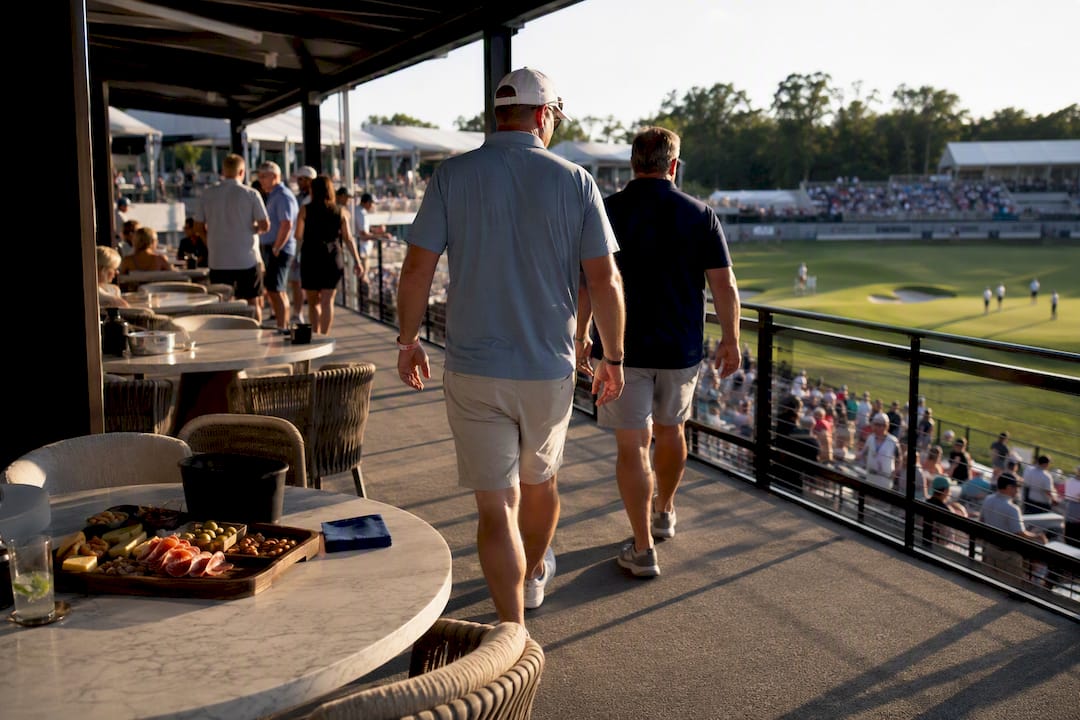
Spectators overlooking a professional golf event

Buy your tickets directly from the tournament’s official site or the PGA TOUR event page first; this is where inventory and pricing are most trustworthy. If that round is sold out, turn to the tournament’s official resale partner rather than a random secondary marketplace. Choose grounds tickets if you want freedom to roam and a lower price tag, or invest in a hospitality package if shade, seating, and included food matter more than mobility. Major championships move fast, so act as soon as sales open.


TL;DR:

  • Tickets should be purchased directly from the tournament’s official site or verified resale partners to avoid scams and ensure authenticity.
  • Ground tickets are the most economical choice for general access, while hospitality packages can offer better value through inclusive food, drinks, and reserved seating.
  • Premium hospitality tickets quickly increase in price once amenities like shaded seating and private restrooms are included, so check what “all-inclusive” entails before buying.
  • Arrive at least 30 to 45 minutes early and plan your day to avoid crowds at popular holes, with a designated meeting point for groups.
  • Prepare for the day with sun protection, comfortable shoes, binoculars, a portable phone charger, and water, considering shuttle transport from off-site parking.

Table of Contents

Where to buy tickets and what to expect to pay

The safest, and usually cheapest, path to attending a pro golf event runs through the tournament’s own website. PGA TOUR events, major championships, and signature tournaments list their sale dates directly on their official pages, and ticket availability for events like the AT&T Pebble Beach Pro-Am typically opens months ahead of the tournament itself. That head start matters. Popular rounds, especially weekend rounds at majors, sell out well before the tournament week arrives.

Pricing swings widely depending on the day and the tier. Here’s a rough sense of what you’ll pay:

  • Practice rounds: often under a moderate price, sometimes in a lower range due to looser fields and lack of competitive pressure.
  • Standard tournament days: prices vary considerably depending on the event’s prestige and day of the week, with weekend rounds generally costing more than early-week days.
  • Premium hospitality: can cost several times more than standard tickets per day, reflecting included amenities and exclusivity.

Ticket prices at premium hospitality venues climb fast once food, private restrooms, and shaded seating enter the equation, so compare inclusions before you compare price tags. A $600 hospitality ticket that includes all your meals and drinks for the day can actually undercut a $200 grounds ticket plus concessions, parking, and a rental chair.

Timing your purchase is half the battle. Following a tournament’s social channels and signing up for its email list is often the fastest way to learn exactly when tickets drop, since most tournaments announce sale windows through those channels well before general awareness catches up.

What’s the difference between grounds and hospitality tickets?

Grounds tickets, sometimes labeled general admission, get you onto the property and into the public grandstands, but they’re unreserved. You walk the course, find open sightlines, and grab concessions as you go. This is the ticket for golfers who want to see multiple holes, follow a specific group down the fairway, or simply soak in the atmosphere without committing to one spot.

Hospitality tiers change the entire equation. Tiers like Championship+ or Club PGA at major championships often bundle in food and non-alcoholic beverages as part of the ticket price, while higher hospitality levels add open bars and chef-curated menus on top of reserved seating and concierge service. Named venues such as The Turn, Trophy Club, or the Arch and Gateway Clubs push that further still, typically including shaded or climate-controlled seating, private restrooms, and all-inclusive food and drink for the price of admission.

  • Grounds/general admission: course access, public grandstands, concessions, best value for exploring the whole property.
  • Championship+/Club tiers: inclusive food and beverage, reserved seating, upgraded comfort.
  • Named premium clubs (The Turn, Trophy, Arch/Gateway): shade or climate control, private restrooms, all-inclusive food and drink.

Pro Tip: Before booking a named hospitality venue, confirm exactly what “all-inclusive” means for that event. Open bar versus limited drink tickets, and the number of guests allowed per pass, vary from tournament to tournament and can swing the real value of your ticket significantly.

How do you buy safely if the event is sold out?

Sold-out rounds happen constantly at marquee tournaments, and the instinct to grab whatever ticket shows up on a random resale site is exactly how spectators end up turned away at the gate. Follow a few steps instead.

  1. Start with the tournament’s official ticketing page. If tickets are still live, this is always your cheapest and safest route.
  2. Check the event’s official resale partner if sold out. Major championships direct fans to verified resale through SeatGeek when Championship+ rounds are gone, and those tickets are authenticated against the tournament’s own database.
  3. Review transfer, refund, and re-entry policies before purchasing. Many venues enforce strict no-re-entry rules, so a ticket that lets you leave and come back may not exist at all.
  4. Consider an official travel package if single-day tickets are unavailable. These often bundle tickets with hotel stays and transport, and can be a strong value when individual days are locked out.

Skipping straight to an unverified reseller is the single most common way spectators get burned. If the ticket in your hand doesn’t match the tournament’s own system, you may be denied entry entirely, no refund included.

What should you know before arriving at the course?

Most tournaments run tighter than a typical sporting event when it comes to entry rules. No re-entry is the norm, meaning once you leave the grounds, that ticket is done for the day. Hospitality areas usually require a separate wristband or badge on top of your grounds ticket, and staff check for both at every hospitality gate. Junior admission is often free or discounted for kids under a certain age (many majors set the cutoff around 15 when accompanied by a ticketed adult), and military members and first responders frequently get reduced or complimentary access through a verification service.

Transport is worth planning around. Many tournaments, including the BMW Championship, rely on off-site parking lots with continuous shuttle service rather than on-course parking, so budget extra time for that ride in.

  • Sun protection: hat, sunscreen, sunglasses.
  • Comfortable, broken-in walking shoes.
  • Binoculars for distant leaderboard holes.
  • A portable battery for your phone.
  • A refillable water bottle, if the venue allows it.

Pro Tip: Arrive at least 30 to 45 minutes before your desired viewing spot fills in, especially near marquee holes on weekend rounds. Crowds build fast once featured groups approach.

How Golf Blab helps you prepare for event day

Attending a pro event tends to spark something in golfers: the urge to sharpen their own game and gear right after watching the pros work. Golf Blab builds products and experiences around exactly that moment. Custom Golf Club Labels let you mark up your bag the way you saw the pros’ equipment personalized on the range, while Golf Blab’s apparel lineup, including its polos and hats, keeps you comfortable through a long day of walking the grounds.

  • Custom Golf Club Labels for personalizing clubs after event-day inspiration strikes.
  • Branded hats and polos built for a full day outdoors.
  • Innovate Tour Performance Golf Balls for taking your own game up a notch.
  • Educational content and the Play Golf with a Tour Pro experience for readers who want to learn directly from professional instruction.

Partnerships with professionals like LPGA’s Mariel Galdiano back this up with real credibility, not just marketing language.

A spectator’s game plan for the day

A spectator's game plan for the day — overview diagram

Arrive early enough to walk a full loop before the crowds settle, and pick one hole you’ll return to as your anchor point, usually a par 3 or a green complex with good sightlines from multiple angles. Grab the event map or app the moment you’re through the gate; most tournaments post tee times and group pairings there before the broadcast even starts.

Build in real breaks. Hospitality tents and concession areas get crowded fast around midday, so plan yours slightly off the peak. If you’re attending with a group, set a fixed meeting point and time rather than trying to coordinate by text in patchy cell service near the ropes. Track marquee groups through the tournament app rather than chasing rumors on the course. That’s how you end up seeing the golf you actually came for.

— Michael Marini

Ready to gear up for your next event?

Golf Blab is the practical next stop after you’ve bought your ticket, whether you’re heading to your first tournament or your tenth. Instead of guessing what gear makes a long day on the grounds comfortable, browse Golf Blab’s event-ready apparel, including the Adidas Sport Polo and Under Armour golf hat, both built for hours of walking in the sun. If the event inspires you to sharpen your own game afterward, Golf Blab’s Custom Golf Club Labels let you personalize your bag the same way, and traveling fans should also look at sports travel insurance before booking flights and hotels around tournament week. Order your labels or gear today and walk into the gallery looking like you belong there.

Sources