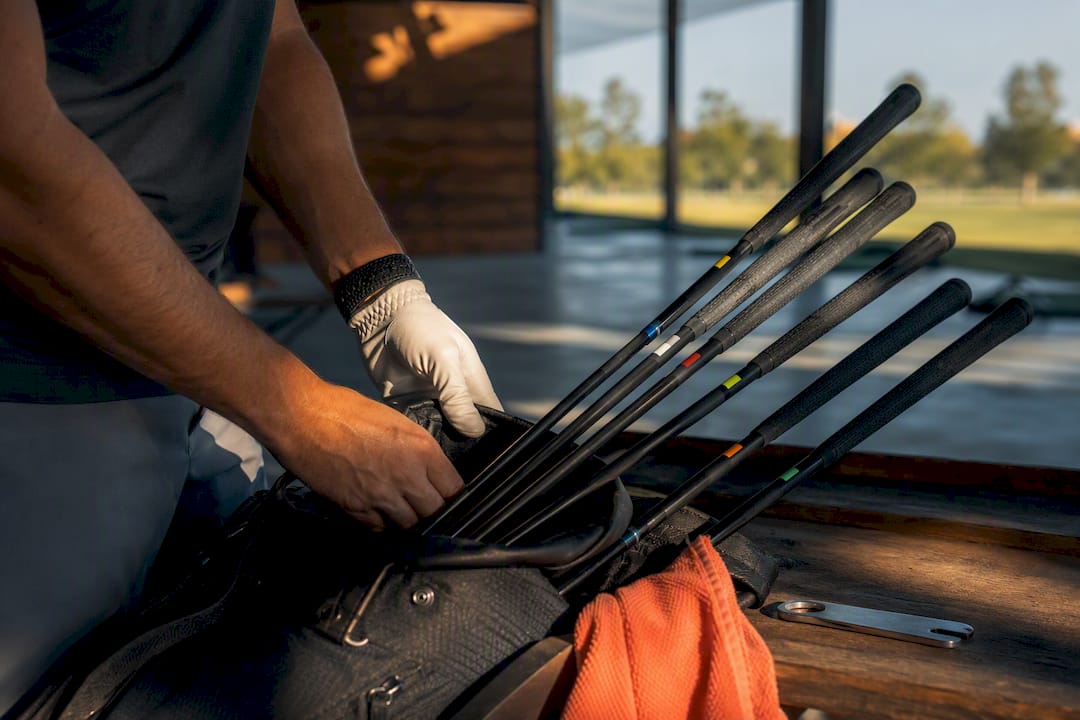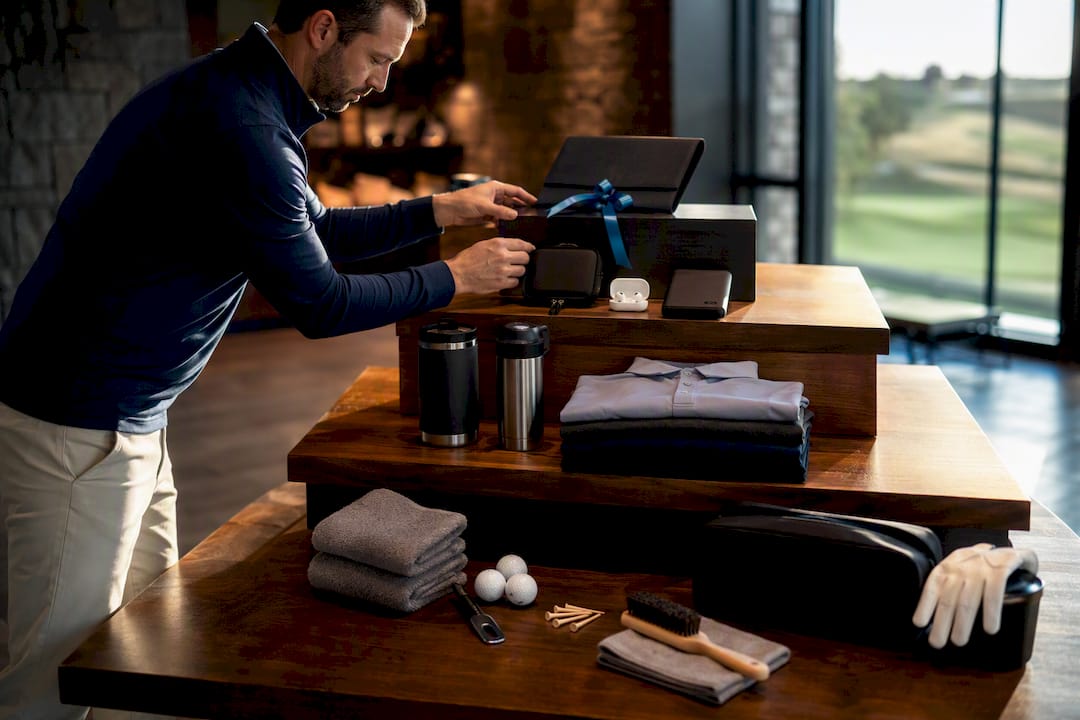
The winning formula for tournament gifting is simple: give every participant one or two genuinely useful essentials, then reserve a handful of standout prizes for winners, closest-to-pin champions, and top sponsors. Prioritize towels, premium balls, tees, and drinkware for the field, apparel and tech for mid-tier prizes, and a personalized keepsake or an experience-based reward for your VIP tier. Budget and logistics decisions follow naturally once those categories are locked in.
TL;DR:
- Practical gifts like microfiber towels, premium balls, and durable drinkware are essential for usefulness and long-term visibility, especially for sponsors.
- Budgeting prizes into four tiers ensures cost-effectiveness, with under $25 for tee gifts and over $500 for marquee awards like experiences or high-value sponsor prizes.
- Personalized and experience-based gifts, such as golf lessons or tour pro rounds, create lasting memories and enhance perceived value for top players and sponsors.
- Eco-friendly items like biodegradable tees and reusable bottles are increasingly affordable and meet environmental expectations without raising costs significantly.
- A hybrid approach to sourcing—combining local vendors for last-minute needs and online suppliers for bulk orders—balances speed, selection, and price.
Table of Contents
- The Best Golf Tournament Gift Ideas by Category
- How Should You Budget Golf Tournament Prizes by Tier?
- Welcome Bag Essentials and Fulfillment Logistics
- Sponsor-Friendly Giveaways and Branding That Lasts
- Novelty and Contest Prizes That Keep Everyone Engaged
- Personalized Keepsakes That Turn Prizes Into Memories
- How to Choose Vendors for Tournament Gifts
- Legal and Regulatory Considerations for Prizes
- What Do Different Players Actually Want From a Prize?
- Are Eco-Friendly Golf Tournament Gifts Worth the Cost?
- Should You Source Gifts Locally or Order Online?
- What’s Trending in Golf Tournament Gifts Right Now?
- Digital and Experience-Based Gift Ideas Worth Considering
- A Planner’s Take: What Actually Makes a Prize Table Work
- Personalize Your Prize Table With Golf Blab
- Sources
The Best Golf Tournament Gift Ideas by Category
Every gift you hand out either gets used again or gets left in a golf cart cupholder by the ninth hole. The goal is to load your tournament with the first kind.
Practical essentials remain the backbone of any giveaway table, and for good reason. Microfiber towels, a sleeve of premium balls, tees, divot tools, and ball markers cover the basics every golfer actually needs on the course. Quality matters more than most organizers assume. Cheap golf balls read as an afterthought, while a good ball sleeve signals that you thought about the round, not just the swag table. The same logic applies to towels: a thin, scratchy one gets tossed, but a well-made microfiber towel ends up clipped to a bag for years.
Apparel and headwear work best as mid-tier or team prizes rather than blanket giveaways, since sizing complicates bulk ordering. Performance caps and visors sidestep that problem entirely. Polos need size charts collected in advance, and branding should sit on the sleeve or chest, never across the whole back panel, where it competes with a player’s own gear.
Drinkware and cooler bags punch above their price point. An insulated tumbler or a soft-sided cooler survives dozens of rounds after the tournament ends, which means your sponsor’s logo keeps traveling long after the last putt drops.
Tech gadgets belong in your $50 to $150 range: portable power banks, compact Bluetooth speakers, and entry-level rangefinders. Player satisfaction surveys consistently rank functional tech and quality headwear above generic promotional trinkets, which tells you where to spend when the budget allows.
Kits and bundles solve a packing problem and a perception problem at once. Grouping a towel, a few balls, tees, and a marker into one branded pouch raises the perceived value of the whole package, and it means no single cheap item stands alone looking thin.
Novelty items keep the mood light. Golf-themed socks, mulligan vouchers, or a “worst drive” trophy give your emcee something fun to work with during the awards ceremony.
- Practical: microfiber towels, premium ball sleeves, tees, divot tools, ball markers
- Apparel: performance caps, visors, sleeve-branded polos
- Drinkware: insulated tumblers, cooler bags, water bottles
- Tech: power banks, compact speakers, entry-level rangefinders
- Bundles: pouch kits combining three to five small items
- Novelty: themed socks, mulligan vouchers, gag trophies
How Should You Budget Golf Tournament Prizes by Tier?
Tiered budgeting keeps a tournament’s prize table from becoming either an afterthought or a runaway expense. Organizers commonly work in four bands, and each one has a job to do.
- Under $25 covers the tee gift every player receives: a towel, a ball marker set, or a small bundled kit. This is the largest line item by volume, since it multiplies across your full field.
- $25 to $100 fits contest and flight prizes: a rangefinder accessory, a nice polo, or a premium ball dozen for closest-to-pin and longest-drive winners.
- $100 to $500 works for tournament champions and team prize packages: a Bluetooth speaker set, a quality bag, or a curated gift bundle for the winning foursome.
- $500 and above is your marquee tier, reserved for the overall winner, a hole-in-one contest, or a sponsor auction item. This is where donated experiences and sponsor contributions stretch a budget further than cash ever could.
A useful rule of thumb: aim to have roughly one in four or five players walk away with something once tee gifts, contest wins, and raffle prizes are all counted. That ratio keeps the room engaged without inflating your prize budget past what sponsorships can cover.
Welcome Bag Essentials and Fulfillment Logistics
A welcome bag is the first physical thing a player touches at your event, and it sets the tone for everything that follows. Branded golf balls, a towel, and a few practical add-ons form the foundation of a solid welcome bag, and a personalized or locally sourced item on top of that turns a standard giveaway into something a player remembers.
- Core items: ball sleeve, towel, tees, ball marker, scorecard holder
- Comfort add-ons: sunscreen packet, snack bar, printed schedule, bottled water
- Optional upgrades: local product (coffee, jerky, a small treat) or a personalized item
Keep bag weight manageable for check-in tables and cart transport. A stuffed canvas bag looks generous but becomes a bottleneck when volunteers are hand-carrying 150 of them to staging carts.
Misprinted logos are far cheaper to catch on one sample than on 200 finished units.*
Confirm vendor lead times early. Custom-imprinted items often need two to four weeks between proof approval and delivery, and that window stretches during spring and fall tournament season. When sponsors donate items, get their branding files and quantities locked at least three weeks out so nothing arrives the morning of the event looking mismatched.
Sponsor-Friendly Giveaways and Branding That Lasts
Sponsors want their logo seen again in March, not just on the golf cart in October. Items that stay in daily rotation, rather than the ones that get tossed after one use, deliver repeated brand visibility long after the tournament ends.
- Towels, tumblers, and umbrellas rank highest for staying power
- Ball markers and divot tools work well for smaller sponsor budgets
- Place imprints where they show during actual use, not just in a gift bag photo
Both organizers and sponsors prefer items that genuinely stay in use, which is why a $15 quality towel usually outperforms a $5 stress ball as sponsor swag. Match sponsor tiers to prize tiers. A title sponsor might fund your $500-plus marquee prize, while a hole sponsor covers a $25 contest item, and that alignment gives every sponsor a visible, appropriately sized presence.
Novelty and Contest Prizes That Keep Everyone Engaged
Not every memorable prize needs to go to the lowest score. Matching contest prizes to the skill being tested keeps the leaderboard interesting for players who know they won’t win outright.
- Closest-to-pin: a mid-tier tech item like a compact speaker or rangefinder
- Longest drive: a branded polo or a pro shop gift voucher
- Raffle and door prizes: smaller items that multiply the number of winners announced
- Gag awards: “most balls lost” or “worst tee shot” for lighthearted recognition
Novelty categories like Best Dressed or Spirit of the Game give your ceremony room to recognize personality, not just performance, and that inclusiveness is often what people talk about on the drive home.
Personalized Keepsakes That Turn Prizes Into Memories
A personalized gift does something a generic one cannot: it tells the recipient this prize was chosen, not just distributed. That distinction matters most for your VIP tier and your top sponsors, the people whose goodwill funds next year’s event.
Golf Blab offers three options built for exactly this moment. Golf Blab E-Gift Cards give organizers a flexible, instantly deliverable reward for winners or sponsor thank-you packages, without the sizing or shipping headaches of physical goods. Play Golf with a Tour Pro turns a marquee prize slot into an actual experience, the kind of reward players mention long after the trophies are forgotten. Custom Golf Club Labels create a lasting keepsake players see every time they pull a club from the bag.
A gift that a golfer sees every round is worth more than a dozen items that sit in a closet. Personalization is what separates a prize from a promotional afterthought.
Consider slotting the tour pro experience into your $500-plus tier, the e-gift cards into sponsor thank-yous, and the club labels into a runner-up or volunteer-appreciation slot.
How to Choose Vendors for Tournament Gifts
Selection comes down to five questions you should ask before placing any bulk order: Is the item genuinely useful on the course? Will it survive more than one round? Does it have a clean imprint area? Can it be packed efficiently into a welcome bag or cart? What’s the cost per unit at your required quantity, and what’s the minimum order?
Vendor vetting matters just as much as product choice. Ask directly about sample policy (do they send a physical proof, not just a digital mockup?), proof turnaround time, imprint method (screen print versus laser engraving affects durability), and their shipping and return policy if a batch arrives damaged.
- Confirm minimum order quantities before you commit to a headcount
- Request a physical sample, not just a digital rendering
- Ask about imprint method and expected fade or wear over time
- Clarify who absorbs the cost of shipping delays or defects
Pro Tip: Treat a vague answer about lead times as a red flag. A vendor who can’t commit to a delivery window in writing is the same vendor who will call you two days before your event with bad news.
Watch for thin materials that look fine in a product photo but feel cheap in hand, and imprint areas so small the branding becomes illegible after one wash.
Legal and Regulatory Considerations for Prizes
Running contests and giveaways at a tournament brings a few compliance questions that are easy to overlook until a sponsor or attorney raises them. If your event includes cash prizes, raffles, or high-value giveaways like a car for a hole-in-one, check your state’s rules on games of chance versus games of skill, since raffles in particular are regulated differently depending on whether your event is run by a nonprofit or a for-profit organizer.
For high-ticket contest prizes, especially hole-in-one promotions, organizers commonly purchase prize indemnity insurance to offer a big-ticket reward while capping their own financial exposure if someone actually wins it. This is standard practice at charity and corporate outings alike, and it needs to be arranged weeks before the event, not the morning of.
If your tournament benefits a nonprofit, confirm whether prizes above a certain value need to be reported for tax purposes, both for the organization and the winning player. Sponsors donating prizes should also provide a fair market value estimate in writing, which protects everyone if the IRS or a state gaming authority ever asks questions. None of this needs to slow down your planning, but a five-minute conversation with your event’s legal or financial advisor before prizes are finalized is worth far more than discovering a problem after the trophies are handed out.
What Do Different Players Actually Want From a Prize?
A 22-year-old club champion and a 65-year-old charity outing regular do not want the same gift, and treating your whole field as one demographic is where prize budgets get wasted. Younger, competitive players tend to respond to performance gear: rangefinders, premium balls, apparel from brands they already wear. Casual and older players, who make up a large share of charity and corporate tournament fields, often value comfort and practicality over performance tech: quality towels, sun protection, drinkware, and snacks in the welcome bag.

Mixed fields, which describes most charity tournaments, benefit from a layered approach. Give the practical essentials to everyone regardless of skill level, then let contest prizes naturally skew toward the players chasing performance recognition. Women’s flights deserve the same prize quality as men’s flights, not a scaled-down or generic version. If your field includes a meaningful number of women golfers, make sure apparel sizing and prize selection reflect that rather than defaulting to a men’s-only assumption.
Corporate outings carry their own wrinkle: many attendees golf only once or twice a year for this exact event. A rangefinder might sit unused in a closet, while a nice tumbler, a set of usable balls, or a small local treat gets genuine use regardless of how often someone plays. Ask your registration form one simple question, shirt size and rough skill level, and you’ll make sharper prize decisions than most organizers who skip that step entirely.
Are Eco-Friendly Golf Tournament Gifts Worth the Cost?
Sustainable gifting has moved from a nice-to-have to an expectation at many corporate and charity events, and it usually doesn’t cost more once you shop the category deliberately. Bamboo tees, biodegradable ball markers, and towels made from recycled microfiber now sit at price points close to their conventional counterparts.
Reusable items do double duty here: a quality metal water bottle or a canvas tote replaces several single-use plastics a player might otherwise go through during one round, and it keeps working long after the tournament. Skip individually wrapped snack packs where a bulk-dispensed alternative exists, and consider a digital scorecard or app-based leaderboard instead of printed sheets for every hole.
If a sponsor specifically wants to highlight sustainability, say so on the item itself. A small “eco-friendly” tag or a note in the welcome bag about a towel’s recycled content turns a quiet choice into a visible one, which matters to sponsors who track their own environmental commitments. The cost difference on eco-conscious swag has narrowed enough that it’s rarely the deciding factor. Availability and lead time are more likely to determine whether it makes your final order.
Should You Source Gifts Locally or Order Online?
The honest answer is both, and the split usually comes down to timeline and item type. Local vendors, pro shops, and print shops win on speed and relationship. If you need 150 rush-embroidered towels in nine days, a local shop that can turn samples around in 48 hours beats an online supplier quoting a three-week lead time, even if the online price is lower.
Online bulk suppliers win on price and selection once you have four to six weeks of lead time. Custom apparel, drinkware, and tech gadgets at scale are almost always cheaper per unit through an online promotional products supplier, and the catalog breadth lets you compare imprint methods and materials side by side before committing.
A hybrid approach works well for most tournaments: order your bulk essentials (towels, balls, tees) online where lead time allows, and use a local vendor for anything last-minute, low-quantity, or requiring a physical proof you need to see in person before approving. Local sourcing also opens the door to regional products, a nearby brewery’s gift card, a local bakery’s treat bag insert, that give your welcome bags a sense of place national suppliers can’t replicate.
What’s Trending in Golf Tournament Gifts Right Now?
Tech-adjacent gifts have quietly become the standard mid-tier prize rather than the exception. Portable power banks and compact speakers, once considered a splurge item, now show up regularly in the $50 to $100 prize range because players actually use them on and off the course.
Experience-based prizes are climbing steadily as organizers realize a physical item competes with everything else in a player’s closet, while an experience doesn’t. A round with a touring professional, a lesson package, or a resort stay creates a story a winner tells for years, not just a shelf item.

Kitted, bundled giveaways continue to outpace single-item swag because bundling raises perceived value without raising per-unit cost much. Personalization has also moved down-market: what used to be reserved for the champion’s trophy, monogrammed gear or a custom nameplate, now shows up in mid-tier prize packs as suppliers make small-batch customization more affordable. Expect that trend to keep accelerating as more golfers expect a level of personal touch that mass-produced swag simply can’t deliver.
Digital and Experience-Based Gift Ideas Worth Considering
Not every meaningful prize needs to be something a winner carries out of the clubhouse. Lesson vouchers, either for the winner or donated to a local junior golf program in the winner’s name, give a prize a second life beyond the event itself. Range memberships, simulator studio credits, and driving range punch cards make strong mid-tier prizes for players who golf often enough to use them but might not spend the money themselves.
Digital gift cards solve the logistics problem entirely: no sizing, no shipping delay, no inventory to manage, and the recipient chooses exactly what they want. That flexibility makes them especially useful for sponsor thank-you packages, where you want something that feels personal without guessing at preferences. A club membership trial, a golf app subscription, or a virtual coaching session round out the category for organizers who want to skip physical inventory altogether for at least one prize tier.
A Planner’s Take: What Actually Makes a Prize Table Work
The best tournament I’ve seen built its prize table around one idea: every player left with something useful, and only the top handful left with something memorable. Mixing a rangefinder into a mid-tier prize alongside a round with a local touring pro created more buzz at the ceremony than five generic trophies ever could. My tactical recommendation is simple. Put one local experience, a lesson, a range membership, a round at a nearby course, into your mid-tier prize packs. It costs less than most tech gifts and gets talked about longer.
— Michael Marini
Personalize Your Prize Table With Golf Blab
Golf Blab gives organizers a way to turn a standard prize table into something players remember, without the guesswork of sourcing multiple vendors for different tiers. For VIP winners and sponsor thank-yous, Golf Blab E-Gift Cards skip the sizing and shipping problems that slow down physical prizes and let the recipient choose exactly what they want. For a marquee prize that outshines anything sitting on a shelf, Play Golf with a Tour Pro gives your tournament a genuine story to tell at the awards ceremony. And for a keepsake that keeps a sponsor’s or organizer’s name in front of a golfer every time they pull a club, Custom Golf Club Labels offer a durable, personal touch few competing giveaways can match. Browse the full shop to build your prize tiers, or check the personalized gift guide for more pairing ideas before you finalize your order.
Sources
For more prize inspiration, see player-favorite gift ideas, budget-tiered prize lists, and novelty award concepts. For trophies, Success Awards supplies custom rings and event awards.
- 5 Unique Golf Tournament Gifts: Proven Player Favorites
- 45 Golf Tournament Prize Ideas for Every Budget
- Best Golf Tournament Giveaway Ideas for Sponsors