
TL;DR:
- Many golfers believe more technology automatically leads to faster improvement, but effective progress depends on proper interpretation, focus, and coaching integration. Validated tools like GPS devices reliably track shot distances, while neurofeedback can improve putting when protocols are correctly applied, especially for beginners. The key to success is using technology intentionally to target specific skills, complemented by structured practice and expert guidance, rather than collecting gadgets indiscriminately.
Most golfers assume that more technology automatically means faster improvement. Buy the latest swing analyzer, strap on a GPS tracker, and watch your handicap drop. Simple, right? Not exactly. The reality is more complicated, and frankly, the golf instruction industry doesn’t always talk straight about it. Some tools deliver real, measurable gains. Others create more noise than signal. Understanding the difference between the two is what separates golfers who actually improve from those who just collect gadgets and wonder why their scores stay the same.
Table of Contents
- What technology is changing in golf instruction
- Validating technology: What works and what doesn’t
- Risks and limitations: When technology creates confusion
- How to use technology for maximum benefit in your golf training
- Our take: Why intentional use beats chasing more tech
- Boost your skills with expert-guided, personalized golf technology
- Frequently asked questions
Key Takeaways
| Point | Details |
|---|---|
| Validated tech matters most | Using scientifically proven tools delivers measurable improvement in golf instruction. |
| Protocol specificity is key | Results depend on matching technology to your skill level and targeted training goals. |
| Avoid data overload | Tracking everything can overwhelm and confuse; focus feedback for actionable results. |
| Pair tech with coaching | Maximum gains come from combining technology with expert guidance. |
| Intentional application wins | Purposeful, targeted use of technology always beats chasing new gadgets. |
What technology is changing in golf instruction
The landscape of technology-driven golf instruction has exploded over the last decade. GPS tracking devices, swing analyzers, launch monitors, putting robots, and even neurofeedback headsets are all competing for your training time and your wallet. Before you spend a dollar, it helps to know what these tools actually do.
Here’s a quick breakdown of the core technologies reshaping instruction:
- GPS tracking devices (like Arccos and Shot Scope) record shot distances and locations on the course, building a statistical picture of your game over time.
- Swing analyzers attach to your club or glove and feed tempo, speed, and path data to your phone or tablet.
- Launch monitors measure ball flight data such as spin rate, launch angle, and carry distance, typically used in fitting and advanced practice.
- Neurofeedback systems read your brainwave activity during a putting stroke and train you to stay in a calm, focused mental state.
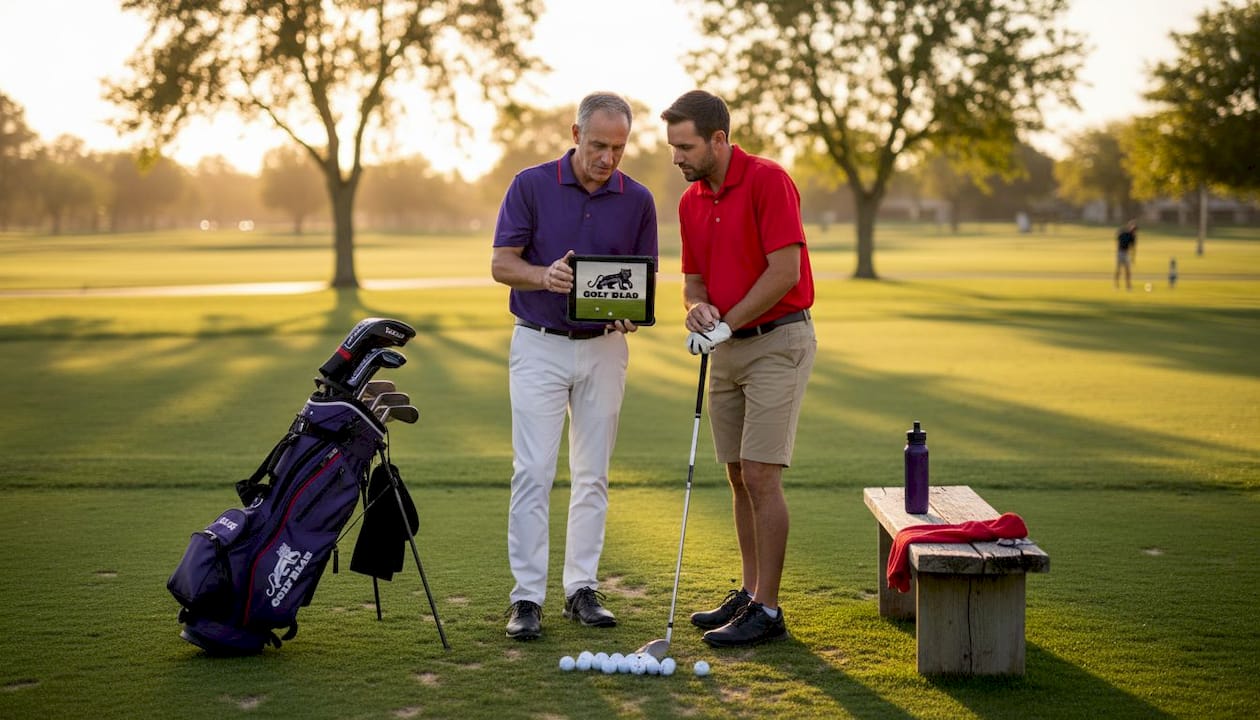
Most modern instruction blends these tools with traditional coaching, drills, and course play. The technology isn’t replacing the coach. It’s supposed to amplify what good coaching already does. The problem is that rapid feedback only helps if you know what you’re measuring and why. Dumping 30 data points on a 15-handicapper and saying “fix this” is not a coaching plan. It’s a recipe for paralysis.
Working on improving practice routines with purpose and structure matters far more than having the most expensive gadget in your bag. Likewise, updating golf equipment based on actual data is smart, but only when you understand what the data is telling you.
Here’s the honest truth that too few people in the instruction world will say out loud:
“Technology’s practical value in golf instruction depends on correct interpretation and context; otherwise it can create confusion or maladaptive practice behavior.”
Quantity of feedback is not quality of feedback. Context matters more than data volume. Every time.
Validating technology: What works and what doesn’t
With a view of the main technologies, let’s look at which ones actually deliver on their promises and where they sometimes fall short.
The most scientifically grounded category right now is GPS distance tracking. An International Journal of Golf Science study confirmed that on-course GPS tracking can be validated for distance measurement accuracy and reliability, supporting its use as a feedback component in instruction. Devices like Arccos and Shot Scope recorded mean errors of 3 yards or less, with correlation scores (Spearman r) of 0.91 or higher. That’s genuinely impressive consistency for a wearable device used in real playing conditions.
Here’s a quick comparison of what the research found across two leading GPS devices:
| Feature | Arccos | Shot Scope |
|---|---|---|
| Mean distance error | ≤3 yards | ≤3 yards |
| Correlation (Spearman r) | ≥0.91 | ≥0.91 |
| Missed shot tracking | Occasional gaps | Occasional gaps |
| Reliability rating | High | High |
| Best use case | Long-term trend analysis | Shot-by-shot review |
Both devices perform well in controlled testing, but neither is perfect. Missed shot counts remain an issue, particularly on short shots around the green where the device may not register impact. That matters because incomplete data can paint a misleading picture of your game.

Neurofeedback is a more surprising story. A Frontiers systematic review and meta-analysis found that neurofeedback can produce significant improvements in golf putting performance, especially for beginners and intermediate players. The catch is protocol specificity. Targeting the correct brainwave frequency band, typically the sensorimotor rhythm (SMR), matters enormously. Use the wrong protocol and you can actually make putting performance worse. This is not a “plug in and play” technology.
Key validated findings from the research:
- GPS devices show high accuracy and are reliable for tracking distance trends over many rounds.
- Neurofeedback shows measurable putting improvement when the SMR protocol is used correctly.
- Both technologies show stronger benefits for less experienced players than for elite golfers.
- Neither technology shows a consistent, direct link to handicap reduction on its own.
- Expert-guided use significantly increases the probability of a positive outcome.
Pro Tip: Before you rely on any device for training feedback, verify its calibration and make sure the metric you’re tracking is directly connected to the specific skill you’re trying to improve. Tracking tempo when you really have a path problem is just wasted time.
Recording your golf swing with even a simple smartphone can be one of the most powerful low-tech tools available, provided you know what you’re looking for. Sometimes the simplest feedback loop is the best one.

Risks and limitations: When technology creates confusion
After reviewing what works, it’s essential to understand where technology can actually undermine your progress.
The biggest trap most golfers fall into is information overload. When you’re measuring your swing path, attack angle, smash factor, tempo ratio, spin axis, and dynamic loft all at once, you stop swinging and start thinking. That’s a problem. Golf is a motion sport. It requires feel, rhythm, and trust. Drowning in metrics destroys all three.
The direct handicap reduction claims made by some technology companies deserve serious skepticism. As HappyGolferHQ notes, evidence for direct handicap reduction is thin, and guidance overload is a very real risk. Seeing a data point on a screen doesn’t automatically translate into a better swing. A device can tell you that your club face is two degrees open at impact. It cannot tell you why, or give you the feel of what a square face looks like in your hands. That’s what a good coach does.
Here are the most common technology mistakes golfers make:
- Tracking everything at once instead of isolating one metric to improve
- Confusing data output with actionable coaching and skipping the human interpretation step
- Using the wrong protocol for neurofeedback or choosing a metric that doesn’t match their biggest weakness
- Ignoring baseline measurements so they have no reference point for whether they’re actually improving
- Abandoning a tool too quickly before enough data has accumulated to reveal real patterns
- Overcorrecting based on a single bad session instead of looking at trend data across multiple rounds
Technology does not replace structured practice routines for consistency. It should serve them. When you treat a device as a shortcut instead of a tool, you are setting yourself up for frustration.
It’s also worth understanding the difference between individual sessions and curriculum-based improvement. That’s one reason why exploring golf clinics vs private lessons can reframe how you think about all of this. Instruction format matters as much as the tools you use within it.
Pro Tip: Choose one specific skill to focus on each practice block, like lag putting or iron contact, then select the single technology metric most relevant to that skill. One signal. One focus. That’s how real progress happens.
How to use technology for maximum benefit in your golf training
Recognizing the risks, let’s lay out a clear guide for using technology in ways that consistently improve your game.
The core principle is simple: validated protocol plus targeted focus plus coaching context equals actual improvement. Research confirms that when the measurement or training protocol is reliable and correctly targeted, benefits are measurable and repeatable. Remove any one of those three ingredients and you’re gambling.
Here’s a practical framework to follow:
- Identify your weakest skill using round-by-round data. Strokes gained analysis or even basic stat tracking can reveal whether you’re losing most shots on approach, putting, or driving.
- Select one validated tool that targets that specific weakness. GPS tracking for distance control, a launch monitor for ball-striking, or a putting alignment aid for green work.
- Set a baseline before you start. Record at least three rounds or practice sessions of data so you have a real starting point to measure against.
- Work with a coach to interpret the data correctly. A trusted instructor will tell you which numbers actually matter and which ones are noise.
- Run a defined practice block of four to six weeks focusing exclusively on the chosen metric. Don’t chase new tools during this period.
- Reassess and adjust by comparing your post-block data to your baseline. If the needle moved, continue. If not, reconsider whether you’re targeting the right variable.
Here’s a practical pairing guide to match feedback tools with specific skill goals:
| Skill target | Recommended tool | Key metric to track |
|---|---|---|
| Driving distance and accuracy | GPS device or launch monitor | Carry distance, fairways hit |
| Iron consistency | Swing analyzer or launch monitor | Contact quality, attack angle |
| Putting performance | Neurofeedback or putting mat | Stroke tempo, face angle at impact |
| Short game distance control | GPS or video analysis | Carry distance, landing zone accuracy |
| Mental focus under pressure | Neurofeedback (SMR protocol) | Alpha/SMR brainwave balance |
Practicing golf at home with this kind of focused framework is entirely realistic. You don’t need to be at a full facility to make disciplined, technology-assisted improvement work for you. And if you want a deeper resource for pulling all of this together, the Golf Blab Learning Center is built exactly for this kind of structured development.
Our take: Why intentional use beats chasing more tech
Here’s our frank perspective after watching thousands of golfers cycle through the latest gear hoping for a breakthrough.
More technology does not equal more improvement. That’s a sales pitch, not a coaching philosophy. We’ve seen golfers with five different trackers and a drawer full of training aids who haven’t broken 90 in three years. We’ve also seen golfers use a single validated putting neurofeedback protocol paired with two lessons from a sharp instructor and drop five strokes off their scoring average in a single season. The difference isn’t the amount of technology. It’s the intentionality behind using it.
The golfers who get the most out of modern tools are the ones who treat them like a skilled tradesperson treats their equipment. They know what each tool does, they use it for the specific job it was designed for, and they stop using it when the job is done. They’re not collecting gadgets. They’re building skills.
Here’s what we find frustrating about the current conversation around golf technology: it’s largely driven by companies with products to sell, not coaches with track records to defend. That creates a culture where golfers feel pressure to stay current with the latest tech instead of mastering the fundamentals that actually produce lower scores.
We believe firmly that coaching amplifies the value of every piece of validated technology. A GPS device gives you data. A great instructor gives you meaning. That’s why taking golf lessons from qualified coaches, especially when you combine that instruction with the right tools, is still the fastest and most reliable path to genuine improvement. Technology is a force multiplier. But only when there’s something worth multiplying.
The future of golf instruction isn’t tracking everything. It’s tracking the right things with precision, connecting those signals to skill-building work, and having the discipline to stay focused long enough to see real results.
Boost your skills with expert-guided, personalized golf technology
At Golf Blab, we’re built for exactly this kind of intentional, smart improvement. Whether you’re just getting started with technology-driven training or you’ve been burned by gadget overload before, we connect you with expert coaching and tools that are grounded in what actually works. Explore unlocking your golf potential through easy lessons backed by a money-back guarantee so there’s zero risk to taking the next step. Dig into the Learning Center for structured guidance on how to pair the right methods with the right goals. And when you’re ready to gear up the smart way, browse the Golf Blab shop for performance tools and gear that complement your training. Your best golf is ahead of you.
Frequently asked questions
How accurate are GPS tracking devices for golf practice?
Validated devices like Arccos and Shot Scope track shot distances with mean errors of 3 yards or less, making them reliable tools for monitoring distance trends over multiple rounds.
Can neurofeedback training really improve my golf putting?
Yes, studies show neurofeedback improves putting, especially for beginners, but results depend on using the correct SMR protocol and matching the approach to the player’s current skill level.
What is the best way to use technology for golf improvement?
Pair validated technology with a single focused skill target and qualified coaching, because technology’s value depends entirely on correct interpretation and purposeful application rather than tracking every metric available.
Do swing analyzers directly lower your handicap?
Evidence for a direct handicap reduction link is thin; swing analyzers are most effective when used alongside coaching and a clear improvement plan rather than as standalone solutions.