
TL;DR:
- Golf in 2026 is marked by record participation among younger demographics, personalized AI training tools, and equipment emphasizing consistency over distance. The sport has shifted toward wellness-oriented play, shorter formats, and off-course venues, reshaping traditional gender and age dynamics. Advancements in technology and course design are driving deeper engagement, making golf more accessible and tailored to individual lifestyles.
Golf in 2026 is defined by record participation, AI-powered training tools, and a new generation of players who treat the course as a wellness destination rather than a networking event. The golf trends in 2026 explained across this article cover everything from Callaway’s multi-material driver technology to the demographic “age flip” reshaping who shows up on the first tee. Whether you are a weekend player or a serious amateur, these shifts affect your equipment choices, your practice habits, and the courses you will be playing on. The future of golf 2026 is not a distant concept. It is already here.
How golf trends in 2026 are being driven by who is playing
The single biggest story in golf right now is not a new club or a tour win. It is who is picking up the game. Adults aged 18 to 34 have become the largest on-course playing group in the United States, a shift that would have seemed impossible a decade ago when the sport was synonymous with retirement-age country club members.

Women are rewriting the participation story just as dramatically. Women now represent 28% of on-course golfers, a 46% increase since 2019. That is not a rounding error. That is a structural change in who the game belongs to, and every facility, brand, and instructor needs to reckon with it.
Here is what is driving these numbers:
- Mental health and self-care. 51% of Gen Z golfers rank mental health as their primary reason to play. Golf is no longer sold as a business tool. It is sold as a reset button.
- Solo play preference. Younger golfers are not waiting for a foursome. They want to walk nine holes alone on a Tuesday evening, and courses that accommodate that preference are winning their loyalty.
- Off-course entry points. Nearly 38 million Americans play golf away from traditional courses, including simulators and entertainment venues, which have grown 80% since 2019. These venues are not just fun. They are the front door to the sport for millions of new players.
Total U.S. golf participation has surged to 48.1 million including off-course venues, a 41% increase since 2019. That growth rate puts golf alongside pickleball as one of the fastest-expanding participation sports in the country.
What golf technology trends are actually worth your attention?
Golf innovations in 2026 fall into two categories: things that sound impressive in a press release and things that genuinely change how you practice and play. Here is how to tell the difference, and which technologies belong in the second group.
-
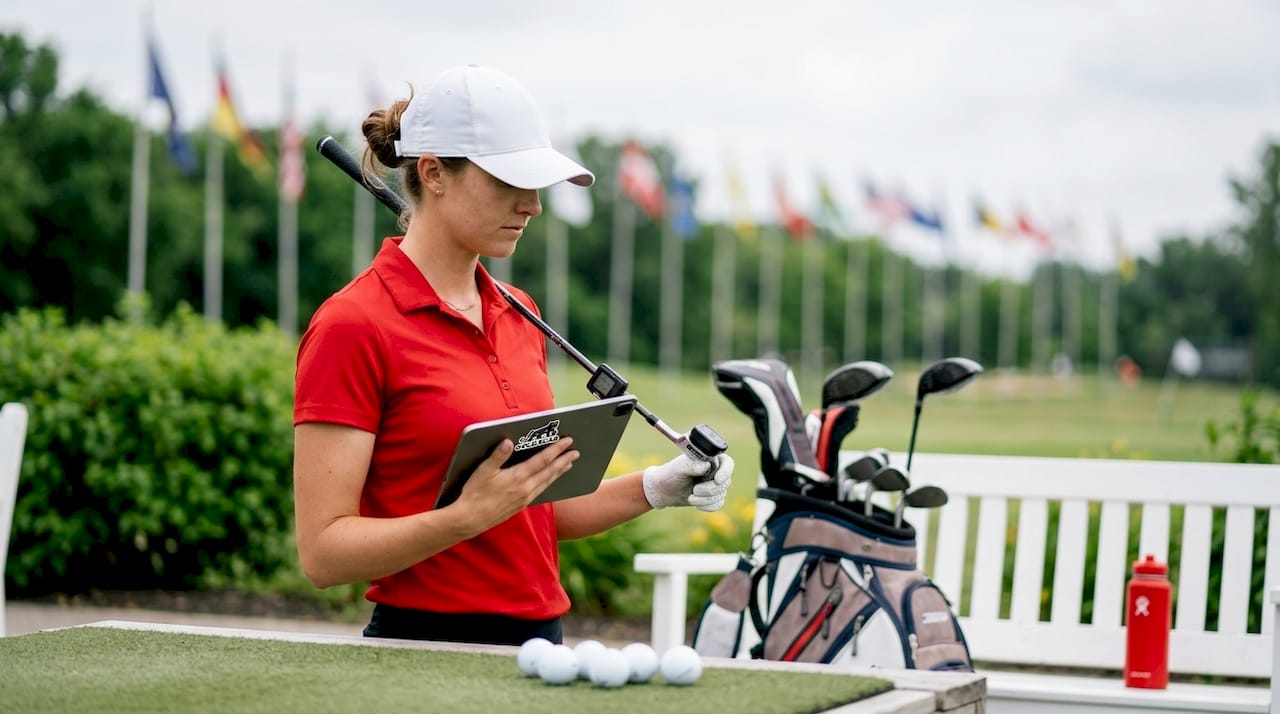
AI-powered swing analysis. AI coaching apps now provide three-dimensional swing models and contextual drill recommendations, making professional-grade feedback available at low or no cost. This is not a gimmick. Apps like Arccos and Swing AI are giving club-level amateurs the same data feedback loop that tour players pay coaches thousands of dollars for. If you are still relying on a mirror and a feeling, you are leaving real improvement on the table.
-
Eye-tracking putter design. Ping’s Quiet Eye technology, developed from sports psychology research on elite putting performance, uses gaze pattern data to optimize putter design for more consistent stroke mechanics. The science behind it is legitimate, and the performance results on tour have been measurable.
-
Golf simulators as serious training tools. The simulator market is valued at approximately $1.7 to $2.9 billion and growing 9 to 10% annually. That growth reflects a behavioral shift. Simulators are no longer just entertainment. Serious amateurs use TrackMan and Foresight Sports GCQuad setups to practice shot shaping, dial in yardages, and work through course management scenarios in ways that a bucket of range balls simply cannot replicate.
-
Course maintenance robotics and drones. AI-powered robots now handle divot repair and turf monitoring, while drones guide irrigation decisions based on real-time moisture data. The practical result for you as a player is more consistent course conditions, particularly at mid-range facilities that previously could not afford the labor to maintain tour-quality turf.
-
Wearable shot-tracking technology. Devices like the Garmin Approach series and Shot Scope V5 now integrate with AI platforms to build a statistical picture of your game over time, identifying patterns in missed shots that even experienced instructors might miss.
Pro Tip: Before investing in any golf tech tool, ask one question: does it give you data you can act on in your next practice session? If the answer is no, it is a toy, not a training tool. Read more about what actually works before you spend.
How does 2026 golf equipment compare to previous generations?
The honest answer is that 2026 equipment is genuinely better, but not in the way most marketing copy suggests. The gains are not about hitting the ball farther. They are about hitting it more consistently, which matters far more to the 95% of golfers who play to a handicap above 10.

| Feature | Previous generation drivers | 2026 multi-material drivers |
|---|---|---|
| Face material | Single titanium construction | Titanium, carbon fiber, and polymer combined |
| Primary benefit | Maximum distance | Strike consistency and spin stability |
| Forgiveness zone | Moderate sweet spot | Extended playable strike zone |
| Price range | $400 to $550 | $550 to $700+ |
| Best for | Low handicappers | Mid to high handicappers seeking consistency |
Callaway’s 2026 Quantum driver features a Tri-Force face combining titanium, carbon fiber, and a military-grade polymer, retailing from $649.99. The engineering logic is sound. Each material handles a different zone of the face, so off-center strikes lose less energy and produce more predictable ball flight. That is a real performance benefit, not a marketing story.
The broader equipment innovation focus in 2026 centers on improving strike consistency, spin retention, and forgiveness rather than raw distance gains. This shift matters because the USGA and R&A have been tightening distance regulations, pushing manufacturers to compete on playability instead.
Pro Tip: If you are shopping for a new driver in 2026, test it with your typical miss, not your best swing. A club that performs well on a heel strike or a toe strike is worth more to your scorecard than one that launches perfectly on center contact. Check out why updating your equipment can shift your confidence on the course.
What playing styles and course formats are emerging in 2026?
The way people actually play golf is changing as fast as the equipment. Upcoming golf styles in 2026 are less about the traditional 18-hole stroke play round and more about formats that fit real life, real schedules, and real motivations.
- Nine-hole rounds are mainstream. Courses that once treated the back nine as an afterthought are now marketing standalone nine-hole experiences with dedicated tee times, separate pricing, and even nine-hole leagues. The data on younger player preferences makes this a business necessity, not just a courtesy.
- Short courses and par-3 layouts are multiplying. Facilities like Topgolf Swing Suite and standalone par-3 courses are attracting players who want the experience of golf without the four-hour time commitment. These formats also serve as skill-building environments for beginners who are not ready for a full-length course.
- Social-first golf experiences. Venues are designing spaces where the 19th hole is as important as the first tee. Food, music, and community programming are part of the product now, particularly for the 18 to 34 demographic that drives social-first values in how they engage with the sport.
- Adaptive course design. New course builds and renovations are incorporating wider fairways, multiple tee options, and pace-of-play features that make the game accessible to beginners, older players, and those with physical limitations.
The business side of this evolution is not without tension. Industry analysis describes a “violent contradiction” where operators balance tariff and labor challenges with record institutional investment. High-performing facilities are responding by leaning into simulator-based revenue streams to offset operational cost pressures. The courses that thrive in 2026 are the ones treating technology as a revenue tool, not just a novelty. You can also explore evolving tournament formats that clubs are adopting to attract new players and keep existing ones engaged.
Key takeaways
Golf in 2026 is defined by a convergence of demographic change, accessible technology, and equipment engineering that prioritizes consistency over raw distance, making this the most player-friendly era the sport has ever seen.
| Point | Details |
|---|---|
| Demographics are reshaping the game | Adults 18 to 34 are now the largest on-course group, and women represent 28% of golfers. |
| AI coaching is no longer optional | Apps like Arccos and Swing AI deliver pro-level feedback at low cost for any amateur. |
| Multi-material equipment is a real upgrade | Callaway’s Tri-Force face extends the strike zone, benefiting mid and high handicappers most. |
| Shorter formats are driving participation | Nine-hole rounds and par-3 courses are mainstream responses to how younger players want to play. |
| Simulators are serious training tools | A market valued at up to $2.9 billion signals that off-course golf is a permanent fixture. |
Why I think most golfers are missing the point on these trends
Here is my honest read after watching this sport evolve for decades. Most golfers hear “AI coaching” and picture something complicated, expensive, or reserved for tour players. That assumption is costing them real improvement. The naked truth is that the technology gap between a tour player’s practice environment and yours has never been smaller. A $20 app on your phone can now do what a $200-per-hour instructor used to do, and it does not get distracted or give you vague feedback like “swing more inside out.”
What I find more interesting, though, is the cultural shift. The fact that 51% of Gen Z golfers are playing for mental health reasons tells you something profound about where the sport is headed. Golf is becoming a wellness practice, not just a competitive game. That changes everything from how courses are designed to how equipment is marketed to how you should think about your own relationship with the game.
My advice? Stop treating every new trend as something to evaluate skeptically and start asking which ones actually fit your game and your life. If you play solo rounds for stress relief, a nine-hole par-3 course with a TrackMan bay might serve you better than a full-length private club membership. If you are serious about improving, an AI swing analysis app combined with a self-taught practice structure might outperform weekly lessons with an instructor who has not updated their methodology in fifteen years. Pick the tools that match your actual goals, not the ones with the best marketing.
— Michael
Upgrade your game with Golf-blab in 2026
Golf-blab has been watching these trends closely, and we have built our product lineup and content library around exactly what serious players need right now.

If you are ready to match your gear to the 2026 equipment moment, start with golf club personalization at Golf-blab. Custom club labels, performance golf balls, and branded accessories let you bring your personal identity onto the course while playing with gear that reflects the current era of the sport. Browse the full Golf-blab shop for equipment upgrades that align with where the game is heading. And if you want to sharpen your strategy alongside your new gear, our score-lowering tips give you a practical framework to put it all together.
FAQ
What are the biggest golf trends in 2026?
The biggest trends are surging participation among 18 to 34-year-olds, AI-powered coaching apps, multi-material driver technology from brands like Callaway, and the rise of shorter formats like nine-hole rounds and par-3 courses.
How is AI changing golf training in 2026?
AI coaching apps now provide three-dimensional swing analysis and personalized drill recommendations at low or no cost, giving amateur golfers access to the same quality of feedback previously available only to tour professionals.
Are golf simulators worth it for serious players?
The simulator market is valued at $1.7 to $2.9 billion and growing 9 to 10% annually, reflecting widespread adoption among serious amateurs who use platforms like TrackMan for year-round practice and course management work.
What makes 2026 golf equipment different from previous years?
The focus has shifted from maximizing distance to improving strike consistency and forgiveness. Callaway’s Tri-Force face technology, combining titanium, carbon fiber, and military-grade polymer, is the clearest example of this engineering direction.
Why are younger players choosing golf in 2026?
51% of Gen Z golfers cite mental health and self-care as their primary motivation to play, preferring solo rounds and social-first venues over traditional competitive formats.