Posted on

Golf wedges explained: Unlock your short game mastery

Golfer practicing wedge shot near green


TL;DR:

  • Wedges are essential for short, precise shots and scoring improvement.
  • Choosing the right wedge involves understanding types, loft, bounce, and course conditions.
  • Consistent practice and proper fitting are key to mastering wedge technique and lowering scores.

Most golfers spend hours obsessing over their driver and irons, then grab any old wedge and wonder why their short game falls apart inside 100 yards. Here’s the naked truth: your wedges are the most important clubs in your bag for scoring, and treating them as an afterthought is costing you strokes every single round. Understanding the different types of wedges, when to use each one, and how to practice with them is the fastest path to lower scores. This guide breaks it all down so you can stop guessing and start making better decisions around the green.

Table of Contents

Key Takeaways

Point Details
Wedges enable short game precision Understanding wedge types lets you control distance and trajectory close to the green.
Key wedge types suit different shots Pitching, sand, gap, and lob wedges each serve unique purposes and course conditions.
Choosing based on skill matters Match your wedge choices to your abilities and course for better performance.
Practice unlocks wedge mastery Regular drills and good technique are essential for consistent success with wedges.
Personalization boosts performance Custom fitting and club labels can give you a tailored edge in your short game.

What is a golf wedge and why does it matter?

A golf wedge is a specialized iron with a high loft angle, typically ranging from 44 to 64 degrees, designed specifically for short-distance shots that require precision, height, and control. Wedges sit at the high end of the iron spectrum, and understanding the full range of types of golf clubs helps you appreciate why wedges occupy such a critical role in your bag.

Unlike your 7-iron or 5-iron, a wedge is not built for distance. It’s built for accuracy. The steep loft creates a high ball flight that lands softly, which is exactly what you need when you’re trying to stop the ball close to the pin. Think of it this way: your driver is a hammer, and your wedge is a scalpel.

Here’s what separates wedges from other clubs:

  • High loft angles (44 to 64 degrees) for short, high shots
  • Wider soles that interact with turf and sand differently than standard irons
  • Bounce angle (the angle between the leading edge and the lowest point of the sole) that prevents the club from digging too deep
  • Shorter shaft length for better control and feel around the green
  • Heavier clubhead weight to maintain feel on delicate touch shots

One common misconception is that wedges are only for bunker shots. Not true. Wedges handle everything from full approach shots to chips, pitches, flop shots, and bump-and-run plays. Another myth is that one wedge is enough. Most competitive golfers carry three or four wedges because each one fills a specific distance and shot-shape gap.

Pro Tip: If you’re losing strokes within 100 yards, don’t blame your swing first. Check whether you’re using the right wedge for the shot. More often than not, the wrong club is the real problem.

Types of golf wedges: How each wedge serves your short game

Understanding what a wedge is sets the stage for knowing the differences between them, so let’s get into the four main wedge types and their unique designs. Knowing the different wedge types and their specific purposes is what separates a golfer who scrambles well from one who bleeds strokes around the green.

The four main wedge types:

  • Pitching wedge (PW): Loft of 44 to 48 degrees. This is the most commonly used wedge and typically comes standard with iron sets. It’s your go-to for full shots from 100 to 130 yards and basic chip shots around the green.
  • Gap wedge (GW): Also called the approach wedge, loft of 50 to 54 degrees. It fills the distance gap between your pitching wedge and sand wedge, covering shots from roughly 80 to 110 yards.
  • Sand wedge (SW): Loft of 54 to 58 degrees. Designed specifically for bunker play, the sand wedge has the most bounce of any wedge, which helps it glide through sand without digging in. It also works beautifully for pitches from tight lies.
  • Lob wedge (LW): Loft of 58 to 64 degrees. The highest lofted club in most bags, the lob wedge launches the ball nearly straight up and lands it with almost no roll. It’s essential for shots over hazards or when you need to stop the ball fast.

Here’s a quick comparison to keep things clear:

Wedge type Loft range Typical distance Best use case
Pitching wedge 44 to 48° 100 to 130 yards Full approach shots, basic chips
Gap wedge 50 to 54° 80 to 110 yards Filling distance gaps, pitches
Sand wedge 54 to 58° 60 to 90 yards Bunkers, pitches, rough shots
Lob wedge 58 to 64° 40 to 70 yards Flop shots, tight pin positions

Beyond loft, two other specs matter enormously: bounce and grind. Bounce is the angle that lifts the leading edge off the ground. High bounce (12 to 16 degrees) suits soft turf and fluffy sand. Low bounce (4 to 8 degrees) suits firm turf and tight lies. Grind refers to how the sole of the wedge is shaped, which affects how the club interacts with the turf through impact.

Infographic comparing golf wedge types and uses

Studies show that amateur golfers lose more strokes inside 100 yards than anywhere else on the course. Getting your wedge selection right is the single fastest way to change that number.

Woman practicing wedge shots at driving range

Choosing the right wedge for your skill level and course

Once you know the available wedge types, the next challenge is picking the right ones for you and the courses you play. This is where a lot of golfers get it wrong. They buy wedges based on what a Tour pro uses without considering their own swing speed, turf conditions, or typical miss patterns.

When choosing golf clubs, especially wedges, think through these key factors:

  • Skill level: Beginners benefit from more forgiving wedges with wider soles and moderate bounce. Advanced players can handle tighter soles and lower bounce for more shot-shaping versatility.
  • Course turf conditions: Soft, lush courses demand higher bounce to prevent the club from digging. Firm, dry courses call for lower bounce to avoid bouncing off the surface.
  • Sand type: Fluffy, soft bunker sand rewards high bounce. Firm, wet sand plays better with lower bounce.
  • Rough frequency: If you’re often in thick rough, a heavier sole and more bounce helps you power through without the club getting stuck.
  • Distance gaps: Map out your distances with each club and identify where you have gaps of more than 15 yards. Fill those gaps with the appropriate wedge.

For beginners, we’d suggest starting with a pitching wedge and a sand wedge. Those two cover the most common situations without overwhelming you with choices. As your game develops and you start to notice specific distance gaps or shot demands, add a gap wedge or lob wedge.

Pro Tip: Walk your typical course and note the three most common short game situations you face. Are you often in bunkers? Hitting from tight fairway lies? Needing to stop the ball quickly on fast greens? Your answers should drive your wedge selection, not what looks cool in the pro shop.

Advanced players should think about carrying three or four wedges and adjusting which ones they bring based on the specific course they’re playing that day. A links-style course with firm turf plays very differently from a parkland course with soft, manicured grass.

Techniques and drills to maximize wedge shots

After picking the right wedges, learning proper techniques and regular practice will transform your short game. The mechanics of a wedge shot are different from a full iron swing, and that difference trips up a lot of golfers who just try to “swing it like a 7-iron.”

Here are the fundamentals of a solid wedge shot:

  1. Stance: Take a slightly narrower stance than you would for a full iron shot. Your feet should be about shoulder-width apart or slightly less. This promotes a steeper angle of attack.
  2. Ball position: Play the ball in the center of your stance for standard pitches. Move it slightly back for lower, running shots and slightly forward for higher, softer shots.
  3. Grip pressure: Keep it light. A death grip kills feel, and feel is everything with wedges.
  4. Weight distribution: Favor your lead foot slightly (about 60 percent) to encourage a downward strike that compresses the ball.
  5. Swing length: Match your backswing length to the distance you need. A three-quarter swing produces a three-quarter distance shot. Don’t try to muscle a short shot with a full swing.
  6. Follow through: Commit to a full finish even on shorter shots. Decelerating through impact is one of the most common wedge mistakes, and it leads to fat and thin shots.

“The golfer who masters their wedges controls the scoring zones. Every stroke saved inside 100 yards is a stroke earned, and those strokes add up faster than any driver upgrade ever will.”

Here are three drills that work for all skill levels:

  • The clock drill: Set up to a ball and make swings where your lead arm stops at 9 o’clock, 10 o’clock, and 11 o’clock. Note the distance each swing produces. This builds a reliable distance control system.
  • The towel drill: Place a folded towel about four inches behind the ball. Practice hitting shots without touching the towel. This trains a clean, descending strike.
  • The landing zone drill: Pick a specific spot on the green and try to land the ball on that exact spot, not just near the hole. This sharpens precision and forces you to think about trajectory and spin.

If you want to lower your scores consistently, wedge practice has to be a regular part of your routine. Building strong chipping skills is one of the highest-return investments you can make in your game. And if you can’t always get to the course, there are solid ways to practice golf at home that will keep your wedge game sharp between rounds.

Custom wedge fitting: The hidden advantage for every golfer

Beyond technique and practice, the next level of improvement is getting wedges that fit your exact needs. This is something most recreational golfers skip entirely, and it’s a genuine mistake. A wedge that doesn’t match your swing can work against you no matter how good your technique is.

Custom fitting for wedges involves adjusting several variables:

Fitting variable What it affects Who benefits most
Loft angle Distance and trajectory All skill levels
Bounce angle Turf interaction, fat/thin shots All skill levels
Sole grind Shot versatility, turf feel Intermediate to advanced
Shaft flex and weight Swing speed match, control All skill levels
Grip size Comfort, hand pressure All skill levels
Club length Posture, consistency Taller or shorter golfers

The golf club personalization trend has grown significantly in recent years, and it’s not just about aesthetics. Personalized wedges with the right specs for your swing can tighten your dispersion (how spread out your shots land) and give you more confidence over the ball.

Personalization also extends to visual elements like custom shaft labels and grip markings, which help you quickly identify the right wedge in your bag without second-guessing yourself under pressure. That split-second confidence matters more than most golfers realize.

Pro Tip: Even if you can’t afford a full custom fitting session right now, at minimum get your loft and lie angles checked by a local club fitter. Wedges that are too upright or too flat will send shots offline even with a perfect swing.

Why mastering wedges is more than club selection

Here’s something the traditional golf instruction world doesn’t like to admit: selling you a new wedge is easier than teaching you how to use the one you already have. We’ve seen it happen over and over. A golfer buys the latest high-tech sand wedge, hits it great for two rounds, then falls back into the same old patterns because the underlying skill was never developed.

The real secret is that wedge mastery lives at the intersection of the right equipment, deliberate practice, and the ability to adapt to what the course is giving you that day. Equipment matters, yes. But it’s the last piece of the puzzle, not the first.

Golfers who rely on equipment alone make a predictable mistake: they stop thinking. They assume the fancy club will do the work. It won’t. A lob wedge in the hands of someone who hasn’t practiced the flop shot is a recipe for a skull across the green or a chunk that goes nowhere. The club is only as good as the hands holding it.

What actually works is building practice routines that are specific to your wedge game, then using those routines consistently over weeks and months. Not one session. Consistent, deliberate repetition. That’s what builds the kind of muscle memory that holds up when you’re standing over a 40-yard pitch with the match on the line.

Adapting to course conditions is the other piece most golfers underestimate. The same sand wedge plays completely differently on a wet morning versus a dry afternoon. Reading the turf, adjusting your ball position, and modifying your swing length based on conditions is a skill that only comes from experience and attention. Pay attention to what the course is telling you, and your wedge game will sharpen faster than you think.

Upgrade your short game with personalized wedges and expert resources

Ready to stop leaving strokes on the course? At Golf Blab, we’ve built a set of resources and products specifically designed to help golfers like you make real progress with their wedge game.

https://golf-blab.com

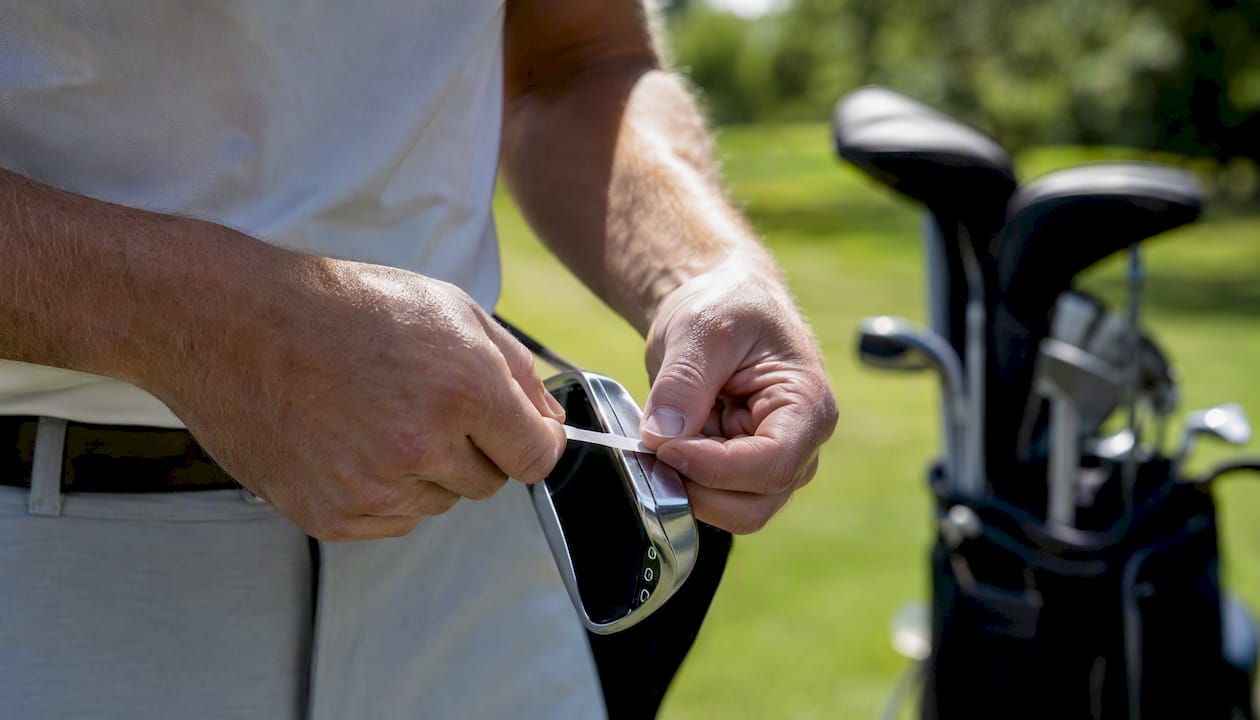
Start by exploring our shop golf shaft labels collection to keep your wedges organized and looking sharp. For a more personalized touch, our custom golf club labels let you mark your clubs exactly the way you want them. And if you’re serious about building real short game skill from the ground up, our golf lessons come with a money-back guarantee because we believe in what we teach. Your short game transformation starts here.

Frequently asked questions

What are the main types of golf wedges and when should I use each?

The four main types are pitching, gap, sand, and lob wedges, each designed for specific distances and shot situations. Your pitching wedge handles full approaches, while your lob wedge covers high, soft shots over hazards or tight pin placements.

How do I choose the right wedge for my playing style?

Focus on your skill level, the typical turf and sand conditions on your home course, and the specific shot situations you face most often. Matching bounce and grind to your course conditions is just as important as loft selection.

Does custom fitting really make a difference for golf wedges?

Yes, custom fitting can noticeably tighten your shot dispersion and improve consistency by matching loft, bounce, shaft flex, and lie angle to your actual swing. Even a basic loft and lie check can eliminate shots that fly offline for no apparent reason.

What practice drills can help me improve my wedge shots?

The clock drill, towel drill, and landing zone drill are three of the most effective for building distance control, clean contact, and precision. Consistent repetition of these drills over several weeks will produce real, measurable improvement.

Is wedge selection or technique more important for short game success?

Both matter, but technique and consistent practice will always outperform equipment alone. The right wedge makes a good technique better, but no club in the world fixes a skill that hasn’t been developed through deliberate practice.

Posted on

Etiqueta en golf: claves para jugar con respeto

Un golfista observa el recorrido con admiración y cuidado, mostrando respeto por cada detalle del campo.

Muchos golfistas piensan que la etiqueta es solo cuestión de buenos modales, de saludar al llegar y guardar silencio cuando alguien golpea. Pero eso es quedarse en la superficie. La etiqueta en el golf determina la seguridad en el campo, el ritmo de juego, la reputación personal y, en casos extremos, hasta el resultado oficial de una competencia. Si alguna vez has salido de una ronda sintiéndote frustrado por el comportamiento de otros jugadores, o si te han mirado raro en el campo sin entender por qué, este artículo es para ti. Vamos a ver exactamente qué es la etiqueta, cómo funciona en la práctica y qué diferencia hace en tu experiencia como golfista.

Tabla de contenidos

Puntos Clave

Punto Detalles
La etiqueta es esencial El comportamiento correcto marca la diferencia en la experiencia de todos en el campo.
Reglas y etiqueta conviven Las normas oficiales refuerzan la importancia de la cortesía y el respeto en el golf.
Mejora tu juego y ambiente Aplicar la etiqueta agiliza el juego y fortalece las relaciones entre jugadores.
Las sanciones son reales El incumplimiento puede llevar a advertencias, penalizaciones o descalificación.

¿Qué es realmente la etiqueta en golf?

Para comprender su importancia, primero definamos qué abarca la etiqueta.

La etiqueta en golf no es una lista de modales opcionales. Es el sistema de normas no escritas que sostiene todo el juego desde adentro. Piénsalo así: el golf es uno de los pocos deportes donde no hay árbitro siguiéndote a cada paso. Eres tú y tu conciencia. Eso cambia todo.

“La etiqueta en el golf es el conjunto de normas no escritas de conducta, respeto y cortesía que garantizan un juego justo, seguro y agradable para todos los jugadores, basado en la integridad personal y el ‘Espíritu del Juego’.”

Esta definición lo dice claro. No estamos hablando de ser “simpático” en el campo. Estamos hablando de integridad, respeto y juego justo como pilares reales del deporte.

La etiqueta abarca al menos tres grandes áreas que muchos jugadores mezclan o ignoran:

  • Seguridad: Avisar “¡fore!” cuando una bola puede alcanzar a otros jugadores, esperar turno antes de golpear, no lanzar palos bajo ningún concepto.
  • Ritmo de juego: Preparar el golpe mientras otros juegan, no demorar búsquedas de bola más de tres minutos, moverse con agilidad entre hoyos.
  • Cuidado del campo: Reparar los piques en el green, rastrillar los bunkers después de usarlos, no pisar la línea de putt de otro jugador.

Estos tres pilares no son independientes. Se refuerzan mutuamente. Un jugador que cuida el campo también tiende a respetar el tiempo de los demás. Un jugador que conoce las normas de seguridad suele tener mejor disposición hacia el grupo.

La etiqueta también influye directamente en tu imagen como jugador. Si quieres saber cómo se puntúa el golf y competir en serio, necesitas entender que la forma en que te comportas habla tanto como tu handicap. Los clubes recuerdan a los jugadores problemáticos. Los compañeros de ronda también.

Otro aspecto que poca gente asocia con la etiqueta es la vestimenta. Usar ropa adecuada en golf es parte del respeto hacia el campo y hacia los demás jugadores. No se trata de vanidad. Es señal de que entiendes el contexto en el que estás jugando.

El golf tiene una cultura que lo distingue de casi cualquier otro deporte. Y esa cultura se construye desde la etiqueta. Ignorarla no es solo un error de educación. Es no entender realmente el juego al que juegas.

La regulación oficial: de la Regla 1.2 a los casos de sanción

Definido el concepto, veamos cómo la etiqueta también está respaldada por la normativa.

Mucha gente cree que la etiqueta es “el lado blando” del golf, separado de las reglas oficiales. Error. La etiqueta tiene base legal dentro del reglamento, y sus consecuencias son absolutamente reales.

La Regla 1.2 del libro oficial de R&A y USGA establece los estándares de conducta del jugador. Esta regla exige integridad, consideración hacia otros y cuidado del campo. El Comité de la competencia tiene autoridad para actuar cuando un jugador viola estos estándares, y las sanciones van desde una amonestación formal hasta la descalificación directa.

Tipo de conducta Sanción posible
Distracción menor (móvil, conversación) Advertencia verbal
Retrasos repetidos en el juego Penalización de golpes
Daño intencional al campo Descalificación
Conducta violenta (romper palos, insultos) Descalificación inmediata

El caso más reciente y comentado es el de Sergio García en el Masters de Augusta 2026. García fue amonestado oficialmente por romper su driver contra el suelo en un acceso de ira durante la ronda. La imagen del palo destrozado recorrió todos los medios deportivos. Pero más allá del impacto mediático, el mensaje fue claro: ni el rango profesional ni la trayectoria te protegen cuando rompes con el espíritu del juego.

Este tipo de incidentes no son exclusivos del tour profesional. En campos de todo el mundo, jugadores amateurs son sancionados con más frecuencia de lo que se cree por conductas que van desde retrasos injustificados hasta disputas con otros jugadores o con el personal del club.

Para entender bien tus derechos y obligaciones en la cancha, consulta la guía de reglas oficiales y profundiza con la explicación de reglas de golf que tenemos disponible. Conocer las reglas es también parte de la etiqueta. No puedes respetar lo que no conoces.

Un punto que merece atención especial: la Regla 1.2 no solo sanciona conductas extremas. También aplica a comportamientos pasivos como no ceder el paso a un grupo más rápido, no marcar correctamente la bola en el green o ignorar avisos del marshal sobre el ritmo. La etiqueta y la regla funcionan como un sistema integrado, no como mundos separados.

Consecuencias de no respetar la etiqueta: impacto real en el juego

Ahora, exploremos qué ocurre cuando se ignora la etiqueta y cómo esto afecta a todos.

Seamos directos. Cuando un jugador ignora la etiqueta, el daño no es solo “un mal ambiente”. Hay consecuencias concretas y medibles para todos los que comparten el campo ese día.

El impacto más visible es el tiempo. Una ronda de 18 hoyos debería completarse en un rango de referencia de 4 horas 15 minutos a 4 horas 30 minutos. Cuando los grupos no respetan el ritmo de juego, ese tiempo se dispara. Y lo que empieza como cinco minutos de retraso en el hoyo 3 termina siendo un embotellamiento de media hora en el hoyo 14.

Un grupo de golfistas se dispone a comenzar su ronda

Los incumplimientos de etiqueta causan entre 20 y 30 por ciento de los retrasos típicos en una ronda. Ese número, aunque proviene de foros especializados y no de estudios formales, refleja la experiencia real de miles de jugadores. No es exagerado. Es lo que pasa cuando nadie prepara su golpe mientras el compañero juega, cuando se tarda diez minutos en buscar una bola o cuando hay que esperar porque alguien olvidó rastrillar el bunker.

Infografía: ¿Qué pasa si no respetas la etiqueta en el golf?

Aquí un resumen de los impactos más frecuentes según el tipo de infracción:

Conducta descuidada Consecuencia directa
No preparar el golpe con anticipación Rondas de 5 a 6 horas
No reparar piques en el green Superficies dañadas para todos
Móvil sonando durante el juego Distracción y golpes fallidos
No rastrillar bunkers Mala experiencia del grupo siguiente
Retrasos continuos sin ceder paso Conflictos y sanciones

Las consecuencias también son emocionales y sociales. Un grupo que juega con mala etiqueta genera tensión, frustración y discusiones. Eso contamina la experiencia para todos, incluso para los que se están comportando bien. El golf es un deporte mental. Un ambiente cargado de tensión arruina la concentración y, con ella, el rendimiento.

Las sanciones formales también entran en juego:

  • Advertencia verbal del marshal o del comité.
  • Penalización de uno o dos golpes según la situación.
  • Retirada de la tarjeta, equivalente a descalificación en muchos torneos amateurs.

Consejo profesional: Si ves que tu grupo está retrasando el juego, no esperes a que te lo digan. Invita al grupo siguiente a adelantarse. Ese gesto vale más que mil palabras y demuestra que entiendes el juego de verdad.

La buena noticia es que aplicar la etiqueta correctamente no requiere esfuerzo extra. Solo requiere conciencia. Y con conciencia, las rondas fluyen mejor, el ambiente mejora y todos terminan el día con ganas de volver.

Cómo aplicar correctamente la etiqueta en tu partida

Sabiendo el efecto que tiene la etiqueta, pasemos a consejos prácticos para convertirla en hábito.

Conocer las normas es un punto de partida. Aplicarlas en cada ronda es lo que realmente cuenta. Y aquí es donde muchos jugadores, incluso los que saben las reglas, fallan. La diferencia entre saber y hacer es la práctica consciente.

“Siempre preparar el golpe mientras otros juegan, lo que se conoce como ‘ready golf’, acelera las rondas considerablemente; saludar y disculparse cuando es necesario fomenta la camaradería y el respeto entre jugadores.”

Sigue estos pasos para integrar la etiqueta en tu juego desde la primera ronda:

  1. Aplica el “ready golf” desde el primer hoyo. No esperes a que sea “tu turno oficial” si ya estás listo y no interfiere con los demás. Este hábito solo puede reducir tu ronda entre 20 y 40 minutos.
  2. Saluda a tus compañeros de ronda antes de comenzar. Parece obvio, pero muchos lo saltan. Un saludo establece el tono correcto para toda la partida.
  3. Silencia tu móvil ANTES de llegar al campo. No durante el primer hoyo. Antes. Y mantenlo guardado salvo emergencias reales.
  4. Repara los piques del green cada vez, sin excepción. Lleva siempre una horquilla reparapiques. Si encuentras piques que otros no repararon, repáralos también. El campo es de todos.
  5. Rastrillar el bunker después de cada uso. No es opcional. Es una muestra básica de respeto hacia los jugadores que vienen detrás.
  6. Si rompes o dañas algo, acepta la responsabilidad. En 2026, las aclaraciones sobre palos dañados durante el juego establecen que si el daño es por mal uso o temperamento, no se permite reemplazar el palo durante la ronda. Conocer esta norma te evita situaciones incómodas y sanciones.
  7. Cede el paso cuando tu grupo va lento. Si el grupo detrás lleva varios hoyos esperando, invítales a pasar. No es derrota. Es buen juego.

Consejo profesional: El “ready golf” no significa jugar sin orden. Significa que si estás listo y los demás no, puedes actuar. Coordina esto con tu grupo al inicio y todos ganan tiempo y energía.

Para mejorar tu comportamiento en el campo de forma estructurada, las lecciones para mejorar conducta en golf son un recurso directo y práctico. Trabajar con un instructor no es solo para mejorar el swing. También es para construir los hábitos correctos desde el principio.

La etiqueta no es lo que haces cuando te observan. Es lo que haces cuando crees que nadie mira. Esa diferencia define al verdadero golfista.

La etiqueta en golf: el secreto del éxito silencioso

Hay algo que muy pocos artículos sobre etiqueta se atreven a decir en voz alta, y es esto: en el golf, tu comportamiento en el campo puede abrirte o cerrarte puertas mucho más que tu handicap.

He visto jugadores con un swing impresionante que no son bienvenidos de vuelta en ciertos clubes. Y he visto golfistas con un juego modesto que son invitados constantemente porque jugar con ellos es un placer. La etiqueta decide más de lo que imaginas.

En el golf sin árbitros, el respeto mutuo y el autocontrol son la base real del deporte. No hay nadie detrás de ti anotando tus gestos de frustración o tus demoras. Solo tú y lo que eliges hacer en cada momento. Eso es lo que hace al golf único, y también lo que lo hace exigente.

Los casos de sanciones a profesionales como García subrayan algo importante: si las consecuencias llegan incluso a ese nivel, imagina lo que una mala reputación puede hacer a un jugador amateur dentro de su comunidad local. La etiqueta no es un tema menor. Es el núcleo de cómo te perciben en este deporte.

Mi recomendación es esta: trata cada ronda como una oportunidad de demostrar quién eres más allá del score. Porque eso es exactamente lo que todos los demás van a recordar.

Lleva tu juego y tu etiqueta al siguiente nivel

¿Listo para diferenciarte? Descubre cómo seguir perfeccionando tu presencia en el campo.

Entender la etiqueta es el primer paso. El siguiente es rodearte de los recursos correctos para seguir mejorando, porque el conocimiento sin práctica no lleva muy lejos.

https://golf-blab.com

En Golf Blab encontrarás todo lo que necesitas para crecer como golfista de verdad. Desde la posibilidad de jugar con un profesional y aprender directamente en el campo, hasta una selección completa de accesorios para golfistas que reflejan tu nivel y compromiso con el juego. Y si quieres aprendizaje estructurado, el Learning Center de Golf Blab tiene lecciones, estrategias y guías diseñadas para jugadores que quieren mejorar de verdad, no solo dar vueltas al campo. La etiqueta y el juego van de la mano. Empieza hoy.

Preguntas frecuentes sobre etiqueta en golf

¿Qué ocurre si no respeto la etiqueta en el golf?

Puedes recibir advertencias, penalizaciones de golpes o incluso ser descalificado según la gravedad; además, los incumplimientos pueden llevar a sanciones por el Comité y dañar tu reputación dentro del club.

¿Qué diferencia hay entre etiqueta y reglas de golf?

La etiqueta son normas de conducta y cortesía no escritas que definen el espíritu del juego, mientras que las reglas establecen técnicamente cómo se juega. Ambas son esenciales y se complementan.

¿Cuáles son las faltas más comunes de etiqueta?

Las más habituales son hablar o moverse cuando otros golpean, no reponer piques en el green, y los retrasos repetidos que pueden causar penalización además de arruinar la experiencia del grupo.

¿Puedo recibir penalización si soy amateur?

Sí. El comité puede sancionar a cualquier jugador por faltas graves sin importar el nivel, porque el respeto y autocontrol aplican a todos, sean profesionales o amateurs.

Recomendación

Posted on

Top 3 Pinhighinc.com Alternatives 2026

Golfer comparing golf gear on tablet

Many websites promise an easy path to your goals but finding the best fit can feel tricky. New platforms pop up with fresh features each year and some unexpected options might surprise you. Whether you want better pricing or smoother support or even just a new look for your favorite tools there is always something new to discover. Curious about what stands out and what each option brings to the table Take a look and see which choices could make your experience even better.

Table of Contents

Golf Swing Automation by Golf Blab

Product Screenshot

At a Glance

Golf Swing Automation by Golf Blab is a leading online golf lesson that promises rapid swing improvement with a focused, repeatable routine. It pairs instruction with personalized gear and access to tour pros to deliver a complete training and style solution.

Core Features

The program centers on an online golf lesson that emphasizes automated swing mechanics designed to improve accuracy and consistency in minutes. The offering also includes personalized golf club labels, branded apparel, and opportunities to connect with professional players for targeted tips and inspiration.

Pros

  • Fast measurable drills: The course claims to transform your swing in four minutes using focused automation drills that you can repeat on the range or at home.
  • Personalized equipment options: Custom club labels and branded shirts and balls help you organize your bag and present a cohesive look on the course.
  • Direct access to pros: The platform highlights engagement with tour players which adds expert insight and credibility to the lessons offered.
  • Broad educational content: The site includes lessons on rules, strategy, and club selection so you develop both technique and course intelligence.
  • Merchandise integrated with training: Buying performance gear and apparel from the same source makes it easier to adopt a consistent practice routine and personal brand.

Who It’s For

This product fits golfers who want quick, practical improvements without a long technical deep dive. You are a weekend player or aspiring amateur who values time efficient drills, personalized gear, and occasional guidance from tour level players to sharpen results.

Unique Value Proposition

Golf Swing Automation stands out because it combines three elements that most competitors separate. First, a time efficient instructional method focused on automated swing mechanics designed for immediate consistency. Second, an integrated e-commerce layer offering personalized club labels and branded apparel so your practice extends into equipment identity and style. Third, a marketing driven approach that connects learners with professional players for credibility and motivation. Together these features create a unified path from learning to equipment adoption to on course confidence. Smart buyers choose this option because it reduces friction between coaching and real world practice, saves time, and supports a personal brand on the course.

Real World Use Case

A golfer struggling with erratic ball striking uses the four minute automation routine before range sessions to lock in a reliable motion. They add personalized club labels for faster club selection during practice and wear branded apparel to feel more confident. They then review a tip from a tour pro and see consistent shot dispersion improve over several practice sessions.

Pricing

Pricing is not specified on the website. You will need to visit the product page for current offers, lesson bundles, and merchandise pricing.

Website: https://golf-blab.com

MG Golf

Product Screenshot

At a Glance

MG Golf sells a broad selection of golf gloves, apparel, balls, and accessories at competitive prices while offering a user friendly shopping experience. Their mix of competitive pricing and a customer satisfaction guarantee makes the site attractive for budget conscious golfers.

Core Features

MG Golf features a wide range of golf products that include gloves, apparel, accessories, golf balls, and customizable products for personalization. The site highlights clearance sales, customer reviews, and free shipping on orders $75 or more which lowers the total cost for typical equipment purchases.

Pros

  • Affordable prices and discounts: The store lists low entry price points and clearance deals that make upgrades affordable for amateur players.
  • Comprehensive product selection: You can find gloves, balls, apparel, and customizable options all in one place which saves time versus shopping multiple vendors.
  • Customer satisfaction guarantees: Positive reviews and satisfaction promises reduce purchase risk when you try a new glove or ball model.
  • Free shipping threshold: Free shipping on orders over $75 removes a common barrier for larger orders or multiple-item purchases.
  • Customizable products available: Personalized gear helps golfers build a consistent look and makes strong gift options for fellow players.

Cons

  • Limited detailed product specifications appear on the website which can make club or accessory comparisons harder before purchase.
  • Some items require preorder which may delay delivery and inconvenience buyers who need gear quickly for upcoming rounds.
  • The site does not mention live chat support which reduces the immediacy of help for order questions or sizing concerns.

Who It’s For

MG Golf serves golf players and enthusiasts who want good value for quality gear and who prefer shopping a single, focused store. The site fits players upgrading equipment, buyers hunting sales, and shoppers who want personalized accessories without hunting multiple sites.

Unique Value Proposition

MG Golf combines broad product variety with budget friendly pricing and a clear free shipping threshold which simplifies buying multiple items. The added focus on customer reviews and satisfaction guarantees gives reassurance when trying lesser known or customizable products.

Real World Use Case

A weekend player orders a DynaGrip Elite glove, a sleeve of MG Senior Ball golf balls, and a laser rangefinder together. The combined order reaches the free shipping threshold, saves on delivery cost, and arrives with customizable initials on the glove for easy identification.

Pricing

Prices vary by product with budget items starting at $2.99 and premium items listed up to $114.95. Clearance sales and discounts change the effective price, and free shipping activates for orders of $75 or more.

Website: https://mggolf.com

Club Valet® Golf Club Labels

Product Screenshot

At a Glance

Club Valet® Golf Club Labels are personalized, waterproof labels built to stay on through rain, sun, and heavy handling. They focus on durability and clear contact identification so your clubs stay identifiable and protected on the course.

Core Features

The product uses durable materials and a custom print method to deliver long lasting, weather resistant labels. Labels are designed to wrap down the shaft for improved readability and resilience. Application is simple: align with the grip bottom and shaft length for a secure fit.

Pros

  • Highly durable and waterproof. The materials resist rain and sun so labels remain legible after many rounds and frequent exposure to outdoor conditions.

  • Customizable with contact details. You can add phone numbers or other info which helps recover lost clubs and keeps a sleek appearance on the shaft.

  • Simple application process. Aligning with the grip bottom and shaft length makes installation repeatable and reduces peeling in play.

  • Resistant to fading and solvents. The print and material withstand light exposure and common cleaners so the label stays readable longer.

  • Long lasting labels. The construction aims for durability that may outlast the clubs they are attached to, reducing replacement frequency.

Cons

  • Removal can be difficult. Getting labels off may require nail polish remover or alcohol based products which adds time and potential residue.

  • Designed for long term use only. Because labels are intended to stay on, you will lose flexibility for frequent reapplication or switching identification often.

  • Pricing is not listed online. The website does not provide explicit pricing which means you need to contact the vendor or order directly to learn costs.

Who It’s For

Golfers who want reliable, low maintenance identification for clubs and gear will benefit most. If you play often, travel with clubs, or manage gear for a small group, these labels reduce theft and loss while keeping a clean, professional look.

Unique Value Proposition

Club Valet® focuses on a simple promise: durable, customizable labels that survive outdoor play and remain clearly readable. The wrap down shaft design and weather resistant print set it apart from flat stickers that peel under play.

Real World Use Case

A weekend player applies labels to a mixed set and heads to a rainy course. After several rounds the labels show no fading. When a bag is misplaced at a club event the visible contact details speed recovery and avoid replacement costs.

Pricing

Pricing details are not explicitly provided on the webpage. Interested customers are encouraged to order directly through the website to get current pricing and customization options.

Website: https://golf-label.com

Golf Tool Comparison

This table summarizes the key features, advantages, disadvantages, and intended audiences of all showcased golf tools to facilitate a clear comparison.

Product Key Features Pros Cons Target User
Golf Swing Automation Online lesson with automated drills, branded apparel, and tour pro access Quick drills, personalized gear with expert insights Pricing not specified For golfers seeking measurable swing improvement
MG Golf Wide selection at competitive prices, customizable options available Affordable pricing, satisfaction guarantee, free shipping over $75 Limited specifications, preorder delays For value-conscious golfers needing varied gear
Club Valet® Golf Club Labels Durable waterproof labels, custom design with contact information Weather resistant, identifies lost clubs easily Requires effort to remove, pricing not listed For golfers requiring long-lasting club organization

Elevate Your Game Beyond Pinhighinc.com Alternatives

If you are searching for the best way to improve your golf swing and enhance your on-course confidence then Golf Blab offers a unique solution that goes beyond typical platforms like those listed in the article. The challenge many players face is finding time efficient lessons combined with personalized gear and expert insights all in one place. Golf Blab answers this with focused online golf lessons that simplify swing mechanics and help you achieve immediate consistency.

https://golf-blab.com

Discover how you can benefit from golf instruction alongside personalized club labels, performance golf balls, and branded apparel that build your personal style. Plus get direct access to tour pros for motivation and tips. Don’t wait to transform your golf experience. Visit Golf Blab today and start your journey to smarter practice and sharper play.

Frequently Asked Questions

What are the top alternatives to Pinhighinc.com in 2026?

The top alternatives to Pinhighinc.com include options that offer similar features and user experiences. Explore each alternative’s functionalities to determine which one best suits your needs.

How can I determine which Pinhighinc.com alternative is best for my golf game?

To determine the best alternative, evaluate each option’s specific features, user reviews, and pricing plans. Assess how well they match your requirements for improving your golf game or managing equipment.

Are there any free options available among the Pinhighinc.com alternatives?

Yes, some alternatives may offer free trials or free versions. Check each alternative’s website for detailed information about their pricing models and features available at no cost.

How do I compare the features of different Pinhighinc.com alternatives?

You can compare features by creating a list that includes key aspects like functionality, ease of use, and customer support. Rank these features based on your personal priorities to make a well-informed decision.

Can I find user reviews for the suggested alternatives to Pinhighinc.com?

Yes, user reviews can often be found on each alternative’s website or on platforms that aggregate user feedback. Reading these reviews will give you insights into the experiences of other users and help guide your choice.

What should I consider when switching from Pinhighinc.com to a new platform?

When switching, consider the ease of migration, the learning curve of the new tool, and whether it meets your specific golfing needs. Plan your transition carefully to minimize downtime and ensure a smooth integration.