Posted on

LPGA Practice Routines for Golfers Who Want Real Transfer

Golfer mid-swing at practice range

An LPGA-style practice routine is a five-phase, time-blocked session, warmup, short game, technical work, performance transfer, and a speed finish, structured so what you groove on the range actually shows up on the scorecard. The LPGA Learning Center’s video demos and GolfDigest’s tour pro checklist both point to the same architecture, and PracticeCaddie’s practice-plan framework backs it with the same time-blocked logic. You can run the whole thing in an hour.

Here’s the 60-minute skeleton to copy today:

  1. Warmup (10 minutes): short putts and wedge feel shots to loosen up.
  2. Pitching and wedges (10 minutes): 5 to 10 balls, dialing in distance control.
  3. Technical work (15 to 18 minutes): one swing thought, drills, alignment checks.
  4. Performance transfer (15 minutes): target games, random clubs, on-course simulation.
  5. Speed ramp-up (5 to 10 minutes): 5 to 10 driver swings at full speed to finish sharp.
  • Putt first, hit last with the driver, and never skip the transfer phase.

Key Takeaways

LPGA-style practice works because it sequences warmup, technical work, and performance transfer in a fixed order, then tracks results with a log.

Point Details
Follow the five-phase order Warmup, wedges, technical work, transfer, and a speed finish, always in that sequence.
Budget technical time carefully Cap technical drilling around 30% of session length, then shift to random practice.
Prioritize short game Shots inside 100 yards drive roughly 60% of amateur scoring, so weight practice there.
Log every session Record makes, misses, and one note per drill to build a real improvement roadmap.
Personalize your setup with Golf Blab Custom Golf Club Labels and Play Golf with a Tour Pro sessions support faster feedback and better-organized practice.

Table of Contents

Why LPGA Practice Routines Actually Produce Results

Pros separate two kinds of work, and mixing them up is the single biggest reason amateur practice stalls out. Blocked practice, hitting the same shot repeatedly, builds the motor pattern. Random practice, changing clubs, targets, and lies rep to rep, is what translates that pattern into course-ready skill, because it forces your brain to solve a new problem every swing instead of grooving autopilot.

Feedback closes the loop. Data on rep quality shows that 30 tracked, purposeful reps can outperform 200 aimless ones, because logging outcomes tells you what actually needs work.

  • Blocked practice: use it early in a session to fix mechanics.
  • Random practice: use it late to test whether the fix holds under variation.
  • Feedback and logging: the difference between practicing and just hitting balls.

The Five-Phase Practice Architecture Pros Swear By

Every serious range session pros run follows the same five-phase order, and the sequence matters as much as the drills themselves.

  1. Literal warmup. Loosen up with putts and half-wedges. No swing thoughts yet.
  2. Pitching and wedges. Hit 5 to 10 balls to sharpen distance control before anything technical.
  3. Technical, or “brush teeth,” work. One focused swing change, repeated deliberately.
  4. Performance and transfer. Simulate real holes, random clubs, and specific yardages.
  5. Speed ramp-up. Close with 5 to 10 full-speed driver swings.

For a 60-minute session, budget roughly 30% of your time on technical work, around 18 minutes, with the rest split across the other four phases. Shrink to 30 minutes by trimming technical work to 8 to 10 minutes and cutting the transfer phase to a single game. Stretch to 90 minutes by adding a second technical block and a longer transfer session with scorecard tracking.

Pro Tip: If you’re still hitting the same “fix” shot after 15 straight balls with no change, you’ve overloaded the technical phase. Switch to random practice immediately, the extra reps are reinforcing a habit, not building one.

Diagram of five-phase LPGA practice routine

What Does a Tour-Style Pre-Round Warmup Look Like?

A tour player’s pre-round routine is a countdown, not a free-for-all, and it starts well before the first tee shot.

  1. Arrive 60 to 90 minutes early.
  2. Putting (15 to 20 minutes): start with short putts, build to lag putts for speed.
  3. Short game (15 minutes): chips and pitches from varied lies.
  4. Full swing on the range (20 to 25 minutes): work from wedges up to driver.
  5. Final putting (5 to 10 minutes): a few pressure putts to settle nerves before you tee off.

Not every day allows the full version. A 20-minute quick warmup keeps putting and short game, then trims range time to a handful of swings per club. The full 60-minute version, closer to what Golf describes, adds mental rehearsal between blocks.

  • Use a putting mirror or alignment rod during the putting block to catch setup faults early.
  • Run one visualization pass of your opening hole before you leave the range.

How Do LPGA Pros Build a Pre-Shot Routine?

Every consistent pre-shot routine splits into two boxes. The Think Box is where you read the shot, pick a target, and choose a club, pure analysis. The Play Box is execution only, no more thinking allowed. What connects them is a physical trigger, a specific move that tells your brain to stop planning and start swinging, and Alexa Pano’s routine, shaped by Annika Sorenstam, is a clear example of this exact structure.

Here’s a checklist to rehearse on the range:

  1. Stand behind the ball and read the shot (Think Box).
  2. Pick your target and club.
  3. Walk into the shot and set your feet.
  4. Perform your trigger, a club-to-ground touch or a set waggle.
  5. Swing without further analysis (Play Box).
  • Common triggers: one waggle, a forward press, or a single deep breath.
  • Drill: rehearse the trigger 20 times on the range without hitting a ball, just to groove the transition.

Sample Practice Plans You Can Run This Week

A 60-minute plan built on the same logic as a tour pro’s competition-week routine looks like this:

  1. Putting (15 minutes): lag putts, then 10 in a row from 3 feet as your success marker.
  2. Short game (20 minutes): chips from three lies, success is 7 of 10 inside a 4-foot circle.
  3. Long game (20 minutes): iron and driver work, alternating targets each swing.
  4. Rhythm check (5 minutes): slow, smooth half-swings to reset tempo before you leave.

A one-week sample spreads the load instead of cramming it: Monday short game only, Wednesday full-swing technical work, Friday a mixed 60-minute session, Saturday or Sunday a pre-round warmup before you play. That rhythm protects recovery while still hitting each skill weekly.

Before you tee off, run a compact checklist: putting stroke feels good, one swing thought only, trigger rehearsed. In your log, note the date, drill, makes versus misses, and one sentence on what changed. That single line is often the most useful thing you write all week.

Which Drills Do LPGA Pros Use by Area?

Short game deserves the largest share of your practice time. Shots from inside 100 yards account for roughly 60% of strokes for most amateur golfers, so drills there pay off faster than anywhere else on the range.

  • Putting: Gate drill (tee gates just wider than the putter head) for stroke path, and a 10-in-a-row pressure drill from 3 feet for nerve control under pressure.
  • Chipping and short game: Three-lie ladder (fairway, light rough, tight lie), landing-zone targets to build feel for carry distance, tied closely to short game strategy work.
  • Wedges: Clock drill using 9, 8, and 7 o’clock swing lengths to dial in specific yardages instead of guessing.
  • Irons: Alignment-rod drill for swing path, paired with a target-changing drill every rep to build transfer.
  • Driver: Tee-height consistency drill, plus a fairway-percentage game using two targets instead of one.

Pro Tip: Set a numeric success criterion for every drill before you start, like 7 of 10 makes, so you know exactly when to move on instead of hitting balls until you get bored.

How Should You Track Progress and Avoid Common Mistakes?

Log four things every session: date, drill, makes versus misses, and one short note. That habit alone prevents drift and gives you a real roadmap for next time, rather than a vague sense that you “hit a bunch of balls.”

The most common mistakes: no success criteria per drill, too many unfocused reps with the same club, and skipping short game because full swing feels more satisfying. If a fault won’t resolve after two or three sessions of focused technical work, it’s worth a video check-in or a session with an instructor rather than more solo reps.

A Short Note on Starting Small

Start with just the 60-minute plan, once a week, before you try to build a full seven-day schedule. Track three sessions in a simple log and you’ll already see which drills are worth repeating. Progress in golf rewards patience more than intensity, and consistency beats any single great range day.

Where Golf Blab Fits Into Your Practice Routine

Building a routine this structured means your gear should keep pace with your effort. Custom Golf Club Labels from Golf Blab let you mark yardages, swing thoughts, or trigger reminders right on the shaft, small details that matter when you’re running a five-phase session and need instant club identification between drills. Round out your practice bag with the Golf Blab Under Armor Golf Hat or a Golf Blab Adidas Sport Polo and Adidas Space Dyed Polo for warm-weather range sessions, and consider Innovate Tour Performance Golf Balls for consistent feedback on greenside spin during your short game blocks.

If you want the feedback loop this article keeps returning to, direct, immediate, expert, nothing accelerates it faster than Play Golf with a Tour Pro, a hands-on session where a professional watches your routine and corrects it in real time. Golf Blab also offers E-Gift Cards if you’re outfitting a practice partner. Start by picking one drill from this guide and one product to support it, then book your session.

Innovate Tour Performance Golf Balls

Frequently Asked Questions

How long should an LPGA-style practice session last?
Sixty minutes covers the full five-phase architecture comfortably. Thirty minutes works if you compress technical time and skip the second transfer game.

Do I need a coach to run these lpga practice routines correctly?
No, you can start solo using the checklists in this guide. A coach becomes useful once a specific fault won’t resolve after two or three focused sessions.

What’s the biggest mistake amateurs make in practice?
Skipping success criteria. Hitting balls without a defined make/miss target turns practice into repetition instead of improvement.

How often should I run a full pre-round warmup?
Every time you play a round that matters to you, tournament or casual. A 20-minute compressed version still beats skipping the warmup entirely.

Sources

Posted on

Care for Golf Polos: Wash, Dry, and Protect Their Fit

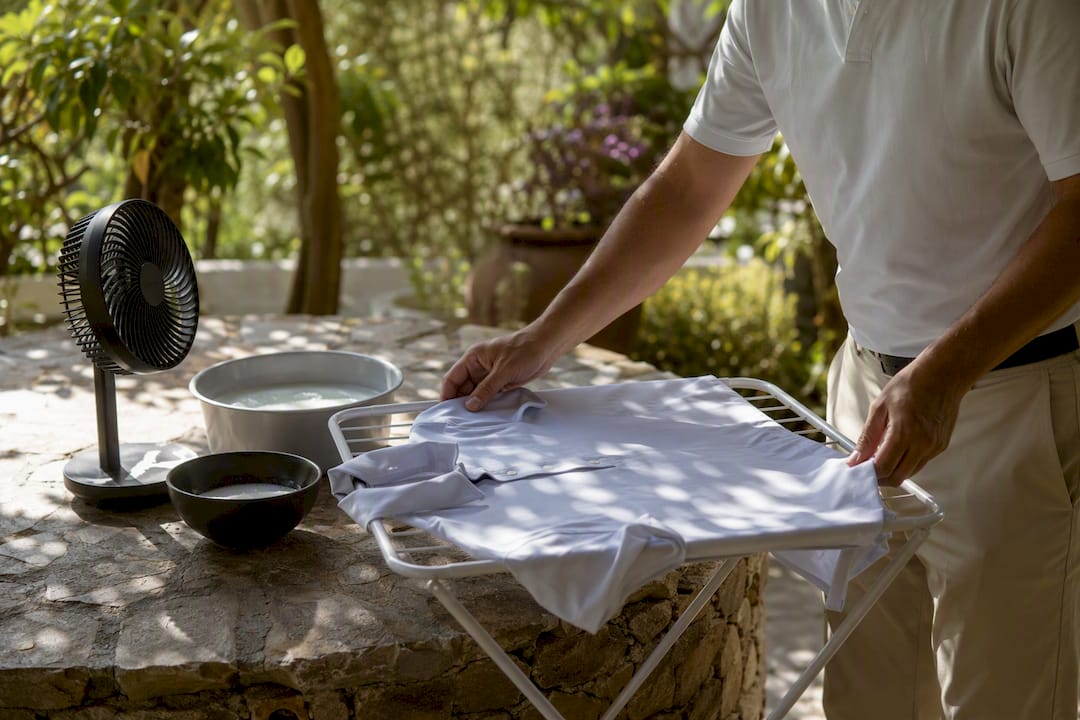
Laying golf polo flat to dry with box fan

Wash your golf polos in cold water on a gentle cycle, use a mild detergent, skip the fabric softener, turn them inside out, and let them air-dry or tumble on the lowest heat setting. That single routine protects moisture-wicking finishes, keeps embroidered logos crisp, and prevents the shrinkage that turns a favorite polo into a donation-pile candidate. Every other rule in this guide branches off that one. They recommend washing cold, on a gentle cycle with mild detergent; avoiding bleach, fabric softener, and dryer sheets; turning shirts inside out (using a mesh bag for embroidered polos); and air-drying when possible or tumbling on low heat and removing early.

Pro Tip: Run embroidered polos on the shortest gentle cycle your machine offers, inside a mesh laundry bag. The bag cuts friction against zippers and hooks, which is usually what frays stitched logos before the fabric itself wears out.

Modern performance fabric doesn’t need the aggressive cleaning old-school cotton used to demand. Treat it gently, and it pays you back in wash cycles.

Key Takeaways

Cold water, mild detergent, no softener, and air-drying preserve a golf polo’s fit, color, and moisture-wicking performance for far longer than standard laundry habits allow.

Point Details
Wash cold and gentle Cold water on a gentle cycle protects dye, stretch, and wicking finishes.
Skip softener and bleach Both coat or degrade synthetic fibers and reduce moisture-wicking permanently.
Air-dry when possible Heat causes shrinkage, pilling, and embroidery puckering; hang-dry avoids all three.
Wash performance polos less often 3 to 5 wears between washes reduces fiber stress and microfiber shedding.
Golf Blab pairs care with quality apparel Its performance polos and club labels are built to hold up through this exact routine.

Where to Read More on Apparel Care

Table of Contents

Care for Golf Polos: How Often Should You Wash Them?

Performance polos and heavy cotton blends age differently, so they don’t belong on the same wash schedule. A moisture-wicking polo built from polyester or a poly-spandex blend can usually go several wears between washes if you’re not visibly sweating through it or playing in humidity. Cotton and cotton-blend polos hold odor and oil closer to the surface, so they typically need a wash after every one or two wears.

  • Performance/synthetic polos: 3 to 5 wears, or sooner if visibly soiled
  • Cotton and cotton-blend polos: after 1 to 2 wears
  • Any polo with sunscreen, deodorant, or grass contact: wash immediately

Washing less often isn’t laziness. It’s fabric science. Every wash cycle mechanically stresses the wicking treatment applied to synthetic fibers, and a University of Leeds and Procter & Gamble study found that shorter, cooler cycles cut microfiber shedding by roughly half compared to standard cycles. Fewer, gentler washes mean the fabric’s performance coating lasts longer, and less plastic fiber ends up down the drain.

How to Wash Golf Shirts the Right Way

Getting the wash step right is the single biggest factor in how long a polo keeps its shape, color, and stretch. Here’s the machine-wash sequence that protects both fabric and embroidery.

  1. Check the care label first. Manufacturer instructions override any general rule here.
  2. Button any placket buttons and turn the polo inside out to protect the outer face from friction.
  3. Slide embroidered or logo-heavy polos into a mesh laundry bag.
  4. Wash in cold water on a gentle or delicate cycle, keeping the load small enough that garments move freely.
  5. Use a mild liquid detergent, measured to the “light load” line, not a full scoop.
  6. Skip the extra rinse and spin settings unless your machine defaults to them; performance fabric doesn’t need aggressive extraction.

Hand-washing is worth the extra five minutes for a polo with delicate embroidery, a tour-logo patch, or a fabric blend you’re not sure about. Fill a sink or basin with cold water, add a small amount of mild detergent, and submerge the shirt. Agitate gently for about two minutes, focusing water flow rather than scrubbing, then let it soak for 10 to 15 minutes. Rinse under cool running water until the water runs clear, pressing (never wringing) excess water out.

A few non-negotiables apply to both methods, echoed consistently in manufacturer care guidance for performance polos:

  • No bleach, ever, even the “color-safe” kind on synthetic blends
  • No fabric softener
  • Avoid 2-in-1 detergent-softener combos; check the label before buying one

Pro Tip: A sport-specific detergent, or even just a smaller-than-normal dose of regular liquid detergent, cleans performance fabric more effectively than a full measure. Excess detergent doesn’t rinse fully out of technical weaves, and the residue is what starts dulling wicking performance after a season of washes.

Removing Sweat, Sunscreen, and Grass Stains

Golf stains respond well to fast action and cold water, and poorly to heat or force. Treat each type this way before it goes anywhere near the wash:

  1. Sweat and deodorant marks: Rinse the area with cold water, then work a small amount of liquid detergent directly into the fabric with your fingers. Let it sit five minutes before washing.
  2. Sunscreen (oil-based): Blot, don’t rub, then apply a dab of dish soap to break down the oil before laundering as usual. Dish soap is built for grease and works on synthetic fibers without the harshness of a solvent stain stick.
  3. Grass stains: Apply an enzyme-based stain remover directly to the mark and let it sit 10 to 15 minutes. Enzymes break down the plant proteins causing the stain, which is gentler on synthetic fibers than harsh chemical treatments.
  4. Food or drink spills: Cold rinse from the back of the fabric to push the stain out, then treat as above based on whether it’s oil or protein based.

Avoid these common instincts, all of which make stains worse on modern fabric:

  • Hot water, which sets protein-based stains like sweat and grass permanently
  • Bleach on any colored or performance polo
  • Vigorous scrubbing, which pushes stains deeper into the weave
  • Drying a stained shirt before it’s fully treated; heat locks the stain in for good

Pro Tip: If a stain is still visible after one wash, retreat it before drying again rather than running it through the dryer “to see.” Once heat sets a stain, most enzyme treatments lose their effectiveness entirely.

Best Way to Dry Polos Without Shrinking or Warping Them

Air-drying is the safest default for any performance or embroidered polo, full stop. Lay the shirt flat on a drying rack or hang it on a plastic hanger out of direct sunlight, and it will typically be dry within a few hours depending on humidity.

If you need the dryer, keep these limits:

  • Lowest heat setting only, ideally a “delicate” or “air fluff” cycle
  • Short cycle time, and pull the shirt out slightly damp rather than bone dry
  • Dryer balls instead of dryer sheets, since sheets coat fibers the same way fabric softener does
  • Remove promptly to avoid extended heat exposure sitting in a warm drum

High heat is the fastest way to undo everything a careful wash accomplished. Dryer heat causes embroidery backing and thread to shrink at a different rate than the polyester blend around it, which is exactly what produces that rippled, puckered look around a logo. The same heat also drives shrinkage and pilling in the body fabric.

Pro Tip: Point a box fan at flat-laid polos instead of reaching for the dryer. You’ll get comparable dry times to low heat with zero risk to embroidery or fit.

Ironing, Steaming, and Embroidery-Safe Pressing

Wrinkles happen, but an iron set too hot will do more damage to a golf polo than a season of wear. Set the iron to its lowest synthetic or “polyester” setting, and always press through a thin cloth rather than direct contact with the fabric. Test on the inside hem first if you’re unsure how the fabric will react.

Steaming is the better option for anything with an embroidered crest or logo, since it removes wrinkles without direct heat contact against stitching. Hold the steamer a few inches away and let the vapor do the work rather than pressing the nozzle into the fabric.

  • Turn embroidered polos inside out before ironing to shield the stitching
  • Use a mesh bag in the wash and hang-dry rather than tumble-dry to avoid needing heavy ironing at all
  • Skip high heat entirely on any logo or patch area

Pro Tip: Hang a slightly damp polo on a sturdy hanger and let gravity pull out most wrinkles as it finishes drying. It’s slower than an iron, but it’s the closest thing to a zero-risk pressing method for logo-heavy shirts.

Choosing the Right Detergent, and What to Avoid

Not every detergent on the shelf belongs anywhere near a performance polo. A mild liquid detergent, or one formulated specifically for sport and technical fabrics, cleans oils and odor without leaving the kind of residue that powder detergents and heavy-duty “2-in-1” formulas tend to deposit on technical weaves.

  • Use: mild liquid detergent or a specialty sport detergent
  • Avoid: powder detergents (they dissolve less completely in cold water)
  • Avoid entirely: fabric softener and dryer sheets, and any 2-in-1 detergent-softener blend

Fabric softener and dryer sheets are the single most common care mistake golfers make, largely because the instinct to keep clothes “soft” is so ingrained from cotton laundry habits. On technical fabric, softener coats the microscopic channels that pull sweat away from your skin, and that coating doesn’t wash back out. Once it builds up, no amount of careful washing afterward restores full wicking performance.

Oxygen-based stain removers (the powder or liquid oxygen-bleach alternatives) are safe for occasional use on tough stains and won’t strip color the way chlorine bleach does. Chlorine bleach has essentially no place in a performance-polo routine; it breaks down synthetic fibers over time and yellows white or light-colored shirts faster than sun exposure ever would.

Storing Polos to Prevent Pilling and Collar Damage

How you store a polo between rounds matters almost as much as how you wash it. Hanging preserves collar shape and shoulder structure better than folding, particularly for polos with any structured collar or placket. Use sturdy plastic or wooden hangers rather than wire, which stretches shoulder seams over a season of storage.

  • Hang in a closet with airflow, away from direct sunlight and sealed plastic bags that trap moisture
  • Shave pills carefully with a fabric shaver rather than picking at them, which can pull threads
  • Use padded hangers for heavier cotton-blend polos to prevent shoulder bumps

Pro Tip: Before storing polos for the off-season, confirm every shirt is fully clean and completely dry, then store them in breathable garment bags rather than sealed plastic. Trapped moisture in plastic storage is a common cause of musty odor and mildew spotting that shows up months later.

Quick Fixes for Stains Mid-Round

You don’t need to wait until the 19th hole to deal with a fresh mark. A cold water rinse and gentle blot handles most fresh sweat or drink spills on the spot, and a tiny dab of dish soap worked into sunscreen streaks with a light touch (never a hard rub) keeps oil from setting before you get home.

  • Blot, don’t rub, on any fresh stain
  • Carry a small travel-size stain pen or dish soap packet in your bag
  • Hang the shirt in fresh air at the turn if odor is the main concern

Pro Tip: A safety pin works as a genuine emergency fix for a popped placket button or a stretched seam mid-round. Just launder the shirt normally as soon as you’re home, following the routine above rather than skipping ahead a wash cycle.

The Golf Blab Routine for Longer-Lasting Polos

Golf Blab recommends a simple sequence for every performance and embroidered polo in your bag, built around the same principle every serious apparel-care guide converges on: less heat, less friction, less residue.

  1. Turn the polo inside out and secure it in a mesh bag if it carries embroidery
  2. Wash cold on a gentle cycle with a mild or sport-specific detergent, no softener
  3. Air-dry flat or on a hanger; use the dryer’s lowest setting only if you’re short on time
  4. Steam or low-heat iron through a cloth if wrinkles remain

The environmental case backs up the fabric case. The same Leeds and Procter & Gamble research that found cooler washes reduce microfiber shedding also points to lower energy use per load, since heating water is the most energy-intensive part of a wash cycle. Cold, short washes protect your polo and use less power doing it.

The best care routine is the one that asks less of the fabric, not more. Cold water and patience outperform hot water and force almost every time.

Golf Blab builds this thinking into its own performance apparel line, and readers looking to pair a durable polo with instruction that actually improves their swing can explore Play Golf with a Tour Pro for hands-on coaching alongside the gear.

A Practical Note From Michael Marini

Follow the cold-wash, air-dry routine above and your polos will outlast their fit before they wear out. It’s the small, consistent choices that protect performance fabric over a full season.

A Practical Note From Michael Marini — overview diagram

Shop Polos Built to Handle This Routine

Golf Blab Adidas Sport Polo

The washing and drying steps above work best when you start with a polo engineered for them. Golf Blab’s Adidas Sport Polo and Adidas Space-Dyed Polo use moisture-wicking construction designed to hold up through repeated cold washes and air-drying, so the routine in this guide keeps them performing round after round instead of fighting against a fabric that wasn’t built for gentle care in the first place. Pair either shirt with a set of custom golf club labels to round out a bag that looks as sharp as a freshly cared-for polo, or browse the full performance apparel shop to see what else fits your rotation. If you’re building a complete kit for the season, the Under Armour golf hat rounds it out well. Start with one polo, run it through the cold-wash routine for a full season, and see the difference for yourself.

Sources

Posted on

Types of Golf Tournament Formats: Which One to Run

Golfers playing golf tournament on fairway

Nine formats cover almost every event you’ll ever organize or play: Stroke Play for pure skill, Match Play for head-to-head drama, Scramble for charity and corporate crowds, Best Ball/Four-Ball for partner competitions, Stableford for pace and forgiveness, Alternate Shot/Foursomes for elite team pairings, and hybrid or novelty games like Shamble, Chapman, Skins, and Bingo-Bango-Bongo for texture and fun.

  • Stroke Play: choose it for club championships and serious individual competition.
  • Match Play: choose it for knockout brackets and dramatic one-on-one events.
  • Scramble: choose it for charity days and mixed-skill corporate outings.
  • Best Ball/Four-Ball: choose it for member-guest and partner tournaments.
  • Stableford: choose it for weekly club play and faster pace.
  • Foursomes: choose it for Ryder Cup-style team sessions.
  • Shamble/Chapman: choose them for social events wanting a hybrid feel.
  • Skins/Bingo-Bango-Bongo: choose them as side games layered onto any main format.

Every one of these traces back to the Rules of Golf’s Rule 3, which the R&A defines as the foundation for how competitions are structured, while the USGA provides committee-level guidance for running stroke-play events specifically.

Key Takeaways

The right golf tournament format depends on your group’s skill spread, your event’s goal, and how much time you have on the course.

Point Details
Stroke play tests skill Best for club championships and serious individual competition with gross and net divisions.
Scramble maximizes fun Four-player teams, best-ball selection, and reduced pressure make it ideal for charity and corporate days.
Stableford speeds pace Points-based scoring under Rule 21.1 lets players pick up on bad holes without stalling the field.
Match play builds drama Hole-by-hole scoring like “4 & 3” suits brackets and head-to-head team events.
Personalize team gear Golf Blab’s custom club labels help organizers prevent equipment mix-ups during fast-paced team formats.

Table of Contents

Golf Tournament Format Comparison at a Glance

Picking a format comes down to four variables: how competitive your group wants to feel, how many players you’re managing, how much time you have on the course, and how comfortable your field is with scoring math.

Format Best For Team Size Pace/Duration Scoring Complexity Competitive vs Social
Stroke Play Club championships Individual 4 hours or more Simple Competitive
Match Play Knockout brackets Individual/pairs Variable, often shorter Simple Competitive
Scramble Charity/corporate days 4 players 4 hours Simple Social
Best Ball/Four-Ball Member-guest events 2 players 4 hours Moderate Both
Stableford Weekly club play Individual Faster than stroke play Moderate Social
Foursomes Team representative matches 2 players Fastest team format Moderate Competitive

Comparison chart of golf tournament formats

A scramble typically finishes faster than a stroke-play field of the same size, since only one ball advances per team. Stableford speeds pace within individual formats because players can pick up once a hole is out of reach, helping keep the field moving. If your event goal is fundraising, a scramble is often preferred. If it’s crowning a true champion, stroke play or match play should anchor your day.

Stroke Play: The Standard for Serious Competition

Stroke play counts every stroke across all 18 holes, and the lowest total wins. It’s the format golf uses to measure skill, and it comes in two flavors organizers must state clearly: gross (the raw number on the card) and net (gross score minus the player’s course handicap).

Say a player shoots 88 gross with a 14 handicap. Their net score is 74. Someone shooting 82 gross with a 4 handicap posts a net 78. The higher-scoring gross player wins the net competition. Gross leaderboards reward the best ball-strikers; net leaderboards let a wider range of skill levels compete fairly, which is why most club events run both simultaneously.

Stroke play suits club championships, qualifying rounds, and any event where you want an unambiguous, single champion. Large fields handle it well because everyone plays independently. The USGA’s stroke-play resources outline committee procedures for exactly this kind of event.

  • Gross division rewards raw scoring ability.
  • Net division levels the field using handicaps.
  • State your handicap allowance (100% or a reduced percentage) in writing before the round.

Pro Tip: Most net competitions use 100% of course handicap for individual stroke play, but team formats often reduce it to 80% or 90% to prevent high-handicap pairs from dominating. Print the exact percentage on the scorecard, not just in a rules sheet nobody reads.

Match Play: Head-to-Head Drama on Every Hole

Match play scores by holes won, lost, or tied rather than total strokes, and it’s the second of the two forms of play the Rules of Golf recognize alongside stroke play. Win more holes than your opponent and the match ends early. A result reading “4 & 3” means one player led by four holes with only three left to play, so the match concluded on the 15th green.

This format creates the tension a stroke-play card never quite manages. One bad hole in stroke play costs you strokes; one bad hole in match play costs you nothing once you’ve conceded it, which keeps momentum swinging deep into a round.

  • Best for single-elimination brackets, club championships with knockout stages, and team events like alumni or rivalry matches.
  • Schedule brackets in advance and decide tie-break protocol (extra holes, sudden death, or a coin flip for consolation matches) before the first tee time.
  • A detailed breakdown of match-play scoring and strategy helps first-time organizers avoid common scoring confusion.

Corporate events rarely use pure match play at scale, since pairing dozens of golfers into brackets takes real scheduling effort. Save it for smaller, higher-stakes fields.

Scramble: The Charity and Corporate Day Standard

A scramble is the format most golfers will encounter at a fundraiser, and for good reason. All four teammates tee off, the team picks the best result, and everyone plays their next shot from that spot. Repeat until the ball is in the hole. One score per team, per hole.

Golfers playing scramble format shot on putting green

Four-player teams are the norm, and scrambles dominate charity and corporate outings in the U.S. because they reduce pressure on weaker golfers while speeding up the entire field. A weak drive doesn’t sink the team when three other players are hitting behind you.

Scoring is simple: record the single best result per hole under the team name, then total for 18. A team scoring consistent birdies from their best drives might post scores well below typical individual rounds on the same course.

  • Assign tee times in waves to prevent bottlenecks at par-3s.
  • Clarify local rules (out-of-bounds relief, gimme putt distance) before the shotgun start.
  • Golf Blab’s full scramble rules and strategy guide covers team-building tactics organizers often overlook.

Pro Tip: Distribute prizes by flight (based on average team handicap) rather than gross score alone. Otherwise the same low-handicap foursome wins every year and enthusiasm for the event fades.

Best Ball and Four-Ball: Partner Play With an Individual Edge

Four-ball, often called best ball, pairs two players as a team, but each golfer plays their own ball for all 18 holes. The team score on each hole is whichever partner scored lower. It splits the difference between full individual pressure and full team cover.

It’s played as match play in formats like the Ryder Cup’s four-ball sessions, where the team with the lower ball wins the hole outright. It’s played as stroke play in club member-guest events, where you total the best score per hole across the round.

Best ball suits member-guest tournaments, mixed-experience partner events, and any format where you want individual accountability softened by a partner’s safety net. If Player A cards a 4 and Player B cards a 6 on a hole, the team posts a 4. Ties in stroke-play best ball are typically broken by comparing back-nine or last-six-hole scores.

  • Ideal team size: two players, ideally with complementary strengths (one long hitter, one strong putter).
  • Works at nearly every skill level since the format forgives one bad hole per player.

Stableford: Points-Based Scoring That Keeps Pace Moving

Stableford flips scoring on its head: instead of counting strokes, players earn points based on their score relative to par on each hole. A double bogey or worse scores zero, a bogey scores one point, par scores two, a birdie scores three, and an eagle scores four. Higher point totals win.

This scoring approach falls under Rule 21.1 of the Rules of Golf, which covers Stableford and other stroke-play variants. The real advantage: once a hole is unsalvageable, a player can simply pick up their ball and move to the next tee, since a zero is a zero whether they finish the hole or not. That single mechanic is why weekly club Stableford competitions keep pace moving and more players engaged across the full field compared to stroke play.

Modified Stableford, used in some professional and member events, widens the gap between good and bad holes, awarding five or more points for an eagle and deducting points for a double bogey. It’s useful when organizers want to reward aggressive play rather than steady conservatism.

Pro Tip: Print the points table directly on the scorecard. Players unfamiliar with Stableford often misjudge their running total, and a visible reference cuts confusion in half.

Alternate Shot and Foursomes: The Ultimate Team Test

Foursomes, also called alternate shot, has two partners hit one ball, alternating every stroke. One player tees off on odd holes, the other on even holes, and both continue swapping until the ball is in the cup. It’s the format that built the Ryder Cup’s reputation for tension, since a single mis-hit affects your partner’s next shot directly.

  • Best suited to experienced pairs who trust each other’s shot selection and course management.
  • Requires clear pre-round agreement on tee-order strategy (who starts on par-3s versus par-5s).
  • Pace tends to run faster than stroke play since only one ball per team is in play at a time.

Scoring runs as either match or stroke play, but the strategic weight lands on communication, not raw ability.

Shamble: A Scramble That Rewards Individual Skill Too

A shamble starts like a scramble: every teammate tees off, and the team picks the best drive. From there, it diverges. Each player plays their own ball into the hole from that spot rather than continuing as a team shot.

Team sizes typically run four players, matching scramble norms, and scoring can go either way: total the team’s aggregate net score, or count only the single best individual score per hole. Organizers favor shambles when they want the camaraderie of a great team drive but still want individual skill to show up on the card, a nice middle ground between a scramble’s forgiveness and stroke play’s accountability.

Chapman: The Two-Person Puzzle Format

Chapman, sometimes called Pinehurst, runs a specific sequence: both partners tee off, then each plays the other’s ball for the second shot. After that, the pair selects the better of the two resulting positions and plays alternate shots the rest of the way to the hole.

It rewards strategic pairing more than raw power. Scoring works under either match or stroke play, and it’s popular in member-guest events precisely because it blends individual tee shots with team-based finishing.

Pro Tip: Pair a strong iron player with a strong long-game player rather than two similar golfers. Chapman’s second-shot swap rewards complementary skill sets more than matched handicaps.

  • Handicap application in Chapman events typically uses a combined percentage of both partners’ course handicaps, agreed upon before the round.

Skins, Flags, and Other Novelty Games

These formats layer extra competition onto any main event without replacing it. A broad list of tournament formats groups them as side games, and for good reason: they’re built to add fun, not structure an entire day.

  • Skins: each hole carries a cash or prize value; the outright lowest score wins the skin, and ties carry the value to the next hole.
  • Flags: players receive strokes equal to par plus their handicap, then plant a flag wherever they run out of strokes; furthest flag from the clubhouse wins.
  • Bingo-Bango-Bongo: points go to first player on the green, closest to the pin once everyone’s on, and first to hole out, rewarding different skills on every hole.
  • Snake: whoever three-putts last “holds the snake,” and holds it until someone else three-putts; the final holder pays a small penalty.

Novelty formats work best as after-round contests or side bets layered onto a scramble or stroke-play field. Keep prize handling simple: cash skins paid on the spot, or raffle tickets for flags and snake winners announced at the closing dinner.

How to Pick the Right Format for Your Event

Match your format to four variables before you touch a tee sheet: group size, skill spread, event goal, and available time.

  1. Assess group size and handicap spread. A wide skill range points toward scramble or best ball; a tight, competitive field suits stroke play or match play.
  2. Define the event goal. Fundraising favors scrambles for enjoyment; club championships require stroke play for legitimacy; team-building favors foursomes or shamble.
  3. Estimate your timeline. A four-person scramble for a large field usually completes faster than individual stroke play rounds, which often require more time due to tee-time intervals.
  4. Budget for prizes and side games. Skins and flags need small cash pools or donated prizes; stroke and match play need flight-based awards.
  5. Communicate handicap rules clearly. State the exact percentage (100% for individual net, often 80% to 90% for team formats) on the scorecard and in pre-round materials.

Pro Tip: Send handicap and format rules to players 48 hours before the event, not at check-in. Confusion at the first tee slows every group behind it for the rest of the day.

Running Your Event: A Sample Timeline and Scorecard Notes

A well-run charity scramble follows a tight, four-hour arc:

  • 7:00 AM: Registration and check-in, players receive scorecards and team assignments.
  • 7:45 AM: Range warm-up and brief format announcement.
  • 8:00 AM: Shotgun start across all holes simultaneously.
  • 12:00 PM: Scores turned in, post-round lunch and awards.

Your scorecard template should include team name, all four player names, gross score per hole, net score after handicap allowance, and a signature line for team captains to verify the card. Golf Blab’s learning center hosts downloadable checklist and scorecard templates organizers can adapt for any format on this list. Fast-moving formats like scrambles also benefit from clearly labeled equipment, since multiple players are frequently swinging from the same fairway position within seconds of each other.

Which Format Wins for Your Event Type? A Short Take

Club championships call for stroke play, full stop. Member-guest events almost always run best in Chapman or best ball, since they balance two skill levels without punishing either partner. Charity days belong to the scramble. Corporate outings do too, unless the group specifically wants competitive tension, in which case a modified Stableford strikes a better balance.

Casual weekend groups get more out of Stableford or a shamble than anyone expects, since both formats forgive bad holes without erasing the satisfaction of a great one. The real skill in organizing isn’t knowing every format. It’s matching the format to what your specific group actually wants from the day, competition, camaraderie, or a bit of both.

Gear That Keeps Team Formats Running Smoothly

Scrambles, shambles, and best-ball events all share one operational headache: multiple players’ clubs ending up in the same cart, the same fairway, the same confusing pile near the green, which is why specialized golf training and mental performance coaching can help players and organizers better prepare for these formats. Custom golf club labels solve that instantly, giving every teammate’s set a distinct, personalized identity so nobody’s 7-iron disappears into someone else’s bag mid-round.

Custom golf club labels on golf clubs outdoors

Golf Blab also offers branded event merchandise, including the Under Armour golf hat, a practical prize or team-uniform option for corporate days and charity outings alike. Order personalization gear at least two to three weeks ahead of your event date, since custom labels and apparel take production time your event-week checklist should account for early. Browse the full shop to build out prize tables, team gifts, or the personalized touches that make a charity scramble feel like more than just another Saturday round.

Frequently Asked Questions

What are the main types of golf tournament formats?
The core formats are stroke play, match play, scramble, best ball/four-ball, Stableford, and alternate shot/foursomes, with hybrid options like shamble and Chapman, plus novelty games like skins and flags layered on top.

Which golf tournament format is best for a charity event?
A scramble is the standard choice because it speeds pace, reduces pressure on weaker golfers, and keeps mixed-skill teams engaged for a full four-player round.

What’s the difference between match play and stroke play?
Stroke play totals every stroke across 18 holes; match play scores by holes won, lost, or tied, and the match can end before the 18th hole once one side has an unbeatable lead.

How does Stableford scoring work?
Players earn points based on their score relative to par: zero for double bogey or worse, one for bogey, two for par, three for birdie, and four for eagle, with the highest total winning.

Can Chapman and shamble formats be played with more than two players?
Chapman is strictly a two-person format by design; shambles typically use four-player teams, matching standard scramble team sizes.

Sources

Rule 3 of the Rules of Golf establishes match play and stroke play as the two forms of play, and clarifies that competitions can run as individual play or as partnerships, the backbone every other format on this list builds from.

For committee-level procedures on running a stroke-play event, consult the USGA’s dedicated resources. For Stableford scoring specifics, Rule 21.1 covers the point-based method directly within the Rules of Golf.