
TL;DR:
- Consistent golf equipment care, including cleaning grooves, maintaining grips, and proper storage, significantly improves performance and prolongs gear lifespan. Neglecting routine maintenance leads to control loss, faster wear, and costly repairs, while low-effort routines ensure optimal shot accuracy and durability. Building simple, regular habits with the right tools makes equipment care an effortless yet impactful part of your game.
Golf equipment care is the practice of systematically cleaning, inspecting, and storing your clubs, grips, bags, and accessories to preserve performance and extend the life of your investment. Most golfers spend thousands on their gear and then leave it to degrade in a car trunk or skip groove cleaning for months. That is a costly mistake. The golf equipment care steps covered here draw on guidance from Golf Digest, PGA Play, and MyGolfSpy to give you a practical, performance-backed routine you can actually stick to. Whether you play twice a week or twice a month, these steps will protect your gear and sharpen your game.
What tools and products you need for effective golf equipment care
Before you clean a single club, you need the right supplies. Using the wrong materials is one of the fastest ways to damage finishes, degrade grips, or strip the coating off your irons. The good news is that a complete maintenance kit costs less than a sleeve of premium balls.
Here is what belongs in every golfer’s maintenance kit:
- Groove brush or stiff-bristle brush: Clears packed dirt and grass from clubface grooves. A dedicated groove brush is ideal, but a firm toothbrush works in a pinch.
- Mild dish soap: Dawn or any gentle dish soap mixed with warm water is the standard cleaning solution recommended across the industry.
- Microfiber cloths and dry towels: Microfiber lifts debris without scratching. Dry towels are non-negotiable for drying shafts and grips after washing.
- Wooden tee or plastic groove pick: Dislodges compacted mud from grooves without scratching the face.
- Headcovers: Protect woods, hybrids, and putters from contact damage during transport.
- Golf bag with dividers: Prevents club-on-club contact that chips finishes and weakens shafts over time.
What to avoid is just as important. Harsh chemicals and high-pressure water damage club finishes, loosen adhesives, and degrade grip rubber. Alcohol-based disinfectants are particularly destructive to grip tackiness. Steel wool and abrasive pads scratch metal faces and remove protective coatings permanently.
| Supply | Purpose |
|---|---|
| Groove brush | Removes debris from clubface grooves to restore spin |
| Mild dish soap + warm water | Safe cleaning solution for heads and grips |
| Microfiber cloth | Lifts dirt without scratching shafts or faces |
| Headcovers | Prevents impact damage to woods and putters during transport |
| Wooden tee or groove pick | Clears packed mud without scratching the clubface |
Pro Tip: A $5 to $10 groove brush clipped to your bag is one of the highest-return investments in golf. Tour pros use them between every shot. You should too.

How to clean golf clubs: step-by-step for heads, shafts, and grips
Proper club cleaning, known in maintenance circles as component-specific care, means treating each part of the club differently because each part is made of different materials with different vulnerabilities. Here is the full process.
Cleaning clubheads (irons and wedges)
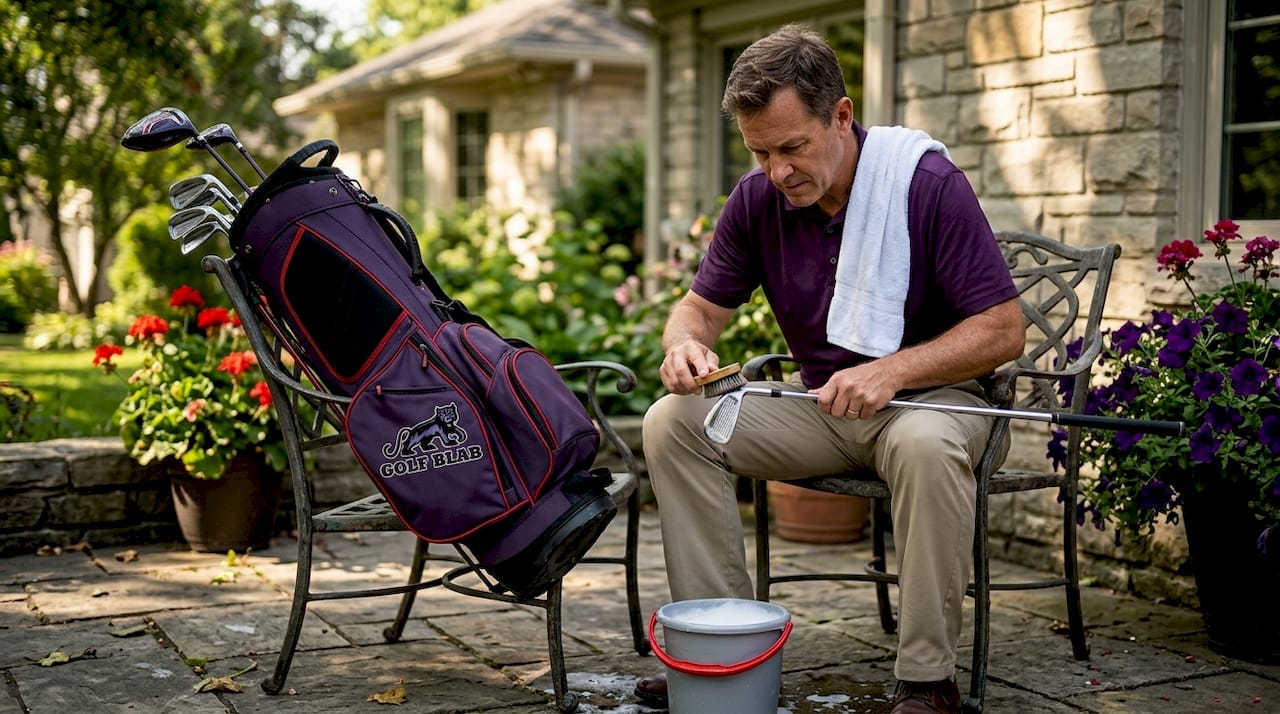
- Fill a bucket or sink with warm water and a few drops of mild dish soap.
- Submerge only the clubheads. Never submerge the full shaft, especially on graphite, because water can seep under the ferrule and weaken the bond.
- Let irons and wedges soak for five to ten minutes to loosen caked-on dirt.
- Scrub the face and grooves firmly with a groove brush or stiff-bristle brush. Work the brush in the direction of the grooves, not across them.
- Use a wooden tee to clear any remaining packed debris from individual grooves.
- Rinse the head with clean water and dry immediately with a microfiber cloth.
Cleaning shafts
Steel shafts can be wiped down with a damp cloth and dried right away. Graphite shafts need gentler handling. Use a soft, barely damp cloth and avoid twisting or scrubbing. Dry completely before storing. Moisture left on graphite shafts accelerates micro-cracking over time.

Cleaning grips
PGA Play and Golf Pride recommend washing grips with warm water and mild soap, scrubbing gently with a soft cloth, rinsing thoroughly, and air drying completely before the next round. This process restores tackiness and removes the oils and sweat that build up with every round. Grips dried in direct sunlight or near heat sources will harden and crack faster, so air dry at room temperature.
How often should you clean your clubs?
Clean clubheads and grips after every round. A quick wipe takes two minutes and prevents buildup from hardening. Do a full deep clean, including soaking irons and scrubbing every groove, once a month or after any round played in wet or muddy conditions.
Pro Tip: Clean grooves produce dramatically more spin. Dirty grooves cut spin from roughly 10,500 rpm to 5,759 rpm on wedge shots. That is nearly a 50% drop. Two seconds with a brush between shots is the simplest stroke-saver in golf.
What should you do during a round to protect your equipment?
In-round care is where most amateur golfers leave strokes on the table. You do not need to carry a cleaning kit the size of a toolbox. A wet towel, a dry towel, and a groove brush clipped to your bag handle the job.
Here is a practical in-round maintenance routine:
- After every iron or wedge shot: Wipe the clubface with a damp towel, then run a groove brush across the face. This takes two seconds and restores the friction that creates spin and shot control.
- After every shot in wet conditions: Dry the grip with a dry towel before re-gripping. Slippery grips cause tighter grip pressure and tension throughout the swing, which degrades both speed and consistency.
- Between holes: Replace headcovers on woods and hybrids. Bag dividers prevent clubs from banging together during cart rides or carries.
- During rain delays: Dry all grips and clubfaces before play resumes. Wet grips left to sit will lose tackiness faster than normal wear.
- At the turn: Take thirty seconds to wipe down your bag handles, check for loose headcovers, and clear any mud from your shoes or spikes.
The on-course groove cleaning workflow used by tour pros is simple: towel, brush, tee. Standardize that sequence and you will never hit a shot compromised by a dirty face again.
Pro Tip: Clip a groove brush to your bag’s towel ring so it is always within reach. Golf Pride advises drying grips during every round, especially after rain, to sustain control through the full 18 holes.
How should you store golf equipment to extend its lifespan?
Storing golf gear correctly is one of the most overlooked aspects of golf gear maintenance tips. The damage from poor storage is slow and invisible until it is expensive. Here is what proper storage looks like.
The cardinal rule: Never store clubs in your car trunk. Heat dries out grips and makes them brittle. Cold stiffens them and reduces tackiness. Extreme temperatures shrink grip lifespan significantly and affect overall club performance. A cool, dry indoor space is always the right answer.
Follow this storage checklist after every round:
- Dry all clubs completely before putting them in the bag. Moisture trapped in a closed bag breeds rust on steel components and weakens graphite bonds.
- Replace all headcovers on woods, hybrids, and putters.
- Stand the bag upright in a cool, dry location. Laying it on its side causes clubs to shift and rub against each other.
- Remove wet towels, gloves, and any food or drink from bag pockets. Wet items left inside create mold and odor.
- Check the bag’s feet and stand mechanism for damage. A broken stand causes the bag to fall repeatedly, which stresses shafts and club connections.
Seasonal maintenance: the spring reset
MyGolfSpy’s 7-step spring cleaning routine is the gold standard for seasonal gear preparation. It includes emptying and vacuuming the bag, washing all textiles, checking spikes and grips, deep cleaning every club, and inspecting for damage. This kind of seasonal reset reveals unseen dirt and damage that builds up over a full season and restores your gear to functional readiness before the first round of the year.
During your seasonal inspection, check for these specific issues:
- Loose clubheads or rattling ferrules
- Cracks or flat spots on graphite shafts
- Worn or hardened grips that no longer feel tacky
- Frayed or broken bag straps and zippers
- Worn shoe spikes that reduce traction
Catching early wear during a cleaning routine prevents costly repairs and avoids performance loss mid-season. Gear that cannot be restored should be donated to junior golf programs or recycled through manufacturer take-back programs rather than left to deteriorate in a closet.
Common mistakes that damage your golf equipment
Even golfers who care about their gear make these errors regularly. Knowing what not to do is half the battle.
- Using harsh cleaning products: Bleach, acetone, and alcohol-based sprays strip protective finishes from clubheads and destroy grip rubber. Stick to mild dish soap and warm water, full stop.
- Skipping groove cleaning: Dirty grooves are not just a cosmetic issue. The spin loss is real and measurable. Neglecting this one step costs you control on every wedge shot you hit.
- Wet storage: Putting damp clubs into a closed bag is the fastest way to rust steel shafts and corrode the hosel. Always dry before storing.
- Ignoring grip wear: Worn grips cause you to grip tighter, which creates tension and kills swing speed. Replace grips when they lose tackiness or show visible cracking. Most golfers should replace grips once per season.
- Neglecting the bag itself: Bags collect dirt, moisture, and debris that transfer back onto clean clubs. Wash the bag’s exterior and vacuum the interior at least once per season.
- Overlooking shoes: Golf shoes with worn spikes reduce stability at address and through impact. Check spikes every few rounds and replace them before they affect your footing.
The updating your equipment conversation always comes up, but the truth is that well-maintained gear outperforms neglected new gear. Care first. Replace when care is no longer enough.
Key takeaways
Consistent golf equipment care, built around cleaning grooves, maintaining grips, and storing gear correctly, is the single most cost-effective way to protect performance and extend the life of your clubs.
| Point | Details |
|---|---|
| Clean grooves after every shot | Dirty grooves cut wedge spin by nearly 50%, costing you control on every approach. |
| Wash grips regularly | Mild soap, warm water, and full air drying restore tackiness and extend grip life. |
| Store clubs indoors | Extreme heat and cold degrade grips and affect shaft integrity over time. |
| Do a seasonal deep clean | A spring reset reveals hidden damage and restores full equipment readiness before the season. |
| Avoid harsh chemicals | Bleach and alcohol-based cleaners strip finishes and destroy grip rubber permanently. |
What 20 years on the course taught me about equipment care
Here is the naked truth: most golfers treat equipment care like a chore they will get to eventually. I used to be one of them. I would finish a round, toss the bag in the garage, and wonder why my wedges were spinning inconsistently two months later. The answer was always sitting right there in the grooves.
The habit that changed everything for me was the two-second groove clean between shots. It sounds trivial until you see the spin numbers. Going from 5,759 rpm to 10,500 rpm on a wedge shot is not a marginal gain. That is the difference between a ball that checks up and one that rolls through the green. Once I standardized the towel-brush-tee routine, my short game became noticeably more predictable.
Grip care was the second revelation. I was gripping tighter than I needed to because my grips had lost their tackiness and I did not even realize it. A simple wash and a fresh set of grips every season removed tension I had been carrying for years. If you want to know more about how golf strategy and equipment reliability connect, the relationship is tighter than most people think.
My honest advice: build the routine around convenience, not perfection. A quick wipe after every shot, a full clean once a week, and a seasonal deep clean before the first round of the year. That is it. You do not need an hour and a specialty cleaning station. You need consistency and the right tools within arm’s reach.
— Michael
Gear that works as hard as you do

At Golf-blab, we believe your equipment should reflect the care you put into your game. If you are already following a solid maintenance routine, the next step is making sure your gear is set up exactly the way you want it. Our golf club personalization options let you customize shaft labels, protect your clubs with branded accessories, and organize your bag the way a serious golfer should. Browse the full range of maintenance accessories and personalization products at the Golf-blab shop and give your gear the treatment it deserves.
FAQ
What are the most important golf equipment care steps?
The core steps are cleaning clubface grooves after every shot, washing grips with mild soap and warm water regularly, drying all clubs before storage, and doing a full seasonal inspection. These four habits cover the majority of performance and longevity gains.
How often should you clean golf club grooves?
Clean grooves between shots during a round, especially on wedges and short irons. Dirty grooves reduce wedge spin by nearly 50%, dropping from roughly 10,500 rpm to 5,759 rpm, which directly costs you shot control.
What is the best way to store golf clubs?
Store clubs in a cool, dry indoor space with headcovers on woods and hybrids. Avoid car trunks and garages with extreme temperature swings, as heat and cold both degrade grip materials and affect shaft performance over time.
How do you know when to replace golf grips?
Replace grips when they feel hard, slick, or show visible cracking. Most golfers should replace grips once per season. Worn grips force tighter grip pressure, which creates swing tension and reduces both speed and consistency.
Why is golf equipment care important for performance?
Clean, well-maintained equipment performs the way it was designed to. Dirty grooves, worn grips, and damaged shafts all introduce variables that no amount of swing improvement can fully compensate for. Maintenance is the foundation that makes every other improvement possible.