Posted on

Domina tu swing de golf: guía práctica para mejorar

Jugador de golf preparándose para golpear desde el tee

¿Llevas meses practicando y tu swing sigue igual? Eso no es falta de talento, es falta de un plan concreto. La mayoría de los amateurs repite los mismos movimientos incorrectos una y otra vez esperando resultados distintos. No funciona así. En esta guía te explico paso a paso cómo mejorar tu swing de golf desde la postura hasta el finish, con ejercicios reales, errores que debes evitar y una rutina de 30 días para que veas cambios tangibles. Esto es DIFERENTE a lo que has leído antes. Te lo prometo.

Tabla de contenidos

Puntos Clave

Punto Detalles
Domina la base del swing Una postura correcta y grip neutral son el punto de partida obligatorio para mejorar el swing de golf.
Sigue la secuencia técnica El backswing, downswing e impacto deben realizarse con ritmo y transferencia de peso, no solo fuerza.
Corrige errores y mide avances Identifica errores comunes y corrige con ejercicios prácticos, usando espejos o videos para monitorear tu progreso.
Practica con intención La rutina estructurada y la práctica deliberada superan a largas sesiones repetitivas sin objetivos claros.

Preparación esencial: postura, grip y materiales necesarios

Después de entender la importancia de mejorar el swing, pasamos a los preparativos esenciales que servirán de base para un buen golpe.

Sin una postura alineada y un grip correcto, todo lo demás falla. No importa cuánto practiques el backswing si tu base está rota. La buena noticia es que corregir estos dos puntos es más sencillo de lo que parece.

Guía visual sencilla sobre las etapas del swing en golf

Empecemos por el grip. El agarre neutral es fundamental como único punto de contacto con el palo. Aplica una presión de 4 a 6 sobre 10, nunca tenses las manos, y asegúrate de que las “V” que forman tus pulgares e índices apunten hacia tu hombro derecho. Un grip tenso provoca slice y hook porque bloquea la rotación natural de las muñecas.

La postura también es crítica. Pies al ancho de los hombros, rodillas ligeramente flexionadas, espalda recta con inclinación hacia la bola desde las caderas. Nada de encorvarse. Antes de hablar de swing avanzado, te recomiendo repasar las reglas básicas del golf para entender el marco completo del juego.

Estos son los materiales que necesitas para practicar correctamente:

  • Varillas de alineación: colocadas en el suelo para verificar la dirección.
  • Espejo de práctica: para detectar errores posturales en tiempo real.
  • Pelotas de práctica: volumen con atención, no solo cantidad.
  • Guante de golf: mejora el grip y previene ampollas.
Material Objetivo Consejo de uso
Varillas de alineación Alinear pie, cadera y hombros Colócalas paralelas a la línea de juego
Espejo Corregir postura y swing Úsalo de frente y de lado
Pelota de práctica Volumen de golpes Practica con atención al impacto
Guante Estabilizar el grip Cámbialo cuando esté desgastado

También conviene conocer bien los usos de los hierros antes de trabajar el swing con cada palo, ya que cada uno requiere ajustes específicos de postura y ángulo.

Consejo profesional: Realiza siempre el grip con las manos completamente relajadas antes de apretar. Si aprietas primero y luego ajustas, garantizas tensión innecesaria que arruina el golpe.

Desglosando el swing: backswing, downswing, impacto y finish

Con la base de tu preparación lista, ahora desglosamos el swing y sus fases para que entiendas exactamente qué ajustes debes hacer.

El swing no es un solo movimiento. Es una cadena de fases conectadas donde cada parte depende de la anterior. Si falla una, falla todo.

  1. Backswing: Rota el torso aproximadamente 90 grados manteniendo los brazos conectados al cuerpo. No los balancees por separado. Según expertos en mecánica del swing, esta rotación genera la energía potencial que liberarás en el downswing.
  2. Downswing: Aquí el error más común es empezar con los brazos. La secuencia correcta es: piernas, caderas, torso, brazos. Inicia siempre con caderas y transfiere el peso al pie delantero mientras giras. Esto multiplica la velocidad sin esfuerzo adicional.
  3. Impacto: El contacto debe ocurrir en el centro de la cara del palo. Un impacto sólido y balanceado con el peso ya en el pie delantero es la diferencia entre un golpe poderoso y uno débil.
  4. Finish: Termina con el pecho apuntando al objetivo, en equilibrio, con el 90% del peso en el pie delantero. Si tropiezas o te desequilibras, algo antes falló.

Para profundizar con ejercicios guiados, el centro de aprendizaje de golf tiene recursos específicos para cada fase.

Fase Error común Técnica correcta
Backswing Brazos separados del cuerpo Rotación de torso 90°, brazos conectados
Downswing Empezar con los brazos Iniciar con caderas y piernas
Impacto Contacto en el filo del palo Centro de la cara, peso en pie delantero
Finish Desequilibrio o corte del swing Pecho al objetivo, equilibrio completo

“El swing correcto no se siente como esfuerzo. Se siente como rotación.”

Si quieres llevar esto al siguiente nivel, el reto swing como profesional es exactamente para ti.

Errores frecuentes en el swing de golf y cómo corregirlos

Ahora que sabes qué hacer, es vital identificar lo que hay que evitar mientras mejoras tu swing.

Casi todos los amateurs cometen los mismos errores. No porque sean malos golfistas, sino porque nadie se los señaló con claridad. Vamos a cambiar eso ahora.

Los errores más frecuentes en el swing incluyen mala alineación, ritmo apresurado y transferencia de peso inadecuada. Todos se pueden corregir con herramientas simples como un espejo y varillas de alineación.

Esta es la lista de los fallos más habituales:

  • Mala alineación: Los pies apuntan a la derecha o izquierda del objetivo sin que lo notes. Solución: usa varillas en el suelo siempre.
  • Overswing: Llevar el palo más allá de los 90 grados rompe el control. Menos es más.
  • Ritmo acelerado: La mayoría de amateurs apresura el downswing buscando más velocidad. Resultado: pérdida de contacto y precisión.
  • Flip en el impacto: Las muñecas “flipean” antes del contacto, anulando la potencia del golpe.
  • Falta de transferencia de peso: Quedarse en el pie trasero durante el impacto genera golpes débiles y sin dirección.

Dato importante: La mayoría de los amateurs pierde el ritmo precisamente por querer más velocidad, cuando en realidad la velocidad es consecuencia del ritmo correcto, no al revés.

Consejo profesional: Practica el conteo en voz alta: “1” en el backswing, “2” en la pausa, “3” en el downswing. Repite frente al espejo 10 veces antes de golpear. Ese simple ejercicio reajusta tu ritmo en minutos.

Otro factor que pocos mencionan: la ropa cómoda para el swing importa más de lo que crees. Ropa ajustada o restrictiva limita la rotación y afecta la mecánica del golpe directamente.

También te recomiendo grabar tu swing regularmente. Lo que sientes y lo que realmente ocurre son dos cosas completamente distintas. El video no miente.

Ejercicios y rutina para perfeccionar el swing paso a paso

Corrigiendo errores y evitando malas prácticas, solo falta estructurar una rutina concreta para afianzar los cambios.

Mujer entrenando su swing de golf en casa

La práctica sin estructura es tiempo perdido. He visto jugadores que golpean 200 bolas al día sin mejorar nada porque repiten los mismos errores. La clave está en practicar con intención, no con volumen. Según consejos de Golf Digest para 2025, la práctica intencional enfocada en el impacto es más efectiva que solo el volumen de repeticiones.

Estos son los ejercicios principales que debes incluir en tu rutina:

  1. Swings lentos a media velocidad: Realiza el swing al 50% de tu velocidad normal, enfocándote en la secuencia correcta. 20 repeticiones por sesión.
  2. Equilibrio sobre una pierna: Practica el finish sosteniendo la posición sobre el pie delantero durante 3 segundos. Fortalece la estabilidad y el control.
  3. Toalla bajo los brazos: Coloca una toalla bajo ambas axilas y realiza swings sin que caiga. Esto conecta los brazos al torso automáticamente.
  4. Análisis en espejo o video: Técnicas con espejo y video son esenciales para detectar errores que no puedes sentir. Dedica 10 minutos por sesión a revisar grabaciones.

Consejo profesional: Practica menos repeticiones, pero con atención total al contacto de la bola. 30 golpes conscientes valen más que 150 automáticos.

Aquí tienes una rutina sugerida para 30 días:

Semana Foco técnico Ejercicios sugeridos
Semana 1 Postura y grip Grip frente al espejo, varillas de alineación
Semana 2 Backswing y rotación Swings lentos, toalla bajo los brazos
Semana 3 Downswing e impacto Conteo rítmico, análisis en video
Semana 4 Finish y ritmo completo Equilibrio sobre una pierna, swing completo

Si quieres apoyo guiado, las lecciones para mejorar el swing incluyen garantía de devolución de dinero. Y para un plan estructurado completo, el programa swing like a pro está diseñado exactamente para este proceso.

El error más común: confundir fuerza con control

Tras detallar el plan de mejoras, quiero compartir una reflexión que cambiará tu perspectiva sobre cómo progresar realmente en el golf.

He trabajado con muchos amateurs y el patrón es siempre el mismo: llegan queriendo golpear más fuerte. Y eso es precisamente lo que los frena. La obsesión con la potencia destruye la secuencia, y sin secuencia no hay ni distancia ni control.

Los pros no golpean más fuerte que tú porque sean más fuertes. Lo hacen porque su ritmo y rotación son perfectos. Según análisis de los mejores instructores, los profesionales priorizan la rotación y el ritmo mientras que los amateurs suelen fallar por intentar golpear con más fuerza. La velocidad de la cabeza del palo es consecuencia directa de una buena secuencia, no del esfuerzo muscular.

El cambio real ocurre cuando aceptas esto y dejas de micro-gestionar el movimiento desde dentro del movimiento. Suena raro, pero tiene sentido cuando lo vives. Enfócate en el ritmo, en la secuencia, en el equilibrio. La potencia llega sola.

Usa feedback objetivo: grábate, revisa en espejo, compara semana a semana. Y si necesitas orientación sobre cómo bajar tu score con estrategia, hay mucho más que el swing para explorar.

Mejora tu swing con recursos exclusivos de Golf Blab

Si buscas apoyo adicional para acelerar tu aprendizaje, aprovecha los recursos exclusivos de Golf Blab.

Todo lo que has leído aquí tiene sentido sobre el papel, pero la verdad es que mejorar sin guía toma más tiempo del necesario. En Golf Blab tenemos herramientas diseñadas para que progreses más rápido y con confianza.

https://golf-blab.com

El curso swing like a pro te lleva paso a paso por cada fase del swing con instrucción clara y directa. Si quieres organizar tu equipo y practicar con identidad propia, las etiquetas personalizadas para varilla son el detalle que marca la diferencia. Y si quieres seguir aprendiendo sobre técnica, estrategia y mucho más, el centro de aprendizaje avanzado tiene todo lo que necesitas en un solo lugar. Empieza hoy.

Preguntas frecuentes

¿Cuál es el error más común al intentar mejorar el swing de golf?

Buscar más potencia con los brazos en vez de enfocarse en la secuencia y el ritmo es el error principal. Los amateurs fallan en secuencia donde los pros enfatizan rotación, no fuerza.

¿Cuánto tiempo lleva ver resultados notables al mejorar el swing?

En 30 días siguiendo una rutina enfocada, se pueden apreciar cambios consistentes y corregir errores mecánicos evidentes. Un plan de 30 días con ejercicios específicos es suficiente para notar una diferencia real.

¿Qué ayuda más: practicar mucho o practicar con intención?

La práctica intencional, enfocada en mejorar el contacto y el ritmo, supera al simple volumen de repeticiones. La práctica intencional sobre el impacto produce mejoras más rápidas y duraderas.

¿Por qué usar espejo o grabar mi swing en video?

El feedback visual ayuda a detectar errores ocultos que no puedes sentir desde dentro del movimiento. Los ejercicios con espejo y video son herramientas esenciales para medir progreso objetivo semana a semana.

Recomendación

Posted on

How to Practice Golf at Home for Real Skill Improvement

Man practicing golf swing in home garage setup


TL;DR:

  • Effective home golf practice focuses on drills that improve swing mechanics, short game, and putting.
  • Consistency, proper feedback, and goal-setting are essential for translating practice into real game improvement.
  • Real skill transfer requires combining home drills with on-course experience, as home practice alone doesn’t guarantee lower scores.

You want to get better at golf. But between work, family, and life in general, getting to the course three or four times a week just isn’t realistic. So your game stagnates, and every round feels like you’re starting from scratch. Here’s the thing: practicing at home, done right, can genuinely sharpen your swing mechanics, your putting stroke, and your feel for the short game. This guide breaks down exactly how to set up your space, which drills actually work, how to track your progress, and how to stay motivated so your at-home sessions translate into real results when it counts.

Table of Contents

Key Takeaways

Point Details
Dedicated practice space Set up a safe and functional area at home to make your golf practice consistent and effective.
Simple, repeatable drills Focus on basic swing, short game, and putting routines that build reliable skills without fancy tools.
Use technology wisely Leverage mirrors, smartphones, and simple apps to get feedback, but realize tech is no substitute for real on-course experience.
Track and celebrate progress Measuring and enjoying your small wins helps you stay motivated and see steady improvement.

Set up your home golf practice space

With a clear goal in mind, the first step is to establish a dedicated space for productive at-home practice. You don’t need a mansion or a fancy studio. A garage, basement, or even a backyard corner can become a surprisingly effective training ground if you set it up with intention.

The key is consistency. When your practice space is always ready, you’re far more likely to actually use it. Tripping over boxes to find your mat, or having to move furniture every time you want to swing a club, is a fast road to skipping sessions.

Infographic explaining basic home golf practice

Home drills build swing mechanics and consistency effectively when the environment supports focused repetition. That means removing distractions, ensuring safe clearance around you, and having your tools within reach.

Here’s a quick checklist of what your practice area should include:

Item Purpose
Hitting mat Protects floors, simulates turf feel
Practice net Safely catches full and half swings
Full-length mirror Real-time posture and alignment feedback
Foam or wiffle balls Safe for indoor chipping and short swings
Putting cup/target Grooves putting stroke indoors
Alignment sticks Reinforces correct setup and ball position
Smartphone mount Enables easy video recording of swings

Beyond gear, keep these space and safety considerations in mind:

  • Ceiling height matters. You need at least 9 feet of clearance for full swings with a driver indoors.
  • Clear a zone of at least 6 feet around you on all sides to avoid clipping furniture or walls.
  • Use a non-slip mat or rubber flooring if you’re working on a smooth surface.
  • Keep pets and kids out of the space during active practice sessions.
  • Backyard setups need to account for neighbors and sightlines before you start hitting.

You might also want to explore some golf club personalization tips to make your practice setup feel more like your own.

Pro Tip: Place a full-length mirror to your left (for right-handed golfers) at address. Glance at it during slow-motion swings to check your spine angle, knee flex, and shoulder turn without needing anyone else in the room.

Essential drills for swing, short game, and putting

Once your space is ready, it’s time to focus on which practice routines actually drive skill development. Not all drills are created equal. Some build raw mechanics, others sharpen feel. You need both.

Home drills improve swing mechanics and help build consistency when done with intention and repetition. Here are three core drills that cover the major areas of your game:

  1. Slow-motion swing drill (full swing mechanics): Take any iron and swing at 25% speed, pausing at key positions like takeaway, top of backswing, and impact. This trains your muscles to follow the correct path without relying on momentum to cover mistakes. Do 20 slow reps before any full-speed work.

  2. Towel chip drill (short game feel): Roll a small towel and place it just behind the ball position on your mat. Practice chipping without clipping the towel. This drill builds a clean, descending strike on chip shots and eliminates the scooping habit that kills most amateurs around the green.

  3. Gate putting drill (putting accuracy): Set two alignment sticks or pencils just wider than your putter head, about 6 inches in front of the ball. Stroke putts through the gate without touching either side. This immediately reveals any face rotation or path issues in your stroke.

Here’s a breakdown of how these drills compare in purpose:

Drill Focus Benefit
Slow-motion swing Mechanics Builds muscle memory and correct positions
Towel chip Touch and feel Eliminates scooping, improves contact
Gate putting Stroke accuracy Corrects face angle and putter path

Want to push further? The swing like a pro drills at Golf Blab give you a structured framework for self-coaching your full swing at home.

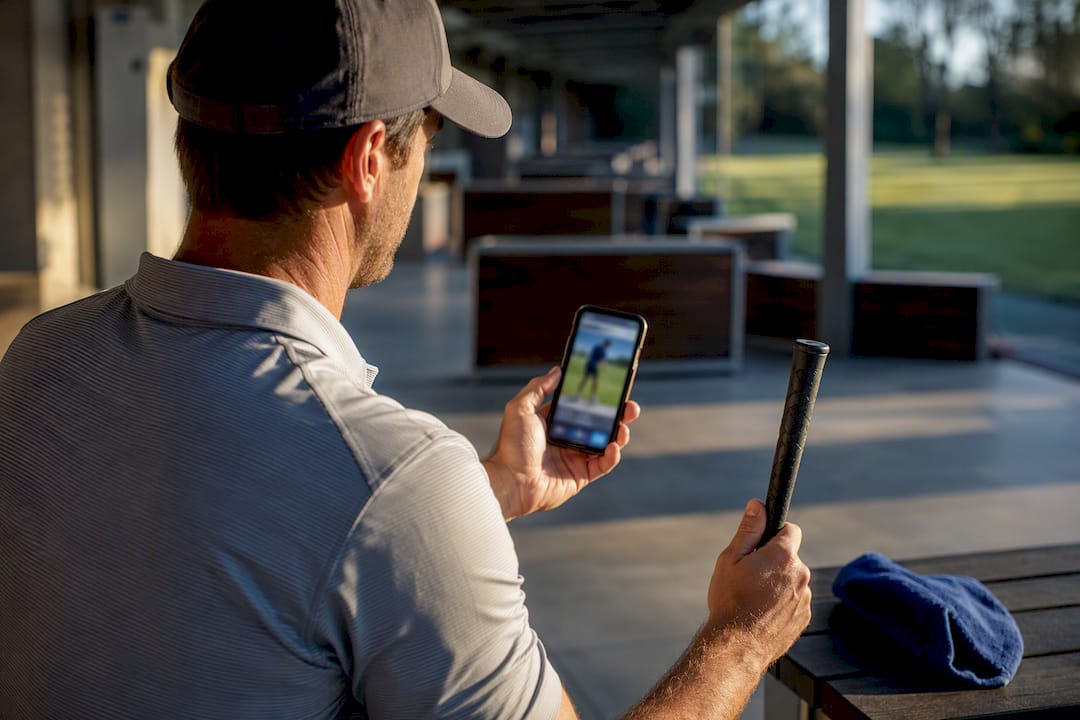
Pro Tip: Start recording your swing at home with your smartphone at face-on and down-the-line angles. Watch in slow motion. You’ll catch flaws in 30 seconds that you’d never feel during the swing itself.

Woman records golf swing in living room

On VR simulators: they’re a fun addition, but research shows they don’t reliably predict improvement in your actual handicap. Use them as a supplement, not a replacement for mechanical drills.

Using feedback and tracking progress

Effective drills are only part of improvement; verifying progress with feedback tools ensures your at-home practice yields real-world results. Here’s the honest truth: practice without feedback is mostly just repetition. And repeating a flawed movement hundreds of times doesn’t fix it. It cements it.

Fortunately, you don’t need expensive equipment to get solid feedback. A smartphone, a mirror, and a free swing app will get you most of the way there. The swing recording tips at Golf Blab walk you through exactly how to film and review your swing to spot real issues.

Here are the metrics you can actually track at home without a launch monitor:

  • Swing path: Use your mirror or video to check your club’s direction through the impact zone.
  • Tempo: Count a rhythm like “one, two” for backswing and downswing. Consistent tempo is trackable without tech.
  • Putting accuracy: Track how many putts out of 10 you make from 3, 5, and 8 feet. Chart it weekly.
  • Setup consistency: Check your grip, stance width, and ball position each session. Take photos to compare over weeks.
  • Contact quality: Notice where foam balls fly and how the mat feels at impact. Clean strikes feel and sound different.

“The difference between a golfer who improves and one who plateaus almost always comes down to whether they have a clear feedback loop. Without it, you’re flying blind.”

When it comes to apps and VR swing analysis, the current evidence shows they can be useful for general motion training but do not yet predict real-world golf handicap improvement. That’s not a reason to ignore them. It’s a reason to use them intelligently as one tool among many.

For deeper educational resources to pair with your feedback work, the Golf Blab Learning Center resources offer structured lessons that complement what you’re doing at home.

Avoiding common mistakes and staying motivated

To make progress sustainable, it’s vital to address obstacles and prevent burnout during home golf training. Most golfers start with great intentions but fall into predictable traps that stall progress or kill motivation entirely.

Consistency, routine, and smart feedback are essential for progress in home practice. Without them, even the best drills produce mediocre results. Here are the most common at-home practice errors to watch for:

  • No structure: Randomly swinging without a drill or goal teaches your body nothing useful. Every session needs a plan.
  • Overtraining the full swing: Most golfers spend 80% of practice on driving and barely touch putting and chipping. Flip that ratio. The short game is where scores are actually made.
  • Ignoring setup: Gripping the club wrong or standing too far from the ball makes every drill you do counterproductive. Check your fundamentals first.
  • Skipping review: If you never watch your videos or check your logged metrics, you lose the entire feedback benefit.
  • Practicing too long: Forty focused minutes beats two sloppy hours every time. Mental fatigue leads to bad reps.

Staying motivated over weeks and months requires more than willpower. Here’s what actually works:

Set small, specific goals. “Make 7 out of 10 putts from 4 feet” is a real goal. “Get better at putting” is not. Mix up your drills every two weeks so sessions don’t feel stale. Connect with an online golf community or accountability partner who checks in on your progress. The golf strategy tips on Golf Blab give you fresh concepts to keep learning between drill sessions.

Pro Tip: Keep a simple practice journal. Write down what you worked on, what felt off, and one thing that improved. Reviewing it monthly shows you real progress that’s easy to miss day to day. Small wins add up faster than most golfers realize.

What most home golf practice guides miss

Taking a step back, it’s important to consider what most advice misses about practicing golf at home and what really matters for improvement. Most guides will hand you a drill list and send you on your way. They oversell home practice as a near-complete substitute for course time. It isn’t.

The real issue is skill transfer. You can groove a beautiful slow-motion swing in your garage and still struggle on the course because real golf involves uneven lies, wind, pressure, and visual targets at actual distance. Those variables don’t exist in your basement.

That’s not a reason to skip home practice. It’s a reason to use it correctly. Build your mechanics at home. Then take them to a range and eventually to the course to test them under pressure.

Research confirms that VR and home-based training do not always correlate with improved golf handicaps. Deliberate feedback beats volume every single time. One focused session where you catch a flaw on video and correct it is worth more than ten sessions of mindless swinging.

At Golf Blab, we’d rather you take the swing challenge experience seriously, treat home practice as a foundation, and approach every session with curiosity rather than frustration. That mindset is what separates golfers who genuinely improve from those who just stay busy.

Enhance your home practice with Golf Blab

For golfers serious about efficient improvement at home, dedicated support and quality tools can make a dramatic difference.

https://golf-blab.com

At Golf Blab, we’ve built a space specifically for players like you who want to get better without wasting time on vague advice. Browse our training aids and gear to outfit your home practice space with equipment that actually supports your development. Dig into the Learning Center for structured lessons that build on exactly the drills covered in this guide. And if you want a broader framework for developing a complete game, the master every shot guide is a great next step. You don’t have to figure this out alone.

Frequently asked questions

What are the best drills for practicing golf indoors?

The best drills are simple swing repetitions, mirror feedback, and putting to targets, all easily done indoors without special equipment. Home drills improve swing mechanics and help build the consistency needed for real on-course improvement.

Does practicing golf at home really improve my actual game?

Practicing at home develops important mechanics and consistency, especially when you track progress, but real handicap gains require on-course play too. Home practice is valid for mechanics but does not predict handicap improvement directly.

What equipment do I need to practice golf effectively at home?

A hitting mat, net, foam balls, mirror, and basic putting cup are sufficient for most core home practice routines. Home setups with minimal equipment can build core golf skills without expensive gear.

Are VR golf simulators useful for at-home golfers?

VR simulators are useful for general training but don’t correlate with handicap improvement, so stick to mechanical drills for best results. VR swing analysis does not predict real-world handicap gains reliably.

Posted on

Master swing plane in golf: boost accuracy and power

Golfer practicing swing plane at driving range


TL;DR:

  • Swing plane is the invisible path the golf club follows during the swing, crucial for accuracy.
  • Errors in swing plane, like coming over the top or dropping inside, impair shot consistency and distance.
  • Understanding and customizing your swing plane enhances performance, regardless of body type or swing style.

You’ve got a solid setup, you’re putting in the practice, and yet the ball keeps slicing into the trees or hooking left like it has a mind of its own. Sound familiar? Here’s the naked truth: for most golfers, the missing ingredient isn’t effort. It’s understanding swing plane. This single concept explains why some players stripe the ball down the fairway with what looks like minimal effort, while others fight their swing every single round. In this article, we’re going to break down exactly what swing plane is, why it matters more than most teaching pros let on, and how you can use it to start hitting more consistent, powerful shots.

Table of Contents

Key Takeaways

Point Details
Swing plane basics Swing plane is the angled path your golf club traces during the swing and is key to hitting straight shots.
Impacts accuracy A correct swing plane helps you avoid slices, hooks, and distance loss.
Choose your style Both one-plane and two-plane swings work; match your swing plane to your natural motion.
Practical improvement Use video, practice drills, and self-awareness to diagnose and refine your swing plane for measurable game improvement.

What is swing plane in golf?

Let’s start simple. Swing plane refers to the angle and path your club follows during the golf swing. Think of it as an invisible tilted surface that your club travels along from the moment you start your takeaway to the moment you finish your follow-through. Some people picture a tilted hula hoop sitting at an angle around their body. Others imagine a large pane of glass resting on their shoulders and extending down to the ball. Both mental images work. The point is that your club should follow a consistent, repeatable path along that plane.

Now, why does this matter for you specifically? Because if your club drifts off that plane, even slightly, the face angle and path at impact change. And when those two things change, the ball goes somewhere you didn’t intend. It’s not magic. It’s geometry.

Here’s what swing plane affects in practical terms:

  • Takeaway path: Where the club goes in the first 12 inches of your swing sets the tone for everything that follows.
  • Backswing angle: Too steep or too flat changes how you must reroute the club on the way down.
  • Downswing delivery: This is where the plane really matters. The club has to return on a path that allows the face to square at impact.
  • Follow-through: A proper plane naturally leads to a balanced, full finish.
  • Club selection: Longer clubs like drivers naturally produce a flatter plane, while shorter irons are steeper. Your mastering your golf stance directly influences this.

Beginners often assume swing plane is an advanced concept they can worry about later. That’s a mistake. Understanding it early prevents bad habits that take years to undo. Experienced golfers who’ve hit a plateau often find that a small plane correction unlocks distance and accuracy they didn’t know they were leaving on the table.

“The swing plane is the invisible highway your club travels on. Get off that highway, and you’re lost.” — Golf Blab

Pro Tip: Set up your phone on a tripod and record your swing from directly behind you (down the line). Watch where the club head travels on the way back and the way down. You’ll see your swing plane clearly, and it might surprise you. Check out these swing like a pro tips to pair with your video review.

Why swing plane matters: Impact on accuracy and distance

Now that you understand what swing plane is, let’s see why it holds the key to accuracy and power on the course.

Your swing plane directly controls shot shape. A club traveling on an out-to-in path (too steep) through impact produces a slice for right-handed golfers. A club traveling on an in-to-out path (too flat) tends to produce a hook or a push. A neutral, on-plane swing gives you the best chance of a straight shot, or at least a controlled, predictable shape you can work with.

Swing plane error Club path at impact Typical ball flight
Too steep (over the top) Out to in Slice or pull
Too flat (dropping inside) In to out Hook or push
On plane Square to target Straight or slight draw
Severely steep Far out to in Pull hook or weak slice

The numbers back this up. Even tour pros lose accuracy with a 2-degree swing plane deviation, which tells you just how sensitive the swing is to plane errors. If professionals at the highest level are affected by two degrees, imagine what a 10 or 15-degree error does to a weekend golfer’s shot.

The two most common mistakes we see are coming over the top and dropping too far inside. Coming over the top means the club starts the downswing on a steep, outside path. It’s the number one cause of slices. Dropping too far inside means the club falls behind the body on the downswing, making it nearly impossible to square the face without flipping the hands.

Here’s what a poor swing plane costs you:

  • Accuracy: Shots miss left or right with no clear pattern, making course management nearly impossible.
  • Distance: Off-plane swings create glancing blows instead of solid, centered contact.
  • Consistency: You might hit one good shot, then three bad ones, with no idea why.
  • Confidence: Nothing kills your mental game faster than not trusting your swing.
  • Scoring: All of the above combine to add unnecessary strokes to your round.

If you want to understand how these errors show up on the course, pairing swing plane awareness with smart golf strategy tips can make a real difference. And recording your golf swing is one of the fastest ways to spot exactly where your plane breaks down.

Swing plane types: One-plane vs. two-plane swings

Understanding its impact helps, but which swing plane type might fit you best?

Golfers typically use a one-plane or two-plane swing, and both are completely viable. The difference comes down to how your arms and body work together during the swing.

Infographic comparing one-plane and two-plane swings

In a one-plane swing, your arms stay on the same plane as your shoulders throughout the swing. The body rotates aggressively, and the arms stay connected to that rotation. It tends to produce a more rounded, flatter swing. Ben Hogan is often cited as a one-plane example.

Golfer showing one-plane swing body alignment

In a two-plane swing, the arms swing on a steeper plane than the shoulders. The arms lift more independently on the backswing, then the body drives through on the downswing. Jack Nicklaus is a classic two-plane golfer.

Feature One-plane swing Two-plane swing
Arm and shoulder plane Same plane Different planes
Body rotation High Moderate
Ideal for Flexible, athletic builds Taller or less flexible golfers
Shot tendency Draw bias Fade bias
Learning curve Steeper initially More intuitive for many

Your body type and flexibility play a huge role here. If you’re naturally flexible and athletic, a one-plane swing may feel fluid and powerful. If you’re taller or have limited hip rotation, a two-plane approach often feels more natural and sustainable.

Here’s how to figure out which swing type you’re already using:

  1. Record your swing from directly behind you (down the line).
  2. Pause the video at the top of your backswing.
  3. Draw a line along your left forearm (for right-handed golfers).
  4. Draw a line along your shoulder plane.
  5. If both lines are parallel or match up, you’re swinging on one plane. If the arm line is steeper, you’re on two planes.

Pro Tip: Don’t force yourself into a swing type because a famous pro uses it. Test both in practice sessions and notice which one produces more consistent contact with less effort. Your body will tell you what works. If you want structured guidance, the golf lesson challenge at Golf Blab is a great place to explore this with real feedback.

How to find and improve your ideal swing plane

Once you’ve identified the swing plane styles, it’s time to put theory into action.

The first step is self-diagnosis. Recording your swing from the down-the-line view helps you analyze your swing plane and spot errors that you simply cannot feel in real time. Set your phone at hip height, directly behind you, and record several swings with a mid-iron. Watch the club’s path on the way back and the way down. Does it match up? Does it drift above or below the ideal plane line?

Here’s a simple process to check and improve your swing plane:

  1. Set your baseline: Record 10 swings and watch them back. Note whether your club is consistently above, below, or on the ideal plane.
  2. Pick one fix: Don’t try to change everything at once. Focus on the takeaway or the downswing, not both.
  3. Use an alignment stick: Place a stick in the ground at the same angle as your club at address. Practice swinging along that line.
  4. Try the pump drill: Start your downswing, stop halfway, and check your club position. Repeat until the correct position feels natural.
  5. Recheck with video: After two weeks of focused practice, record again and compare. Progress is often visible before it’s feelable.

Useful tools for swing plane practice:

  • Alignment sticks: Cheap, effective, and used by tour players every day.
  • Swing plane trainers: Devices that physically guide your club along the correct path.
  • Mirror work: A full-length mirror at home lets you check your takeaway and backswing position without a camera.
  • Launch monitors: More advanced, but they give you data on club path and face angle at impact.

Pro Tip: Pair your video review with swing video analysis tips to know exactly what to look for. The Golf Blab golf learning center also has resources to guide your practice with purpose.

Tracking your progress matters. Keep a simple log of what you worked on, what changed, and how your ball flight responded. Over time, patterns emerge that tell you more than any single practice session can.

The hidden truth: Swing plane is personal

Here’s what most guides won’t tell you. There is no single perfect swing plane that works for every golfer. None. The traditional teaching industry loves to show you a textbook model, point to a tour pro, and say, “Do it like that.” But that pro has a specific body, specific flexibility, and has spent thousands of hours grooving that exact motion. Copying it wholesale is like wearing someone else’s prescription glasses and wondering why you can’t see clearly.

At Golf Blab, we’ve seen golfers make their biggest breakthroughs not when they chased perfection, but when they got honest about their own movement patterns. A small, self-aware adjustment to your natural swing plane often produces more improvement than months of trying to match a model that doesn’t fit your body.

Coaches and training aids are valuable guides. But your own feedback, what you see on video, what you feel in your hands, and how the ball actually flies, is the most honest data you have. Trust it. Personalize your plane. That’s where real, lasting improvement lives.

Upgrade your swing: Next steps with Golf Blab

Ready to step up your game? Explore more below.

If this article lit a fire under you, Golf Blab has everything you need to keep that momentum going. Our personalized golf lessons are built around your swing, your body, and your goals, not a generic template. And yes, they come with a money-back guarantee because we stand behind what we teach.

https://golf-blab.com

While you’re working on your swing, don’t overlook the fun side of the game. Our golf club personalization options let you put your own stamp on your gear, and our golf shaft labels are a favorite among golfers who take pride in how their bag looks. Better swing, better gear, better game. Golf Blab is your resource for all of it.

Frequently asked questions

Does everyone need the same swing plane in golf?

No, your swing plane should be tailored to your body type and flexibility for best results. Body type and flexibility influence which swing plane model works best for each individual golfer.

How do I measure my swing plane?

Record your swing from the side and compare your club’s path to visualize your natural swing plane. Recording from the down-the-line view gives you the clearest picture of where your plane is and where it needs to go.

What are signs of a poor swing plane?

If your shots frequently slice, hook, or lack distance, your swing plane likely needs adjustment. An inconsistent swing plane leads to poor accuracy and lost distance that no amount of extra practice will fix on its own.

Can I fix my swing plane without a coach?

Yes, using video analysis and alignment drills can help you refine your swing plane on your own. Drills and video give golfers a clear, self-directed path to adjusting their swing plane without needing a coach present every session.