
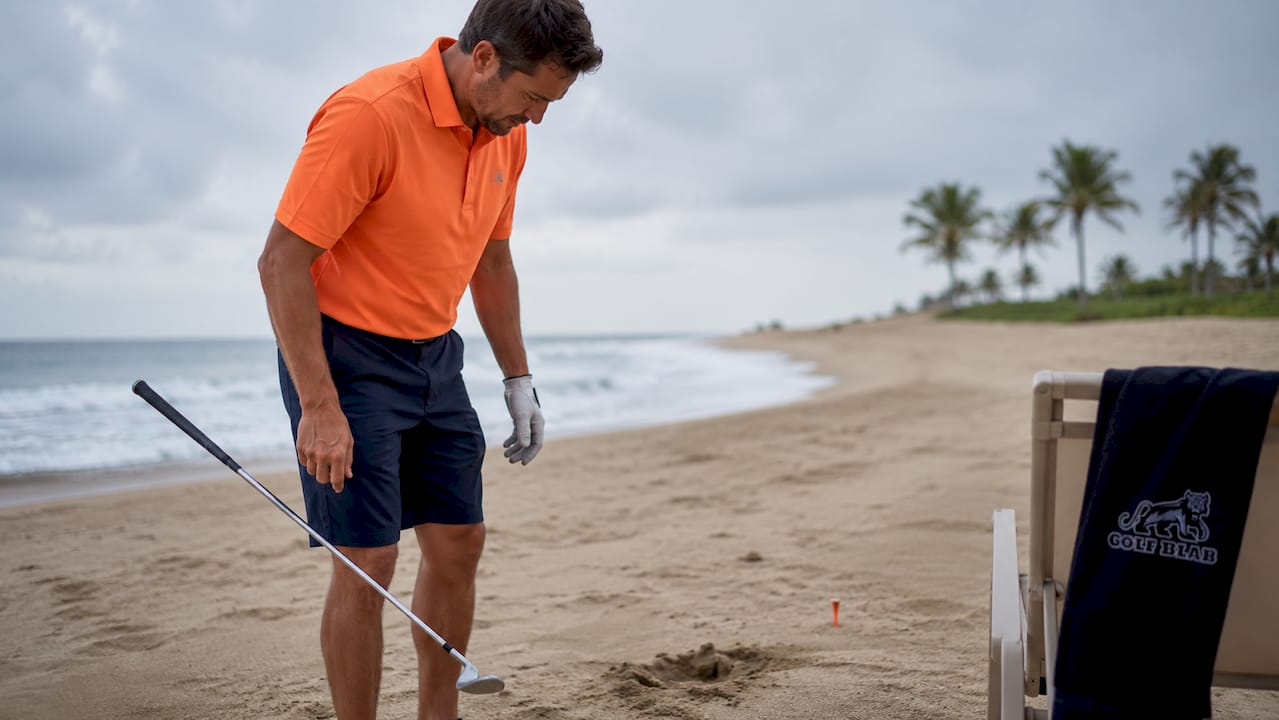
TL;DR:
- A golf divot is a strip of turf displaced by a club during impact, revealing swing mechanics and attack angle. Proper repair involves replacing or filling the divot with sand and seed, ensuring turf health and course upkeep. Reading and repairing divots enhances both individual performance and respect for the course.
A golf divot is defined as the strip of turf and soil displaced by a club’s impact with the ground, most commonly produced by irons and wedges during a proper ball-first strike. Technically, the term covers two distinct things: the turf chunk removed and the bare spot left behind, though most golfers use “divot” to mean both. Understanding what a divot tells you about your swing, and knowing how to repair one correctly, separates players who respect the game from those who simply play it. Golf Blab has put together this guide to give you both the performance insight and the course-care knowledge you need.
What is a golf divot and what does it reveal?
A golf divot is the physical record of your club’s path through the impact zone, pressed into the turf for anyone to read. Professional golfers consistently bottom their swing arc a few inches ahead of the ball, which means their divots start after the ball’s original position. That forward placement confirms ball-first contact, proper shaft lean, and solid compression. Amateurs, by contrast, often bottom out behind the ball, producing a divot that begins before the ball’s position and signals a “fat” or chunked shot.
The golf divot definition extends beyond a simple hole in the ground. It is a diagnostic snapshot of your angle of attack, swing path, and club face behavior at the moment of truth. Recognizing this transforms every iron shot into a free lesson, no instructor required.
How does a divot reflect your golf swing mechanics?
Divot location, shape, and depth each communicate something specific about your swing. Learning to read them is one of the fastest ways to self-correct on the range or the course.
Divot location: before or after the ball?
- Divot starts after the ball: The club struck the ball first, then the turf. This is the correct sequence for irons and wedges, producing maximum compression and spin.
- Divot starts behind the ball: The club bottomed out early, hitting turf before ball. This is the classic “fat” shot, often caused by excessive weight on the back foot or early wrist release.
- No divot at all with wedges: Failing to compress the ball correctly with a wedge often means the club is sweeping rather than striking down. Experienced players expect a divot with every wedge shot.
Divot shape and depth: what they tell you
Divot shape reveals swing path. A divot pointing left of the target (for a right-handed golfer) indicates an out-to-in swing path, which produces a pull or a slice. A divot pointing right of the target suggests an in-to-out path, which can cause a push or a draw. A divot pointing straight at the target is the ideal.

Depth matters too. A very deep, steep divot suggests too sharp a downward angle of attack, which can rob distance and consistency. A shallow, barely-there divot with irons may mean the swing is too flat or the player is scooping at impact. Correct divot size and placement are critical for solid ball striking, and experienced players embrace divot presence as a sign of an effective downward strike rather than something to fear.
Pro Tip: After each iron shot on the range, pause and look at your divot before retrieving the ball. Note whether it starts ahead of or behind the tee peg, which direction it points, and how deep it is. Three shots of consistent data tell you more than a swing video.
Divots also serve as a swing automation feedback tool that complements formal instruction. Advanced players aim to strike ball first and turf second, creating divots that start just after the ball’s position with precise club path and angle of attack, which maximizes spin and control.
What are the best practices for repairing golf divots?
Divot repair is an obligation, not a courtesy. Poor divot repair creates uneven play surfaces, disrupts mowing equipment, and damages turf that can take weeks to recover. The repair method depends on what the divot looks like after the shot.
- Assess the displaced turf first. If the turf chunk is intact, with roots still attached and the grass side facing up, replace it immediately. Press it firmly back into the hole so the roots make contact with the soil below.
- Tamp it down with your foot. A light, firm press with the sole of your shoe seats the turf and restores soil-to-root contact. Do not stomp or grind, just a steady, even press.
- Use sand and seed mix when turf is shattered or missing. Most courses provide bottles or buckets of a sand and seed mixture on carts and at tee boxes. Pour enough to fill the hole flush with the surrounding turf. Never use pure sand or an incorrect seed type, as both impede healthy regrowth.
- Fill only to flush, not above. Overfilling divot holes with sand and seed mix creates raised humps that disrupt ball roll and damage mower blades. Fill until level with the surrounding turf, then tamp lightly.
- Repair your divot before leaving the area. Divot etiquette in golf is clear: the player who made the divot repairs it. Leaving it for course staff or the next group is a breach of the game’s foundational respect for shared space.
Pro Tip: Carry a personal sand and seed bottle in your bag, even if the course provides them on carts. Walking golfers often reach a fairway divot before the cart does, and having your own supply means you can repair immediately and keep pace.
Effective divot repair is more about turf biology than aesthetics. Understanding plant root health leads to better course maintenance and faster turf recovery, which benefits every golfer who plays after you.

Divots vs. ball marks: how do they differ?
Golf course divots on fairways and pitch marks on greens are related but distinct problems, and they require different repair approaches.
| Feature | Fairway Divot | Green Pitch Mark (Ball Mark) |
|---|---|---|
| Cause | Club strikes turf during iron or wedge shot | Ball lands on green and compresses turf |
| Location | Fairways, approaches, tee boxes | Putting greens only |
| Repair tool | Foot, sand and seed mix | Divot repair tool or tee |
| Repair method | Replace turf or fill with sand and seed | Push edges inward, tap flat with putter |
| Key mistake | Overfilling with sand, leaving raised mound | Lifting from beneath, which tears roots |
| Recovery time | Days to weeks depending on turf type | 24–48 hours with correct repair |
The most critical distinction is how you handle a pitch mark on the green. Lifting from beneath ball marks damages roots and should be avoided entirely. The correct technique pushes the turf edges inward toward the center of the mark, then taps the surface flat with the sole of a putter. This preserves root structure and allows the turf to heal naturally within a day or two.
Specialized divot repair tools, such as the classic two-pronged fork or the newer switchblade-style tool, make green repair faster and more precise. Every golfer should carry one. The golf rules governing course care are explicit: players are expected to repair pitch marks on greens and divots on fairways as a condition of play.
Common misconceptions about divots and their repair
Several persistent myths about golf course divots lead golfers to make the same mistakes round after round.
- “Good golfers don’t take divots.” This is false. Taking a divot with an iron or wedge is a sign of a proper descending strike. Beginners who try to avoid divots often develop a scooping motion that costs them distance and accuracy.
- “Replacing the turf chunk is always the right move.” Only when the chunk is fully intact. Shattered or dried-out turf pieces cannot re-root. Placing them back in the hole without sand and seed mix underneath actually slows recovery.
- “A big sand mound means a thorough repair.” The opposite is true. High sand mounds interfere with mowing and ball roll, creating problems worse than the original divot. Flush is the goal, not mounded.
- “Ball marks heal on their own.” An unrepaired pitch mark takes up to three weeks to recover. A correctly repaired one heals in 24–48 hours. The difference is significant for turf health and playing conditions.
- “Divot repair is the groundskeeper’s job.” Course superintendents emphasize that poor divot repair affects not only turf health but also golfer experience by creating uneven lies and interfering with mowing. The responsibility belongs to the player who made the mark.
Understanding golf etiquette around divots is not about following arbitrary rules. It reflects a genuine respect for the course and the players who follow you.
Key takeaways
A golf divot is both a performance indicator and a course-care responsibility, and treating it as both makes you a better player and a better steward of the game.
| Point | Details |
|---|---|
| Divot definition | A divot is the turf strip removed by club impact, plus the bare spot left behind. |
| Swing diagnostic value | Divots starting after the ball confirm correct ball-first contact and proper angle of attack. |
| Repair method matters | Use sand and seed mix for missing turf; replace intact chunks grass-side up and tamp firmly. |
| Green pitch marks differ | Push edges inward on greens; never lift from beneath, as this tears roots and delays healing. |
| Overfilling causes damage | Fill divot holes flush with surrounding turf to avoid mounds that disrupt mowing and ball roll. |
Reading the ground beneath your feet
I have spent years watching golfers walk past their own divots without a second glance, and I understand the impulse. When you are focused on where the ball went, the ground behind you feels like yesterday’s news. But that strip of displaced turf is one of the most honest pieces of feedback the game offers you.
The divots that taught me the most were the ugly ones. A deep gouge pointing left told me I was coming over the top. A shallow scrape behind the ball’s position confirmed I was hanging back on my right side. No lesson, no video, just the turf telling the truth. Once I started reading divots with the same attention I gave to ball flight, my iron play improved faster than it had in years.
On the repair side, I have seen what happens to courses where players routinely skip the sand bottle. Fairways develop a pockmarked texture that makes clean lies a matter of luck rather than skill. That is not the game anyone signed up for. Repairing your divot takes twelve seconds. It is the smallest act of generosity in golf, and it compounds beautifully across an entire round.
My honest advice: treat every divot as a two-part opportunity. Read it before you walk away, then fix it before you move on. The course rewards players who pay attention to both.
— Michael Marini
Gear up, play better, and care for the course
Golf Blab is built for golfers who take both their game and their presence on the course seriously. Whether you are working on producing cleaner divots with your irons or looking to express your identity between shots, Golf Blab has you covered with products designed to match your passion.

Start with custom golf club labels that bring a personal signature to every club in your bag, turning your equipment into an extension of who you are on the course. For players ready to sharpen the swing mechanics that produce those telling divots, the Swing Like a Pro program delivers structured instruction with a money-back guarantee. Browse the full Golf Blab shop for accessories, training aids, and everything else that supports a more intentional, rewarding round.
FAQ
What is the golf divot definition in simple terms?
A golf divot is the piece of turf and soil removed by a club during impact, typically with an iron or wedge. The term also refers to the bare hole left in the ground after the turf is displaced.
How do you fix a divot on a golf course fairway?
Replace intact turf chunks grass-side up and press firmly with your foot; for missing or shattered turf, fill the hole flush with a sand and seed mix provided by the course, then tamp lightly.
Why are divots important for understanding your swing?
Divot location reveals your angle of attack. A divot starting after the ball confirms correct ball-first contact, while one starting behind the ball signals a fat shot caused by poor swing mechanics.
What is the difference between a divot and a ball mark?
A divot is turf displaced by a club on a fairway or approach; a ball mark (pitch mark) is the compression crater a ball creates when it lands on a green. Each requires a different repair technique.
Is it bad etiquette to not repair your divot?
Leaving an unrepaired divot is a clear breach of golf etiquette. Unrepaired divots create uneven lies, disrupt mowing, and can take weeks to recover, directly affecting the experience of every golfer who plays after you.