
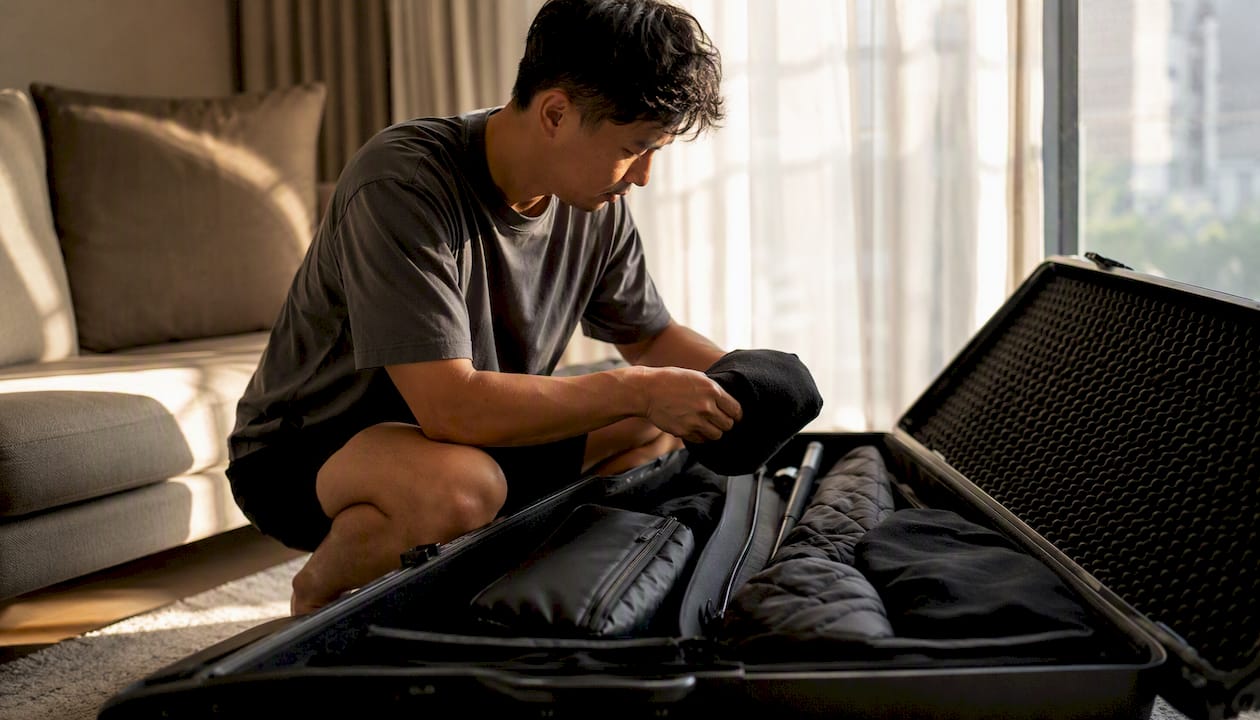
For most golfers flying within the U.S., checking your clubs in a well-padded travel case is the right call — and the decision gets easier once you know exactly what to do before you leave the house.
Before you book your bag, take these steps:
- Measure and weigh your packed case at home. Most U.S. carriers cap checked golf bags at 50 lbs and 115 linear inches.
- Photograph every club, focusing on driver heads and shafts, so you have timestamped evidence of pre-trip condition.
- Confirm your airline’s golf bag policy for every segment on your itinerary, including any connecting carrier.
- Add durable, personalized labels to your bag and headcovers so your clubs are identifiable at a glance.
- Decide: check, ship, or rent. Checking costs less and works for most trips. Shipping reduces airport hassle but needs planning. Renting makes sense for a single round or a destination where your clubs would be overkill.
The core tradeoff is simple: checking is cheapest and fastest but puts your clubs in baggage handlers’ hands; shipping costs more and takes longer but keeps your set out of the carousel lottery; renting eliminates transit risk entirely but means playing with unfamiliar clubs.
Key Takeaways
Checking clubs in a well-padded hard case, with every club photographed and labeled before departure, covers the vast majority of what can go wrong when traveling with golf equipment.
| Point | Details |
|---|---|
| Weigh and measure before you leave | Pack to under 50 lbs and 115 linear inches to avoid overweight and oversize fees on major U.S. carriers. |
| Protect the driver with a stiff arm | A rigid internal support device prevents driver head shear, the most common transit damage. |
| Choose your case by trip type | Hard cases offer the strongest protection and claim standing; soft cases are lighter but may trigger limited liability. |
| Label visibly and document thoroughly | Attach durable labels to bag and headcovers, photograph serial numbers, and store receipts digitally before every trip. |
| Golf Blab custom labels | Golf Blab’s personalized club labels make your set identifiable on any carousel and support faster damage or loss claims. |
Table of Contents
- How do checking, shipping, and renting compare for traveling golfers?
- What airline rules and fees apply when flying with golf clubs?
- How to pack your golf clubs so they survive the flight
- Which golf travel case is right for your trip?
- When does shipping your clubs make more sense than checking them?
- What to do at the airport and how to file a damage claim
- How to mark and insure your clubs for faster recovery and stronger claims
- How to handle connecting flights and multi-segment trips with your clubs
- International travel with golf equipment: customs and import considerations
- What experienced traveling golfers actually do differently
- Your clubs deserve an identity as distinctive as your game
- Sources
How do checking, shipping, and renting compare for traveling golfers?
Each option suits a different traveler profile, and the right choice often depends on trip length, how often you fly with clubs, and how much you value your set.
Checking with the airline is the default for most golfers. You pay the standard checked-bag fee (sometimes a golf-specific surcharge), drop the bag at check-in, and collect it at the oversized carousel. The convenience is real, but so is the handling risk.
Shipping ahead through a specialized golf shipper or a common carrier removes the airport-hauling step and generally reduces mishandling risk, as the PGA notes. The tradeoff is cost and lead time: you typically need to ship several days in advance, and the total price often exceeds what you’d pay to check the bag.
Renting at the destination works best for one-off trips, resort rounds, or international travel where customs complexity outweighs the benefit of playing your own sticks. Quality varies widely, so call ahead and ask specifically about shaft flex, club condition, and whether the rental set includes a hybrid or fairway wood.
A hybrid approach can make sense for multi-destination trips: ship your bag to the first stop, check it on the return, and rent for any side-trip rounds where hauling the case would be impractical.
| Option | Typical Cost | Convenience | Damage Risk | Planning Required | Best For |
|---|---|---|---|---|---|
| Check with airline | Low to moderate | High | Moderate | Minimal | Most domestic trips, frequent flyers |
| Ship ahead | Moderate to high | Moderate | Lower | Several days | Planned trips, high-value sets |
| Rent at destination | Variable | Very high | None | Minimal | Short trips, international, one-off rounds |
What airline rules and fees apply when flying with golf clubs?
U.S. carriers treat a golf bag as one checked item, but the details vary enough that assuming a flat policy is a costly mistake.
Delta allows one golf bag as standard checked baggage when it meets size and weight limits, with standard checked-bag charges applying and excess-weight fees kicking in for bags over 50 lbs; items over 115 linear inches may be refused outright. American Airlines follows a similar structure: a golf bag counts as one checked bag and may contain clubs, balls, tees, and one pair of shoes, with standard fees up to 50 lbs and an overweight fee for bags between 50 and 70 lbs. Southwest applies standard checked-bag and overweight fees as well, and soft-sided golf bags may be subject to a limited release of liability, which can reduce what the carrier will reimburse if damage occurs.
A few things to watch closely:
- Connecting carriers can have different rules. A codeshare partner may enforce stricter size limits or charge a separate oversize fee. Check every segment.
- Some carriers waive oversize fees for golf bags but still enforce weight limits — always verify both dimensions and weight for each leg.
- Prepaying baggage charges online is often cheaper than paying at the counter.
- Soft cases and limited release: if your carrier asks you to sign a limited release form for a soft-sided bag, understand that your damage claim rights may be reduced. A hard case offers stronger protection and, in some cases, stronger claim standing.
Statistic callout: The standard weight threshold across major U.S. carriers is 50 lbs for a golf bag before overweight fees apply; bags exceeding 115 linear inches may be refused entirely.
Pro Tip: Remove extra golf balls before you pack. The PGA flags excess balls as one of the most common reasons golf bags tip over the 50-lb limit. Pack only what you’ll actually use and fill the remaining space with soft clothing for padding instead.
How to pack your golf clubs so they survive the flight
A repeatable packing method — call it the smart pack — takes about 20 minutes and dramatically reduces the chance your driver arrives in two pieces.
Step 1: Clear and photograph. Remove all loose items from pockets. Photograph every club individually, focusing on the driver head, shaft, and any high-value woods. Record serial numbers for your most expensive clubs and keep that list with your travel documents. The PGA recommends keeping photos and receipts accessible throughout the trip.
Step 2: Protect the driver first. The driver is the most vulnerable club in transit. Use a rigid internal support device (often called a stiff arm) that extends from the bag’s base to above the driver head, preventing the head from flexing into adjacent clubs during impact. Wrap the head in a thick towel or heavy clothing as a secondary layer.

Step 3: Organize and secure the full set. Arrange clubs so heads are grouped and cannot collide. Long irons and woods go in the center; shorter irons and wedges toward the edges. Use internal straps to hold the bundle together.
Step 4: Pad with clothing and close securely. Fill empty space with soft clothing — shirts, sweaters, and socks work well. Secure all pocket zippers. Place your golf shoes in a shoe bag and tuck them at the base.
Step 5: Weigh, measure, and label. Weigh the packed case on a home scale and measure total linear inches (length + width + height). Attach a durable, clearly visible label with your name, phone number, and destination. Keep your boarding pass and baggage receipts in an accessible pocket.
Quick-reference checklist:
- Loose items removed from all pockets
- Clubs photographed, serial numbers recorded
- Driver protected with stiff arm and padded wrap
- Club heads grouped and secured with internal straps
- Clothing padding fills all empty space
- Shoes bagged and placed at base
- Total weight under 50 lbs
- Total linear inches under 115
- Visible ID label attached
- Receipts and travel documents accessible
Pro Tip: A rigid stiff-arm device is the single highest-impact investment for driver protection. The PGA’s guidance specifically highlights driver head shear as the most common transit failure, and a stiff arm addresses exactly that failure mode.
Which golf travel case is right for your trip?
The case you choose shapes every other decision: how much you pay in fees, how well your clubs survive, and whether you can file a successful damage claim.
Hard cases offer the strongest protection and are often required by carriers for full liability coverage. They add weight (typically 10–15 lbs before clubs), which can push you toward the overweight threshold, and they’re bulkier to store. For frequent flyers or anyone traveling with a high-value set, the protection premium is worth it.
Soft cases are lighter and easier to store, but they offer less impact protection and often trigger a limited release of liability at check-in, as Southwest’s policy makes clear. If you choose a soft case, pair it with maximum internal padding and consider supplemental travel insurance.
Hybrid cases use rigid panels around the clubhead area with a lighter overall shell. They split the difference on weight and protection, making them a practical choice for golfers who travel several times a year without wanting to haul a full hard shell.
Key features to prioritize when buying any travel case:
- Rigid or reinforced driver/head protection zone
- Shock-absorbing wheelbase for easy transport
- Interior stability straps to prevent club movement
- Padded clubhead area with replaceable padding
- Durable exterior fabric or shell with lockable zippers
- Folded dimensions that fit standard storage spaces
- Manufacturer warranty covering structural damage
Pro Tip: Before purchasing, check whether the case accommodates an internal stiff-arm device. Some soft and hybrid cases have a fixed internal structure that prevents adding one, which limits your driver protection options.
When does shipping your clubs make more sense than checking them?
Shipping clubs ahead removes the airport-hauling step and reduces the chance of rough carousel handling, but it demands planning and usually costs more than a standard checked-bag fee.
The PGA describes shipping as a less stressful alternative when time allows, particularly for golfers who want to arrive at the course ready to play rather than waiting at baggage claim. Specialized golf shipping services handle the packing, tracking, and delivery logistics, often with door-to-door options that drop your bag directly at the resort or club.
Practical steps for shipping:
- Book at least 5–7 days before your tee time to allow for transit time and any delays.
- Choose door-to-door service when available; depot pickup adds a logistical step at both ends.
- Select tracking and signature confirmation so you have a delivery record.
- Declare the full replacement value of your clubs when purchasing shipping insurance; keep receipts and photos to support any claim.
- Compare total cost against the airline’s checked-bag fee plus any overweight or oversize surcharge before committing.
Statistic callout: Shipping clubs typically costs more than checking them with a U.S. carrier, but the tradeoff is reduced airport handling and a lower mishandling risk, according to PGA guidance.
For golfer packing essentials beyond the clubs themselves, a well-organized approach to what travels with you makes the whole logistics chain smoother.
What to do at the airport and how to file a damage claim
Handling the airline interaction well protects your claim rights if something goes wrong.
- Arrive early. Oversized bags often require a separate check-in process. Give yourself at least 30 extra minutes beyond the standard cutoff.
- Declare your golf bag explicitly at the counter and confirm it will travel on your same flight.
- Keep all baggage receipts — the claim tag is your primary proof of check-in.
- Ask about limited release forms. If the agent presents one for a soft-sided bag, understand what you’re signing before you agree.
- Get written or verbal confirmation at the oversized drop desk that the bag is accepted for your specific flight.
- Inspect immediately at the carousel. Open the case before leaving the baggage area and photograph any damage with a timestamp.
- File a claim before leaving the airport. Airline liability is limited and often requires immediate reporting; delayed claims are routinely denied.
Pro Tip: Keep a photo of your clubs’ serial numbers and a copy of purchase receipts on your phone, not just at home. If damage occurs, you need that documentation at the airport counter, not later.
If damage is found after you leave:
- Contact the airline’s baggage claim department within 24 hours (domestic) or 7 days (international) for most U.S. carriers.
- Submit photos, receipts, and the original claim tag number.
- Escalate in writing if the initial response is unsatisfactory; reference the carrier’s published liability limits.
How to mark and insure your clubs for faster recovery and stronger claims
Clear identification is one of the simplest, highest-return steps a traveling golfer can take. PGA guidance specifically recommends visible labels on shafts and headcovers alongside documented photos and receipts, noting that this combination increases recovery odds and speeds insurance or airline claims.
Effective labeling and documentation steps:
- Place a visible external label on the bag and each headcover with your name and contact number.
- Add a discreet internal label inside the bag and on individual shafts — if the external tag is torn off, the internal one remains.
- Photograph serial numbers on driver heads and high-value irons before every trip.
- Store receipts digitally in a cloud folder you can access from your phone at any airport.
- For club personalization that doubles as identification, custom labels with a unique design make your bag instantly recognizable on a crowded carousel.
Insurance options worth considering:
- Travel insurance with sports equipment coverage typically covers loss, theft, and damage above the airline’s liability cap.
- Carrier declared value raises the airline’s maximum liability for an additional fee at check-in, but coverage terms vary.
- Homeowner’s or renter’s insurance sometimes extends to personal property in transit — check your policy before buying duplicate coverage.
Pro Tip: A discreet hidden label inside the bag combined with a bold, distinctive external label gives you two layers of identification. If the outer tag is lost in handling, the internal one can still confirm ownership and support a claim.
How to handle connecting flights and multi-segment trips with your clubs
Multi-segment itineraries introduce compounding risk: each transfer is another handling event, another opportunity for a bag to miss a connection, and another set of carrier policies to navigate.
The most important step is confirming that your golf bag is checked through to your final destination on a single claim tag. When you check in at the origin, ask the agent explicitly whether the bag will be transferred automatically or whether you need to reclaim and recheck it at the connecting airport. Some international connections require passengers to clear customs and recheck all baggage, which adds time and handling.
Tight connections are the biggest hazard. An oversized bag that travels through the oversize system takes longer to load and unload than standard luggage. If your layover is under 90 minutes, there is a genuine risk the bag misses the connecting flight even when you make it. Booking a longer layover when you’re traveling with golf equipment is a practical form of insurance.
Connecting through a different carrier adds another layer of complexity. The originating carrier’s golf bag policy may not apply on the connecting segment, and fees can differ. Always check the baggage rules for every airline on your itinerary, not just the one that issued your ticket.
International travel with golf equipment: customs and import considerations
Crossing a border with golf clubs is rarely complicated, but a few practical steps prevent misunderstandings that can delay your arrival at the first tee.
British Airways notes that golf equipment is often treated as out-of-gauge or oversize on international routes, and recommends notifying the airline at least 72 hours in advance and using the out-of-gauge drop desk so the bag is more likely to travel on the same flight. That advance notification step applies broadly to international carriers, not just British Airways.
On the customs side, golf clubs are personal sporting goods and are generally admitted duty-free when you’re traveling as a tourist with your own equipment. Carry purchase receipts for high-value clubs, particularly if the set is new. Customs officers occasionally flag expensive equipment as potential commercial goods, and a receipt showing personal purchase resolves that quickly. Some countries set a threshold above which personal goods must be declared; check the destination country’s customs authority website before you travel.
A few additional considerations for international trips:
- Declare valuable equipment proactively if the total replacement value exceeds the destination country’s personal goods threshold.
- Carry receipts in both digital and printed form — not every customs desk has reliable connectivity.
- Confirm whether your travel insurance covers international loss or damage, including the transit legs operated by foreign carriers.
- Research rental options at the destination as a backup, particularly for remote courses where replacement clubs would be difficult to source quickly.
What experienced traveling golfers actually do differently
The gap between a golfer who dreads traveling with clubs and one who treats it as routine usually comes down to a handful of small, repeatable habits rather than any single piece of gear.
Experienced traveling golfers tend to pack a dedicated towel specifically for padding — not a course towel, but a thick bath towel that lives in the travel case year-round. They know exactly what their packed case weighs before they leave the driveway, because they’ve weighed it after every trip and adjusted accordingly. They also keep one mid-iron in a carry bag for practice swings at the hotel, a habit that has nothing to do with protection and everything to do with arriving ready to play.
The choice to ship rather than check is rarely about cost for experienced travelers. It’s about arriving at a destination where the course is the point, not the logistics. When the trip is built around a specific course or a competitive round, shipping removes one variable from a day that already has enough of them.
What experienced golfers almost universally endorse is the discipline of labeling and documentation. A distinctive, durable label on every headcover and a photo of every serial number takes ten minutes before the first trip and pays dividends every time a bag comes off a carousel in the wrong city. The smart-pack checklist isn’t a beginner’s tool; it’s what careful golfers use precisely because they’ve seen what happens when it’s skipped.
Your clubs deserve an identity as distinctive as your game
Traveling with your clubs is one thing. Arriving at the first tee knowing exactly which bag is yours, with every club accounted for and every headcover intact, is another. Golf Blab’s Custom Golf Club Labels give your set a visible, durable identity that works as hard as you do: bold enough to spot on a crowded carousel, distinctive enough to support a damage or loss claim, and personal enough to reflect the golfer behind the bag. Available in multiple ink colors, these labels attach to shafts and headcovers and hold up through the rigors of checked baggage. For golfers who want to take their game further, the Play Golf with a Tour Pro experience adds a layer of credibility and inspiration to any golf trip. Browse the full range at Golf Blab’s shop and label your clubs before your next flight.

Sources
The policies and expert guidance referenced throughout this article come from primary carrier sources and the PGA, which represent the most authoritative and up-to-date information available for traveling golfers.
- Flying With Sports Equipment | Delta Air Lines
- Flying With Golf Clubs? Follow These Five Tips – PGA
- Flying With Golf Clubs | Golf Baggage Policy
- Allowance and requirements — Golf clubs — American Airlines
- Flying with sports equipment | Information | British Airways