Posted on

Golfers: 7 Goal First Checks to Choose an Online Golf Clinic

Golfer reviewing swing video with online coach

If your goal is fast technical change, choose live real-time coaching for its immediate cues. If you want affordable, frequent feedback on a busy schedule, choose asynchronous video review. If you’re building a swing from scratch, a structured subscription course beats either. Beginners should favor programs with a real baseline assessment before anything else. The checklist below turns that verdict into a repeatable evaluation process.


TL;DR:

  • Initial assessments that accurately evaluate your swing, goals, and injury history are crucial and should be structured rather than generic.
  • Coaching credential verification and evidence of results are essential, with PGA certification and documented outcomes serving as strong indicators.
  • Feedback speed varies; live coaching delivers instant corrections, while asynchronous reviews typically take around 48 hours, affecting how quickly you can adapt.
  • For beginners, live sessions offer faster technical improvements, but seasoned golfers benefit more from detailed video analysis and structured practice over time.
  • Testing a coach with a trial session or a single video review before committing to larger packages helps ensure communication style and results meet expectations.

Golf Blab
Build Your Golf Game With Purpose
Explore Golf Blab’s targeted instructional content and personalized club labels for progress and individuality on the course.

Explore Golf Blab

Table of Contents

How to Choose an Online Golf Clinic: A Checklist You Can Use Now

Before you hand over a card number, run every candidate program through the same seven checks. Consistency here is what separates golfers who improve from golfers who just collect swing videos.

  1. Define your objective and learning style first. A golfer chasing 20 extra yards off the tee needs a different clinic than one trying to stop a two-way miss under pressure. Know which one you are before you shop.
  2. Require a real initial assessment. Quality programs open with a structured evaluation covering your goals, injury history, and a baseline look at your current swing, not a generic welcome email. This matters because the strongest virtual training programs build every future lesson around that first diagnostic.
  3. Check feedback speed and communication channels. Ask directly: is this a live call, a video upload with a 48 hour turnaround, or something slower?
  4. Verify coach qualifications and evidence of results. PGA certification and tour experience are worth asking about by name, not assuming.
  5. Look for structured practice plans with measurable drills, not a stack of unconnected tips.
  6. Read the pricing shape before you commit. Is it a single analysis, a per-session live rate, or a recurring subscription?
  7. Confirm your equipment and camera setup will actually work with their platform before session one.

Pro Tip: Book a single trial session or one-off video analysis before buying a bundle. A $40 test tells you more about a coach’s communication style than any testimonial on their homepage.

Professional golf educators consistently point out that a “practice with a purpose” model beats sporadic tips for long-term improvement, and that single principle should guide every item on this list.

What Types of Online Golf Clinics Exist, and Which Fits Your Goal?

Online golf training programs generally fall into four formats, and picking the wrong one is the single most common reason golfers quit after a month.

  • Live, real-time coaching puts you on a video call with a coach who watches you swing and corrects you in the moment. This format has the strongest motor-learning advantage because the cue arrives while your body still remembers the movement that caused it.
  • Asynchronous video review has you upload swings for a coach to analyze on their own schedule, usually with frame-by-frame annotation and a written or recorded breakdown. It costs less per session and lets a coach spend real analytical time on your mechanics instead of narrating live.
  • Subscription or course libraries deliver a structured curriculum, lesson by lesson, often building from setup fundamentals through full-swing sequencing. These suit golfers who want a syllabus more than a personal relationship with one coach.
  • Hybrid models blend scheduled live check-ins with ongoing async review between sessions, which top coaches recommend for the same reason: you get immediate cues plus deeper analysis over time.

Feedback speed varies sharply by format. Some remote coaching services promise video reviews inside 48 hours, while live formats deliver correction instantly, and that gap directly affects how fast a new movement pattern sticks.

How Do You Prepare for Your First Online Golf Clinic Session?

A first session is only as good as the footage and information you bring to it. Coaches cannot fix what they cannot see clearly, and a blurry, poorly angled video wastes the paid minutes you’re trying to protect.

  1. Pick one measurable objective for the session. “Fix my slice” is vague; “get my clubface square at impact” gives a coach something to actually measure against.
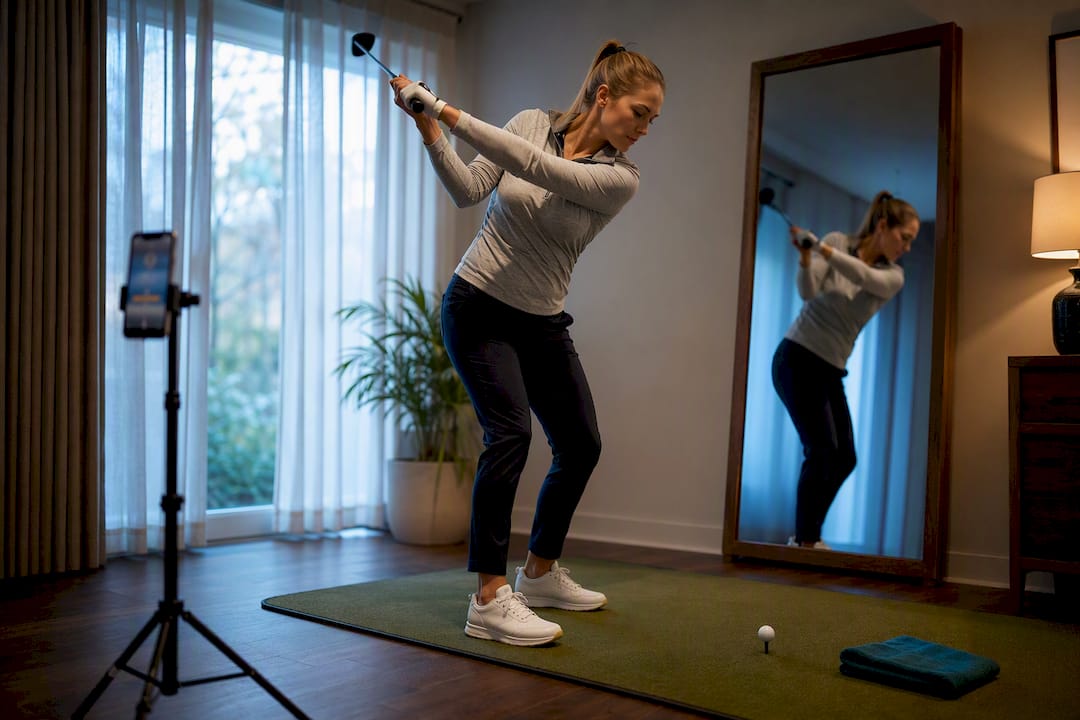
  2. Set up two camera angles: face-on and down-the-line, both on a tripod or stable surface at hip height, roughly eight feet back.
  3. Mark your ball position with an alignment stick or towel so the coach has a fixed reference point across multiple swings.
  4. Warm up for five to ten minutes, then capture several full-speed swings, not just your best one.
  5. Tell your coach upfront about any injuries, prior instruction, or launch monitor data you already have.
  6. Confirm the scheduling and follow-up format before the session ends, including when to expect notes or a practice plan.

Spending roughly half an hour analyzing your own game and defining goals before the lesson measurably sharpens how useful that lesson becomes.

Pro Tip: Run through a basic equipment check first. Worn grips or an ill-fitting club can look exactly like a swing flaw on video, and no coach can fix a fault that’s actually your equipment.

Hands inspecting a worn golf club grip

How Do You Evaluate a Coach’s Credentials and Communication?

Credentials alone don’t guarantee a coach can actually teach through a screen, but they’re still your first filter. PGA certification and documented tour or teaching experience signal a coach has been vetted by a standard beyond their own marketing copy.

Ask for a sample deliverable before you pay for a full package. Quality coaches can show you what an annotated video breakdown, a drill assignment, or a documented practice log actually looks like. If they can’t produce one, that’s your answer.

  • Ask directly about turnaround time and hold them to it after your first submission.
  • Request a written or recorded explanation, not just marked-up video with no context.
  • Confirm a follow-up cadence: will they check your progress in a week, two weeks, or never?
  • Watch for red flags: generic advice that ignores your specific swing, no initial assessment at all, or vague promises with no measurable drill attached.
  • Ask what happens if the first fix doesn’t work. A coach with a real process has a next step ready; one without a process starts guessing.

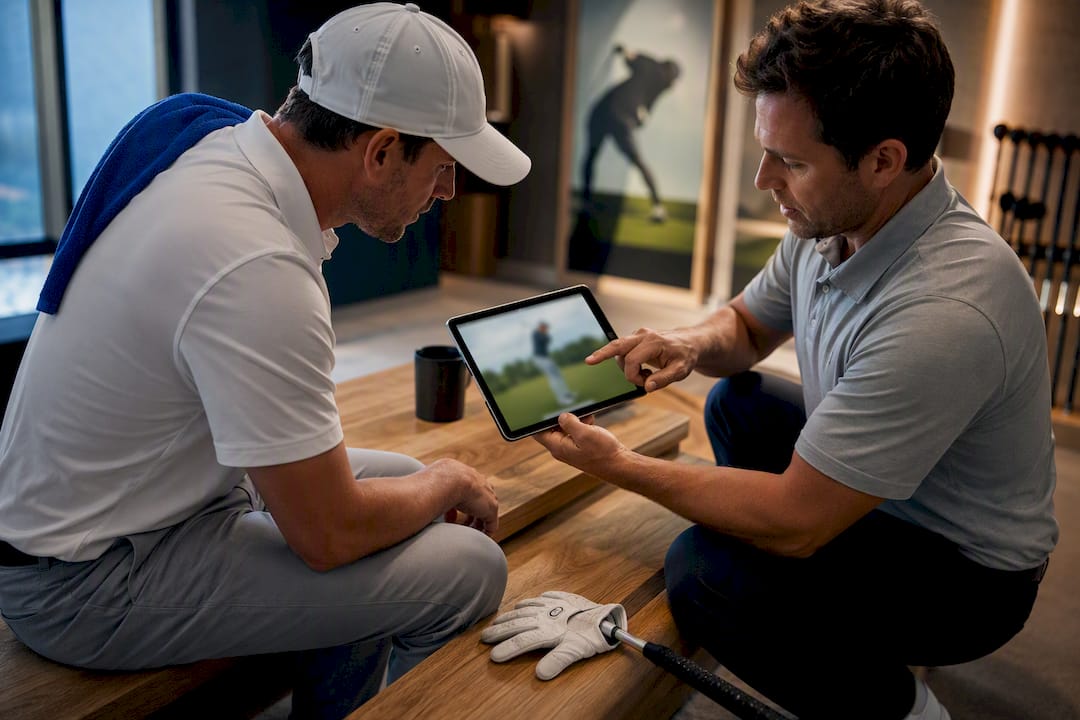
Reviewing footage with a coach who explains the “why” behind a fix, not just the “what,” tends to produce swing changes that hold up under pressure. That’s the gap between swing analysis that actually changes your game and analysis that just points out flaws.

What Should Online Golf Lessons Cost, and How Fast Should You See Results?

Pricing shapes vary more than most golfers expect, and comparing them apples to apples means asking what exactly you’re paying for per dollar.

  • Single video analysis: a flat fee for one swing review, usually the lowest barrier to test a coach.
  • Per-session live coaching: billed per call, often the most expensive per minute but fastest for immediate correction.
  • Subscription plans: monthly access to a course library plus periodic reviews, best for golfers building fundamentals over months.
  • Bundles: a set number of sessions or reviews purchased together, often at a discount versus paying one at a time.

Turnaround speed isn’t just a convenience factor. Faster feedback measurably affects how well a new motion transfers to real swings, since the correction lands closer to when the movement happened. Most golfers need several weeks of focused practice on a single change, not a single lesson, before real transfer shows up on the course. Look for providers offering a trial session or a satisfaction guarantee. Testing a coach for $40 before committing to a $300 bundle is simply good judgment.

How Golf Blab’s Coaching and Resources Match This Checklist

Play Golf with a Tour Pro delivers the live, hands-on coaching style this guide recommends for golfers chasing fast technical change, paired with Golf Blab’s broader library of practical drills and swing tips for structured practice between sessions. Golf Blab’s partnership with professional golfers reflects the same standard this checklist asks you to demand: real credentials behind the instruction, not just marketing language. Expect the experience to open with a real assessment of your goals, move into a plan built around practice routines you can repeat, and include follow-up to track whether the change actually held.

Is Your Video and Personal Data Safe With an Online Golf Coach?

Every online clinic asks you to hand over swing video, and often personal details like injury history or contact information, so it’s worth knowing where that footage actually goes. Before uploading anything, check whether the platform states who can view your video and whether it’s stored, deleted, or reused in marketing without your consent.

A few habits protect you without adding friction to the coaching relationship. Use a platform’s official upload portal or a private link rather than emailing raw video files, which can sit unsecured in inboxes indefinitely. Ask directly whether a coach or platform ever repurposes client swings for public content, and get that answer before your first upload, not after you spot your own swing on someone’s feed. If a service asks for payment details, birthdate, or medical information beyond what’s needed for coaching, question why.

Privacy checks before uploading golf swing video

Reputable coaching services state a clear privacy policy and give you control over whether your footage is kept after the engagement ends. If a provider has no visible privacy terms at all, that gap deserves the same scrutiny you’d apply to a coach with no credentials. Treat your golf swing footage the way you’d treat any personal video: worth sharing with someone qualified, not worth handing to anyone who asks.

A Three-Step Way to Test a Clinic Before You Commit

Define your one goal, then run a starter test: submit two swings, face-on and down-the-line, and ask for one prioritized change. Commit to two weeks of practice, then submit follow-up video to measure actual transfer. Skipping straight to a big package before that test is the most expensive mistake golfers make.

— Michael Marini

Ready to Start? Golf Blab’s Coaching and Gear Options

If the checklist above pointed you toward live, personal instruction with real accountability, Play Golf with a Tour Pro is Golf Blab’s direct answer to that need, priced at $600 one time per person. Expect the same structure this guide recommends: an initial conversation about your goals, hands-on coaching, and a plan you can actually take back to the range. Golf Blab also offers Custom Golf Club Labels for $29.99, a small but genuine confidence boost once your equipment check is done and your bag reflects the golfer you’re training to become. If you’re shopping for someone else, a Golf Blab E-Gift Card at $25 removes all the guesswork. Browse the full lineup, including apparel, in the Golf Blab shop and pick the starting point that matches where you are right now.

Sources

FAQ

What’s the Fastest Way to Choose an Online Golf Clinic?

Match the format to your goal first: live coaching for fast technical fixes, async review for affordable frequent feedback, and subscription courses for building fundamentals. Then test one program with a single trial session before committing to a bundle.

How Much Do Online Golf Lessons Typically Cost?

Pricing ranges from single video analyses to per-session live calls to monthly subscriptions, with cost generally rising alongside personal attention and turnaround speed. Golf Blab’s Play Golf with a Tour Pro is priced at $600 one time per person for live, personal instruction.

How Long Does It Take to See Results From Online Coaching?

Most golfers need several weeks of focused practice on a single prioritized change before real transfer shows up on the course, not just one lesson. A common starter test is two weeks of practice followed by a follow-up video to measure whether the change actually held.

Are Live Sessions Better Than Video Review for Beginners?

Live sessions offer immediate correction, which suits beginners still learning basic positions and motor patterns. Video review works well as a lower-cost complement once a golfer already understands the fundamentals and needs deeper technical analysis over time.

Is It Safe to Share Swing Video With an Online Coach?

It’s generally safe with platforms that state a clear privacy policy covering storage and reuse of your footage. Avoid emailing raw video to unverified addresses and ask directly whether a coach reuses client swings for public content before uploading anything.
Posted on

Make Golf Labels Last Four Seasons With Proven Materials

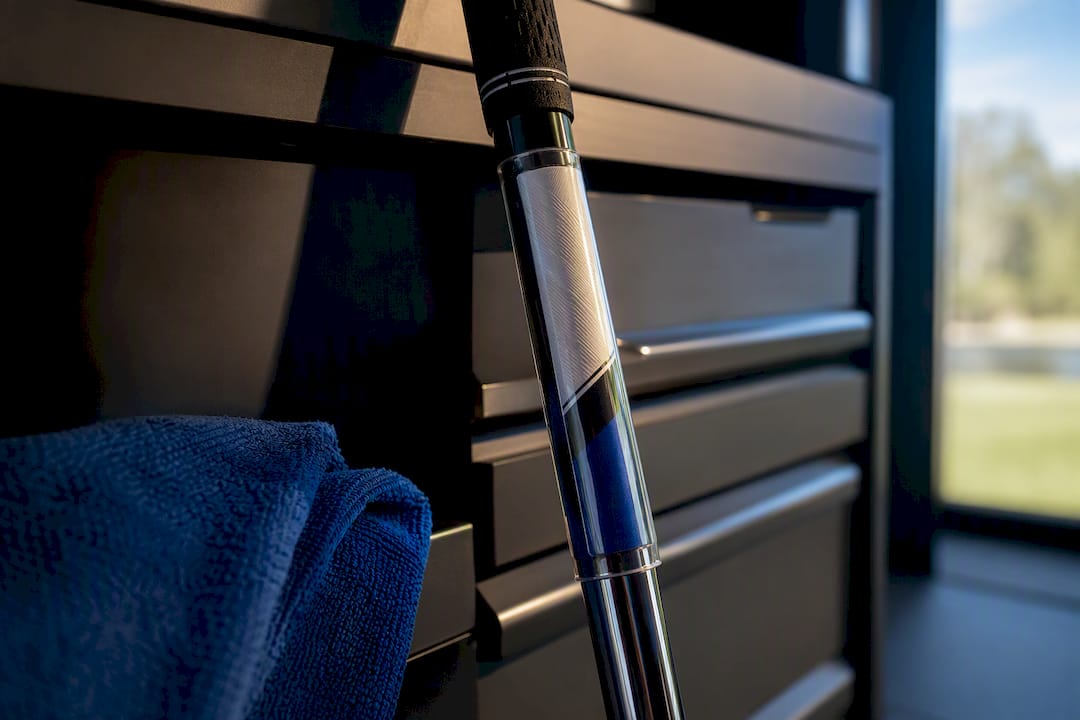
Laminated label edge on golf club shaft

Laminated Mylar or weatherproof vinyl, applied below the grip with a high-tack acrylic adhesive, outlasts every other labeling method golfers try. Clean the shaft with isopropyl alcohol, burnish the label firmly to eliminate air pockets, and let it cure for 24 hours before it ever sees a fairway or a car trunk. That combination of material, placement, and patience is the difference between a label that survives four seasons and one that peels by June, and it’s exactly what Golf Blab builds its custom golf club labels around.


TL;DR:

  • Laminated Mylar and weatherproof vinyl with high-tack acrylic adhesive withstand UV exposure, rain, and bag friction for multiple seasons when applied correctly.
  • Placement below the grip on the shaft’s flat section between steps or just above the hosel ensures durability and ease of visibility without interference from turf or bag contacts.
  • Proper application involves thorough alcohol cleaning, precise positioning, gradual pressing, and curing for 24 hours, with warming labels on cold days improving adhesion.
  • Removal should be gentle, using low heat and solvents like alcohol to avoid damaging club finishes, especially on vintage or specialty clubs.
  • Vendor-printed laminated labels outperform homemade ones in longevity, offering better resistance against fading, delamination, and edge lift over several seasons.

Golf Blab
golf-blab.com
Personalize Your Golf Clubs
Golf Blab creates personalized golf club labels that combine distinctive style with practical function for golfers who want their equipment to stand out.

Explore Golf Blab

Table of Contents

What Makes a Golf Label Material Durable?

The material determines almost everything else. Laminated Mylar and weatherproof vinyl share a construction that matters more than most golfers realize: a printed layer sealed beneath a clear polyester or polypropylene film, so UV rays, rain, and the friction of a crowded bag never touch the ink directly. That sub-surface printing is why laminated Mylar and polyester labels with permanent adhesive show up again and again in vendor specs built for golf equipment specifically.

Adhesive chemistry deserves just as much attention as the face material. High-tack acrylic adhesive forms a permanent bond that resists heat softening in a hot trunk and cold stiffening in a winter bag, and it grips both steel and graphite shafts without leaving residue behind when you eventually remove it. Generic office-label adhesive does neither reliably.

Cheap paper or unlaminated vinyl fails in predictable ways:

  • Fading from UV exposure within a few rounds of direct sun
  • Delamination, where the printed layer separates from the backing after repeated wiping
  • Edge lift, starting at the corners and unraveling the whole label within a season
  • Adhesive failure, where the label slides or spins after contact with sunscreen or rain

A product marketed as waterproof, scratchproof, and made in the USA with a strong long-adhesion bond illustrates the standard serious buyers should expect. Anything short of that is a temporary fix, not a durable one.

Where Should You Place a Label on Each Club?

Below the grip, on the exposed shaft, is the placement that balances visibility against wear for the overwhelming majority of clubs. That zone stays clear of grip torque and away from the head, where turf contact and cart bag racks do the most damage. The USGA’s own equipment guidance backs this logic indirectly: markings need to be permanent, clear, and unambiguous for equipment management, and a spot that avoids abrasion is the only way to keep a marking legible for years, not weeks.

A few situations call for adjustments:

  • Rental sets often carry molded head markings or numbered bag tags instead of shaft labels, since rental clubs get swapped and refinished too often for a permanent label to make sense.
  • Stepped steel shafts need the label centered on a flat section between steps, never straddling a step, or the laminate will bridge and eventually crack.
  • Putters, with their shorter, often non-standard shafts, sometimes take a smaller label just above the hosel instead of the standard below-the-grip zone.
  • Bag tags work as a backup identifier for tournament play, but they get lost or swapped far more easily than a shaft label ever does.

Golf Blab’s guide to labeling golf clubs walks through sizing for each club type if you’re outfitting a full set at once.

How Do You Apply a Label for Maximum Adhesion?

Application technique separates a label that lasts four seasons from one that lifts at the edges within a month. Even the best laminate fails on an oily or curved surface if you skip the prep work, and that single mistake accounts for most of the “my labels keep falling off” complaints golfers post online.

Start with surface prep. Wipe the shaft with isopropyl alcohol on a lint-free cloth, working past the spot where the grip’s lower edge sits, since grip solvent and hand oils leave a residual film that blocks adhesive contact. Let it dry fully before touching the label.

Then follow this sequence:

  1. Position the label against the dry shaft and confirm the orientation before committing.
  2. Peel back roughly a third of the backing and set that exposed edge in place first.
  3. Align the label along the shaft’s length, keeping it parallel to the grip line.
  4. Press down gradually while peeling the remaining backing away, working out from the center to avoid trapping air.
  5. Burnish firmly with a squeegee or the edge of a credit card, pushing outward toward the edges to force out any remaining bubbles, which matter more on curved or stepped shafts where the label has to conform to a slight radius.

Let the label cure for 24 hours before the club goes back in a bag or sees rain. Immediate exposure to moisture or heavy handling is the single most common reason a properly applied label still fails early.

Pro Tip: Warm the label slightly with your hands before burnishing on a cold day. Cold adhesive is stiffer and bonds less completely on the first pass, which is exactly when edge lift starts.

How Do You Remove a Label Without Damaging the Finish?

Start gentle, then escalate only if you need to. Peel from one corner slowly, at a low angle, rather than pulling straight up, since a shallow angle puts less stress on the clearcoat underneath.

If the label resists, a hairdryer on low heat softens the adhesive enough to lift it cleanly in most cases. For residue left behind, isopropyl alcohol or an adhesive remover made for painted or coated surfaces will dissolve the remaining tack without attacking the finish. A few practical guardrails:

  • Test any solvent on an inconspicuous spot first, especially near a shaft’s paint fill or logo.
  • Never scrape with a blade or fingernail across the clearcoat. That’s how removal turns into a repair job.
  • Work in short passes rather than one long aggressive pull, which tends to stretch the laminate and smear adhesive rather than lift it whole.

Pro Tip: Vintage clubs and specialty finishes, like hand-painted persimmon woods or collector irons, are worth a call to a club repair professional before you apply any solvent at all. Some older lacquers react poorly to alcohol.

How Do You Keep Labels Readable Through the Seasons?

A quick visual check every time you clean your clubs catches problems while they’re still cheap to fix. Look for lifted corners, cloudy lamination, or fading text, then wipe each label with a damp cloth rather than scrubbing, since aggressive scrubbing is what starts edge lift in the first place.

A few habits extend label life measurably:

  • Avoid leaving clubs in a hot trunk for extended stretches. Heat cycles are harder on adhesive than a single hot round on the course.
  • Position clubs in bag dividers so labels don’t rub directly against neighboring shafts or the bag’s interior lining.
  • Re-burnish edges after a stretch of heavy play, especially if you’ve noticed any lifting starting at a corner.
  • Replace a label once you see delamination, persistent edge lift after re-burnishing, or fading that makes the text hard to read at arm’s length.

Vendor and community durability reports consistently describe multi-layer laminated Mylar surviving multiple seasons of rain, UV, and bag friction when it’s applied with proper edge prep, which is the pattern worth trusting over any single product’s marketing claim.

DIY Labels or Vendor-Printed: Which Lasts Longer?

DIY Labels or Vendor-Printed: Which Lasts Longer? — overview diagram

Vendor-printed laminated labels beat home-made versions on durability almost every time, mainly because sub-surface printing seals the ink beneath a protective layer in a way home thermal printers and inkjet labels can’t replicate. A home-printed label sitting exposed on the surface starts fading and smearing far sooner, especially with any rain exposure.

Cost and time cut the other way, somewhat. A vendor set costs more per label upfront than a roll of address labels, but the time saved and the multi-season durability usually make it the better value once you count a full bag of clubs and a season or two of reapplication for DIY versions. Consider:

  • Cost per club adds up fast when you’re relabeling DIY versions two or three times a season versus once with a laminated set.
  • Time investment for DIY includes design, printing, cutting, and troubleshooting adhesive that wasn’t built for a golf shaft in the first place.
  • Privacy and format choices matter too. A phone number is faster for a stranger to use if your clubs go missing, while a QR code linking to a private contact form keeps your number off a public shaft.
  • Tournament readability favors simple, high-contrast text over a QR code, since event staff scanning a rack of clubs need something they can read at a glance, not something they have to scan.

What Sizes and Tools Do You Need to Get This Right?

Drivers and fairway woods typically take a slightly longer label to wrap the wider shaft taper, while irons and wedges use a shorter, narrower size suited to a straighter shaft section. Putters need the smallest size of the group, given their shorter exposed shaft. Stepped shafts require sizing the label to fit within a single flat section rather than spanning a step, which is where most fit problems happen.

A short tools checklist covers nearly every job:

  • Isopropyl alcohol and a lint-free cloth for prep
  • A burnisher, squeegee, or credit card edge for pressing labels flat
  • A hairdryer for any future removal
  • A cutting mat and sharp blade if you’re trimming DIY labels to size

Before final adhesion, mock-fit the label dry against the shaft to confirm placement and size. That one extra minute prevents the far more annoying problem of peeling off a misaligned label and starting over.

What Do Experienced Players and Event Staff Say About Label Durability?

Multi-season durability shows up consistently in how golfers talk about their labels once a few years have passed, not right after a purchase. The clubs that still carry a legible label after three or four seasons almost always got the same treatment: a proper alcohol wipe, a firm burnish, and a full 24-hour cure before their first round.

A durable label isn’t the one that looks best on day one. It’s the one nobody notices again until they need it, still readable, still stuck flat, three seasons later.

Tournament staff have a practical reason to care about this beyond aesthetics. Event organizers who build labeling into their planning checklist alongside bag tags and cart signage report far less confusion at the bag drop and faster equipment returns when clubs go missing mid-round. Clear, permanent shaft markings speed up that process in a way a loose bag tag alone never does.

Is a Slightly Visible Label Worth the Trade-off for Durability?

The most durable label on the market does no good if it looks like an afterthought stuck onto a club you’re proud of, and the reverse is just as true. I’ve come to think the right answer isn’t choosing between invisible and legible. It’s choosing a label thin and well-matched enough to the shaft’s finish that it reads as part of the club, not an addition to it.

Durable labeling belongs in the same category as regripping on schedule or storing clubs properly between rounds: a small maintenance decision that protects resale value and equipment identity over years, not weeks. Golfers who replace flimsy labels three times a season aren’t saving money. They’re paying for the same fix repeatedly. Choose the better material once, apply it correctly, and let it do its job for the long haul instead of chasing quick, cheap fixes that need constant attention.

— Michael Marini

Order Custom Golf Club Labels Built for Multi-Season Wear

Golf Blab’s Custom Golf Club Labels are $29.99 one-off and built around the same principles this article just walked through: laminated, sub-surface printing sealed against water and UV, a high-tack adhesive that holds on both steel and graphite, and sizing options that fit drivers, irons, wedges, and putters without guesswork. When you order, include your name or phone number in high-contrast text, keep the design simple enough to read at a glance, and place it below the grip for the best balance of visibility and protection.

Outfitting a whole bag or shopping for a gift, the shop page also carries Golf Blab E-Gift Cards at $25 one-off and the Play Golf with a Tour Pro experience at $600 one-off per person, alongside apparel like the Adidas Sport Polo and Adidas Space Dyed Polo. Start with the labels, get your set applied correctly, and your clubs carry identification that actually survives the seasons ahead.

Sources

Material and adhesive claims in this guide draw on USGA’s equipment submission guidelines on permanent marking standards, vendor specifications for laminated Mylar and vinyl label construction, a waterproof, US-made label product listing documenting real-world durability claims, and tournament planning guidance on integrating labels with bag tags and event signage.

FAQ

What Are the Best Golf Club Labels for Durability?

Laminated Mylar or weatherproof vinyl labels with a high-tack acrylic adhesive outperform paper or unlaminated vinyl by a wide margin, since the sub-surface printing protects the ink from UV and moisture. Vendor specifications consistently point to that laminated construction as the standard for shafts that see regular play. Golf Blab’s own custom labels use this same approach.

What Is the 70/30 Rule in Golf?

The 70/30 rule generally refers to a swing or practice concept, often describing a recommended weight distribution or focus split during setup or the golf swing rather than anything related to equipment labeling. Definitions vary by instructor, so it’s worth confirming the specific context before applying it to your own swing.

What Is the 24/38 Rule in Golf?

This is a niche term used in some regional or informal golf discussions, and there’s no single widely recognized standard definition for it tied to labeling or equipment rules. Treat any specific numeric “rule” you encounter with some skepticism unless it comes from an official body like the USGA.

What Is the 90% Rule in Golf?

Like the other numbered “rules” above, this phrase circulates informally among golfers and coaches with inconsistent definitions, often tied to swing tempo or short-game practice ratios rather than equipment. It isn’t part of any official USGA guidance on clubs or markings.

How Long Does a Properly Applied Golf Label Last?

A laminated label applied with correct surface prep and a full 24-hour cure commonly lasts multiple seasons of regular play, rain, and heat exposure. Failure almost always traces back to skipped degreasing or a rushed cure rather than the material itself.

Posted on

Match Your Goal: Improve in 4–6 Weeks with Online Golf for Women

Woman practicing golf swing with video recording

The fastest way to improve is to match your goal to the format built for it: self-paced video for fundamentals, live 1:1 coaching for swing fixes, and women-only group classes for confidence and consistency. Beginners should start with a structured video library. Golfers stuck on a specific fault need to live feedback. Anyone chasing camaraderie belongs in a group setting, ideally one backed by a money-back guarantee, like the coaching resources Golf Blab builds around its LPGA partnership.


TL;DR:

  • Self-paced video libraries suit beginners who want flexible learning but lack personalized feedback on specific swing faults.
  • Live one-on-one coaching provides tailored advice within 24 to 48 hours and is best for fixing particular issues.
  • Women-only group classes offer social support and confidence building, making them ideal for those relearning or seeking camaraderie.
  • Equipment requirements are minimal at first, with a phone tripod and alignment sticks enough before considering launch monitors for advanced control.
  • A money-back guarantee is essential when choosing a program, ensuring protection if the coaching style does not match individual needs.

Golf Blab
Build Your Golf Skills With Purpose
Golf Blab combines targeted instructional content, personalized club labels, and professional partnerships for golfers focused on improvement.

Explore Golf Blab

Table of Contents

Top Online Golf Lesson Formats for Women: What They Are and Who They Fit

Online instruction for women now splits into four distinct lanes, and picking the wrong one is the most common reason golfers quit before they see progress. Self-paced video libraries work like a course catalog. You buy access, watch modules in any order, and revisit drills as often as you want. CoachTube’s Women’s Golf Fundamentals course by Karen Tucker is a good example. It includes lifetime access, a certificate of completion, and a money-back guarantee, which suits someone who wants to learn on her own schedule without a coach watching her calendar.

Live 1:1 video coaching flips that model. You submit swing footage, a coach reviews it, and you get personalized notes back, often within a day or two. Venus Golf’s online coaching program advertises unlimited video reviews with a 48 hour response window, which gives you a real feedback loop rather than a static playlist.

Women-only group classes sit between the two. You get scheduled sessions, a shared curriculum, and other women working through the same struggles, which does wonders for confidence when the driving range still feels intimidating.

Here’s how the three main formats compare:

  • Self-paced libraries: lowest cost, most flexible schedule, least personalization, best for learning fundamentals from scratch.
  • Live 1:1 coaching: mid to high cost, requires filming and waiting for feedback, highest personalization, best for fixing a specific swing fault.
  • Women-only group classes: mid cost, fixed schedule, moderate personalization, best for building confidence and social accountability.

A brand-new golfer usually thrives with a self-paced track. A mid-handicap player fighting a slice needs a coach’s eyes on her exact swing. A returning player who hasn’t held a club in years often benefits most from a group setting where she isn’t the only one relearning the basics.

How to Choose the Right Online Golf Program for Women

Start with your goal, not the sales page. A program built to fix your grip won’t help if what you actually need is course strategy or a confidence reset.

  1. Define the outcome you want. Lower scores, a repeatable swing, or simply enjoying a round without anxiety each point to a different format.
  2. Check the credentials. Look for LPGA affiliation, named instructors, and a visible track record, not just a slick landing page.
  3. Ask for a sample lesson. A legitimate provider will show you exactly what a module or video review looks like before you pay.
  4. Confirm the turnaround time. Personalized feedback should arrive within a stated window. Some coaching platforms cite 24 to 48 hours for detailed video review, and that’s a reasonable benchmark to hold any provider to.

Red flags worth walking away from: vague credentials, no sample content, and guarantees that only apply if you complete an unrealistic number of sessions. A certificate of completion is a nice touch, but it’s not a substitute for coaching quality.

Match program cadence to your actual practice habits. If you only get to the range once a week, a 12-week self-paced track like Nancy Lopez’s Online Game Improvement Program fits better than a live coaching plan demanding weekly video submissions you won’t have footage for.

Pro Tip: Before buying anything, ask the provider one direct question: “What happens if this doesn’t work for my game?” Their answer tells you more about the program than any marketing page will.

What a Typical Online Golf Lesson Looks Like

Most well-structured online lessons follow the same skeleton regardless of length: a short warm-up, one focused skill, video analysis of your swing, a drill set to practice, and a quick recap of what to work on next. The differences show up mostly in depth.

  • 30-minute lessons: one swing fault, one fix, one drill. Good for quick tune-ups between rounds.
  • 45-minute lessons: room for a warm-up sequence plus two related fixes, like grip and tempo.
  • 60-minute lessons: full swing review, short game work, and a practice plan for the following week.

Filming your swing well matters more than most golfers realize. Set your phone at hip height, roughly six feet away, capturing both a face-on angle and a down-the-line angle from behind. Good lighting beats a good camera. A shadowed video is nearly useless for a coach trying to spot subtle timing issues.

For confined-space practice, focus on drills that don’t require a full range. Short, specific tempo and contact drills practiced daily tend to move the needle faster than occasional long-range sessions. A putting mat in the living room, chipping into a laundry basket, and slow-motion swing reps in front of a mirror all reinforce what your coach flags in review. For deeper mechanics work, golf swing fundamentals built for setup and posture translate directly into better video submissions.

Woman practicing putting on indoor mat

Essential Tech and Practice Gear for Online Lessons

You don’t need a launch monitor to get real value from online coaching. A phone mounted on a simple tripod, at the right height and angle, delivers footage good enough for a coach to diagnose most swing faults.

Gear worth owning before anything expensive:

  • A phone tripod or clamp mount, roughly $15 to $25.
  • Alignment sticks for setup and swing path checks.
  • A portable hitting mat and foam practice balls for indoor swings.
  • A basic putting mat for short game reps.
  • Free swing-tracking apps that overlay tempo and plane on your video.

Launch monitors add real value once you’re refining ball flight and distance control at an intermediate level or beyond, but for most beginners, affordable gear paired with good video submissions accounts for the bulk of early improvement. That’s a meaningful detail, because it means the barrier to starting online lessons is far lower than most new golfers assume.

There’s also a psychological piece worth naming. Clubs that feel personally yours, through something as simple as a custom label with your name or a phrase that matters to you, tend to get pulled out of the bag more often. Confidence compounds through repetition, and repetition depends on wanting to show up to practice in the first place.

Why Online Lessons Work for Women: Evidence and Expected Outcomes

Programs built specifically for women tend to combine technical fundamentals with mindset coaching, and that pairing shows up across the most established options. WomenOnCourse FastTrack follows a Prepare, Practice, Play structure designed by women for beginners, easing new golfers from short drills into course-ready play. Nancy Lopez’s program layers mental coaching into a 12-week arc precisely because confidence and skill development reinforce each other more than either does alone.

Golf Blab approaches this the same way. Its instructional content pairs with a partnership with LPGA golfer Mariel Galdiano, giving learners a direct line to professional-level insight rather than generic tips. Group learning formats and community events add the social layer that keeps women coming back after the first few frustrating sessions, and a money-back guarantee reduces the financial risk of trying a new coach.

Expect feedback within a day or two on submitted video, consistent with the 24 to 48 hour turnaround common across personalized coaching platforms. Most learners should spend four to six weeks on fundamentals before moving to live 1:1 coaching. Rushing into swing overhauls before your basics are solid usually creates more confusion than progress. Building genuine confidence in your mental game alongside the technical work tends to shorten that timeline considerably.

Timeline from fundamentals to live coaching

Ready to Learn? Golf Blab’s Direct Options for Women Golfers

Golf Blab turns instructional advice into something you can act on today. If you want live, high-touch coaching from someone who has played at the highest level, Play Golf with a Tour Pro puts you directly in front of a tour professional for personalized instruction, priced at $600 per person. That’s the right pick for a golfer past the fundamentals stage who wants targeted, expert feedback rather than another video module.

If you’re shopping for someone else, a Golf Blab E-Gift Card at $25 lets a friend or family member choose their own lesson path or gear, which solves the classic problem of guessing what a golfer already owns.

And if your practice gear needs an upgrade, Innovate Tour Performance Golf Balls give you a consistent feel for dialing in short game and ball flight work at home. For beginners still building fundamentals, start with the shop page to browse instructional bundles and custom labels that make practice feel personal instead of generic. Whatever your goal, pick the option that matches where you are right now, not where you hope to be in six months.

Sources

FAQ

How Long Does It Take to See Improvement From Online Lessons?

Most golfers notice measurable changes within four to six weeks of consistent practice, especially when short, focused drills replace unfocused range sessions.

Do I Need Expensive Equipment to Start Online Lessons?

No. A phone tripod, alignment sticks, and a portable hitting mat cover most beginner needs, and launch monitors only add real value once you’re refining advanced ball flight control.

What if the Online Program Doesn’t Work for My Game?

Look for a provider offering a money-back guarantee, which protects your investment if the teaching style or format isn’t the right fit.

How Much Does a Tour Pro Lesson Through Golf Blab Cost?

Play Golf with a Tour Pro is priced at $600 per person for a personalized session with a professional golfer.

Should I Start With Group Classes or 1:1 Coaching?

Start with group classes or a self-paced track if you’re building confidence and fundamentals, and move to 1:1 coaching once you have a specific swing fault to correct.