
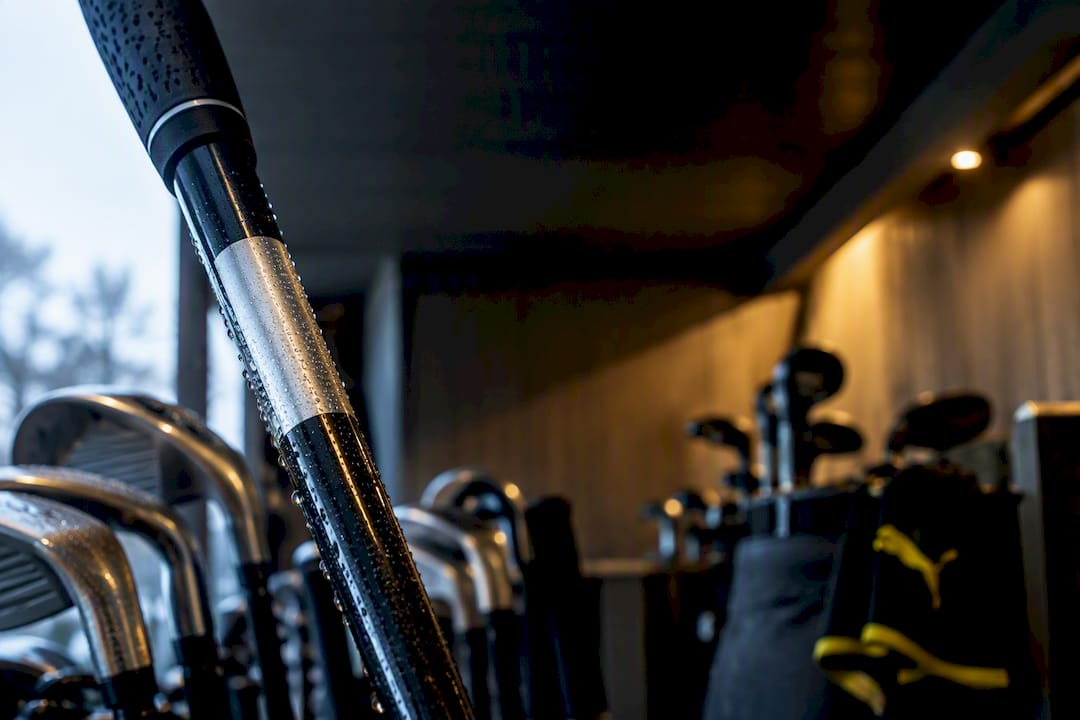
The best golf label text leads with one primary identifier, a surname or set number, followed by a single readable backup line: a phone number, email, or QR code. Keep shaft labels to one or two short lines; bag tags can carry more, including a logo or event name. Legibility and a durable substrate matter more than decorative wording every time.
TL;DR:
- Most durable golf labels use laminated vinyl or metallized polyester with overlamination to resist UV fading and surface wear for at least four seasons.
- Shaft labels should stay below the grip, about 0.5 to 1 inch tall, with high contrast and simple font sizes to ensure readability during quick club exchanges.
- Pair QR codes with clear, high-contrast contact information to improve scanning reliability, and test with various phones before final ordering.
- Proper placement and size are critical; bag tags should be around 2 to 3 inches, with full contact details, while cart signs focus on large, minimal text for quick distant reading.
- Ordering a real-size mockup and checking legibility at arm’s length before production helps prevent design mistakes that can render labels unreadable.
Table of Contents
- What Golf Label Text Should Include (Shaft Labels, Bag Tags, Cart Signs)
- Font Size, Contrast, and Layout Rules for Legible Labels
- Which Materials Keep Golf Labels From Fading or Peeling?
- Where to Place Golf Labels and What Size Works Best
- Should You Add a QR Code to Your Golf Label?
- Golf Label Text Ideas That Stay Readable and Tasteful
- How to Order and Proof Your Golf Label Text
- The Label Mistakes That Ruin Otherwise Good Gear
- When Should You Replace a Golf Label?
- An Editorial Perspective on Getting Golf Label Text Right
- Order Custom Golf Club Labels Built to Last
- Sources
- FAQ
What Golf Label Text Should Include (Shaft Labels, Bag Tags, Cart Signs)
Every golf label carries a job, and that job changes depending on where it lives on your equipment. A shaft label gets glanced at from a foot away during a club swap. A bag tag gets read up close, often by a stranger trying to return a lost bag. A cart sign gets scanned from across a staging area by a volunteer juggling fifty other assignments at once. Different label formats demand different information density and placement, and treating them the same is the most common design mistake golfers make.
Think of the hierarchy in three tiers:
- Primary identifier: surname or set number, big and unmistakable
- Secondary contact: a phone number, email, or short QR landing link
- Tertiary detail: event name, team designation, or a small logo mark
Shaft labels should stay stripped down: high contrast, minimal characters, nothing decorative competing for attention. Bag tags have room to breathe, so a full name alongside a phone number and even a tournament logo works well. Cart signs need the opposite instinct entirely, just a group number or last name rendered large enough to read at a walking pace across a parking lot.
Font Size, Contrast, and Layout Rules for Legible Labels
Small labels punish small mistakes. Text set below roughly the equivalent of 26 pixels on a standard shaft label frequently blurs into illegibility once printed and viewed at arm’s length, especially on a moving cart or in bright sun glare. The fix is not clever design, it’s restraint.
Contrast decides whether text survives a quick glance. Dark lettering on a light background, or the reverse, consistently outperforms subtle color pairings that look elegant on a screen but vanish outdoors. Skip gradients and low-contrast pastel combinations entirely.
Layout follows the same logic:
- Set your primary identifier on a single line whenever the character count allows it
- Avoid script or decorative fonts for anything functional; save flourish for a logo or accent, never for the name itself
- Proof every design at 100% scale before ordering, never at a zoomed-in view that hides real-world sizing problems
Pro Tip: Print a paper mockup at actual size and tape it to the shaft or bag before you finalize the order. What reads clearly on a monitor can shrink into a smear once it’s on the actual surface.
Design tools that enforce minimum type sizes and show a true-to-scale preview catch these problems before they become printing mistakes like clipped text or washed-out contrast, which is worth checking for whenever you’re comparing label printing services.
Which Materials Keep Golf Labels From Fading or Peeling?
Golf equipment lives outside. It bakes in July heat, gets soaked in April rain, and rides in a trunk through winter storage. The material behind your text determines whether that identifier survives a single season or several.
Metallized polyester and laminated vinyl are the two substrates that show up again and again in durable golf label construction, and for good reason: both resist moisture intrusion and hold color under UV exposure far better than uncoated paper stock or basic vinyl decals. Mylar-style laminates add another layer of physical toughness against the scuffs a bag takes on cart paths and airline conveyor belts.
A few things separate a label that lasts from one that peels by August:
- Overlamination shields printed ink from UV fading and surface abrasion
- Adhesive cure time matters more than most golfers realize; a bond that hasn’t fully set will lift under heavy handling within weeks
- Placement and care extend life further, keeping labels away from grip friction points and wiping them down rather than scrubbing
Weatherproof, fade-resistant, laminated thermal transfer labels represent the commercial standard golfers should be comparing against. Golf Blab builds its own labels around materials designed to hold up across four full golf seasons, which is the kind of real-world benchmark worth asking about from any supplier.
Where to Place Golf Labels and What Size Works Best
Placement is where good label text either performs or gets ignored. Get the position and dimensions right, and even a simple two-line identifier does its job for years.
- Shaft labels belong below the grip and above the club’s midpoint, never touching the tape or overlapping the swing zone. A range of roughly 0.5 to 1 inch tall keeps text legible without interfering with hand placement.
- Bag tags attach through a grommet or zip-tie loop, sized around 2 to 3 inches across so a full name, phone number, and small logo can all sit without crowding.
- Cart signs run larger, often 4 inches or more, with text reduced to the bare minimum, a group number or last name only, since the goal is a split-second read from a distance.
For a closer look at exact application steps, Golf Blab’s guide to labeling clubs walks through hand placement and surface prep in more depth.
Should You Add a QR Code to Your Golf Label?
QR codes solve a real problem: cramming a phone number, email, and message into a space smaller than a postage stamp. But a QR code is only as useful as the phone scanning it, and course conditions, wet fingers, bright glare, low battery, work against a clean scan more often than golfers expect.
That’s why QR codes should never stand alone; pair one with a readable name or phone number as a permanent fallback. A few habits keep this reliable:
- Size the QR code at least half an inch square so cameras can lock focus quickly
- Keep contrast high, black on white performs best, and test scans across two or three different phone models before finalizing an order
- Encode a simple contact landing page rather than a personal email or home address, protecting your privacy if the club ever ends up with a stranger
Golf Label Text Ideas That Stay Readable and Tasteful
Good label copy is short enough to read in a second and personal enough to feel like yours. A surname alone often does more work than a full name. A set number paired with initials handles a full bag without repeating the same six letters fourteen times. A short nickname with a single digit adds personality without clutter.
- “Marini · #4” for individual club identification within a set
- “J. Alvarez” as a clean, professional bag tag standard
- “Team Ridgeview 2026” for tournament-specific gear
- A short phone digit string as a minimal backup contact line
Logos and colored accents earn their place during team play or tournament weeks, but reflective or metallic finishes can glare under midday sun and actually hurt legibility. Etiquette matters here too: keep the primary identifier calm and easy to read, and save the personality for accents rather than the text a stranger needs to read fast.
How to Order and Proof Your Golf Label Text
Ordering a custom label is simple once you know what to check before you click “confirm.” Skipping any of these steps is how golfers end up with a beautiful design that’s unreadable from three feet away.
- Choose your label type first, shaft label, bag tag, or cart sign, since each has different size constraints and text limits.
- Enter your text using the hierarchy above: primary identifier, one backup line, optional logo or event name.
- Request a real-size mockup or downloadable proof. Templates and printable previews exist precisely so you can catch sizing problems before production, not after the label’s already on your clubs.
- Check legibility at arm’s length, not zoomed in on a screen, before approving anything.
- Confirm substrate, overlamination, and adhesive cure time with whichever supplier you’re using; these details separate a label that lasts a season from one that lasts four.
- Save your roster or template if you’re ordering for a whole team or event, and sort labels by name or number before they ship to avoid a scramble on distribution day.
The Label Mistakes That Ruin Otherwise Good Gear
The single biggest mistake is cramming too much onto too little surface. A shaft label with a full name, phone number, and slogan crammed into an inch of space doesn’t read as personalized, it reads as noise. Discipline beats decoration every time on a surface this small.
Unreadable fonts come next. Script fonts, condensed display type, and anything with thin serifs might look sharp in a design preview, but they degrade fast once printed small and viewed from a distance or through a scratched laminate. Stick to clean sans-serif lettering for anything functional.
Low contrast is the quiet killer. A gold script on a white background looks premium on a monitor and disappears entirely in direct sunlight. Test every color pairing the way it’ll actually be seen, outdoors, at midday, from a few feet away.
Skipping the proof stage causes more return requests than any other single decision. A digital preview at 100% zoom is not the same as a physical mockup taped to a shaft. Order a sample when a supplier offers one.
Finally, golfers sometimes treat cart signs like bag tags, packing in full names and contact details that nobody has time to read during a quick cart assignment. Match the text density to the viewing distance and urgency of each format, not the other way around.

When Should You Replace a Golf Label?
Even the most durable label eventually needs a refresh, and knowing the signs saves you from carrying illegible gear for months. Watch for edge lifting first, the earliest sign that adhesive has started to fail, usually appearing at corners where handling friction is highest. Fading text, especially in reds and blues, tends to show up after repeated UV exposure well before the label physically peels.
A well-built label using metallized polyester or laminated vinyl with proper overlamination should realistically hold up across four full golf seasons under normal play conditions. That’s a meaningful benchmark, since cheaper adhesive-only labels often show visible wear within a single summer.
A few habits stretch that lifespan further. Wipe labels down with a damp cloth rather than scrubbing them with cleaning solvents, which can break down laminate seals over time. Store clubs somewhere temperature-stable during winter rather than a hot trunk or unheated garage, since repeated temperature swings accelerate adhesive breakdown. Check labels each spring before the season starts, and replace anything showing curling edges or faded text before it becomes unreadable mid-round.

Replacing a label is far cheaper than losing a club to a stranger who can’t read who it belongs to. Treat that seasonal check as routine as regripping.
An Editorial Perspective on Getting Golf Label Text Right
Most golfers overthink the creative part and underthink the durability part, and that’s backward. The identifier matters less than whether it survives the season. Golf Blab’s custom club labels are built around that priority, pairing personalized style with materials engineered to outlast four seasons of real play, which is the standard every label should be judged against.
— Michael Marini
Order Custom Golf Club Labels Built to Last
Golf Blab’s Custom Golf Club Labels are the direct answer to everything covered above: a $29.99 label built for readability and four full seasons of outdoor wear, without the guesswork of piecing together a generic template from a print shop. Ordering takes three steps.
Rounding out your bag with matching gear is simple too. Pair your labels with the Golf Blab Under Armor Golf Hat or the Adidas Space Dyed Polo for a coordinated look at your next event, or browse the full Golf Blab shop for gift cards and bundled options.
Sources
- Live Tourney | Golf Club Labels Guide for Events and Bag Tags
- OnlineLabels® — Golf Club Labels guidance and templates
- PIN HIGH Personalized Golf Club ID Labels | Weatherproof, Fade Resistant, Laminated Thermal Transfer Labels, Made in The USA
FAQ
What Text Should I Put on a Golf Club Label?
Lead with a surname or set number, then add one backup line, a phone number, email, or QR code. Keep it to one or two short lines so the text stays readable at a glance, especially on shaft labels where space is tightest.
How Long Do Golf Labels Actually Last Outdoors?
Quality labels built from metallized polyester or laminated vinyl with proper overlamination typically hold up well against sun, rain, and handling. Golf Blab’s labels are built to last four full golf seasons under normal play conditions.
Should I Use a QR Code Instead of Printed Text?
A QR code saves space and works well for sharing contact details digitally, but it should always be paired with readable backup text like a name or phone number. Relying on a QR code alone risks a lost club going unreturned if a scan fails.
What Size Should a Shaft Label Be?
Most shaft labels work best between 0.5 and 1 inch tall, positioned below the grip where it won’t interfere with your swing. Text should stay large enough to read clearly at arm’s length, never squeezed below a legible minimum size.
How Much Do Custom Golf Club Labels Cost?
Golf Blab’s Custom Golf Club Labels are priced at $29.99 one-time, covering personalized text, proofing, and durable materials built for multi-season wear.