
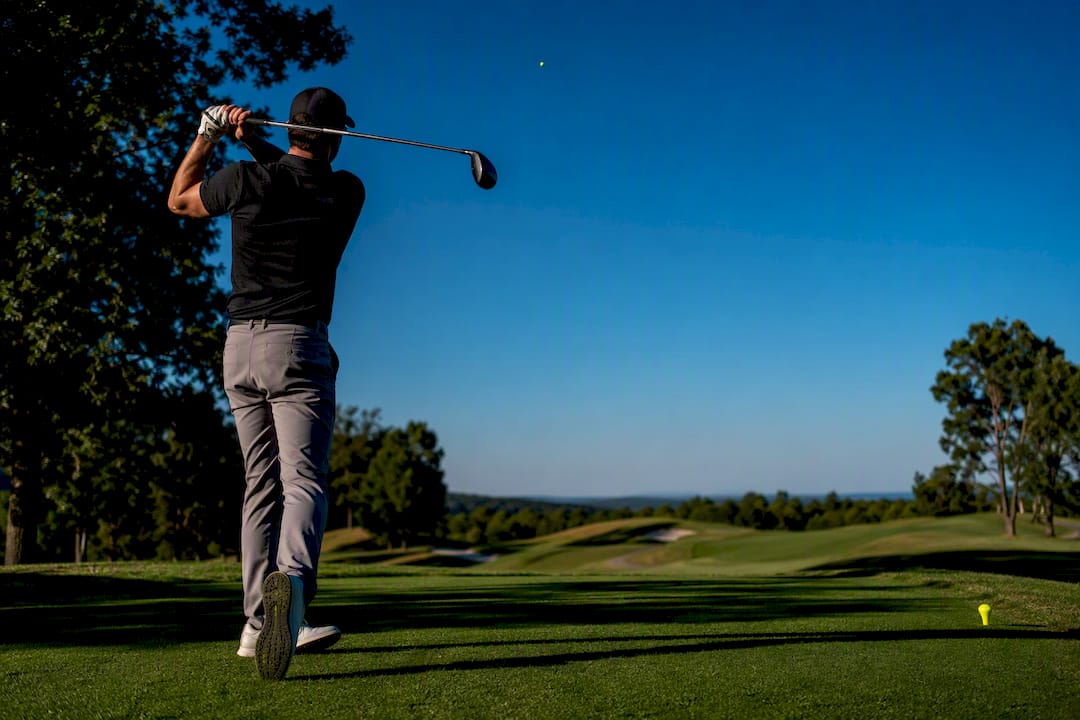
High-optic yellow, sometimes labeled chartreuse, is the single best golf ball color for visibility across the widest range of conditions. Neon green and bright orange trail close behind as situational alternatives, with hot pink and white filling in for niche backgrounds. If there’s one qualifier worth remembering before you buy a dozen, it’s this: choose a matte finish over glossy whenever you’re playing under a bright sun.
TL;DR:
- High-optic yellow and chartreuse remain the best options for visibility across varying lighting conditions, especially on bright daytime courses.
- In low-light or overcast situations, neon green and bright orange outperform yellow due to their enhanced contrast against gray skies and darker backgrounds.
- For golfers with red-green color vision deficiency, neon yellow and lime green are superior choices, whereas red and mid-tone greens tend to blend into backgrounds.
- Matte finishes scatter sunlight and reduce glare, making high-optic yellow balls more effective during daytime play, while glossy balls are better suited for overcast or dusk rounds.
- Testing two colors in real conditions, considering course backgrounds, lighting, and personal vision, provides a more reliable choice than generic recommendations.
Table of Contents
- Golf Ball Color Visibility: A Color-by-Color Breakdown
- How Course Conditions Change Which Color Wins
- Color Vision Deficiency and Aging Eyes: What to Prefer
- Matte vs. Glossy: The Finish Nobody Talks About Enough
- How to Choose Your Best Golf Ball Color: A 5-Step Checklist
- Does Ball Color Actually Affect Your Confidence on the Course?
- A Publisher’s Perspective on Visibility Research
- Golf Blab Products Built Around Visibility and Recognition
- Sources
- FAQ
Golf Ball Color Visibility: A Color-by-Color Breakdown
The human eye reaches peak daylight sensitivity near the yellow-green wavelength band, which is precisely why safety vests, tennis balls, and now golf balls converge on the same family of hues. It isn’t a marketing coincidence. It’s biology, and it explains why high-optic yellow and chartreuse balls consistently top visibility rankings across lighting conditions rather than just looking bright on a shelf.
Here’s how the common options stack up on the course:
- Optic yellow. The most reliable all-around performer. It holds contrast against blue sky, green fairway, and gray overcast alike, which is why it’s the default recommendation for golfers who don’t want to think about color swaps between rounds.
- Neon green / chartreuse. Nearly identical performance to optic yellow, with a slight edge in leaf litter and brown, dormant rough where yellow can start to blend.
- Bright orange. Excellent in low light, fog, and against green turf, but it can lose punch against autumn foliage in the same orange-brown color family.
- Hot pink. A strong niche pick. It stands out beautifully against green and brown backgrounds but can wash out against bright, overcast white sky.
- White. Fine on the ground against dark rough, but the weakest choice in flight against a bright or overcast sky, since it shares the same tone as the background.
- Red, blue, and standard green. Each carries a specific flaw. Blue balls can nearly vanish against a clear sky mid-flight, standard green blends into lush fairways, and red becomes difficult to spot on the ground except against snow.
Golfers who track shots on long drives report noticeably better results with high-visibility colors than with white, particularly on tee shots where the ball climbs against open sky before dropping into rough or trees.
How Course Conditions Change Which Color Wins
No single color visibility rule holds up in every setting. Contrast is relative. A ball reads as “visible” only in relation to what’s behind it, whether that’s cloud cover, tree canopy, or a carpet of fallen leaves, so the smartest golfers treat color choice as a variable, not a fixed decision.
- Bright, sunny days. Optic yellow or chartreuse holds contrast against blue sky and green turf without much competition. Glare becomes the bigger issue here, more on that shortly.
- Overcast skies. Orange and hot pink often outperform yellow, since flat gray light reduces the natural pop that yellow gets from direct sunlight.
- Dawn and dusk. A phenomenon called the Purkinje shift moves the eye’s peak sensitivity toward blue-green tones in low light, which is why neon greens often read as perceptually brighter than yellow or orange at these hours.
- Heavy autumn leaf fall. Swap to neon green. Orange and yellow both start to blend into the reds, golds, and browns littering the rough.
- Desert courses or dry, brown rough. Orange and hot pink separate cleanly from tan and brown backgrounds, while yellow can lose some of its usual advantage.
The practical takeaway: keep two sleeves in your bag, your all-purpose yellow and one seasonal backup like neon green for fall rounds, and swap based on what the course looks like that morning.
Color Vision Deficiency and Aging Eyes: What to Prefer
Roughly 1 in 12 men and a much smaller share of women live with some form of red-green color vision deficiency, and standard ball colors were never designed with that population in mind. The good news is the fix is straightforward.
- Neon yellow and lime green consistently test best for golfers with common red-green deficiencies, since they stay visually distinct from the darker greens and browns of a typical course.
- Standard red and certain mid-tone greens rank among the worst choices for this group, often blending directly into fairway and rough.
- Aging eyes lose contrast sensitivity gradually, even without diagnosed color blindness, which means a color that looked plenty bright at 30 may feel washed out at 60. High-optic colors compensate for that decline better than muted or pastel tones.
Pro Tip: If you’re not sure how your own eyes respond, buy a mixed sleeve, one yellow, one neon green, one orange, and play a full round rotating between them. Your eyes will tell you which one disappears least often.
Matte vs. Glossy: The Finish Nobody Talks About Enough
Color gets most of the attention, but finish decides how that color behaves in direct light. Matte finishes scatter sunlight rather than reflecting it in a concentrated hot spot, which is exactly the glare that makes glossy balls seem to “blink” out against a bright sky at the top of a swing.
Glossy covers aren’t inferior in every setting. In flat, overcast light or at dusk, the extra sheen barely registers as glare and the color itself does most of the work. But at high noon, that same shine turns into a distraction that can cost you the exact half-second of tracking you need off the tee.
The combination that performs best across the most rounds: a matte, high-optic yellow ball for typical daytime play, with a matte neon orange or lime green in reserve for low-light mornings and heavy leaf cover.

How to Choose Your Best Golf Ball Color: A 5-Step Checklist
Picking a color isn’t guesswork if you treat it like a short experiment instead of a snap decision at the pro shop counter.
- Note your regular conditions. Write down the backgrounds you play against most: fairway green, autumn rough, desert tan, dense trees.
- Check your typical tee times. Early morning and late afternoon rounds call for different colors than midday golf.
- Account for any vision differences. If you or a regular playing partner has red-green color vision deficiency, weight your test toward neon yellow and lime green.
- Pick two colors to field test. Don’t test five at once. Narrow it to your top two candidates based on the factors above.
- Decide on finish before you commit. Matte for bright, sunny courses; glossy is acceptable for overcast or dusk rounds.
| Step | What to test | What to watch for |
|---|---|---|
| Two practice holes | Hit one color per hole from the tee | How quickly you spot the ball at landing |
| Full round sampling | Alternate colors hole to hole | Performance in changing light |
| Final decision | Compare notes after the round | Commit to the color you lost sight of least often |
Testing your own conditions beats reading any color chart cold, since your course’s tree line, turf type, and typical tee time are unique to you.
Does Ball Color Actually Affect Your Confidence on the Course?
Visibility research tends to focus on optics, but there’s a mental side to this that golfers rarely discuss openly. A ball you can consistently find builds a quiet kind of confidence that compounds over eighteen holes. Losing sight of your ball, even for a few seconds, injects a flash of anxiety into an otherwise smooth swing thought, and that anxiety doesn’t vanish once you spot the ball again. It lingers into the next shot.
There’s also a self-fulfilling piece to this. Golfers who trust their ball to stay visible tend to commit more fully to full swings, since they’re not subconsciously holding back to make tracking easier. Watching a bright chartreuse ball climb cleanly against a blue sky reinforces a sense of control that a hard-to-track white ball simply doesn’t offer, especially on courses lined with trees or featuring elevated tee boxes.
None of this shows up in a spreadsheet, but golfers who switch to a high-visibility color often report feeling calmer off the tee within a few rounds, less because the ball travels differently and more because the search-and-anxiety cycle shrinks. Confidence in golf is built shot by shot, and removing one small, recurring frustration, like squinting into the trees looking for a white ball, frees up mental bandwidth for the swing itself.

A Publisher’s Perspective on Visibility Research
Michael Marini has spent years covering golf equipment and instructional content, and the visibility research is consistent enough to trust: color and finish are not cosmetic choices, they’re performance variables. Golf Blab builds that principle into its product line and into resources like the color-coded club guide, treating visibility as something worth designing around rather than an afterthought.
— Michael Marini
Golf Blab Products Built Around Visibility and Recognition
The Innovate Tour Performance Golf Balls are designed with visibility science in mind, featuring high-optic construction meant to hold contrast against sky, turf, and rough rather than just looking bright in the box. Pair that with Custom Golf Club Labels, which help reduce mix-ups at the tee and in the cart, whether it’s your own bag or a foursome sharing similar equipment.
Personalized labels do for your clubs what a high-optic ball does for your shots. They cut down the seconds spent second-guessing whose wedge is whose or which ball just landed in the rough. If you’ve ever lost a shot’s worth of momentum hunting through a bag or a fairway, this is the low-effort fix. Browse the Innovate Tour ball lineup or start customizing a label set today, and stop treating visibility and recognition as separate problems.
Sources
- Best golf ball color | GolfNow Blog
- Visible Golf Balls: Which Color Is Easiest To See? | GolferHive
- What Is the Most Visible Golf Ball Color? | Madknows
- Understanding the Color Hierarchy in Golf Balls
FAQ
What Is the Best Color for Golf Ball Visibility?
High-optic yellow, also called chartreuse, is the most visible golf ball color across the widest range of conditions because it sits near the human eye’s peak daylight sensitivity. Neon green and bright orange are the closest situational alternatives.
What Is the Hardest Color Golf Ball to See?
Blue and standard green tend to rank as the hardest colors to spot. Blue can blend into clear sky during flight, while green camouflages against lush fairway turf.
What Color Is Easiest to See Against Green Grass?
Optic yellow, neon green, and hot pink all stand out clearly against green fairway and rough, while standard green and white blend in the most.
What Is the Best Golf Ball Color for People with Color Blindness?
Neon yellow and lime green are the most recommended colors for golfers with common red-green color vision deficiencies, since they stay visually distinct from darker course tones. Red and certain mid-tone greens are the least reliable choices for this group.