
TL;DR:
- Proper golf alignment involves feet, hips, shoulders parallel to the target line, with clubface aimed at the target.
- Consistent alignment routines, including using alignment sticks and practicing slow, deliberate setups, improve accuracy.
- Most golfers overlook alignment due to boredom, but making it a habit drastically enhances overall performance.
Alignment is one of those things most golfers think they have figured out, right up until the round falls apart and they can’t explain why. You made solid contact, your swing felt smooth, yet the ball kept drifting wide. Sound familiar? The naked truth is that poor alignment quietly sabotages more rounds than bad swings ever will. Even a small tweak in how you set up before the swing starts can translate directly into fewer strokes and more confidence. In this article, we break down the fundamentals, share actionable drills, flag the most common mistakes, and help you choose the right tools to make good alignment a habit you never have to think twice about.
Table of Contents
- Understand golf alignment fundamentals
- Key golf alignment tips and drills
- Common alignment mistakes and how to fix them
- Comparing alignment tools and aids
- Why most golfers overlook alignment (and how to fix it for good)
- Take your golf game to the next level with Golf Blab
- Frequently asked questions
Key Takeaways
| Point | Details |
|---|---|
| Alignment drives consistency | Proper alignment reduces swing flaws and leads to more reliable shot patterns. |
| Drills build muscle memory | Practicing alignment with simple tools and routines helps make good habits automatic. |
| Spot and fix mistakes early | Knowing common errors and how to correct them prevents costly strokes on the course. |
| Choose aids wisely | Training aids can speed progress but should be tailored to your needs and experience level. |
Understand golf alignment fundamentals
Let’s get one thing straight. Alignment in golf is not just about where your feet point. It is the full picture of how your feet, hips, shoulders, and clubface all relate to the target line, which is the imaginary line running from your ball to your intended target. When every piece of that picture lines up correctly, your swing has a real chance of sending the ball where you want it. When even one piece is off, you are fighting your own setup before you even pull the club back.
Here is what proper alignment actually looks like in practice:
- Feet: Your toes should run parallel to the target line, not pointed at the target itself. Think of it like train tracks: your feet are one rail, the target line is the other.
- Hips and shoulders: These should also be parallel to the target line. Open hips or a dropped trail shoulder are two of the most common culprits behind pulled shots and slices.
- Clubface: This is the one element that should point directly at the target. Everything else runs parallel; the clubface squares up.
- Target line: Pick a specific target, not a general direction. A tree in the distance, a flag, a spot on the fairway. Vague targets produce vague results.
When any of these elements drift out of sync, ball flight suffers. An open stance (feet aimed left of the target for a right-handed golfer) tends to produce pulls and slices. A closed stance pushes shots to the right. Misaligned shoulders can cause you to swing across the ball, creating that frustrating side spin that sends the ball curving away from your intended line.
“Proper setup and posture are foundational for consistent alignment.”
The good news is that golf alignment basics are learnable and repeatable. You do not need to be a scratch golfer to set up correctly. You just need to know what to check and build the habit of checking it every single time. For a deeper look at how stance feeds into everything else, alignment insights from Golf Digest offer some useful perspective on how the pros approach setup.
Key golf alignment tips and drills
Knowing what alignment should look like is step one. Actually training your body to do it consistently is where the real work happens. Here is a step-by-step process you can use on the range or even in your backyard.
- Pick an intermediate target. Before you step into your stance, find a spot on the ground just a foot or two in front of your ball that sits directly on your target line. A divot, a discolored patch of grass, anything works. Use that as your alignment guide instead of staring at a target 200 yards away.
- Set the clubface first. Aim the clubface at your intermediate target before you position your feet. Most golfers do it backward, setting their feet first and then trying to adjust the clubface. That approach creates inconsistency.
- Build your stance around the clubface. Once the face is square, step into your stance so your feet run parallel to the target line. Check your hips and shoulders next.
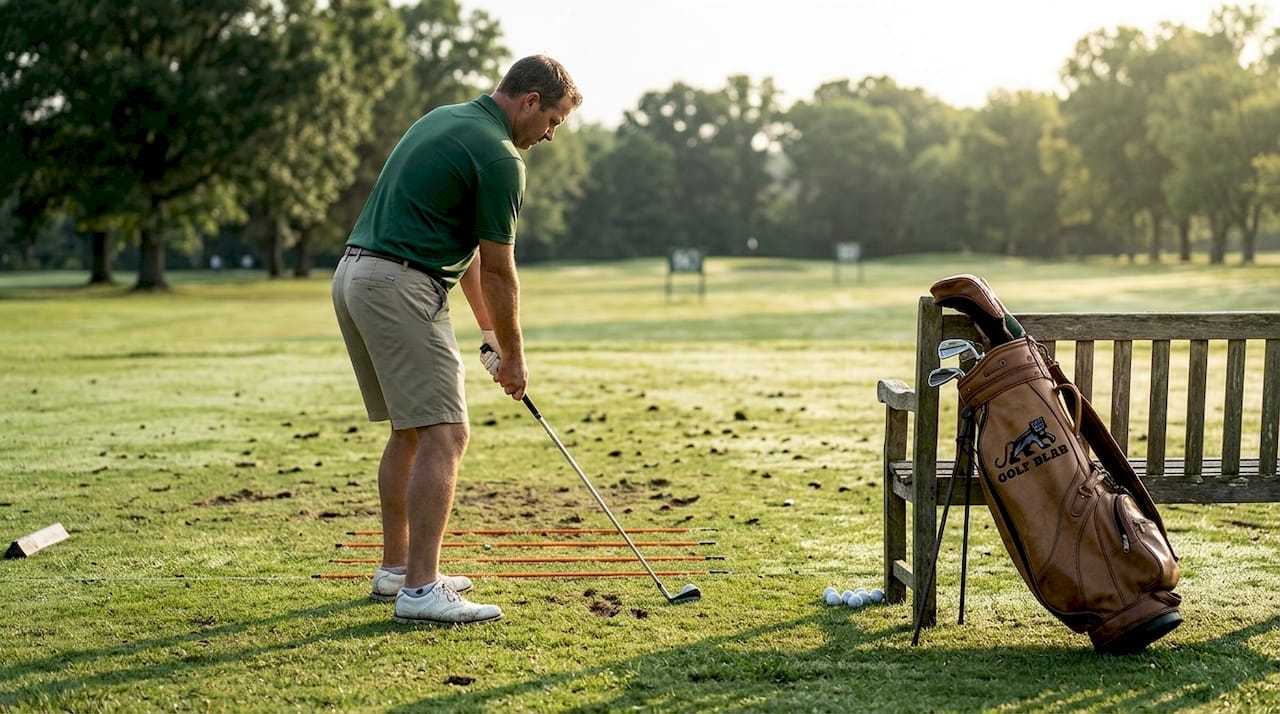
- Use alignment sticks. Place one stick along your toe line and another pointing at your target. This gives you instant visual feedback and makes it obvious when something is off. Golf alignment practice drills using sticks are some of the fastest ways to build muscle memory.
- Slow it down. Hit half-speed shots with your focus entirely on setup, not ball striking. Speed comes after the habit is grooved.
For practice routines for consistency, the key is repetition with intention. Targeted drills help reinforce muscle memory and proper setup. You can also find some creative alignment drill ideas that work well for solo practice sessions.
Pro Tip: Set your phone on a tripod or lean it against your bag and record yourself from behind. Watch the footage and check whether your feet, hips, and shoulders are truly parallel. Most golfers are shocked at what they see. Your eyes lie to you on the course. The camera does not.
Common alignment mistakes and how to fix them
Even golfers who understand alignment theory fall into the same traps over and over. Recognizing these patterns is half the battle.
Here are the most frequent mistakes and what you can do about them right now:
- Aiming feet at the target instead of parallel to it. This is the single most common error. Your feet should run parallel to the target line, not point at the flag. Lay a club along your toe line after you set up and see where it points. It will tell you the truth.
- Ignoring shoulder alignment. Golfers obsess over foot position but forget that open or closed shoulders will redirect the swing path regardless. Check your shoulders every session, not just when you are hitting it sideways.
- Dropping the trail shoulder too early. This tilts your whole setup and causes you to approach the ball on a steep angle, leading to fat shots and pulls.
- Not picking a specific target. Aiming at “the fairway” is not a target. Pick something precise and commit to it.
- Rushing the setup. Alignment takes a few extra seconds. Most amateur golfers skip it when they are in a hurry or feeling confident, which is exactly when bad habits creep back in.
Habitual misalignment leads to inconsistent results despite good swing mechanics. If you are hitting pushes, pulls, or slices that do not match what your swing feels like, alignment is the first place to look. The fix is usually simpler than you think. Lay a club on the ground pointing at your target and build your stance around it. Do a few slow-motion rehearsal swings while checking that your body is tracking along that line.

For more ways to lower your golf scores through smarter setup habits, the strategy is always the same: fix the foundation before chasing the fix. You can also browse most common golf mistakes for a broader look at what holds average golfers back.
Pro Tip: Make alignment checks a non-negotiable part of every practice session, not just when something feels wrong. Five minutes of deliberate alignment work at the start of each session is worth more than an hour of mindless ball striking.
Comparing alignment tools and aids
Once you are ready to invest in your practice, the right training aid can speed up your progress significantly. But not every tool suits every golfer or every situation. Here is a straightforward comparison to help you decide.
| Tool | Best for | Pros | Cons |
|---|---|---|---|
| Alignment sticks | Range and home practice | Cheap, portable, versatile | No feedback if you ignore them |
| Alignment mirrors | Home practice, short game | Instant visual feedback on posture | Not practical on the course |
| Laser guides | Serious practice sessions | Precise, objective feedback | More expensive, needs setup time |
| Foot markers | Beginners, at-home drills | Easy to use, low cost | Limited to stance only |
Alignment sticks are the workhorse of the group. They cost almost nothing, fit in your bag, and work for full swings, chipping, and putting. If you only buy one training aid, make it a pair of alignment sticks.
Mirrors are excellent for home practice, especially for checking posture and shoulder tilt. They give you real-time feedback without needing a camera or a partner. The downside is that you cannot use them on the course.
Laser guides are for golfers who want precision feedback and are willing to invest a bit more time and money. They are particularly useful for putting alignment, where even a degree of error can cost you strokes.
Training aids reinforce good mechanics, but not all are equally effective or necessary for every golfer. If you are just starting out, sticks and a mirror will take you a long way before you need anything more advanced. For a broader look at what is available, check out best training aids for golf to see what fits your game and budget.
Why most golfers overlook alignment (and how to fix it for good)
Here is something we have noticed after years of watching golfers struggle: most players skip alignment work not because they think it is unimportant, but because it feels boring. There is no thrill in checking your shoulder line. There is no dopamine hit from a perfectly parallel stance. The excitement is in the swing, the contact, the flight of the ball.
But here is the hard-won lesson. Alignment is the highest-leverage, lowest-effort improvement available to most golfers. You do not need to rebuild your swing. You do not need new clubs. You just need to set up correctly before you move.
The best players in the world build alignment checks into every single practice session, not just when something goes wrong. It is not a fix. It is a habit. And habits only form through repetition.
Our honest advice: stop chasing swing fixes and start building a repeatable pre-shot routine. Check your intermediate target, set the clubface, build your stance, check your shoulders. Do it every time. The importance of consistent setup cannot be overstated. Make alignment automatic, and your swing will have a real foundation to work from.
Take your golf game to the next level with Golf Blab
Ready to put these tips into action and accelerate your progress? At Golf Blab, we have built everything you need to go from understanding alignment to owning it on the course.

Our Swing Like a Pro course walks you through setup, posture, and swing mechanics with the kind of clarity that most instruction skips entirely. If you want to keep building, the Learning Center resources cover everything from club selection to course management. And when you are ready to think strategically about your whole game, our golf strategy tips will help you shave strokes without overhauling your technique. Better alignment is just the beginning.
Frequently asked questions
What is the most common golf alignment mistake amateurs make?
The most common alignment error is aiming your stance or clubface away from your actual target, often leading to missed shots. Alignment mistakes are the root cause of many missed shots that golfers wrongly blame on their swing.
How can I check my golf alignment on the driving range?
Lay a club on the ground parallel to your target line and practice aligning your feet, hips, and shoulders to that reference. Simple alignment drills like this one help reinforce correct setup without needing any special equipment.
Are alignment aids necessary for improvement?
Alignment aids are not required but can give helpful feedback for learning and maintaining proper setup, especially for beginners. Training aids can reinforce good mechanics but are not a substitute for learning proper alignment habits.
Does alignment affect all golf shots, or just drives?
Alignment is important for every shot, from putting to driving, as it consistently impacts your accuracy and ball flight. Proper alignment is essential for every aspect of the game, including short game and approach shots.