
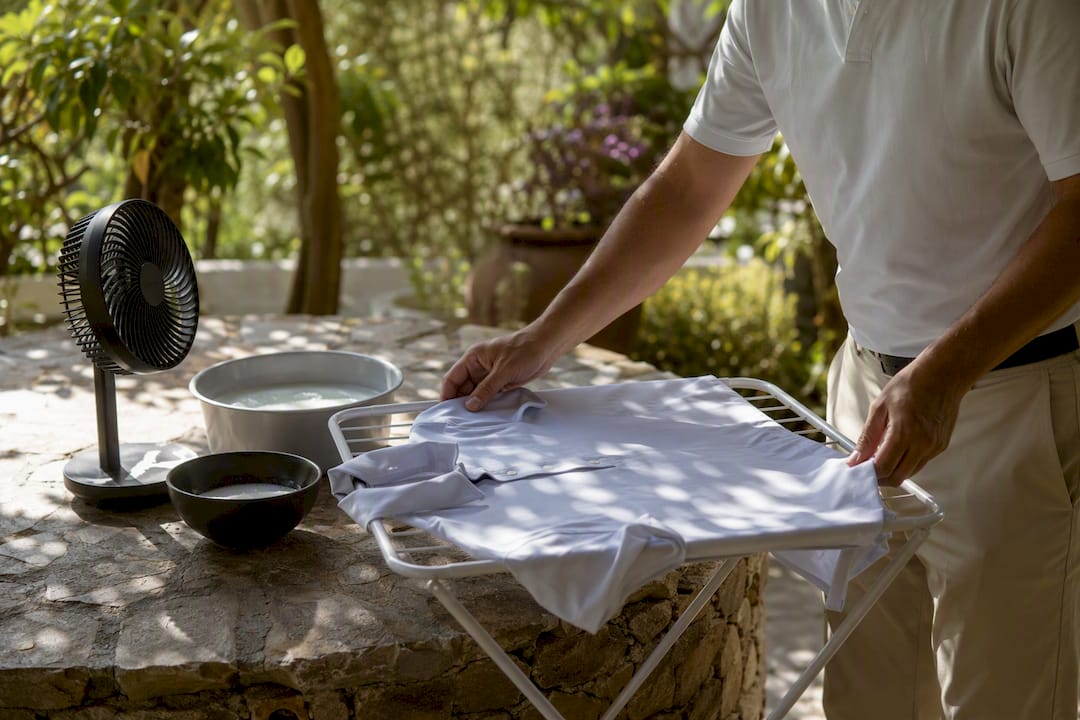
Wash your golf polos in cold water on a gentle cycle, use a mild detergent, skip the fabric softener, turn them inside out, and let them air-dry or tumble on the lowest heat setting. That single routine protects moisture-wicking finishes, keeps embroidered logos crisp, and prevents the shrinkage that turns a favorite polo into a donation-pile candidate. Every other rule in this guide branches off that one. They recommend washing cold, on a gentle cycle with mild detergent; avoiding bleach, fabric softener, and dryer sheets; turning shirts inside out (using a mesh bag for embroidered polos); and air-drying when possible or tumbling on low heat and removing early.
Pro Tip: Run embroidered polos on the shortest gentle cycle your machine offers, inside a mesh laundry bag. The bag cuts friction against zippers and hooks, which is usually what frays stitched logos before the fabric itself wears out.
Modern performance fabric doesn’t need the aggressive cleaning old-school cotton used to demand. Treat it gently, and it pays you back in wash cycles.
Key Takeaways
Cold water, mild detergent, no softener, and air-drying preserve a golf polo’s fit, color, and moisture-wicking performance for far longer than standard laundry habits allow.
| Point | Details |
|---|---|
| Wash cold and gentle | Cold water on a gentle cycle protects dye, stretch, and wicking finishes. |
| Skip softener and bleach | Both coat or degrade synthetic fibers and reduce moisture-wicking permanently. |
| Air-dry when possible | Heat causes shrinkage, pilling, and embroidery puckering; hang-dry avoids all three. |
| Wash performance polos less often | 3 to 5 wears between washes reduces fiber stress and microfiber shedding. |
| Golf Blab pairs care with quality apparel | Its performance polos and club labels are built to hold up through this exact routine. |
Where to Read More on Apparel Care
- This 2-step laundry hack will keep your golf clothes lasting longer: the cold-wash microfiber study
- How to Wash Performance Golf Polos – Haven Golf: manufacturer wash guidance
- Embroidered Golf Apparel Care – Green Ferret Golf: logo and embroidery protection
- Caring for Hawaiian Shirts – Dan Flashes: synthetic fabric maintenance tips
Table of Contents
- Care for Golf Polos: How Often Should You Wash Them?
- How to Wash Golf Shirts the Right Way
- Removing Sweat, Sunscreen, and Grass Stains
- Best Way to Dry Polos Without Shrinking or Warping Them
- Ironing, Steaming, and Embroidery-Safe Pressing
- Choosing the Right Detergent, and What to Avoid
- Storing Polos to Prevent Pilling and Collar Damage
- Quick Fixes for Stains Mid-Round
- The Golf Blab Routine for Longer-Lasting Polos
- Shop Polos Built to Handle This Routine
- Sources
Care for Golf Polos: How Often Should You Wash Them?
Performance polos and heavy cotton blends age differently, so they don’t belong on the same wash schedule. A moisture-wicking polo built from polyester or a poly-spandex blend can usually go several wears between washes if you’re not visibly sweating through it or playing in humidity. Cotton and cotton-blend polos hold odor and oil closer to the surface, so they typically need a wash after every one or two wears.
- Performance/synthetic polos: 3 to 5 wears, or sooner if visibly soiled
- Cotton and cotton-blend polos: after 1 to 2 wears
- Any polo with sunscreen, deodorant, or grass contact: wash immediately
Washing less often isn’t laziness. It’s fabric science. Every wash cycle mechanically stresses the wicking treatment applied to synthetic fibers, and a University of Leeds and Procter & Gamble study found that shorter, cooler cycles cut microfiber shedding by roughly half compared to standard cycles. Fewer, gentler washes mean the fabric’s performance coating lasts longer, and less plastic fiber ends up down the drain.
How to Wash Golf Shirts the Right Way
Getting the wash step right is the single biggest factor in how long a polo keeps its shape, color, and stretch. Here’s the machine-wash sequence that protects both fabric and embroidery.
- Check the care label first. Manufacturer instructions override any general rule here.
- Button any placket buttons and turn the polo inside out to protect the outer face from friction.
- Slide embroidered or logo-heavy polos into a mesh laundry bag.
- Wash in cold water on a gentle or delicate cycle, keeping the load small enough that garments move freely.
- Use a mild liquid detergent, measured to the “light load” line, not a full scoop.
- Skip the extra rinse and spin settings unless your machine defaults to them; performance fabric doesn’t need aggressive extraction.
Hand-washing is worth the extra five minutes for a polo with delicate embroidery, a tour-logo patch, or a fabric blend you’re not sure about. Fill a sink or basin with cold water, add a small amount of mild detergent, and submerge the shirt. Agitate gently for about two minutes, focusing water flow rather than scrubbing, then let it soak for 10 to 15 minutes. Rinse under cool running water until the water runs clear, pressing (never wringing) excess water out.
A few non-negotiables apply to both methods, echoed consistently in manufacturer care guidance for performance polos:
- No bleach, ever, even the “color-safe” kind on synthetic blends
- No fabric softener
- Avoid 2-in-1 detergent-softener combos; check the label before buying one
Pro Tip: A sport-specific detergent, or even just a smaller-than-normal dose of regular liquid detergent, cleans performance fabric more effectively than a full measure. Excess detergent doesn’t rinse fully out of technical weaves, and the residue is what starts dulling wicking performance after a season of washes.
Removing Sweat, Sunscreen, and Grass Stains
Golf stains respond well to fast action and cold water, and poorly to heat or force. Treat each type this way before it goes anywhere near the wash:
- Sweat and deodorant marks: Rinse the area with cold water, then work a small amount of liquid detergent directly into the fabric with your fingers. Let it sit five minutes before washing.
- Sunscreen (oil-based): Blot, don’t rub, then apply a dab of dish soap to break down the oil before laundering as usual. Dish soap is built for grease and works on synthetic fibers without the harshness of a solvent stain stick.
- Grass stains: Apply an enzyme-based stain remover directly to the mark and let it sit 10 to 15 minutes. Enzymes break down the plant proteins causing the stain, which is gentler on synthetic fibers than harsh chemical treatments.
- Food or drink spills: Cold rinse from the back of the fabric to push the stain out, then treat as above based on whether it’s oil or protein based.
Avoid these common instincts, all of which make stains worse on modern fabric:
- Hot water, which sets protein-based stains like sweat and grass permanently
- Bleach on any colored or performance polo
- Vigorous scrubbing, which pushes stains deeper into the weave
- Drying a stained shirt before it’s fully treated; heat locks the stain in for good
Pro Tip: If a stain is still visible after one wash, retreat it before drying again rather than running it through the dryer “to see.” Once heat sets a stain, most enzyme treatments lose their effectiveness entirely.
Best Way to Dry Polos Without Shrinking or Warping Them
Air-drying is the safest default for any performance or embroidered polo, full stop. Lay the shirt flat on a drying rack or hang it on a plastic hanger out of direct sunlight, and it will typically be dry within a few hours depending on humidity.
If you need the dryer, keep these limits:
- Lowest heat setting only, ideally a “delicate” or “air fluff” cycle
- Short cycle time, and pull the shirt out slightly damp rather than bone dry
- Dryer balls instead of dryer sheets, since sheets coat fibers the same way fabric softener does
- Remove promptly to avoid extended heat exposure sitting in a warm drum
High heat is the fastest way to undo everything a careful wash accomplished. Dryer heat causes embroidery backing and thread to shrink at a different rate than the polyester blend around it, which is exactly what produces that rippled, puckered look around a logo. The same heat also drives shrinkage and pilling in the body fabric.
Pro Tip: Point a box fan at flat-laid polos instead of reaching for the dryer. You’ll get comparable dry times to low heat with zero risk to embroidery or fit.
Ironing, Steaming, and Embroidery-Safe Pressing
Wrinkles happen, but an iron set too hot will do more damage to a golf polo than a season of wear. Set the iron to its lowest synthetic or “polyester” setting, and always press through a thin cloth rather than direct contact with the fabric. Test on the inside hem first if you’re unsure how the fabric will react.
Steaming is the better option for anything with an embroidered crest or logo, since it removes wrinkles without direct heat contact against stitching. Hold the steamer a few inches away and let the vapor do the work rather than pressing the nozzle into the fabric.
- Turn embroidered polos inside out before ironing to shield the stitching
- Use a mesh bag in the wash and hang-dry rather than tumble-dry to avoid needing heavy ironing at all
- Skip high heat entirely on any logo or patch area
Pro Tip: Hang a slightly damp polo on a sturdy hanger and let gravity pull out most wrinkles as it finishes drying. It’s slower than an iron, but it’s the closest thing to a zero-risk pressing method for logo-heavy shirts.
Choosing the Right Detergent, and What to Avoid
Not every detergent on the shelf belongs anywhere near a performance polo. A mild liquid detergent, or one formulated specifically for sport and technical fabrics, cleans oils and odor without leaving the kind of residue that powder detergents and heavy-duty “2-in-1” formulas tend to deposit on technical weaves.
- Use: mild liquid detergent or a specialty sport detergent
- Avoid: powder detergents (they dissolve less completely in cold water)
- Avoid entirely: fabric softener and dryer sheets, and any 2-in-1 detergent-softener blend
Fabric softener and dryer sheets are the single most common care mistake golfers make, largely because the instinct to keep clothes “soft” is so ingrained from cotton laundry habits. On technical fabric, softener coats the microscopic channels that pull sweat away from your skin, and that coating doesn’t wash back out. Once it builds up, no amount of careful washing afterward restores full wicking performance.
Oxygen-based stain removers (the powder or liquid oxygen-bleach alternatives) are safe for occasional use on tough stains and won’t strip color the way chlorine bleach does. Chlorine bleach has essentially no place in a performance-polo routine; it breaks down synthetic fibers over time and yellows white or light-colored shirts faster than sun exposure ever would.
Storing Polos to Prevent Pilling and Collar Damage
How you store a polo between rounds matters almost as much as how you wash it. Hanging preserves collar shape and shoulder structure better than folding, particularly for polos with any structured collar or placket. Use sturdy plastic or wooden hangers rather than wire, which stretches shoulder seams over a season of storage.
- Hang in a closet with airflow, away from direct sunlight and sealed plastic bags that trap moisture
- Shave pills carefully with a fabric shaver rather than picking at them, which can pull threads
- Use padded hangers for heavier cotton-blend polos to prevent shoulder bumps
Pro Tip: Before storing polos for the off-season, confirm every shirt is fully clean and completely dry, then store them in breathable garment bags rather than sealed plastic. Trapped moisture in plastic storage is a common cause of musty odor and mildew spotting that shows up months later.
Quick Fixes for Stains Mid-Round
You don’t need to wait until the 19th hole to deal with a fresh mark. A cold water rinse and gentle blot handles most fresh sweat or drink spills on the spot, and a tiny dab of dish soap worked into sunscreen streaks with a light touch (never a hard rub) keeps oil from setting before you get home.
- Blot, don’t rub, on any fresh stain
- Carry a small travel-size stain pen or dish soap packet in your bag
- Hang the shirt in fresh air at the turn if odor is the main concern
Pro Tip: A safety pin works as a genuine emergency fix for a popped placket button or a stretched seam mid-round. Just launder the shirt normally as soon as you’re home, following the routine above rather than skipping ahead a wash cycle.
The Golf Blab Routine for Longer-Lasting Polos
Golf Blab recommends a simple sequence for every performance and embroidered polo in your bag, built around the same principle every serious apparel-care guide converges on: less heat, less friction, less residue.
- Turn the polo inside out and secure it in a mesh bag if it carries embroidery
- Wash cold on a gentle cycle with a mild or sport-specific detergent, no softener
- Air-dry flat or on a hanger; use the dryer’s lowest setting only if you’re short on time
- Steam or low-heat iron through a cloth if wrinkles remain
The environmental case backs up the fabric case. The same Leeds and Procter & Gamble research that found cooler washes reduce microfiber shedding also points to lower energy use per load, since heating water is the most energy-intensive part of a wash cycle. Cold, short washes protect your polo and use less power doing it.
The best care routine is the one that asks less of the fabric, not more. Cold water and patience outperform hot water and force almost every time.
Golf Blab builds this thinking into its own performance apparel line, and readers looking to pair a durable polo with instruction that actually improves their swing can explore Play Golf with a Tour Pro for hands-on coaching alongside the gear.
A Practical Note From Michael Marini
Follow the cold-wash, air-dry routine above and your polos will outlast their fit before they wear out. It’s the small, consistent choices that protect performance fabric over a full season.

Shop Polos Built to Handle This Routine

The washing and drying steps above work best when you start with a polo engineered for them. Golf Blab’s Adidas Sport Polo and Adidas Space-Dyed Polo use moisture-wicking construction designed to hold up through repeated cold washes and air-drying, so the routine in this guide keeps them performing round after round instead of fighting against a fabric that wasn’t built for gentle care in the first place. Pair either shirt with a set of custom golf club labels to round out a bag that looks as sharp as a freshly cared-for polo, or browse the full performance apparel shop to see what else fits your rotation. If you’re building a complete kit for the season, the Under Armour golf hat rounds it out well. Start with one polo, run it through the cold-wash routine for a full season, and see the difference for yourself.
Sources
- This 2-step laundry hack will keep your golf clothes lasting longer
- How to Wash Performance Golf Polos (Keep Airflex™ Lasting) – Haven Golf
- How to Properly Care for Your Premium Embroidered Golf Apparel – Green Ferret Golf
- Moisture-Wicking Golf Shirt Care Guide Winston Salem NC – Echelon