
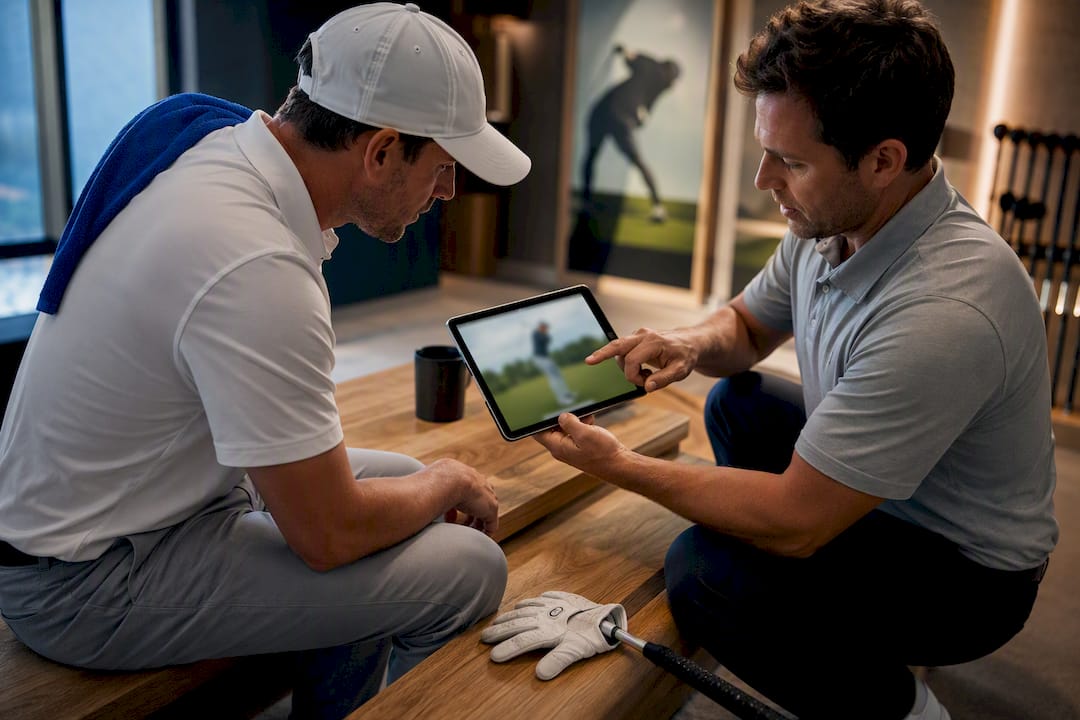
If your goal is fast technical change, choose live real-time coaching for its immediate cues. If you want affordable, frequent feedback on a busy schedule, choose asynchronous video review. If you’re building a swing from scratch, a structured subscription course beats either. Beginners should favor programs with a real baseline assessment before anything else. The checklist below turns that verdict into a repeatable evaluation process.
TL;DR:
- Initial assessments that accurately evaluate your swing, goals, and injury history are crucial and should be structured rather than generic.
- Coaching credential verification and evidence of results are essential, with PGA certification and documented outcomes serving as strong indicators.
- Feedback speed varies; live coaching delivers instant corrections, while asynchronous reviews typically take around 48 hours, affecting how quickly you can adapt.
- For beginners, live sessions offer faster technical improvements, but seasoned golfers benefit more from detailed video analysis and structured practice over time.
- Testing a coach with a trial session or a single video review before committing to larger packages helps ensure communication style and results meet expectations.
Table of Contents
- How to Choose an Online Golf Clinic: A Checklist You Can Use Now
- What Types of Online Golf Clinics Exist, and Which Fits Your Goal?
- How Do You Prepare for Your First Online Golf Clinic Session?
- How Do You Evaluate a Coach’s Credentials and Communication?
- What Should Online Golf Lessons Cost, and How Fast Should You See Results?
- How Golf Blab’s Coaching and Resources Match This Checklist
- Is Your Video and Personal Data Safe With an Online Golf Coach?
- A Three-Step Way to Test a Clinic Before You Commit
- Ready to Start? Golf Blab’s Coaching and Gear Options
- Sources
- FAQ
How to Choose an Online Golf Clinic: A Checklist You Can Use Now
Before you hand over a card number, run every candidate program through the same seven checks. Consistency here is what separates golfers who improve from golfers who just collect swing videos.
- Define your objective and learning style first. A golfer chasing 20 extra yards off the tee needs a different clinic than one trying to stop a two-way miss under pressure. Know which one you are before you shop.
- Require a real initial assessment. Quality programs open with a structured evaluation covering your goals, injury history, and a baseline look at your current swing, not a generic welcome email. This matters because the strongest virtual training programs build every future lesson around that first diagnostic.
- Check feedback speed and communication channels. Ask directly: is this a live call, a video upload with a 48 hour turnaround, or something slower?
- Verify coach qualifications and evidence of results. PGA certification and tour experience are worth asking about by name, not assuming.
- Look for structured practice plans with measurable drills, not a stack of unconnected tips.
- Read the pricing shape before you commit. Is it a single analysis, a per-session live rate, or a recurring subscription?
- Confirm your equipment and camera setup will actually work with their platform before session one.
Pro Tip: Book a single trial session or one-off video analysis before buying a bundle. A $40 test tells you more about a coach’s communication style than any testimonial on their homepage.
Professional golf educators consistently point out that a “practice with a purpose” model beats sporadic tips for long-term improvement, and that single principle should guide every item on this list.
What Types of Online Golf Clinics Exist, and Which Fits Your Goal?
Online golf training programs generally fall into four formats, and picking the wrong one is the single most common reason golfers quit after a month.
- Live, real-time coaching puts you on a video call with a coach who watches you swing and corrects you in the moment. This format has the strongest motor-learning advantage because the cue arrives while your body still remembers the movement that caused it.
- Asynchronous video review has you upload swings for a coach to analyze on their own schedule, usually with frame-by-frame annotation and a written or recorded breakdown. It costs less per session and lets a coach spend real analytical time on your mechanics instead of narrating live.
- Subscription or course libraries deliver a structured curriculum, lesson by lesson, often building from setup fundamentals through full-swing sequencing. These suit golfers who want a syllabus more than a personal relationship with one coach.
- Hybrid models blend scheduled live check-ins with ongoing async review between sessions, which top coaches recommend for the same reason: you get immediate cues plus deeper analysis over time.
Feedback speed varies sharply by format. Some remote coaching services promise video reviews inside 48 hours, while live formats deliver correction instantly, and that gap directly affects how fast a new movement pattern sticks.
How Do You Prepare for Your First Online Golf Clinic Session?
A first session is only as good as the footage and information you bring to it. Coaches cannot fix what they cannot see clearly, and a blurry, poorly angled video wastes the paid minutes you’re trying to protect.
- Pick one measurable objective for the session. “Fix my slice” is vague; “get my clubface square at impact” gives a coach something to actually measure against.
- Set up two camera angles: face-on and down-the-line, both on a tripod or stable surface at hip height, roughly eight feet back.
- Mark your ball position with an alignment stick or towel so the coach has a fixed reference point across multiple swings.
- Warm up for five to ten minutes, then capture several full-speed swings, not just your best one.
- Tell your coach upfront about any injuries, prior instruction, or launch monitor data you already have.
- Confirm the scheduling and follow-up format before the session ends, including when to expect notes or a practice plan.
Spending roughly half an hour analyzing your own game and defining goals before the lesson measurably sharpens how useful that lesson becomes.
Pro Tip: Run through a basic equipment check first. Worn grips or an ill-fitting club can look exactly like a swing flaw on video, and no coach can fix a fault that’s actually your equipment.

How Do You Evaluate a Coach’s Credentials and Communication?
Credentials alone don’t guarantee a coach can actually teach through a screen, but they’re still your first filter. PGA certification and documented tour or teaching experience signal a coach has been vetted by a standard beyond their own marketing copy.
Ask for a sample deliverable before you pay for a full package. Quality coaches can show you what an annotated video breakdown, a drill assignment, or a documented practice log actually looks like. If they can’t produce one, that’s your answer.
- Ask directly about turnaround time and hold them to it after your first submission.
- Request a written or recorded explanation, not just marked-up video with no context.
- Confirm a follow-up cadence: will they check your progress in a week, two weeks, or never?
- Watch for red flags: generic advice that ignores your specific swing, no initial assessment at all, or vague promises with no measurable drill attached.
- Ask what happens if the first fix doesn’t work. A coach with a real process has a next step ready; one without a process starts guessing.
Reviewing footage with a coach who explains the “why” behind a fix, not just the “what,” tends to produce swing changes that hold up under pressure. That’s the gap between swing analysis that actually changes your game and analysis that just points out flaws.
What Should Online Golf Lessons Cost, and How Fast Should You See Results?
Pricing shapes vary more than most golfers expect, and comparing them apples to apples means asking what exactly you’re paying for per dollar.
- Single video analysis: a flat fee for one swing review, usually the lowest barrier to test a coach.
- Per-session live coaching: billed per call, often the most expensive per minute but fastest for immediate correction.
- Subscription plans: monthly access to a course library plus periodic reviews, best for golfers building fundamentals over months.
- Bundles: a set number of sessions or reviews purchased together, often at a discount versus paying one at a time.
Turnaround speed isn’t just a convenience factor. Faster feedback measurably affects how well a new motion transfers to real swings, since the correction lands closer to when the movement happened. Most golfers need several weeks of focused practice on a single change, not a single lesson, before real transfer shows up on the course. Look for providers offering a trial session or a satisfaction guarantee. Testing a coach for $40 before committing to a $300 bundle is simply good judgment.
How Golf Blab’s Coaching and Resources Match This Checklist
Play Golf with a Tour Pro delivers the live, hands-on coaching style this guide recommends for golfers chasing fast technical change, paired with Golf Blab’s broader library of practical drills and swing tips for structured practice between sessions. Golf Blab’s partnership with professional golfers reflects the same standard this checklist asks you to demand: real credentials behind the instruction, not just marketing language. Expect the experience to open with a real assessment of your goals, move into a plan built around practice routines you can repeat, and include follow-up to track whether the change actually held.
Is Your Video and Personal Data Safe With an Online Golf Coach?
Every online clinic asks you to hand over swing video, and often personal details like injury history or contact information, so it’s worth knowing where that footage actually goes. Before uploading anything, check whether the platform states who can view your video and whether it’s stored, deleted, or reused in marketing without your consent.
A few habits protect you without adding friction to the coaching relationship. Use a platform’s official upload portal or a private link rather than emailing raw video files, which can sit unsecured in inboxes indefinitely. Ask directly whether a coach or platform ever repurposes client swings for public content, and get that answer before your first upload, not after you spot your own swing on someone’s feed. If a service asks for payment details, birthdate, or medical information beyond what’s needed for coaching, question why.

Reputable coaching services state a clear privacy policy and give you control over whether your footage is kept after the engagement ends. If a provider has no visible privacy terms at all, that gap deserves the same scrutiny you’d apply to a coach with no credentials. Treat your golf swing footage the way you’d treat any personal video: worth sharing with someone qualified, not worth handing to anyone who asks.
A Three-Step Way to Test a Clinic Before You Commit
Define your one goal, then run a starter test: submit two swings, face-on and down-the-line, and ask for one prioritized change. Commit to two weeks of practice, then submit follow-up video to measure actual transfer. Skipping straight to a big package before that test is the most expensive mistake golfers make.
— Michael Marini
Ready to Start? Golf Blab’s Coaching and Gear Options
If the checklist above pointed you toward live, personal instruction with real accountability, Play Golf with a Tour Pro is Golf Blab’s direct answer to that need, priced at $600 one time per person. Expect the same structure this guide recommends: an initial conversation about your goals, hands-on coaching, and a plan you can actually take back to the range. Golf Blab also offers Custom Golf Club Labels for $29.99, a small but genuine confidence boost once your equipment check is done and your bag reflects the golfer you’re training to become. If you’re shopping for someone else, a Golf Blab E-Gift Card at $25 removes all the guesswork. Browse the full lineup, including apparel, in the Golf Blab shop and pick the starting point that matches where you are right now.
Sources
- How online golf coaching is redefining improvement for everyday golfers
- The future of virtual golf training and remote coaching
- This 30-minute prep saves hours on the range
- The pro tips golf checklist
FAQ
What’s the Fastest Way to Choose an Online Golf Clinic?
Match the format to your goal first: live coaching for fast technical fixes, async review for affordable frequent feedback, and subscription courses for building fundamentals. Then test one program with a single trial session before committing to a bundle.
How Much Do Online Golf Lessons Typically Cost?
Pricing ranges from single video analyses to per-session live calls to monthly subscriptions, with cost generally rising alongside personal attention and turnaround speed. Golf Blab’s Play Golf with a Tour Pro is priced at $600 one time per person for live, personal instruction.
How Long Does It Take to See Results From Online Coaching?
Most golfers need several weeks of focused practice on a single prioritized change before real transfer shows up on the course, not just one lesson. A common starter test is two weeks of practice followed by a follow-up video to measure whether the change actually held.
Are Live Sessions Better Than Video Review for Beginners?
Live sessions offer immediate correction, which suits beginners still learning basic positions and motor patterns. Video review works well as a lower-cost complement once a golfer already understands the fundamentals and needs deeper technical analysis over time.
Is It Safe to Share Swing Video With an Online Coach?
It’s generally safe with platforms that state a clear privacy policy covering storage and reuse of your footage. Avoid emailing raw video to unverified addresses and ask directly whether a coach reuses client swings for public content before uploading anything.