
TL;DR:
- Certified golf instructors use standardized methodologies based on biomechanics and swing mechanics to provide personalized improvement plans. They deliver measurable progress through structured lessons that focus on objective data and specific goals, unlike self-teaching or random practice. Compatibility and communication are crucial for effective instruction, regardless of certification level or specialization.
Certified golf instructors are defined by their training in standardized methodologies covering biomechanics, swing mechanics, and teaching technique, and that foundation is what separates structured improvement from guesswork on the range. Choosing a certified professional means you receive a data-informed development plan built around your specific swing flaws, not generic advice recycled from YouTube. The PGA certification process, recognized as the gold standard in American golf instruction, requires rigorous study in teaching methodology, course operations, and player development. Whether you are a weekend golfer struggling with consistency or a competitive player chasing a lower handicap, the case for working with a certified coach is grounded in measurable outcomes, not tradition alone.
Why choose certified golf instructors over self-teaching
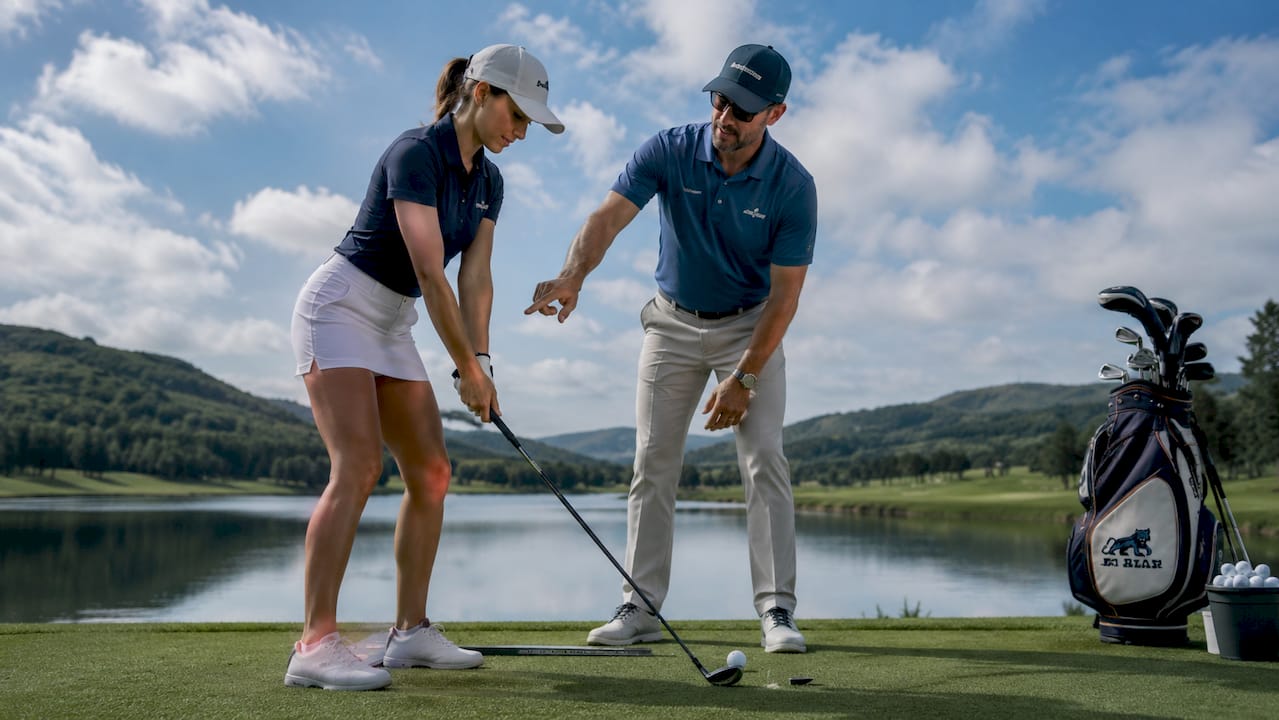
The clearest reason to choose certified golf instructors is the elimination of trial and error. Certified instructors use standardized methodologies in biomechanics and swing mechanics to catch small errors that self-teaching almost always misses. A golfer who has spent two seasons fighting a slice may have ingrained a compensating grip or stance that makes the problem worse. A certified instructor identifies the root cause in the first session, not the symptom.

Structured coaching also replaces the frustration cycle that derails so many self-taught golfers. Consistent lessons paired with structured practice plans focused on measurable goals produce the fastest improvement trajectories. Random, volume-based practice without clear goals stalls development. That distinction is the core argument for professional instruction over solo range sessions.
Beyond swing mechanics, a certified instructor acts as an accountability partner. Objective guidance prevents common failures caused by self-diagnosis, where golfers misread their own ball flight or attribute distance loss to equipment rather than technique. The instructor sees what you cannot see about your own swing, and that outside perspective is genuinely irreplaceable.
Pro Tip: Ask your instructor to track your ball flight data across three consecutive lessons. Visible progress in dispersion and carry distance is the clearest sign the coaching is working.
Understanding what a golf coach really does for your game goes well beyond fixing your grip. It includes building the mental habits and self-correction skills that travel with you onto the course when no coach is present.
How certified instructors deliver measurable improvements
Certified instructors build their lessons around specific, trackable performance indicators rather than vague feel-based cues. They measure ball flight, club path, face angle, and impact location to give you feedback that is objective and repeatable. This approach connects directly to golf performance indicators that show real scoring progress over time.
The structured practice plan is the engine of certified instruction. A good instructor does not simply correct your swing during the lesson and send you to the range. They assign deliberate practice tasks tied to specific goals, such as reducing lateral dispersion by a set number of yards or improving strike rate on short irons. That kind of goal-oriented framework replaces the aimless bucket of balls that most golfers default to.
- Biomechanics analysis: Certified instructors identify how your body moves through the swing and correct inefficiencies that rob you of distance and accuracy.
- Swing path correction: Using launch monitor data or video, they isolate whether your miss pattern comes from club path, face angle, or both.
- Structured practice assignments: Each lesson ends with a specific drill or focus area tied to a measurable outcome.
- Progress tracking: Lessons build on each other, with the instructor comparing current data to baseline measurements from earlier sessions.
Pro Tip: Before your first lesson, record a face-on and down-the-line video of your swing. Give it to your instructor as a baseline. Comparing it to footage from lesson six reveals progress you would otherwise feel but not see.
Does instructor compatibility matter as much as certification?

Certification is the foundation, but compatibility is what makes instruction actually work. Teaching style and learner compatibility matter more than formal credentials in determining whether a golfer improves. Trust and clear communication are the real success factors, and no credential automatically delivers those qualities.
Beginners thrive with teachers who are passionate about fundamentals and patient with repetition. Advanced golfers need coaches who understand competitive pressure, mental game strategy, and long-term development arcs. The right instructor for a 28-handicapper is rarely the right instructor for a scratch player, even if both coaches hold identical certifications.
Here is a practical framework for evaluating compatibility before committing to a series of lessons:
- Watch a sample lesson. Many instructors post lesson videos online. Observe how they communicate corrections. Do they explain the why behind each change, or just issue commands?
- Read student feedback patterns. Look for recurring themes in reviews: patience, clarity, and whether students report actual score improvement over time. Single-session reviews tell you less than patterns across dozens of students.
- Ask about their teaching philosophy. An instructor who prioritizes feel-based cues may frustrate a data-driven learner. One who leads with launch monitor numbers may overwhelm a beginner who just wants to make contact.
- Request a trial lesson. One session is enough to assess communication style, pacing, and whether the instructor listens as much as they teach.
Effective instructors adjust communication and teaching pace based on feedback from the student. Certification provides the methodology, but real teaching excellence develops through experience and adaptability to diverse student needs.
What do specialized golf certifications add to instruction?
General PGA certification covers the full scope of golf instruction, but specialized certifications signal mastery in a specific area of the game. These credentials matter when your weakest area is also the most complex to fix.
AimPoint is the most recognized specialized certification in green reading. An AimPoint-certified instructor teaches a feel-based system for reading slope using your feet, giving you a repeatable process for reading putts that removes guesswork entirely. For golfers who three-putt regularly, one series of lessons with an AimPoint-certified coach can produce faster scoring gains than months of general swing work.
Short game specialists hold certifications focused on chipping technique, bunker play, and distance control inside 100 yards. Specific expertise in the short game, combined with data-driven coaching tools, is a stronger predictor of student success than broad certification alone. The short game accounts for roughly half of all strokes in a typical round, so focused expertise here delivers outsized scoring returns.
- AimPoint certification: Teaches a systematic, feel-based green reading method that reduces three-putts.
- Short game specialist credentials: Provide focused technique for chipping, pitching, and bunker play.
- Mental game coaching certifications: Address pre-shot routines, pressure management, and course strategy.
- Fitness and flexibility credentials: Help instructors connect physical limitations to swing faults, offering corrective exercises alongside technical coaching.
Seeking a specialized certified instructor makes the most sense when you have already addressed the fundamentals and your scoring is stalling in one specific area. A 10-handicapper who drives the ball well but averages 36 putts per round gains more from an AimPoint session than from another round of swing analysis.
How to choose a golf instructor that fits your goals
Selecting the right certified instructor requires more than checking a credential box. Golfers selecting instructors should review patterns in student feedback for patience, communication, and progress, and watch recent lesson videos to confirm that the teaching style fits their personal goals.
The questions you ask before the first lesson reveal more than the lesson itself. Knowing key golf lesson questions to bring into that conversation gives you a clear framework for evaluating any instructor’s approach.
| Evaluation factor | What to look for |
|---|---|
| Certification level | PGA certification or recognized specialist credential in your focus area |
| Student feedback | Consistent themes of patience, clear communication, and score improvement |
| Teaching tools | Use of video, launch monitors, or other objective measurement devices |
| Practice plan quality | Specific, measurable assignments between lessons, not vague range suggestions |
| Trial lesson availability | Willingness to offer a single session before a multi-lesson commitment |
High-level players need instructors who combine competitive experience, mental game strategies, and structured long-term development plans. Quick fixes are avoided in favor of lasting habit formation. If an instructor promises dramatic improvement in one session, treat that as a warning sign rather than a selling point.
If you are still weighing your options between going it alone and hiring a professional, the comparison between self-taught vs instructor-led golf lays out the real trade-offs with clarity.
Key Takeaways
Certified golf instructors deliver measurable improvement by combining standardized methodology with personalized teaching, and compatibility with your learning style determines whether that expertise actually translates to lower scores.
| Point | Details |
|---|---|
| Certification ensures methodology | PGA-certified instructors use standardized biomechanics and swing mechanics training to identify errors self-teaching misses. |
| Structured plans beat random practice | Consistent lessons with measurable goals produce faster improvement than unguided range sessions. |
| Compatibility drives results | Teaching style, communication, and trust matter as much as credentials when choosing an instructor. |
| Specialized certifications add focus | AimPoint and short game credentials deliver targeted expertise that general certification does not cover. |
| Evaluate before committing | Review student feedback patterns, watch lesson videos, and request a trial lesson before signing up for a series. |
What I have learned from watching golfers choose their instructors
Certification is a necessary foundation. Without it, you have no guarantee that an instructor understands swing mechanics at a level deep enough to help you without causing harm. But I have watched certified instructors with impeccable credentials fail their students repeatedly, and I have watched non-PGA coaches with genuine communication gifts transform a golfer’s relationship with the game in six weeks.
The golfers who improve fastest share one trait: they chose an instructor who listened before they spoke. The best coaches I have observed ask more questions in the first lesson than they answer. They want to know your goals, your frustrations, your practice schedule, and your history with the game before they ever suggest a change. That curiosity is not a personality quirk. It is a teaching philosophy, and it produces better outcomes than any credential on its own.
Long-term progress in golf is built on habits, not corrections. A certified instructor who gives you a different fix every lesson is not building your game. They are keeping you dependent on lessons. The instructors worth your time and money are the ones who teach you to self-correct, to read your own ball flight, and to adjust on the course without needing a coach standing behind you. That kind of independence is the real product of excellent certified instruction, and it is the standard you should hold every prospective coach to.
— Michael Marini
Golf Blab resources to complement your certified instruction
Certified instruction sharpens your technique, and the right gear reinforces your identity on the course. Golf Blab brings both together for golfers who take their game seriously. Personalize your clubs with custom golf club labels that make your bag unmistakably yours, a detail that matters more than most golfers admit when confidence is part of performance. For those ready to experience elite-level play firsthand, Golf Blab’s play golf with a Tour Pro experience puts you alongside a professional in a setting that no lesson can fully replicate. Pair that with the instructional content Golf Blab publishes regularly, and you have a complete framework for improvement that extends well beyond the lesson tee.
FAQ
What makes a golf instructor officially certified?
A certified golf instructor has completed a recognized training program, such as PGA certification, covering swing mechanics, teaching methodology, and player development. This credential confirms they meet a standardized level of competency before teaching students.
Are certified golf instructors better than non-certified coaches?
Certification ensures a foundational level of expertise, but teaching effectiveness also depends on communication style, experience, and compatibility with the student. A certified instructor with strong communication skills consistently outperforms one who relies on credentials alone.
How do I find a certified golf instructor near me?
The PGA of America maintains a searchable directory of certified instructors by location. Platforms offering verified student reviews and lesson video samples also help you assess teaching style before booking a session.
What questions should I ask a golf instructor before hiring them?
Ask about their teaching philosophy, how they structure practice plans between lessons, and whether they use objective tools like video or launch monitors. The answers reveal whether their approach matches your learning style and goals.
Do I need a certified instructor if I am a beginner?
Beginners benefit most from certified instructors because foundational habits formed early are the hardest to correct later. A certified coach builds your swing on sound biomechanical principles from the first lesson, preventing the ingrained faults that plague self-taught golfers for years.