Posted on

Golf swing fundamentals: Essential skills for every golfer

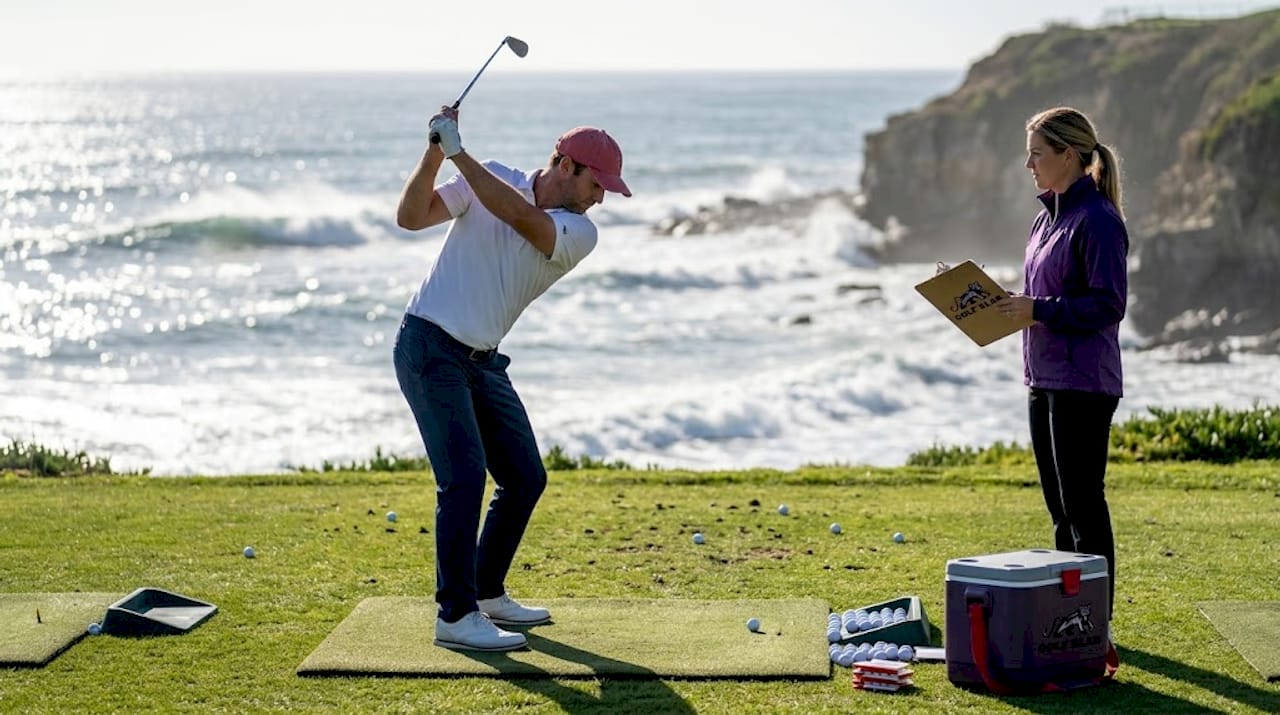
Golfer practicing swing at driving range


TL;DR:

  • A great golf swing delivers power accuracy and consistency through proper fundamentals.
  • Focus on grip stance backswing downswing and follow-through for optimal speed and control.
  • Training ground reaction forces and practicing purposefully with data tracking helps close the skill gap.

Most golfers spend years grinding away on the range, collecting tips from playing partners, YouTube videos, and well-meaning instructors, only to walk off the 18th hole feeling more confused than when they started. The problem isn’t effort. It’s direction. Conflicting advice pulls your swing in a dozen different directions at once, and without a clear framework grounded in what actually works, you end up spinning your wheels. This article cuts through the noise and lays out the core swing fundamentals in plain language, backed by real science, so you can start building a repeatable, powerful swing from the ground up.

Table of Contents

Key Takeaways

Point Details
Build a solid swing Mastering grip, stance, and sequence improves consistency and control throughout your swing.
Train ground forces Practicing ground reaction force exercises translates to higher clubhead speed and better performance.
Adjust for your demographic Know your clubhead speed benchmarks and tailor fundamentals to your age and skill level.
Method beats talent Pro-level habits and personalized training matter more than natural ability.
Golf Blab resources Explore specialized products and lessons to put these fundamentals into action for rapid improvement.

What makes a great golf swing?

Having previewed the essentials, next let’s define how you can recognize a truly effective golf swing. Because here’s the naked truth: not all swings are created equal, and knowing what separates a great swing from a mediocre one gives you a target to aim at.

At the most fundamental level, a great swing produces three things consistently: power, accuracy, and repeatability. You can’t trade one for the other and call it a success. A swing that’s powerful but wildly inaccurate belongs on a demolition site, not a golf course.

Research backs this up in a concrete way. Studies show a GRF/CoP and CHS correlation that is moderate to strong, meaning skilled golfers generate noticeably higher ground reaction force (GRF) and clubhead speed (CHS) than their less experienced counterparts. Ground reaction force is simply the force the ground pushes back against your feet as you swing. The more efficiently you use that force, the faster and more controlled your clubhead moves through impact.

And clubhead speed matters more than most amateurs realize. According to clubhead speed benchmarks, performance varies significantly based on demographic factors like age and sex, which means comparing yourself to a 25-year-old tour player when you’re a 55-year-old weekend warrior isn’t just unhelpful, it’s counterproductive. Know your benchmark. Track your progress against it.

Here’s what we look for when evaluating any golfer’s swing:

  • Consistency: Does the swing repeat under pressure, or does it fall apart on the back nine?
  • Power: Is ground force being used efficiently to generate real clubhead speed?
  • Accuracy: Is the face square at impact, and is the path delivering the ball where you intend?
  • Balance: Does the golfer stay centered and controlled from address through follow-through?
  • Adaptability: Can the swing hold up across different lies, clubs, and conditions?

Understanding swing plane fundamentals is a great starting point once you’ve gotten honest with yourself about which of these five areas needs the most attention. You can also explore the full picture of golf swing mechanics to see how all the moving parts fit together.

The five fundamental elements of a golf swing

Now that we know what defines a great swing, let’s get practical with a clear roadmap of the five core swing fundamentals. Think of these as the non-negotiables. Mess with any one of them and the whole system breaks down.

1. Grip

The grip is where everything starts. Get it wrong and you’re fighting the club through every inch of the swing. A proper grip puts the club in the fingers, not the palm, allowing the wrists to hinge freely and the clubface to return square at impact. There are three grip styles: the overlapping (Vardon), the interlocking, and the ten-finger (baseball). Most club golfers do well with the Vardon grip, but the best grip is the one that feels secure without tension. Grip pressure is everything here. Grip it like you’re holding a small bird. Firm enough that it doesn’t fly away, gentle enough that you don’t crush it.

2. Stance

Your stance sets the table for everything that follows. Feet roughly shoulder-width apart for mid-irons, slightly wider for driver, slightly narrower for wedges. Weight balanced between the balls and heels of your feet, never on your toes. Ball position shifts forward as the club gets longer. This isn’t arbitrary. A correct stance creates the stable base from which your body can rotate freely and powerfully. A sloppy stance is like trying to throw a punch while standing on one foot.

Golfer setting stance on grass tee

3. Backswing

The backswing isn’t about getting the club to a specific position. It’s about loading energy efficiently so you can release it explosively into the ball. Turn your shoulders fully while keeping your lower body relatively stable. The club should track along a consistent plane on the way back. Avoid the urge to lift the arms without turning the body. That’s one of the most common mistakes we see, and it kills your power before the downswing even begins. A great resource on recording your swing can help you spot backswing faults you simply can’t feel in real time.

4. Downswing

This is where the magic happens, or where it all falls apart. The downswing should be initiated from the ground up, meaning your lower body fires first, then your hips rotate, then your torso, and finally your arms and club follow. This sequencing is what creates that snapping, whip-like release through the ball. Research consistently shows that empirical GRF production is what distinguishes skilled golfers from amateurs, so training your ground forces is as important as anything you do with your hands or arms.

5. Follow-through

Your follow-through isn’t decoration. It’s proof of what happened before impact. A full, balanced finish with your weight transferred to your lead foot tells you the downswing was correct. A choppy or abbreviated finish usually means you decelerated through the ball, which kills distance and consistency. Let the club finish high over your lead shoulder and let your chest face the target. That’s your checkpoint.

“The follow-through is not a pose. It’s the natural result of a swing that committed fully through the ball. If it looks forced, something earlier went wrong.” This is the mindset every golfer serious about improvement needs to adopt.

Pro Tip: Check out our practical swing improvement guide for step-by-step drills that reinforce each of these five fundamentals without overcomplicating the process.

Comparing how fundamentals impact clubhead speed

Understanding each fundamental individually, let’s see how these elements stack up when it comes to boosting your clubhead speed. Not all fundamentals are created equal in terms of their direct impact on speed, and knowing which ones move the needle most can help you prioritize your practice time.

Fundamental Impact on clubhead speed Primary benefit Easiest quick win
Grip Moderate Consistency and face control Lighten grip pressure
Stance Moderate Balance and rotation range Widen stance for driver
Backswing High Energy loading and arc width Full shoulder turn
Downswing Very High Speed generation and sequencing Lead with lower body
Follow-through Moderate Commitment through impact Allow full weight transfer

As the table shows clearly, the downswing sequencing and the backswing energy load carry the most direct weight when it comes to raw speed. That said, grip and stance failures can cap your potential even if your downswing is firing correctly. They’re the floor, and you can’t build a house without one.

Here’s what you can do right now for each element:

  • Grip: Practice gripping with just enough pressure to control the club without restricting wrist hinge.
  • Stance: Use alignment sticks on the range to consistently check your foot line and ball position.
  • Backswing: Record your swing from behind to see if your club is tracking on plane and your shoulders are fully turned.
  • Downswing: Practice “step drills,” where you step forward with your lead foot as you start the downswing to train the lower body to lead.
  • Follow-through: Work on slow-motion swings where you hold the finish for five full seconds to build the muscle memory for a complete transfer.

The data on clubhead speed benchmarks shows that demographic differences are real and significant. A junior golfer and a senior golfer should not be training with the same speed targets or the same methods. Personalized approaches aren’t just nice to have. They’re necessary. Understanding ball trajectory insights is another way to measure whether your clubhead speed improvements are actually translating into better real-world shots.

How to train for better ground forces and swing control

Once you know which fundamentals drive speed and accuracy, it’s time to learn how to train efficiently for those advantages. And the most underrated training target in amateur golf is ground reaction force.

Most golfers never think about their feet during the swing. That’s a massive missed opportunity. The force you push into the ground during the downswing is converted directly into rotational speed and, ultimately, clubhead speed. Research confirms a GRF/CoP and CHS correlation that is both meaningful and trainable, which means this isn’t just theoretical. You can get better at it with the right work.

Here are practical ways to train your ground forces and overall swing control:

  • Single-leg balance drills: Stand on one foot for 30 to 60 seconds while maintaining a golf posture. This builds the stabilizing muscles in your ankles, knees, and hips that control your base during the swing.
  • Lateral jump and stick: Jump sideways and land on one foot, holding the position for three seconds. This mimics the weight shift demands of the downswing.
  • Hip hinge with resistance band: Loop a band around a fixed object at hip height and practice hinging while resisting the pull. This trains your ability to load and unload the hips explosively.
  • Med ball rotational throws: Throw a medicine ball against a wall with a rotational motion that mirrors your downswing pattern. Start slow and build power over multiple sessions.
  • Calf raises and ankle mobility work: Often overlooked, ankle stiffness limits your ability to push effectively into the ground. Daily mobility work pays dividends on the course.

The beauty of these exercises is that you can do most of them at home or at the gym without any golf equipment. They build the physical foundation that your technique lives on.

Pro Tip: Pair your fitness training with structured practice routines for swing work on the range. Fitness without technical reinforcement only gets you so far. Learn more about swing automation to understand how these physical skills eventually become instinctive rather than conscious during your round.

The real difference between amateurs and pros: It’s not just talent

Here’s something the traditional golf teaching industry doesn’t want to admit. The gap between a scratch golfer and a 20-handicapper usually isn’t raw talent. It’s habits. Specifically, the habits around how they practice and what they choose to focus on.

Professionals are methodical about reviewing their swings. They track data. They work with coaches who understand biomechanics. They train their ground forces deliberately, not accidentally. They know their clubhead speed numbers, their swing tendencies, and exactly which fundamentals to address when their game goes sideways. That feedback loop is ruthless and consistent.

Most amateurs, on the other hand, show up to the range and beat balls for an hour with no real plan. They work on whatever went wrong in the last round, fix it in isolation, and then wonder why the problem comes back three weeks later. The body hasn’t built the physical foundation to support the technical fix, so the fix doesn’t stick.

We’ve seen it over and over again. Golfers who invest in understanding what a golf coach really does for their game make progress at a completely different rate than those who go it alone. A good coach doesn’t just spot swing flaws. They prioritize what to work on, sequence the improvements logically, and keep the golfer from falling into the trap of fixing one thing while breaking another.

The other thing pros do that amateurs rarely do? They practice with purpose under something resembling pressure. They create situations in practice that simulate the discomfort and stakes of a real round. That mental rehearsal builds the consistency and repeatability that shows up when it counts.

The gap is real, but it is absolutely closeable. With the right structure, the right drills, and an honest look at your own swing data, you can start moving toward it faster than you think.

Ready to take your swing to the next level?

If everything in this article has you fired up to make real changes, we want to help you channel that energy into actual results.

https://golf-blab.com

At Golf Blab, we’ve built a platform that matches the instruction with the gear and the community to support your growth. Start by personalizing your equipment with our golf club personalization options, because knowing which club is which and owning your setup matters more than most people admit. Browse our popular golf shaft labels to keep your bag organized and dialed in. And if you’re serious about structured improvement, our guaranteed golf lessons come with a money-back guarantee because we believe that strongly in what we teach. Your better swing starts here.

Frequently asked questions

What is the most important fundamental for a beginner golfer?

The grip is the foundational fundamental, as it establishes control and consistency for everything else in the swing. Without a solid grip, no other technical improvement will deliver its full potential.

How can I increase my clubhead speed?

Train your ground reaction forces with targeted exercises and refine your backswing and downswing sequencing, since GRF/CoP and CHS share a strong enough correlation that improving one directly benefits the other.

Are there performance benchmarks for clubhead speed?

Yes, clubhead speed benchmarks vary by demographic factors such as age and sex, so golfers should measure their progress against appropriate reference points rather than generic tour averages.

How can I practice ground force skills at home?

Simple balance drills, lateral jumps, and hip hinge exercises train your ground forces effectively outside the course, since empirical GRF production consistently separates skilled golfers from recreational players and is trainable with consistent effort.

Does fitness training improve golf swing mechanics?

Absolutely. Building overall strength and mobility increases your capacity to produce ground forces and sustain the physical demands of a repeatable swing, which directly improves your consistency across all 18 holes.

Posted on

Why adult golfers take lessons: skills and enjoyment

Golf instructor coaching adult player at range


TL;DR:

  • Many adult golfers seek lessons to break through skill plateaus and enjoy the game more confidently. Personalized coaching provides targeted feedback, correcting mistakes early and accelerating progress. Ongoing instruction fosters lifelong growth, enjoyment, and sustained improvement in golf performance.

Most golfers assume lessons are a beginner’s tool. You take a few to learn the basics, then you’re on your own. That thinking is costing you strokes, confidence, and honestly, a lot of fun on the course. The naked truth is that adult golfers pursue lessons to sharpen skills and deepen their enjoyment of the game, regardless of where they currently stand. Whether you’re a 25-handicapper struggling with consistency or a 10-handicap player stuck at the same scoring level for years, professional instruction has something real to offer you.

Table of Contents

Key Takeaways

Point Details
Lessons benefit all levels Adult golfers gain from lessons in skill, confidence, and game enjoyment regardless of experience.
Personalized instruction accelerates progress Tailored approaches help golfers break plateaus and reach their unique goals faster.
Long-term enjoyment grows Ongoing lessons foster lifelong improvement and greater satisfaction with the game.
Choosing the right lesson is key Matching your learning style with lesson format maximizes results and value.

The real reasons adults seek golf lessons

Let’s cut through the noise. Most adults who sign up for lessons aren’t starting from scratch. They’re players who have hit a wall, lost their confidence, or simply want to enjoy the game more. And that’s not a weakness. That’s smart thinking.

Think about it this way. If your car starts pulling to one side, you don’t just drive it harder hoping it corrects itself. You take it to someone who can diagnose the problem and fix it. Golf is no different. Bad habits compound over time, and the longer you wait, the more deeply they get baked into your muscle memory.

Here’s what motivates most adult golfers to finally book that lesson:

  • Breaking a stubborn plateau after months or years at the same handicap level
  • Rebuilding confidence after a stretch of poor rounds that shook their enjoyment
  • Fixing a specific flaw like a persistent slice, poor chipping, or a yippy putting stroke
  • Preparing for a special event like a club championship or a golf trip they’ve been planning
  • Simply wanting to enjoy the game more because frustration has been winning lately

Understanding what a golf coach does for your game changes the entire conversation. A great coach isn’t there to overhaul everything you do. They’re there to identify the one or two things that are holding you back the most and give you a clear path forward.

“The biggest misconception in golf is that once you’ve played for a few years, you’ve learned all you can. In reality, that’s usually when the most meaningful improvement becomes possible.” — Golf Blab coaching team

The personalized feedback you get from a professional is something no YouTube video or golf buddy can replicate. Those golf pro tips you find online are often generic, and generic advice can actually make your specific problem worse.

Pro Tip: Before your first lesson, write down the three things that frustrate you most about your game. That list becomes your instructor’s starting point and saves you both valuable time.

How lessons accelerate skill development and consistency

Here’s where things get interesting. Most golfers practice the wrong way. They go to the range, hit a bucket of balls, feel pretty good, and call it a day. But without structured feedback, you’re just reinforcing whatever you’re already doing, including the mistakes.

Structured guidance through lessons accelerates improvement in a way that self-directed practice simply can’t match. A coach watches your swing from multiple angles, spots the root cause of your problems (not just the symptoms), and gives you targeted drills that fix the actual issue.

Infographic comparing self practice and lessons for golfers

Let’s compare the two approaches honestly:

Factor Self-directed practice Coached sessions
Feedback quality None or guesswork Real-time, specific
Error correction Errors compound Errors caught early
Skill progression Slow or stagnant Structured and measurable
Accountability None Built in
Efficiency Low High
Enjoyment boost Moderate Significant

The difference is stark. When you practice without feedback, you can spend years grinding away at the range without ever moving the needle. When a coach is involved, even one session can change the trajectory of your game.

Here’s a practical progression that most coached adult golfers follow:

  1. Assessment session where your coach identifies your current strengths and the specific gaps holding you back
  2. Focused technique work targeting your biggest weakness first, not a laundry list of fixes all at once
  3. On-course application where you actually use what you’ve learned in a real round or simulated playing situation
  4. Review and adjustment so the coach can see what transferred from the lesson to the course
  5. Refinement and new goals once the initial improvement has been locked in

This kind of progression is what separates real improvement from the endless cycle of range sessions that go nowhere.

Building solid practice routines for performance is something coaches help you design specifically for your schedule and goals. Not everyone has three hours a day to practice. A good coach builds a plan around your real life.

Pro Tip: Ask your instructor to give you one drill and one swing thought to take away from each session. Two things. That’s it. Trying to remember ten things on the course is a recipe for paralysis.

You can even start seeing results by committing to practice at home between lessons. Short daily sessions reinforcing what your coach taught you accelerate progress dramatically compared to waiting until your next range visit.

Personalization: Tailoring lessons to individual needs

This is where professional instruction really earns its value. No two adult golfers are the same. A 55-year-old with limited shoulder mobility has completely different physical needs than a 35-year-old who’s an athlete. A golfer who’s played for 20 years and developed deeply ingrained habits needs a different approach than someone who picked up the game two years ago.

Personalized approaches genuinely enhance the effectiveness of golf lessons in ways that generic instruction never can. A skilled instructor doesn’t apply the same template to every student. They observe, ask questions, and adapt.

Here’s what smart lesson personalization actually looks like in practice:

Golfer profile Primary focus area Coaching approach
Senior with mobility limits Maintaining swing arc Modified setup and rotation drills
High-handicapper beginner Contact and alignment Simplified fundamentals, lots of repetition
Mid-handicapper with plateau Course management Strategy-based instruction alongside technique
Low-handicapper chasing scratch Short game sharpness Detailed wedge and putting refinement
Returning golfer after a break Rust removal Confidence rebuilding and tempo restoration

The right instructor asks about your goals on the first day. Do you want to break 90? Compete in your club’s member-guest? Simply enjoy a round without embarrassing yourself in front of your boss? Those goals shape everything about how instruction is delivered.

Personalization also means respecting your learning style. Some golfers are visual learners who respond well to video analysis. Others are feel-based players who need descriptive cues rather than technical explanations. A good coach reads you and adjusts accordingly.

When you’re deciding between formats, it’s worth exploring the difference between clinics versus private lessons to figure out what matches your goals and budget. Group clinics offer terrific value for social learners who enjoy the energy of other students. Private lessons give you undivided, laser-focused attention.

Here’s what to look for when personalizing your learning experience:

  • A coach who asks about your specific goals before the first swing is taken
  • Flexibility in lesson format, whether on the range, short game area, or on the course itself
  • A willingness to explain why a change is being made, not just issuing orders
  • Adjustments that account for your physical limitations without making you feel limited
  • Regular check-ins to evaluate whether the approach is working for you

Pro Tip: Tell your instructor about any physical limitations upfront. A coach who knows about your bad knee or tight back can build a swing that works with your body, not against it. This saves you pain and frustration in the long run.

Long-term benefits: Confidence, enjoyment, and lifelong growth

Here’s something the golf industry doesn’t say loudly enough. Lessons aren’t just about technique. They fundamentally change how you feel on the golf course. And that emotional shift is often more valuable than the technical improvement.

Adult golfer enjoying a relaxed putting session

When you follow smart golf strategy, and your ball goes where you intend more often than not, something shifts inside you. You walk onto the first tee with a completely different energy. Confidence isn’t just a nice feeling. It directly affects your decision-making, your tempo, and your ability to recover from a bad hole without letting it ruin the rest of your round.

The long-term benefits that consistently coached golfers report include:

  • Sustained confidence that carries over from the range to the course and stays there
  • More consistent ball striking that makes every round more predictable and enjoyable
  • Better decision-making because you understand your game well enough to know when to be aggressive and when to lay up
  • Deeper enjoyment of every round because frustration decreases when you have tools to manage your game
  • Stronger social connections since you’re no longer embarrassed to play with better golfers

“Golf is a game you play for life. The golfers who invest in lessons consistently aren’t just trying to get better. They’re protecting their enjoyment of the game for decades to come.”

Think about updating your golf equipment alongside your lessons. Better gear combined with better technique creates a compounding effect. You stop blaming your clubs and start trusting your swing.

There’s also a fascinating lesson in looking at how junior golfers benefit from early instruction. Young players who get good coaching early develop confidence and mental resilience that shapes their entire relationship with the game. Adults can experience the exact same transformation. It’s never too late, and the benefits look remarkably similar regardless of age.

Pro Tip: Keep a simple round-by-round journal after you start lessons. Track your fairways hit, greens in regulation, and putts per round. You’ll see the improvements faster than you expect, and that data becomes incredibly motivating when progress feels slow.

Why the best golfers never stop learning: A fresh perspective

Here’s an opinion that might sting a little. A lot of adult golfers resist lessons because they see them as an admission of failure. “I’ve been playing for 15 years. Shouldn’t I have figured this out by now?” That mindset keeps more golfers stuck than any bad habit ever could.

Look at the best players in the world. Tour professionals, people who have dedicated their entire lives to this game, still work with swing coaches, short game coaches, mental coaches, and fitness trainers every single week. They aren’t doing that because they’re bad at golf. They’re doing it because they understand that improvement requires outside perspective, regardless of how good you already are.

The golfers who embrace lifelong learning through ongoing coaching support share a specific mindset. They see each lesson not as a fix for something broken but as an investment in a game they love. There’s a real difference between those two frames, and it changes everything about how you engage with instruction.

The uncomfortable truth is that most plateaus in amateur golf aren’t physical limitations. They’re mental ones. The belief that you’re “too old to change” or “too set in your ways” is far more limiting than your actual swing. We’ve seen 60-year-olds drop five strokes in a season after finally committing to consistent instruction. The body adapts more readily than the ego does.

At Golf Blab, we’ve always believed that the frustration golfers feel, the kind that makes you want to snap a club after a triple bogey, is almost always rooted in a feeling of helplessness. That feeling disappears when you have a coach, a plan, and clear evidence that you’re improving. The game becomes fun again. Genuinely, deeply fun.

Growth in golf isn’t linear, and that’s worth accepting early. You’ll have breakthroughs, followed by plateaus, followed by new breakthroughs. The players who keep getting better are simply the ones who don’t quit on the process during the flat stretches. A good coach keeps you grounded and focused when the progress feels invisible.

Take the next step: Find the right lesson for you

You’ve been reading about the benefits of professional instruction, and maybe something clicked. Maybe you’ve been thinking about booking lessons for months but kept putting it off. Here’s a simple truth: the best time to invest in your game is right now, not after next season, not after you buy new clubs, and not after you “get a little better first.”

https://golf-blab.com

At Golf Blab, we’ve built a learning center full of resources designed specifically for adult golfers who are serious about improving. Whether you’re starting fresh or trying to break through a stubborn plateau, we have structured paths that meet you exactly where you are. Explore our available lesson packages and find a format that fits your goals, your schedule, and your budget. We back everything with a money-back guarantee because we’re confident the instruction works, and we want you to feel that confidence before you commit.

Frequently asked questions

Do adult golf lessons work for beginners and experienced players?

Yes, adult lessons benefit both new and experienced golfers by offering tailored instruction that meets each player where they are. Adult golfers at every level see real improvements in skill and enjoyment when instruction is properly personalized.

How do I know if private or group lessons are better for me?

Consider your learning style and specific goals first. Personalized lesson formats offer the best fit when you match them to how you learn best, with private sessions providing focused individual attention and group clinics offering a social, shared learning environment.

Will lessons help me fix common mistakes in my game?

Professional coaching targets your specific weaknesses rather than applying generic fixes, which is why it works so much better than self-correction. Structured guidance from a coach identifies the root cause of your errors and gives you concrete drills to correct them efficiently.

How often should adult golfers take lessons for best results?

Consistency is the single biggest driver of lasting improvement in adult golf. Even monthly lessons, combined with focused practice in between, deliver significantly better results than sporadic sessions whenever frustration peaks.

Posted on

Mejora tu técnica de golf: guía paso a paso para avanzar

Un hombre practica su swing en un campo de golf profesional.

Hay algo tremendamente frustrante en pasar horas en el campo, golpear cientos de bolas, y sentir que tu juego simplemente no avanza. No estás solo en eso. La mayoría de los golfistas repiten los mismos movimientos semana tras semana sin entender por qué sus errores no desaparecen. El problema no es la falta de esfuerzo, es la falta de un proceso claro. En este artículo te detallo cada paso necesario para mejorar de forma realista y sostenible, conectando el análisis físico con los ajustes técnicos que realmente marcan la diferencia en tu swing y en tu rendimiento general.


Tabla de contenidos

Puntos Clave

Punto Detalles
Evaluación previa Antes de modificar la técnica, revisa tus limitaciones físicas y recursos disponibles.
Plan por pasos Dividir el proceso en pasos claros garantiza un avance sostenido y medible.
Evita errores comunes Adaptar ejercicios y valorar el feedback objetivo previene estancamiento y lesiones.
Observa el progreso Medir los avances y reajustar estrategias es clave para una mejora técnica real.

Preparación: requisitos y herramientas para iniciar el proceso de mejora

Una vez reconocido el problema, lo fundamental es prepararse adecuadamente antes de intentar cambios técnicos. Muchos jugadores cometen el error de saltar directamente a modificar su swing sin saber en qué condición física están ni qué limitaciones reales tienen. Eso es como tratar de arreglar un motor sin saber qué parte está fallando.

Antes de tocar un palo, necesitas hacer una autoevaluación honesta. ¿Tienes movilidad suficiente en caderas y hombros? ¿Tu equilibrio es estable al rotar? ¿Sientes tensión en alguna parte del cuerpo durante el golpe? Estas preguntas no son retóricas. Son el punto de partida de cualquier proceso de mejora serio.

Una mujer prueba la libertad de movimiento de sus hombros mientras se pone ropa de golf

El método más reconocido para esta evaluación inicial es el enfoque TPI (Titleist Performance Institute). El enfoque TPI utiliza un screening físico para detectar limitaciones que afectan el swing, identificando si tu cuerpo tiene restricciones que te impiden ejecutar ciertos movimientos con eficiencia. No es un sistema reservado para pros. Cualquier golfista puede beneficiarse de este tipo de evaluación.

En cuanto a herramientas básicas, no necesitas gastar una fortuna. Lo esencial para empezar es:

  • Un set de palos estándar adaptados a tu nivel (no necesitas los más caros)
  • Bolas de práctica y acceso a un campo o zona de práctica
  • Un smartphone para grabarte y revisar tu técnica del swing de golf
  • Un espejo de cuerpo entero en casa para revisar postura y grip
  • Un cuaderno o aplicación para registrar tus sesiones

Consejo profesional: antes de tu primera sesión de trabajo técnico, dedica 10 minutos a revisar tu movilidad. Rota los hombros, gira las caderas y comprueba si tu columna te permite inclinarte sin perder equilibrio. Si notas rigidez o dolor, ese es exactamente el lugar donde hay que trabajar primero.

La siguiente tabla resume qué factores físicos pueden limitar tu técnica y cómo se manifiestan en el swing:

Factor físico limitante Efecto en el swing Área de trabajo prioritaria
Poca movilidad de cadera Rotación incompleta Estiramientos de cadera y flexores
Rigidez en hombros Backswing acortado Movilidad de hombro y columna torácica
Falta de equilibrio Pérdida de postura en el impacto Ejercicios de estabilidad y core
Debilidad en core Falta de potencia transferida Trabajo de fuerza funcional
Tensión en muñecas Grip inestable y mala trayectoria Movilidad y fuerza de antebrazo

Esta tabla no es decorativa. Úsala para identificar dónde estás tú específicamente, porque la mejora técnica que funciona para otro golfista puede no ser la que tu cuerpo necesita.


Pasos prácticos: proceso gradual para mejorar tu técnica de golf

Con las herramientas y conocimientos base listos, el siguiente paso es ejecutar acciones específicas para optimizar la técnica. Aquí es donde muchos golfistas se pierden, porque intentan corregir todo a la vez. Eso no funciona. El progreso real viene de acciones secuenciales y consistentes.

Infografía: pasos clave para perfeccionar tu técnica de golf

Primero, quiero mostrarte la diferencia entre corregir por intuición y usar una guía estructurada:

Corregir por intuición Usar guía estructurada
Cambias lo que “sientes” mal Cambias lo que el análisis muestra como causa raíz
Resultados inconsistentes Progreso medible y sostenible
Riesgo de reforzar errores Corrección desde la base técnica
Sin registro ni seguimiento Registro claro de avances y retrocesos
Dependes del estado de ánimo Dependes del proceso, no de cómo te sientes ese día

Esta comparación no es para hacerte sentir mal. Es para que entiendas que el proceso importa TANTO como el esfuerzo que pones.

Ahora sí, el proceso paso a paso:

  1. Evalúa tu situación actual. Grábate durante una sesión normal. No modifiques nada. Solo observa. Identifica los tres errores más evidentes.
  2. Corrige el grip primero. El agarre es la base de todo. Un grip incorrecto contamina todo lo demás. Revisa la postura correcta en golf y el agarre antes de cualquier otra cosa.
  3. Trabaja la postura antes del swing. Tu alineación, la posición de los pies y la inclinación de columna determinan todo lo que viene después.
  4. Practica movimientos básicos de forma aislada. No intentes hacer el swing completo desde el primer día de corrección. Practica el backswing solo, luego el downswing, y después únelos.
  5. Grábate en cada sesión. No para criticarte, sino para comparar. El video es tu coach más honesto.
  6. Repite durante al menos 3 semanas antes de evaluar resultados. Los cambios técnicos necesitan tiempo para consolidarse en memoria muscular.
  7. Ajusta según lo que el registro muestra. Si algo no mejora después de tres semanas consistentes, cambia el enfoque.

El TPI screen evalúa componentes como movilidad, estabilidad y balance para diseñar planes personalizados, lo cual significa que no existe un proceso universal que funcione igual para todos. Por eso la personalización no es un lujo, es una necesidad.

Consulta la guía para dominar el swing si quieres profundizar en cada fase técnica con mayor detalle.

Consejo profesional: practica al menos 3 veces por semana para que los cambios técnicos se asienten. Una sola sesión semanal no crea memoria muscular. La consistencia supera a la intensidad.


Errores comunes y cómo evitarlos durante la mejora técnica

Mientras avanzas implementando los pasos sugeridos, es fundamental identificar y evitar los obstáculos más habituales. Te lo digo con franqueza: la mayoría de los estancamientos no vienen de falta de esfuerzo sino de errores que se repiten sin reconocerse.

Estos son los errores más frecuentes que veo una y otra vez en golfistas de todos los niveles:

  • Sobreentrenar sin corregir la base. Golpear 300 bolas con un swing defectuoso no lo corrige. Solo lo refuerza. Más repeticiones de un error no producen mejora.
  • No adaptar los ejercicios a tus limitaciones físicas. Si tienes poca movilidad de cadera y copias el swing de alguien con caderas muy flexibles, te vas a frustrar o lesionar. Tu plan debe ser tuyo.
  • Ignorar el feedback objetivo. El video, los datos del GPS, la opinión de un coach o los resultados de un análisis físico son información neutral. Ignorarlos porque “sientes que lo estás haciendo bien” es un error clásico.
  • Interpretar el dolor como señal de progreso. Si algo duele durante la práctica, eso es una señal de ajuste, no de mejora. Parar y evaluar es lo inteligente, no seguir aguantando.
  • Cambiar demasiado a la vez. Modificar el grip, la postura y el swing en la misma semana genera confusión motriz. El cerebro y el cuerpo necesitan tiempo para integrar cada cambio.

“La eficiencia técnica en el golf no se trata de cuántas horas practicas, sino de qué tan bien comprendes y ajustas lo que tu cuerpo puede y no puede hacer en este momento.”

Detectar limitaciones físicas puede evitar lesiones y mejorar la eficiencia del swing antes de que los problemas se vuelvan crónicos. Esto es algo que muchos golfistas aprenden demasiado tarde, después de una lesión en la espalda baja o en el hombro que los deja fuera del campo por meses.

Lo que nadie te dice es que las lecciones fáciles de golf bien estructuradas te evitan estos errores desde el principio, porque te dan un marco claro que no depende de tu intuición del momento.

Consejo profesional: lleva un registro de cómo te sientes físicamente después de cada sesión. Si notas molestias repetidas en la misma zona, consulta a un especialista antes de continuar. Tu cuerpo es tu herramienta principal. Protegerlo es parte del proceso.


Seguimiento del progreso: cómo medir y ajustar tus avances

El último paso consiste en monitorear resultados y tomar decisiones proactivas para mantener el progreso técnico en el tiempo. Sin seguimiento, cualquier plan se convierte en un ejercicio de fe ciega. Y en golf, la fe sin datos no avanza a nadie.

Establecer métricas básicas no requiere tecnología cara. Puedes medir:

  • Precisión: qué porcentaje de golpes llegan al objetivo deseado
  • Distancia media: con qué palo específico y en condiciones similares
  • Estabilidad en el swing: qué tan consistente es tu postura al inicio y al final de cada movimiento
  • Número de errores repetidos: ¿los mismos defectos aparecen en todas tus sesiones?

La siguiente tabla te muestra cómo puede lucir un cuadro de seguimiento simple para las primeras 6 semanas:

Semana Precisión en drives (%) Distancia media (metros) Errores técnicos repetidos Ajuste realizado
1 45% 180 Grip suelto, pérdida de postura Corrección de grip
2 50% 183 Pérdida de postura Trabajo de postura
3 55% 185 Rotación incompleta Ejercicios de cadera
4 60% 188 Rotación incompleta Más movilidad
5 65% 191 Timing en el impacto Ajuste de ritmo
6 70% 195 Menor frecuencia de errores Consolidación

Este tipo de registro te da claridad real. No estás adivinando si mejoras. Lo estás midiendo.

Para reevaluar tu técnica después de varias semanas, sigue estos pasos:

  1. Repite la grabación inicial con las mismas condiciones. Compara plano por plano.
  2. Revisa tus métricas de las últimas 4 semanas. ¿Hay tendencia al alza?
  3. Vuelve a evaluar tu movilidad y estabilidad física. ¿Ha cambiado algo?
  4. Consulta con un coach o compara con materiales técnicos de referencia.
  5. Ajusta el plan si no hay mejoras claras después de 4 semanas consistentes.

Un plan personalizado conecta limitaciones físicas con eficiencia técnica, y el feedback objetivo permite refinar el proceso de mejora de forma continua. Sin este ciclo de evaluación y ajuste, el progreso llega un momento en que se detiene.

Revisa también recursos como las rutinas de práctica de golf para estructurar mejor el tiempo que inviertes en el campo y maximizar cada sesión.


Una visión diferente: por qué la mejora técnica sostenible va más allá de la repetición

Aquí quiero ser DIFERENTE a lo que lees normalmente. La mayoría de los artículos de golf te dicen que practiques más. Que repitas el swing hasta que quede perfecto. Que la constancia es la clave. Y sí, la constancia importa. Pero hay algo que esos artículos no te cuentan.

Puedes practicar miles de horas y seguir sin romper tu techo técnico si no sabes exactamente qué estás corrigiendo y por qué. He visto golfistas con años de experiencia que siguen cometiendo los mismos errores que cometían en su segundo año. No porque sean malos jugadores. Sino porque nunca cuestionaron su método.

El éxito sostenido en golf proviene de combinar tres elementos que rara vez van juntos: autoanálisis honesto, pruebas físicas objetivas y feedback externo real. No de acumular repeticiones vacías. Repetir un error mil veces no lo convierte en virtud.

Lo incómodo es que mejorar de verdad implica cuestionar tus propias creencias sobre cómo juegas. Puede que lleves años pensando que tu grip es correcto y que el problema está en otra parte. O que hayas asumido que tu espalda rígida es solo “tu forma de jugar.” Esas creencias son muros invisibles que nadie puede derribar por ti.

La buena noticia es que cuando combinas un análisis físico real con una metodología técnica clara, los avances llegan más rápido de lo que esperas. No estoy hablando de meses. Estoy hablando de semanas. Porque cuando atacas la causa raíz en lugar del síntoma, el progreso se acelera de forma natural.

Si estás empezando desde cero, los pasos eficaces para jugar golf te dan una base sólida desde la cual construir. Pero si ya tienes experiencia y sientes que tu juego no avanza, la respuesta probablemente no está en golpear más bolas. Está en entender mejor tu cuerpo y rediseñar cómo entrenas.


¿Quieres acelerar tu progreso? Recursos y soluciones personalizadas

Aplicar un proceso metódico amplía resultados, pero potenciarlo con materiales y asesoría profesional te permite avanzar más rápido y con más confianza en cada sesión.

https://golf-blab.com

En Golf Blab encontrarás recursos diseñados específicamente para golfistas que quieren mejorar de verdad. Desde consejos prácticos de golf respaldados por expertos hasta la posibilidad de personalizar tus palos de golf para adaptar tu equipo a tu nivel y estilo de juego. El equipo correcto no lo es todo, pero sí importa cuando ya tienes la técnica trabajada. Explora también nuestra tienda de productos para golfistas donde encontrarás accesorios, indumentaria y herramientas que complementan tu entrenamiento. Porque mejorar tu juego es tanto un proceso interno como una inversión en lo que usas en el campo.


Preguntas frecuentes sobre el proceso de mejora técnica en golf

¿Cuánto tiempo tarda en verse una mejora en la técnica de golf?

Se pueden ver mejoras en 4 a 6 semanas si se mantiene un plan constante y personalizado. La clave está en la consistencia y en corregir desde la causa raíz, no solo los síntomas visibles.

¿Es necesario usar tecnología o análisis físico como el TPI para avanzar?

No es indispensable, pero el TPI identifica limitaciones físicas ligadas a la eficiencia del swing y riesgo de lesión, lo cual acelera significativamente el progreso. Es especialmente útil si llevas tiempo estancado.

¿Qué ejercicios son los más efectivos para mejorar el swing?

Los ejercicios enfocados en movilidad, estabilidad y balance suelen ofrecer los mejores resultados porque trabajan directamente las capacidades físicas que el swing requiere. No se trata de ejercicios genéricos sino de trabajo específico para las demandas del golf.

¿Cómo puedo evitar lesiones mientras mejoro mi técnica?

Debes adaptar los ejercicios a tus capacidades físicas y ajustar el plan ante molestias o señales de fatiga. Detectar limitaciones evita lesiones y mejora eficiencia, así que escucha a tu cuerpo antes de que el problema se vuelva serio.

Recomendación