Posted on

Golf Sponsorship for Amateurs: Your Playbook to Get Backed

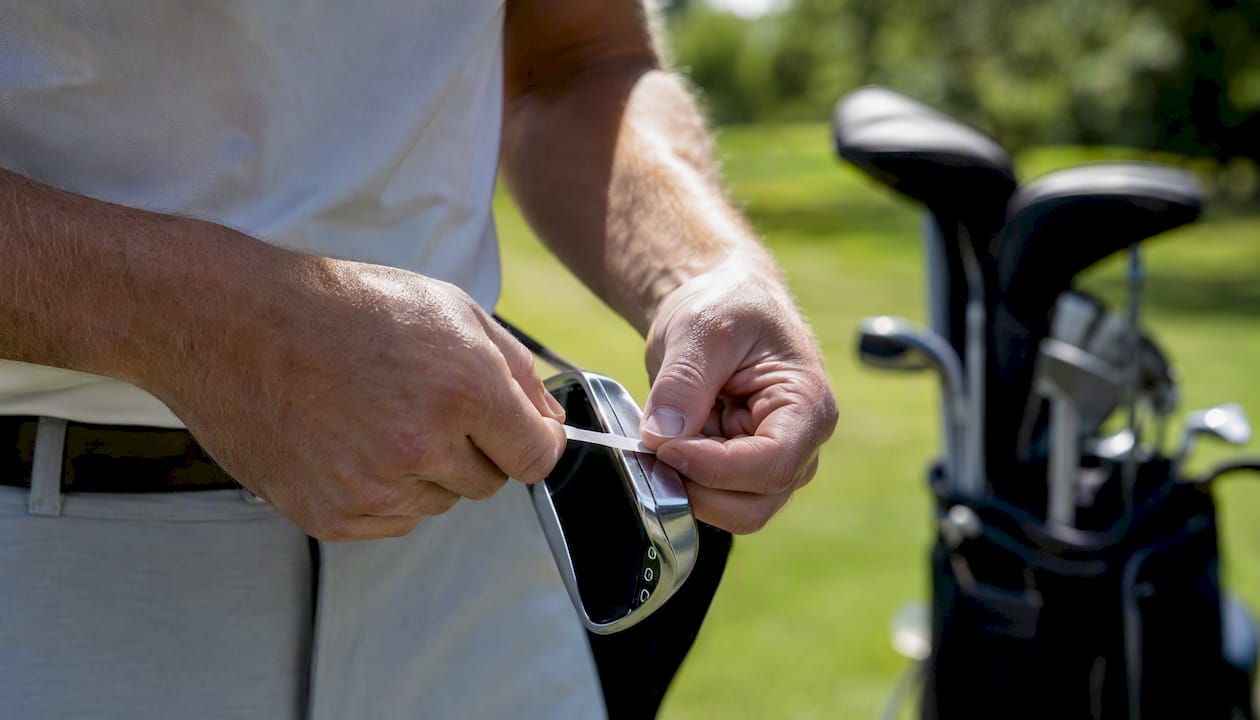
Hands applying personalized golf club label outdoors

Yes, amateurs can land golf sponsorships, including juniors and college players, but the deal only works if you protect your eligibility and pitch measurable value instead of asking for a handout. Governing-body rules and, for students, NIL considerations shape what you can accept and how. Before you send a single email, do this:

  • Confirm your amateur status and review what kind of support is permitted.
  • Pull together your last four tournament results and your next three months of scheduled events.
  • Draft a one-page pitch with your numbers, your audience, and what you’re offering in return.

Key Takeaways

Amateur golfers, including juniors, can secure sponsorship by protecting their eligibility, targeting the right sponsor type, and pitching measurable value instead of a donation ask.

Point Details
Check eligibility first Review USGA guidance before accepting any cash or product support.
Target realistic sponsors Local businesses and junior-tour grants respond faster than major manufacturers.
Reimbursement beats free cash Programs like the USNDP Grant reimburse up to $15,000 against receipts, not lump payments.
Pitch ROI, not charity Include audience reach, schedule, and specific deliverables in every proposal.
Look sponsor-ready Golf Blab’s custom club labels and branded apparel help your pitch look professional from the start.

Table of Contents

What Amateur Status Rules Mean for Golf Sponsorship

Governing-body rules exist to protect the line between amateur and professional competition, and they’re stricter about unrestricted cash than most new players expect. USGA general guidance explains that product support and reimbursement for legitimate expenses are typically fine, while open-ended payments can put your status at risk.

Run through this before signing anything:

  • Do you have a documented score history and current handicap on file?
  • Have you read the USGA’s current guidance notes on sponsored support?
  • Is the money structured as reimbursement rather than free cash?
  • If you’re a college athlete, have you checked how NIL rules at your school apply?

Pro Tip: Reimbursement-based support is almost always safer than a flat check. The USNDP Grant awards up to $15,000 to qualifying juniors, but only against submitted receipts for tournament entries, travel, equipment, and coaching, not as a lump payout.

Who Actually Sponsors Amateur Golfers?

Forget cold-emailing Titleist for a five-figure endorsement. Most sponsorship dollars for amateurs come from a narrower, more local set of sources, and knowing which one fits your level saves months of wasted outreach.

  • Equipment manufacturers rarely hand amateurs cash; expect product support, gear discounts, or a limited affiliate arrangement instead.
  • Local businesses (restaurants, dealerships, real estate agents) often trade small cash stipends or product for logo placement and social mentions.
  • Financial services firms like RBC engage amateur and junior golf through event and community programs rather than individual endorsement checks.
  • Golf clubs and foundations sometimes offer ambassadorships covering greens fees or entry costs.
  • Junior-tour organizers and grants (USNDP, First Tee) provide structured, reimbursement-based support.
  • Corporate event sponsors at charity or member-guest tournaments often fund hospitality and prizes rather than player fees.

Whatever tier you’re courting, showing up with professional assets matters. Custom golf club labels give your bag a branded, sponsor-ready look. A Play Golf with a Tour Pro experience makes a compelling hospitality prize you can offer a sponsor’s clients. Branded apparel, like a Golf Blab Under Armour golf hat, turns you into a walking billboard a sponsor can actually see working.

Cash, Product, or Both: How Sponsorship Deals Work

Sponsorship money comes in two broad shapes: subscription-based, where you get a fixed recurring payment regardless of results, and performance-based, where payouts scale with how you finish. Sponsors often favor performance structures because they manage risk better, while subscription deals suit brands building a long-term relationship with a rising junior.

Support typically arrives as one or more of these:

  • Free or discounted equipment and apparel
  • Travel and lodging reimbursement for tournaments
  • Coaching or lesson credits
  • Entry-fee reimbursements
  • Small cash stipends or appearance fees for local activations

Local deals often land in the low hundreds of dollars per event or season. Regional or product-only arrangements from manufacturers tend to run larger in gear value but rarely include meaningful cash for amateurs.

What Sponsors Look for in a Pitch

Sponsors aren’t donating. They’re buying access to an audience, and your pitch needs to read like a marketing proposal, not a request for charity. That single mindset shift, selling ROI instead of asking for help, is what separates amateurs who get funded from those who get ignored.

Here’s what to prioritize, in order:

  1. Audience and reach. Your follower count, engagement rate, and who actually watches you play.
  2. Visibility. Your tournament schedule, especially events with spectators, livestreams, or media coverage.
  3. Fit and character. Sponsors want someone whose image matches their brand, not just a low score.
  4. Deliverables. Specific things you’ll do: social posts, logo placement, appearances, co-branded content.
  5. Measurable return. Impressions, leads, or new customers a sponsor can point to afterward.

Your written pitch should include a personal brand summary, your tournament history and upcoming schedule, audience demographics, and a clear list of deliverables tied to ROI, the same core elements USNDP requires in its own grant applications.

Pro Tip: Networking beats cold email almost every time. Engage with a brand’s social posts, comment thoughtfully, and become a recognizable name before you ever ask for money. Follow up once, politely, about two weeks after your first outreach.

Where to Apply First: Real Programs and Pages

Start with programs that match your actual stage instead of aiming straight for the top.

  • USNDP Grant: reimbursement-based, up to $15,000 for qualifying competitive juniors; you’ll need itemized receipts and a documented score history before applying.
  • First Tee: development and visibility programming for juniors nationwide, a good entry point for structured community support.
  • Manufacturer product-support pages: check individual brand sites for junior or collegiate ambassador programs; expect gear, not cash.
  • Junior-tour partnership pages: many regional tours list sponsor partners you can approach directly for local exposure deals.
  • Local club ambassadorships: ask your home course’s pro shop or general manager about member-guest and local business ties.

Match your application to your level. A junior chasing USNDP needs different paperwork than a college player exploring NIL or an adult amateur pitching a local dealership.

Red Flags That Threaten Your Amateur Status

Not every offer that looks generous actually is. Watch for:

  • Unrestricted cash labeled a “gift” with no reimbursement structure
  • Contract obligations that conflict with governing-body rules
  • Exclusivity clauses that block you from accepting product support you actually need
  • Appearance requirements that expand well beyond what was originally discussed
  • Vague or missing language about how reimbursements get documented

Pro Tip: Keep every receipt, every email, and every signed agreement. When a contract feels restrictive or unclear, ask your coach, your club, or a lawyer to review it before you sign, not after a governing body asks questions.

Copy This One-Page Sponsorship Proposal Template

Build your pitch around these elements, then customize the specifics for each sponsor you approach.

  1. Headline: your name, age or class year, and your golf identity in one line.
  2. Player summary: three sentences covering your background, current level, and goals.
  3. Top three achievements: your strongest recent results, ranked by relevance.
  4. Upcoming schedule: next three to five events with dates and locations.
  5. Audience reach: follower counts, engagement rate, and any media coverage.
  6. Deliverables offered: specific posts, logo placement, appearances, or co-branded content.
  7. What you’re requesting: product, cash stipend, or reimbursement, stated plainly.
  8. Closing line: something like, “I’d welcome a short call to discuss how this partnership could work for both of us.”

Attach your results, references, and social links. Customize the deliverables section for each sponsor’s actual marketing goals.

Where to Focus Your First Six Months

Start local: your club and nearby businesses respond faster than national brands ever will. Move next to junior-tour grants and foundations, then manufacturer product programs, then regional sponsors. Success in year one looks like a handful of real conversations and one signed product or reimbursement deal, not a logo on TOUR gear.

Look the Part Before You Ask for Support

Sponsors decide fast, and a polished presentation often closes the gap between “maybe” and “yes.” Personalized club labels give your bag the kind of branded, cohesive look a sponsor associates with someone who takes the game seriously, at a fraction of the cost of custom paint or engraving. A Play Golf with a Tour Pro experience doubles as a hospitality prize you can offer inside your own proposal, giving a sponsor something concrete to activate instead of just a logo on your shirt. Pair that with a branded Under Armour golf hat for a consistent look at every event you play.

Play Golf with a Tour Pro

If you’re drafting a sponsorship packet, borrow structure from proven fundraising playbooks like this apparel and merch sponsorship guide and pair it with Golf Blab gear to make your pitch look and feel professional from the first email. Browse the full shop to build a proposal package a sponsor will actually remember.

Useful Pages to Bookmark Next

Frequently Asked Questions

Can amateur golfers accept cash sponsorships without losing eligibility?
It depends on the structure. Reimbursement for documented expenses is generally safer than unrestricted cash, which is why programs like the USNDP Grant require receipts rather than issuing flat payments.

Do junior golfers need a large social following to get sponsored?
Not necessarily. Programs like USNDP and First Tee weigh competitive results and eligibility heavily, though local business sponsors do value social reach when they’re paying for visibility.

What’s the fastest way to find a first sponsor?
Start local. Clubs, regional businesses, and junior-tour grant programs typically respond faster than national equipment brands, which usually reserve cash deals for elite-level players.

How much can amateur golfers realistically expect from a sponsor?
Local and regional deals often involve product support or small stipends rather than large cash sums; grant programs like USNDP can reimburse up to $15,000 for qualifying juniors against actual expenses.

Frequently Asked Questions — overview diagram

Does NIL affect college golfers seeking sponsorship?
Yes. College amateurs should check their school’s NIL rules, since deals often take the form of local ambassadorships or in-kind activations rather than large endorsement contracts.
Sources

Posted on

Rain Golf Strategy: Practical Tips for Club Players

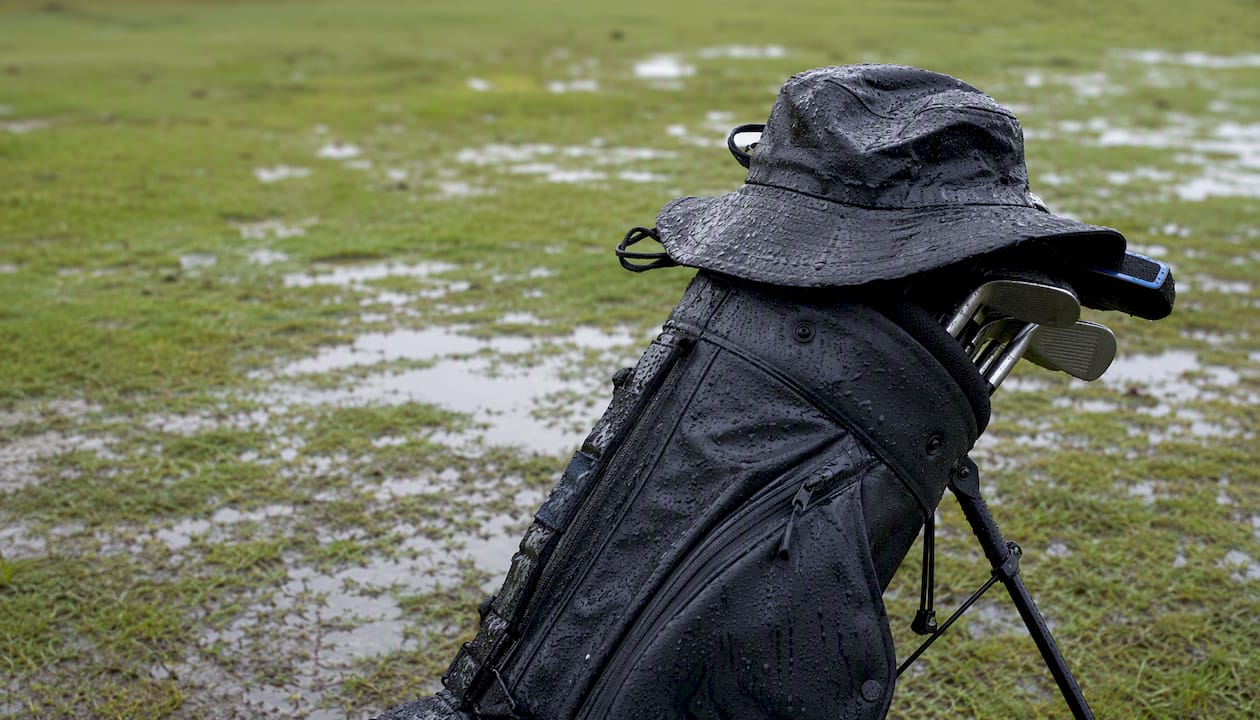
Wet golf gear arranged on damp grass

Playing well in the rain comes down to three priorities, in order: keep your grips and hands dry, treat every yardage as a carry number, and manage your footing and tempo before anything else. Master those three, and the rest of your rain golf strategy is just refinement.

Do this right now: towel off and check your umbrella clip, take one extra club than you think you need, and widen your stance while shortening your swing by about a quarter.

  • Dry towel under the umbrella canopy, cleaning towel outside it
  • Club up before you even see your lie
  • Wider base, shorter backswing, smoother tempo

Pro Tip: Dry your grip immediately before you address the ball, not two shots earlier. Rain finds its way back onto leather and rubber faster than golfers expect.

Key Takeaways

A sound rain golf strategy rests on three pillars: dry grips through disciplined towel rotation, carry-first club selection, and a shortened, centered swing.

Point Details
Dry grip routine Keep one towel dry under the umbrella exclusively for grips and gloves.
Club up early Add one club in steady rain, two in heavy cold rain, and treat yardages as carry numbers.
Firmer putting stroke Wet greens reduce break and roll, so hit putts more assertively than usual.
Know your relief options Casual water grants free relief, and you can always clean your ball on the green.
Gear that supports the plan The Golf Blab Under Armor Golf Hat and custom club labels keep vision clear and gear organized on soaked rounds.

Table of Contents

Preparing for Rain: The Gear That Actually Matters

A quality rain jacket built with a waterproof, breathable membrane (the kind of technology behind Gore-Tex) is worth more than any swing tip in a downpour. Look for taped seams and stretch panels at the shoulders so your swing plane doesn’t feel restricted. Rain pants matter just as much as the jacket, and the biggest mistake amateurs make is waiting for the first drops to put them on. Long-time coaches, including Tom Watson, advise dressing in full rain gear before you even warm up, so your body stays warm and your feel for the club stays consistent from the first swing.

Carry a large golf umbrella and clip a dry towel to its underside. Cover your bag with a rain hood or seal your phone, scorecard, and spare glove in a plastic bag before you leave the cart.

  • Waterproof jacket and pants, sized to layer without restricting your turn
  • Golf umbrella large enough to cover both you and your bag opening
  • Bag rain hood or sealed plastic for valuables and spares
  • A high-visibility, durable-cover ball, useful once the ground turns gray and standing water pools in the rough

Headwear matters more than golfers admit. A brimmed piece like the Golf Blab Under Armor Golf Hat keeps water off your glasses and your line of sight clear on longer approaches. And once your clubs go through a wet round and an inevitable toweling-off at the car, custom club labels keep your set identifiable, since rain-soaked bags in a crowded cart barn tend to look identical.

Pro Tip: Pack your rain gear at the bottom of the bag on dry days too, so it becomes a habit, not a last-minute scramble when the forecast turns.

What Shoes Give You the Best Traction in Wet Turf?

Waterproof shoes with an aggressive outsole pattern matter more than style points once fairways turn spongy. Soft spikes generally out-grip spikeless soles on saturated turf, though spikeless models still work fine on firmer, well-drained courses.

  • Press your toe and heel into the turf before you set up on any sloped or slick lie
  • Widen your stance a couple of inches whenever the ground feels unstable
  • Wear shoes you have already broken in. Novelty blisters from stiff new rain shoes will wreck your focus faster than the weather does

Pro Tip: Test your grip on the practice green before your tee time. If your back foot slides during a warm-up putt, it will slide on the course too.

How Do You Keep Your Grip From Slipping in the Rain?

Wet grips cause more mishits in the rain than bad swings do. A soaked grip forces you to squeeze harder, which tightens your forearms and kills clubhead feel exactly when you need it most.

Rain gloves, which get tackier as they absorb moisture rather than slicker, are worth the investment over a standard glove. Keep at least one spare sealed in a plastic bag in your bag’s dry compartment. Coaches recommend a simple towel choreography: one towel lives under the umbrella canopy strictly for grips and gloves, and a second, wetter towel handles club and ball cleaning.

  • Dry towel for grips and hands only, kept under the umbrella
  • Second towel for cleaning clubheads and golf balls
  • Spare glove sealed and swapped once the current one saturates

Pro Tip: Clip a small microfiber towel inside your bag’s rain hood. It stays bone dry all round, even when everything else gets soaked.

How Many Extra Clubs Should You Take in the Rain?

Take one extra club in steady rain and two in heavy, cold rain, because wet conditions consistently shorten carry distance and every number on your rangefinder needs to be read as a pure carry yardage, not a total distance. Rainwater on the clubface and ball reduces friction at impact, which strips spin and flattens your trajectory whether you want it flattened or not.

Diagram showing extra clubs needed for rainy conditions

That loss of spin cuts both ways. On approach shots, a lower, more penetrating flight actually helps you fight through wind and rain rather than ballooning a high shot that gets knocked down anyway. But from wet, thick rough, watch for the flyer effect: grass between the clubface and ball can reduce backspin enough that the shot jumps and rolls farther than expected, so favor the front of the green rather than firing at a back pin.

A few scenarios worth rehearsing mentally before you’re standing over the ball:

  • Downwind tee shots: expect less roll after landing, so aim your carry number at the fairway’s true landing zone
  • Approaches to firm-looking greens: they will play softer than they look, so a shot that lands pin-high often stays there
  • Shots from soaked rough: assume extra distance and take one less club than the flyer math suggests

Swing with a controlled three-quarter backswing and smooth acceleration rather than trying to power through the conditions. Golf points out that shortening the swing and staying balanced beats overswinging every time turf gets slick.

Pro Tip: Use your first approach shot or a range ball before the round to calibrate real carry distance. That single data point recalibrates every club decision for the next seventeen holes.

How Should You Adjust Your Short Game in Wet Conditions?

Clubs with more bounce resist digging into saturated turf, so a 56 or 58 degree wedge with generous bounce will save you more strokes than a low bounce grinder on soft ground. Use a shallower attack angle around the greens; steep, digging strikes plug into wet turf and produce inconsistent contact.

Hands holding high bounce wedge in wet turf

Bunkers behave differently too. The top layer of sand plugs while the layer beneath compacts, so square the clubface, take slightly less sand than usual, and commit fully through rotation rather than deceleration.

Putting requires the biggest mental shift. PGA coaching consistently recommends a firmer, more assertive stroke on wet greens, because damp turf resists roll and mutes break more than golfers expect. A putt that would break two feet on a dry, fast green might only move six inches on a soaked one.

  • Run a quick three-putt distance test on the practice green to feel actual speed before your round starts
  • Chip a few balls onto wet fringe grass to feel the difference between a shot that checks and one that plugs
  • From the fringe, a putter often beats a chipper because it removes the guesswork of a soft, inconsistent turf transition

Pro Tip: When in doubt on a borderline fringe shot, putt it. You eliminate an entire category of mishit that only shows up on soaked collars.

What Swing Changes Help You Stay Balanced on Soggy Ground?

Shorten your swing length and widen your stance slightly, keeping weight centered over the middle of your feet rather than on your toes. On genuinely soft lies, choke up half an inch for a tighter, more controlled feel as the turf gives slightly under your back foot.

  1. Take two practice swings beside the ball, not over it, to sense how much the turf gives and where your low point actually sits
  2. Deliver the club on a shallower path than usual to avoid a deep divot that costs you distance and control
  3. Commit to the shortened swing fully. A half-hearted three-quarter swing with full-power intent causes more mishits than a properly compact one
  • Widen your stance two to three inches on any lie that feels unstable
  • Keep your weight centered, never shifted toward your toes on a slick slope

How Do You Manage Course Strategy and Claim Relief in the Rain?

Play toward the center of the green more often, and let go of aggressive pin hunting once the ground stops offering any runout. Water runs downhill, so hollows and low-side collection areas flood first. Aim your misses toward the high side of any green or fairway rather than the low side where casual water tends to pool.

Under the Rules of Golf, you get free relief from casual water anywhere outside a penalty area, and you’re entitled to clean your ball on the putting green whenever mud or water clings to it. Roughly a third of a soggy round’s bad breaks come from balls sitting in standing water that golfers play as-is simply because they don’t know the relief rule exists.

  • Take free relief from standing water outside penalty areas rather than playing a submerged lie
  • Clean your ball every time it reaches the green, without exception
  • Mark and repair your pitch marks immediately; wet greens bruise and scar far more easily than firm, dry ones

Pro Tip: When you’re unsure whether standing water qualifies as casual water or a penalty area, ask your group before you drop. A thirty-second conversation beats a two-stroke penalty every time.

Why Do Wet Greens Slow Down and Change Your Reads?

Launch monitor testing on wet wedge shots has recorded roughly 3,000 rpm less spin and about seven yards shorter carry compared to dry conditions, with launch angle climbing several degrees higher. That drop in spin doesn’t just affect approach shots. It’s part of the same physics that slows greens: water on the putting surface adds resistance to the ball’s roll, and softer, saturated soil beneath the surface absorbs energy that a firm green would return.

Because the ball decelerates faster, break reads shrink. A putt that breaks hard on a firm, dry green tracks straighter on a soaked one, since gravity has less time to pull it sideways before it stops rolling.

  • Roll a few putts on the first green specifically to gauge speed before you commit to a read
  • Trust a firmer stroke over a longer backswing. Distance control in the rain comes from pace, not length
  • Assume less break than your eyes tell you, especially on anything inside fifteen feet

Pro Tip: If your practice putt on the first green comes up short, add that exact deficit to every read for the rest of the front nine.

What Should You Pack Before a Rainy Round?

Print this or save it to your phone before you leave the house:

  • Full rain suit (jacket and pants), waterproof shoes, and a large golf umbrella
  • Two towels, one kept strictly dry, and two gloves rotated as they saturate
  • Sealed bag for spare gear, a ball marker, a ziplock for your scorecard, hand warmers, and a bag rain hood

Check the forecast for timing gaps and note which holes tend to flood on your home course. Calibrate your real carry distance on the range or your first long approach, and adjust from there.

Want a quick, real-world read on how these adjustments feel in practice? A first-person perspective follows below.

What I’ve Learned From Playing Dozens of Rainy Rounds

The single habit that gains the most strokes isn’t equipment. It’s the dry-grip choreography: dressing in full rain gear before the first tee, rotating a spare glove the moment the current one saturates, and treating the towel-under-umbrella routine as non-negotiable rather than optional.

Groups that keep moving stay warmer, sharper, and noticeably more patient than groups that huddle under trees waiting out every passing shower. Staying loose and keeping a brisk pace does more for a rainy scorecard than any single swing thought.

Gear That Makes Rainy Rounds Easier to Play

Rain golf strategy starts with mindset and shot discipline, but the right gear removes friction you don’t need to manage mid round. A brimmed piece like the Golf Blab Under Armor Golf Hat keeps rain out of your eyes on longer approach shots, and personalized club labels mean a soaked, muddy bag never leaves you second-guessing which iron you just pulled.

If the swing adjustments in this guide feel like something you’d rather build under real supervision, Play Golf with a Tour Pro pairs hands-on coaching with actual on-course conditions, rain included, so the shortened swing and wider stance become second nature before you need them in a tournament round. None of this replaces course sense or knowing the Rules of Golf cold. Gear and coaching sharpen your execution; judgment on a soaked course still comes from you. Check available dates and book a session while the forecast is still working in your favor.

Frequently Asked Questions

What is the single most important rain golf strategy for beginners?
Keep your grip dry. Every other adjustment, from club selection to swing length, matters less if your hands can’t control the club through impact.

How much extra club should I take in the rain?
Add one club in steady rain and two in heavy, cold rain, since wet conditions shorten carry distance and reduce spin more than most golfers expect.

Do I really get free relief from puddles on the course?
Yes. The Rules of Golf grant free relief from casual water outside penalty areas, and you can clean your ball on the green at any time.

Should I putt harder in the rain?
Yes. Wet, slower greens absorb pace and reduce break, so a firmer, more committed stroke keeps putts from coming up short.

Sources

Posted on

Urethane vs Ionomer: Which Golf Ball Cover Fits Your Game

Close-up of urethane and ionomer golf balls on grass

Choose urethane if you need greenside spin, softer feel, and the ability to shape shots into tight pins. Choose ionomer if you want durability, lower cost, and a ball that shrugs off cart paths and mis-hits. That’s the whole decision in a sentence, but the “why” is where your scoring actually improves.

Here’s how it breaks down by the numbers that matter most to your game:

  • Handicap 0 to 12, faster swing speeds: Urethane, almost without exception. You strike the ball consistently enough to exploit the spin, and firm greens demand the stopping power urethane provides.
  • Handicap 13 to 20: A hybrid approach works. Play urethane on scoring days, keep an ionomer sleeve in the bag for range sessions and rounds where ball loss is a real risk.
  • Handicap 20 and up, or casual/practice rounds: Ionomer. You’ll lose fewer balls to guilt, save real money over a season, and won’t miss spin you weren’t generating consistently anyway.
  • Practice vs. tournament days: Beat up ionomer balls on the range and at the local course where lost balls are common; save urethane for rounds where every stroke and every green-side decision counts.

Key Takeaways

Urethane wins on greenside spin and feel while ionomer wins on durability and cost, and the right choice depends on your strike consistency, course conditions, and how many balls you lose per round.

Innovate Tour Performance Golf Balls

Point Details
Match cover to handicap Low handicap and consistent strikers benefit most from urethane’s spin; high handicap players save more with ionomer.
Wedge spin gap is real Urethane generates roughly 2,000 to 3,500 RPM more wedge spin than ionomer, which matters most on firm greens.
Driver distance barely changes Independent testing shows carry distance stays nearly identical across cover types; fitting matters more.
Cold weather narrows the gap Urethane stiffens in cold temperatures, so ionomer performs relatively better in early-season rounds.
Test before committing Compare a sleeve of each on wedge shots and greenside chips, and consider Golf Blab’s labels to keep practice and play balls organized.

Table of Contents

Urethane vs Ionomer Golf Balls: What’s Actually Different

The difference comes down to chemistry, and it’s simpler than it sounds. Urethane is a soft, elastic material, an elastomer, that deforms slightly at impact and grips the grooves of your clubface. Ionomer, often called Surlyn in older marketing language, is a harder resin, chemically closer to a rigid thermoplastic than a rubber. That single distinction, elastic versus rigid, explains almost every performance gap discussed in this article.

Urethane’s elasticity is variable by formulation. Manufacturers can engineer it soft or firm, thick or thin, and that flexibility explains why “premium” urethane balls from different brands can still feel meaningfully different at impact. Industrial comparisons of urethane against other elastomers confirm this range: urethane’s properties shift dramatically depending on hardness and formulation, which is exactly why one tour ball can feel buttery soft while another feels notably firmer off the putter.

Cover construction matters as much as the material itself:

  • Urethane covers are typically cast in thin layers, thin enough to compress and grip the grooves without adding excess spin-killing mass.
  • Ionomer covers tend to run slightly thicker and are injection molded, a manufacturing process that favors durability and consistency over tactile feedback.
  • Layering underneath the cover (dual-layer, three-piece, multi-layer cores) changes compression and launch independent of cover material, so cover type alone never tells the whole story.
  • Sound at impact differs too. Urethane produces a duller, softer click; ionomer produces a sharper, higher-pitched crack that many golfers associate, rightly or wrongly, with less quality.

Golf Monthly’s breakdown of the two materials puts it plainly: urethane covers dominate at the premium performance tier precisely because their elasticity interacts with grooves more effectively, producing higher spin and more shot-shaping control, at the cost of price and cover longevity.

Does Cover Material Change Your Driver Distance?

Barely. This surprises most golfers, and it’s worth sitting with for a moment before you spend extra money chasing driver yards. Independent 2025 testing found that driver distance clusters tightly across cover types, meaning your swing speed, angle of attack, and driver fitting move the needle far more than whether your ball wears a urethane or ionomer skin.

Where cover type does show up off the tee is spin, and spin cuts both ways depending on your swing. Ionomer’s lower spin rate can help golfers who fight a slice or struggle with excess backspin that balloons drives and kills rollout. Lower spin plus firmer compression often means more roll after landing, which on a dry fairway can add real yards even though carry distance stayed nearly identical.

If you want to see this for yourself, don’t guess. Get on a launch monitor and watch three numbers on your driver swings: ball speed, spin rate, and launch angle. If your spin rate sits above 2,700 RPM off the tee, an ionomer ball’s lower spin characteristics might actually help you. If you’re already in an efficient window, cover material won’t move your carry distance meaningfully either way. Understanding your own golf ball trajectory on a monitor is the fastest way to stop guessing and start knowing.

Why Wedges and Putting Expose the Real Gap

This is where urethane earns its reputation, and where the material story stops being theoretical. Wedge and short-iron shots put the clubface in contact with the ball long enough, and with enough friction, for the cover’s elasticity to matter enormously. Urethane wedge spin commonly runs 8,000 to 10,000 RPM, compared to roughly 5,500 to 7,500 RPM for ionomer covers. That difference impacts whether your approach shot checks up next to the pin or skips through the back of the green into the fringe.

The tactile side matters just as much as the numbers. Urethane comes off the putter and wedge face a touch slower, giving better feedback and a softer, more controlled release on chips and putts, particularly on fast greens where touch separates a two-putt from a three-putt. Ionomer’s firmer, springier response can make delicate greenside shots harder to control, even though it’s perfectly serviceable for full shots.

  • Urethane advantage: Higher spin translates to steeper descent angles on approach shots, meaning the ball drops more vertically and stops faster.
  • Feel and feedback: Softer compression at impact gives better sensory information on partial shots, helping you calibrate distance control.
  • Ionomer trade-off: Firmer feel and lower spin mean the ball releases and rolls more after landing, which can work against you on tucked pins but works fine on run-up approaches.
  • Practice reinforcement: Short-game drills with a urethane ball teach you what real spin feedback feels like, something ionomer simply can’t replicate.

Pro Tip: Not every shot benefits from maximum spin. On a long bump-and-run or a shot into a green that slopes away from you, intentionally reach for lower spin, either by clubbing down or leaning into an ionomer ball’s natural release. More check isn’t always the better outcome; sometimes you want the ball to release and roll toward the hole rather than sit where it lands.

What the Test Data Actually Shows

Numbers settle arguments that opinions can’t. Aggregated 2025 test data comparing cover types found a consistent pattern: driver carry distances stayed close across urethane and ionomer balls, while iron and wedge spin, along with descent angle into greens, showed clear, repeatable separation favoring urethane. The MyGolfSpy 2025 ball test reported wedge spin differences in the thousands of RPM between cover types, alongside steeper, more consistent descent angles for urethane on approach shots.

Shot type Urethane spin range Ionomer spin range Practical impact
Wedge (full swing) 8,000–10,000 RPM 5,500–7,500 RPM Urethane stops faster on firm greens
Mid-iron approach Moderate to high Lower Steeper descent angle with urethane
Driver Clustered, low variance Clustered, low variance Minimal carry distance difference

Spin rate comparison between urethane and ionomer golf balls

A 2,000 to 3,500 RPM wedge-spin gap sounds abstract until you translate it onto a real green: it’s the difference between a ball that checks within a few feet of where it lands and one that releases 10 to 15 feet past the pitch mark. That gap only pays off, though, if you’re striking the center of the face consistently and playing courses firm enough for spin to matter. On soft, receptive greens, or with inconsistent contact, that RPM advantage shrinks toward irrelevance and the extra cost of urethane buys you less than you’d expect.

The takeaway from independent testing is consistent: the real separation between these materials lives in your irons and wedges, not off the tee. If your driver swing is already efficient, don’t buy urethane expecting extra carry. Buy it for what happens once you’re inside 150 yards. Tracking these performance indicators across a season tells you far more about which cover is earning its keep than any single round ever could.

What Premium Spin Actually Costs You Per Round

Here’s the math golfers skip, and it’s the one that actually determines whether urethane is worth it for you. Premium urethane balls typically retail well above ionomer models, and that price gap compounds fast if you’re someone who loses three or four balls a round. Ionomer’s harder cover resists scuffs, cart-path scrapes, and rough-play cuts far better than urethane’s softer surface, which scars more easily on hard contact with cart paths, rocks, or tree bark.

Run this quick checklist before you commit to a dozen:

  • Count your lost balls per round. If you’re regularly losing four or more, ionomer’s lower per-ball cost matters more than any spin advantage you’re not consistently generating anyway.
  • Check your strike consistency. Center-face contact is what lets you actually use urethane’s spin; mis-hits erase most of the benefit.
  • Weigh scuff tolerance. If you play a lot of cart-path-adjacent courses or scrubby rough, ionomer’s durability advantage adds up round after round.
  • Separate practice balls from play balls. There’s no reason to beat up an $4 to $5 urethane ball on the range hitting 80 wedge shots when a $2 ionomer ball does the job just as well for repetition work.

Durability and cost, according to TheGolfBallGuy’s comparison, consistently favor ionomer for beginners, high-handicap players, and anyone using golf balls primarily for volume practice rather than tournament scoring. That’s not a knock on ionomer. It’s the entire reason the material exists.

Matching Cover Type to Your Game

The decision framework is simpler than most golfers make it. Start with your handicap and swing consistency, then layer in how you actually use your rounds.

Low handicap, faster swing speed: Urethane, full stop. You’re generating consistent contact and playing courses firm enough that the extra spin translates directly into strokes saved around the green.

Mid-handicap golfer improving steadily: This is the group that benefits most from testing both. Play a sleeve of each over back-to-back rounds and pay attention specifically to how your wedge shots behave from 80 to 120 yards. That’s where you’ll feel the difference, not off the tee.

High-handicap or casual player: Ionomer, without much hesitation. You’ll save money, lose fewer balls to guilt, and the spin you’d theoretically gain from urethane rarely shows up with inconsistent strike patterns anyway.

Practice and range sessions: Ionomer, regardless of your handicap. Save urethane for rounds and short-game practice sessions where you’re specifically working on wedge feel and spin control, ideas covered well in most short-game strategy frameworks.

A smart bag carries both. Keep a sleeve of ionomer for range warmups and scramble rounds, and a sleeve of urethane reserved for tournament days or serious scoring rounds. This isn’t indecision. It’s allocation, and it’s exactly how better players actually manage their equipment.

How to Spot the Cover Type on Any Box

Manufacturers rarely print “urethane” or “ionomer” in giant letters, but the marketing language gives it away every time if you know what to look for. Balls positioned as “tour,” “tour-level,” or “spin control” are almost always urethane covered, built for players who want shot-shaping and greenside stopping power. Balls marketed around “distance,” “durable cover,” or explicit Surlyn or ionomer resin naming are built for the opposite priority: longevity and value over feel.

Compression numbers on the box or spec sheet offer a second clue, though not a perfect one. Lower compression balls tend to pair with softer urethane covers aimed at moderate swing speeds, while higher compression models often signal a firmer ionomer build meant for faster swings or maximum durability. Reading the box specs carefully before you buy saves you from assuming a “premium-looking” box automatically means urethane inside.

Label language Likely cover Feel Best for
“Tour,” “spin control,” “soft feel” Urethane Soft, responsive Low to mid handicap, scoring rounds
“Distance,” “durable cover” Ionomer Firm, springy High handicap, practice, value play
“Surlyn,” “ionomer resin” named directly Ionomer Firm Beginners, range use

When Weather Changes the Whole Equation

Temperature isn’t a footnote here. It’s a real variable that shifts which cover performs better on a given day. Cold weather reduces urethane’s elasticity, and as the material stiffens, the performance gap between urethane and ionomer narrows considerably. On a 40 degree morning round, you may not feel or see the spin advantage you’d get from the same ball on a humid 85 degree afternoon.

Wet turf changes the equation too, independent of temperature. When fairways and rough are soaked, less friction transfers between clubface and cover on approach shots, which mutes spin generation regardless of cover material. On soft, receptive greens after rain, the ball is going to stop quickly no matter what cover you’re playing, so urethane’s spin advantage matters less than usual. Flip that scenario to a firm, fast, dry course in peak summer, and urethane’s ability to grip and check becomes the single biggest factor in whether your approach shots hold their line.

Use this quick mental checklist before you decide what to tee up:

  • Cold, early-season rounds: Ionomer performs closer to urethane than usual; save your premium balls for warmer months.
  • Wet or soft conditions: Spin matters less across the board; ionomer’s durability advantage becomes the deciding factor.
  • Firm, fast, dry greens: Urethane’s spin and stopping power matter most here, this is exactly the scenario it was engineered for.
  • Windy conditions: Lower-spin ionomer balls can actually fly more predictably into a headwind, an underrated reason to keep a sleeve handy even if you normally play urethane.

A Ball Fitter’s Honest Take on Cover Choice

The biggest mistake golfers make with ball selection isn’t picking the wrong cover. It’s picking a cover based on what their favorite tour pro plays rather than what their own swing and short game actually demand. Watching a broadcast and assuming a $65-per-dozen urethane ball will fix an inconsistent wedge game is backward logic. Spin doesn’t create control. Consistent contact creates control, and spin simply amplifies whatever contact quality you’re already bringing to the shot.

The right approach to testing is simpler than most golfers expect. Take two sleeves, one urethane, one ionomer, to the range and hit 15 wedge shots with each from a consistent yardage, watching where the ball lands and how it reacts on the second bounce. Then take both out on the course for nine holes and pay attention specifically to par-3 approach shots and any greenside chips. You’re not looking for driver distance differences; you already know those are negligible. You’re looking for how the ball behaves once it’s within 100 yards of the pin, because that’s the only place this decision actually shows up in your scorecard.

Golfer practicing wedge shots with golf balls

Retest your choice whenever something in your game changes meaningfully: a new wedge setup, a swing change that alters your strike pattern, or a seasonal shift into firmer summer conditions. A cover choice that made sense last spring might not serve you the same way once your contact quality or the course conditions shift.

A Simple Way to Keep Your Balls (and Your Bag) Organized

Once you start carrying two ball types, urethane for scoring rounds, ionomer for practice and casual play, keeping your gear organized becomes its own small challenge. Golf Blab’s Custom Golf Club Labels let you mark clubs, bags, and gear with personalized identification in a range of ink colors, useful for anyone juggling different equipment setups across different rounds. If you’re serious about translating urethane’s spin advantage into actual strokes saved, working with a coach accelerates that process far faster than trial and error alone. The Play Golf with a Tour Pro experience puts you on the course with professional instruction focused on exactly the kind of shot control this article covers. And if you want to look the part while you test your ball choices, the Golf Blab Under Armor Golf Hat rounds out the bag. Start by personalizing your setup at Golf Blab’s custom labels page and take the guesswork out of managing your equipment.

Sources