Posted on

Organizers: 4 Prize Tiers to Make Tournament Gifts Players Keep

Tiered golf tournament prizes on awards table

The winning formula for tournament gifting is simple: give every participant one or two genuinely useful essentials, then reserve a handful of standout prizes for winners, closest-to-pin champions, and top sponsors. Prioritize towels, premium balls, tees, and drinkware for the field, apparel and tech for mid-tier prizes, and a personalized keepsake or an experience-based reward for your VIP tier. Budget and logistics decisions follow naturally once those categories are locked in.


TL;DR:

  • Practical gifts like microfiber towels, premium balls, and durable drinkware are essential for usefulness and long-term visibility, especially for sponsors.
  • Budgeting prizes into four tiers ensures cost-effectiveness, with under $25 for tee gifts and over $500 for marquee awards like experiences or high-value sponsor prizes.
  • Personalized and experience-based gifts, such as golf lessons or tour pro rounds, create lasting memories and enhance perceived value for top players and sponsors.
  • Eco-friendly items like biodegradable tees and reusable bottles are increasingly affordable and meet environmental expectations without raising costs significantly.
  • A hybrid approach to sourcing—combining local vendors for last-minute needs and online suppliers for bulk orders—balances speed, selection, and price.

Table of Contents

The Best Golf Tournament Gift Ideas by Category

Every gift you hand out either gets used again or gets left in a golf cart cupholder by the ninth hole. The goal is to load your tournament with the first kind.

Practical essentials remain the backbone of any giveaway table, and for good reason. Microfiber towels, a sleeve of premium balls, tees, divot tools, and ball markers cover the basics every golfer actually needs on the course. Quality matters more than most organizers assume. Cheap golf balls read as an afterthought, while a good ball sleeve signals that you thought about the round, not just the swag table. The same logic applies to towels: a thin, scratchy one gets tossed, but a well-made microfiber towel ends up clipped to a bag for years.

Apparel and headwear work best as mid-tier or team prizes rather than blanket giveaways, since sizing complicates bulk ordering. Performance caps and visors sidestep that problem entirely. Polos need size charts collected in advance, and branding should sit on the sleeve or chest, never across the whole back panel, where it competes with a player’s own gear.

Drinkware and cooler bags punch above their price point. An insulated tumbler or a soft-sided cooler survives dozens of rounds after the tournament ends, which means your sponsor’s logo keeps traveling long after the last putt drops.

Tech gadgets belong in your $50 to $150 range: portable power banks, compact Bluetooth speakers, and entry-level rangefinders. Player satisfaction surveys consistently rank functional tech and quality headwear above generic promotional trinkets, which tells you where to spend when the budget allows.

Kits and bundles solve a packing problem and a perception problem at once. Grouping a towel, a few balls, tees, and a marker into one branded pouch raises the perceived value of the whole package, and it means no single cheap item stands alone looking thin.

Novelty items keep the mood light. Golf-themed socks, mulligan vouchers, or a “worst drive” trophy give your emcee something fun to work with during the awards ceremony.

  • Practical: microfiber towels, premium ball sleeves, tees, divot tools, ball markers
  • Apparel: performance caps, visors, sleeve-branded polos
  • Drinkware: insulated tumblers, cooler bags, water bottles
  • Tech: power banks, compact speakers, entry-level rangefinders
  • Bundles: pouch kits combining three to five small items
  • Novelty: themed socks, mulligan vouchers, gag trophies

How Should You Budget Golf Tournament Prizes by Tier?

Tiered budgeting keeps a tournament’s prize table from becoming either an afterthought or a runaway expense. Organizers commonly work in four bands, and each one has a job to do.

  1. Under $25 covers the tee gift every player receives: a towel, a ball marker set, or a small bundled kit. This is the largest line item by volume, since it multiplies across your full field.
  2. $25 to $100 fits contest and flight prizes: a rangefinder accessory, a nice polo, or a premium ball dozen for closest-to-pin and longest-drive winners.
  3. $100 to $500 works for tournament champions and team prize packages: a Bluetooth speaker set, a quality bag, or a curated gift bundle for the winning foursome.
  4. $500 and above is your marquee tier, reserved for the overall winner, a hole-in-one contest, or a sponsor auction item. This is where donated experiences and sponsor contributions stretch a budget further than cash ever could.

A useful rule of thumb: aim to have roughly one in four or five players walk away with something once tee gifts, contest wins, and raffle prizes are all counted. That ratio keeps the room engaged without inflating your prize budget past what sponsorships can cover.

Welcome Bag Essentials and Fulfillment Logistics

A welcome bag is the first physical thing a player touches at your event, and it sets the tone for everything that follows. Branded golf balls, a towel, and a few practical add-ons form the foundation of a solid welcome bag, and a personalized or locally sourced item on top of that turns a standard giveaway into something a player remembers.

  • Core items: ball sleeve, towel, tees, ball marker, scorecard holder
  • Comfort add-ons: sunscreen packet, snack bar, printed schedule, bottled water
  • Optional upgrades: local product (coffee, jerky, a small treat) or a personalized item

Keep bag weight manageable for check-in tables and cart transport. A stuffed canvas bag looks generous but becomes a bottleneck when volunteers are hand-carrying 150 of them to staging carts.

Misprinted logos are far cheaper to catch on one sample than on 200 finished units.*

Confirm vendor lead times early. Custom-imprinted items often need two to four weeks between proof approval and delivery, and that window stretches during spring and fall tournament season. When sponsors donate items, get their branding files and quantities locked at least three weeks out so nothing arrives the morning of the event looking mismatched.

Sponsors want their logo seen again in March, not just on the golf cart in October. Items that stay in daily rotation, rather than the ones that get tossed after one use, deliver repeated brand visibility long after the tournament ends.

  • Towels, tumblers, and umbrellas rank highest for staying power
  • Ball markers and divot tools work well for smaller sponsor budgets
  • Place imprints where they show during actual use, not just in a gift bag photo

Both organizers and sponsors prefer items that genuinely stay in use, which is why a $15 quality towel usually outperforms a $5 stress ball as sponsor swag. Match sponsor tiers to prize tiers. A title sponsor might fund your $500-plus marquee prize, while a hole sponsor covers a $25 contest item, and that alignment gives every sponsor a visible, appropriately sized presence.

Novelty and Contest Prizes That Keep Everyone Engaged

Not every memorable prize needs to go to the lowest score. Matching contest prizes to the skill being tested keeps the leaderboard interesting for players who know they won’t win outright.

  • Closest-to-pin: a mid-tier tech item like a compact speaker or rangefinder
  • Longest drive: a branded polo or a pro shop gift voucher
  • Raffle and door prizes: smaller items that multiply the number of winners announced
  • Gag awards: “most balls lost” or “worst tee shot” for lighthearted recognition

Novelty categories like Best Dressed or Spirit of the Game give your ceremony room to recognize personality, not just performance, and that inclusiveness is often what people talk about on the drive home.

Personalized Keepsakes That Turn Prizes Into Memories

A personalized gift does something a generic one cannot: it tells the recipient this prize was chosen, not just distributed. That distinction matters most for your VIP tier and your top sponsors, the people whose goodwill funds next year’s event.

Golf Blab offers three options built for exactly this moment. Golf Blab E-Gift Cards give organizers a flexible, instantly deliverable reward for winners or sponsor thank-you packages, without the sizing or shipping headaches of physical goods. Play Golf with a Tour Pro turns a marquee prize slot into an actual experience, the kind of reward players mention long after the trophies are forgotten. Custom Golf Club Labels create a lasting keepsake players see every time they pull a club from the bag.

A gift that a golfer sees every round is worth more than a dozen items that sit in a closet. Personalization is what separates a prize from a promotional afterthought.

Consider slotting the tour pro experience into your $500-plus tier, the e-gift cards into sponsor thank-yous, and the club labels into a runner-up or volunteer-appreciation slot.

How to Choose Vendors for Tournament Gifts

Selection comes down to five questions you should ask before placing any bulk order: Is the item genuinely useful on the course? Will it survive more than one round? Does it have a clean imprint area? Can it be packed efficiently into a welcome bag or cart? What’s the cost per unit at your required quantity, and what’s the minimum order?

Vendor vetting matters just as much as product choice. Ask directly about sample policy (do they send a physical proof, not just a digital mockup?), proof turnaround time, imprint method (screen print versus laser engraving affects durability), and their shipping and return policy if a batch arrives damaged.

  • Confirm minimum order quantities before you commit to a headcount
  • Request a physical sample, not just a digital rendering
  • Ask about imprint method and expected fade or wear over time
  • Clarify who absorbs the cost of shipping delays or defects

Pro Tip: Treat a vague answer about lead times as a red flag. A vendor who can’t commit to a delivery window in writing is the same vendor who will call you two days before your event with bad news.

Watch for thin materials that look fine in a product photo but feel cheap in hand, and imprint areas so small the branding becomes illegible after one wash.

Running contests and giveaways at a tournament brings a few compliance questions that are easy to overlook until a sponsor or attorney raises them. If your event includes cash prizes, raffles, or high-value giveaways like a car for a hole-in-one, check your state’s rules on games of chance versus games of skill, since raffles in particular are regulated differently depending on whether your event is run by a nonprofit or a for-profit organizer.

For high-ticket contest prizes, especially hole-in-one promotions, organizers commonly purchase prize indemnity insurance to offer a big-ticket reward while capping their own financial exposure if someone actually wins it. This is standard practice at charity and corporate outings alike, and it needs to be arranged weeks before the event, not the morning of.

If your tournament benefits a nonprofit, confirm whether prizes above a certain value need to be reported for tax purposes, both for the organization and the winning player. Sponsors donating prizes should also provide a fair market value estimate in writing, which protects everyone if the IRS or a state gaming authority ever asks questions. None of this needs to slow down your planning, but a five-minute conversation with your event’s legal or financial advisor before prizes are finalized is worth far more than discovering a problem after the trophies are handed out.

What Do Different Players Actually Want From a Prize?

A 22-year-old club champion and a 65-year-old charity outing regular do not want the same gift, and treating your whole field as one demographic is where prize budgets get wasted. Younger, competitive players tend to respond to performance gear: rangefinders, premium balls, apparel from brands they already wear. Casual and older players, who make up a large share of charity and corporate tournament fields, often value comfort and practicality over performance tech: quality towels, sun protection, drinkware, and snacks in the welcome bag.

Golf prize preferences across player groups

Mixed fields, which describes most charity tournaments, benefit from a layered approach. Give the practical essentials to everyone regardless of skill level, then let contest prizes naturally skew toward the players chasing performance recognition. Women’s flights deserve the same prize quality as men’s flights, not a scaled-down or generic version. If your field includes a meaningful number of women golfers, make sure apparel sizing and prize selection reflect that rather than defaulting to a men’s-only assumption.

Corporate outings carry their own wrinkle: many attendees golf only once or twice a year for this exact event. A rangefinder might sit unused in a closet, while a nice tumbler, a set of usable balls, or a small local treat gets genuine use regardless of how often someone plays. Ask your registration form one simple question, shirt size and rough skill level, and you’ll make sharper prize decisions than most organizers who skip that step entirely.

Are Eco-Friendly Golf Tournament Gifts Worth the Cost?

Sustainable gifting has moved from a nice-to-have to an expectation at many corporate and charity events, and it usually doesn’t cost more once you shop the category deliberately. Bamboo tees, biodegradable ball markers, and towels made from recycled microfiber now sit at price points close to their conventional counterparts.

Reusable items do double duty here: a quality metal water bottle or a canvas tote replaces several single-use plastics a player might otherwise go through during one round, and it keeps working long after the tournament. Skip individually wrapped snack packs where a bulk-dispensed alternative exists, and consider a digital scorecard or app-based leaderboard instead of printed sheets for every hole.

If a sponsor specifically wants to highlight sustainability, say so on the item itself. A small “eco-friendly” tag or a note in the welcome bag about a towel’s recycled content turns a quiet choice into a visible one, which matters to sponsors who track their own environmental commitments. The cost difference on eco-conscious swag has narrowed enough that it’s rarely the deciding factor. Availability and lead time are more likely to determine whether it makes your final order.

Should You Source Gifts Locally or Order Online?

The honest answer is both, and the split usually comes down to timeline and item type. Local vendors, pro shops, and print shops win on speed and relationship. If you need 150 rush-embroidered towels in nine days, a local shop that can turn samples around in 48 hours beats an online supplier quoting a three-week lead time, even if the online price is lower.

Online bulk suppliers win on price and selection once you have four to six weeks of lead time. Custom apparel, drinkware, and tech gadgets at scale are almost always cheaper per unit through an online promotional products supplier, and the catalog breadth lets you compare imprint methods and materials side by side before committing.

A hybrid approach works well for most tournaments: order your bulk essentials (towels, balls, tees) online where lead time allows, and use a local vendor for anything last-minute, low-quantity, or requiring a physical proof you need to see in person before approving. Local sourcing also opens the door to regional products, a nearby brewery’s gift card, a local bakery’s treat bag insert, that give your welcome bags a sense of place national suppliers can’t replicate.

Tech-adjacent gifts have quietly become the standard mid-tier prize rather than the exception. Portable power banks and compact speakers, once considered a splurge item, now show up regularly in the $50 to $100 prize range because players actually use them on and off the course.

Experience-based prizes are climbing steadily as organizers realize a physical item competes with everything else in a player’s closet, while an experience doesn’t. A round with a touring professional, a lesson package, or a resort stay creates a story a winner tells for years, not just a shelf item.

Play Golf with a Tour Pro

Kitted, bundled giveaways continue to outpace single-item swag because bundling raises perceived value without raising per-unit cost much. Personalization has also moved down-market: what used to be reserved for the champion’s trophy, monogrammed gear or a custom nameplate, now shows up in mid-tier prize packs as suppliers make small-batch customization more affordable. Expect that trend to keep accelerating as more golfers expect a level of personal touch that mass-produced swag simply can’t deliver.

Digital and Experience-Based Gift Ideas Worth Considering

Not every meaningful prize needs to be something a winner carries out of the clubhouse. Lesson vouchers, either for the winner or donated to a local junior golf program in the winner’s name, give a prize a second life beyond the event itself. Range memberships, simulator studio credits, and driving range punch cards make strong mid-tier prizes for players who golf often enough to use them but might not spend the money themselves.

Digital gift cards solve the logistics problem entirely: no sizing, no shipping delay, no inventory to manage, and the recipient chooses exactly what they want. That flexibility makes them especially useful for sponsor thank-you packages, where you want something that feels personal without guessing at preferences. A club membership trial, a golf app subscription, or a virtual coaching session round out the category for organizers who want to skip physical inventory altogether for at least one prize tier.

A Planner’s Take: What Actually Makes a Prize Table Work

The best tournament I’ve seen built its prize table around one idea: every player left with something useful, and only the top handful left with something memorable. Mixing a rangefinder into a mid-tier prize alongside a round with a local touring pro created more buzz at the ceremony than five generic trophies ever could. My tactical recommendation is simple. Put one local experience, a lesson, a range membership, a round at a nearby course, into your mid-tier prize packs. It costs less than most tech gifts and gets talked about longer.

— Michael Marini

Personalize Your Prize Table With Golf Blab

Golf Blab gives organizers a way to turn a standard prize table into something players remember, without the guesswork of sourcing multiple vendors for different tiers. For VIP winners and sponsor thank-yous, Golf Blab E-Gift Cards skip the sizing and shipping problems that slow down physical prizes and let the recipient choose exactly what they want. For a marquee prize that outshines anything sitting on a shelf, Play Golf with a Tour Pro gives your tournament a genuine story to tell at the awards ceremony. And for a keepsake that keeps a sponsor’s or organizer’s name in front of a golfer every time they pull a club, Custom Golf Club Labels offer a durable, personal touch few competing giveaways can match. Browse the full shop to build your prize tiers, or check the personalized gift guide for more pairing ideas before you finalize your order.

Sources

For more prize inspiration, see player-favorite gift ideas, budget-tiered prize lists, and novelty award concepts. For trophies, Success Awards supplies custom rings and event awards.

Posted on

Fix Your Biggest Misses With 4 Drills and Golf Swing Feedback Examples

Golfer reviewing swing feedback during practice

Good feedback follows a simple formula: a short cue you can say or hear in five words, an objective checkpoint you can see or measure, and a specific drill that proves the change happened. “Shift before you turn” is feedback. Watching your lead hip clear on video before your shoulders open is the checkpoint. The rest of this guide groups dozens of these cue-checkpoint-drill combinations by the fault they fix, so you can find your problem and start correcting it this week.


TL;DR:

  • Short cues paired with objective checkpoints and drills help verify changes and ensure progress is tangible during practice sessions.
  • Focusing on one key aspect per session, such as sequencing or low point, prevents confusion and accelerates improvement.
  • Video recording from down the line and face-on angles enhances accuracy in assessing swing faults and tracking progress over time.
  • Drills like the Baby Powder Low Point and Skipping a Stone reinforce correct sequencing and path, translating feedback into muscle memory.
  • Corrective feedback is most effective when paired with specific drills, measured by clear checkpoints, and reinforced through consistent, targeted practice.

Table of Contents

Golf Swing Feedback Examples Grouped by What You’re Fixing

The best feedback never floats in the abstract. It attaches to a body part, a moment in the swing, and a visible result. Below are usable lines organized by goal, drawn from how teaching professionals actually talk to students on the lesson tee.

Setup and posture feedback:

  • “Feel your weight centered between both feet, not favoring your heels or toes.” Checkpoint: a coach or phone can nudge your shoulder forward and backward. You should feel stable, not tipping.
  • “Let your arms hang from your shoulders instead of reaching for the ball.” Checkpoint: there’s a fist-width gap between your hands and your thighs at address.
  • “Hinge from your hips, not your waist.” Checkpoint: your spine stays relatively straight while your chest tilts toward the ball, verified from a face-on video angle.

Setup fundamentals matter because they set the ceiling for everything downstream. A balanced setup with centered pressure and proper hip hinge is worth checking before you touch anything in the swing itself.

Sequencing and power feedback:

  • “Start down with your hips, not your hands.” Checkpoint: on video, the lead hip has already begun rotating before the club drops below shoulder height.
  • “Feel like your lower body starts the downswing while your upper body is still finishing the backswing.” Checkpoint: a visible gap, sometimes called separation, between hip turn and shoulder turn at the top of the transition.
  • “Push off your trail foot like you’re stepping toward the target.” Checkpoint: trail heel comes off the ground earlier in the downswing than it used to.

Path and face control feedback:

  • “Feel like the club is dropping into the slot behind you before it comes forward.” Checkpoint: from behind, the shaft points closer to the ball-target line at the halfway-down position, not across it.
  • “Close the face a touch earlier in your downswing.” Checkpoint: face angle relative to path narrows on launch monitor or app data.
  • “Swing more around your body instead of over the top.” Checkpoint: your downswing path avoids cutting sharply outside your original swing plane.

Contact and low-point feedback:

  • “Find the ball, then the ground, in that order.” Checkpoint: divots (if hitting irons) start just ahead of the ball position, not behind it.
  • “Keep your chest moving toward the target through impact.” Checkpoint: sternum has passed the ball at the moment of contact, confirmed on down-the-line video.
  • “Trust that your low point happens after the ball, not before it.” Checkpoint: consistent, shallow divots on the target side of where the ball sat.

Balance and finish feedback:

  • “Hold your finish for a full three count.” Checkpoint: you can actually balance there without stepping or falling toward the target.
  • “Let your finish tell you what happened.” Checkpoint: a finish leaning back usually pairs with a scooping motion; a balanced, chest-up finish usually pairs with solid strikes.

Each of these lines works because it’s short enough to remember mid-round and specific enough to verify. Vague feedback like “swing smoother” gives you nothing to check. “Start down with your hips” gives you a body part, a sequence, and a video frame to confirm it.

Drills That Turn Feedback Into Muscle Memory

Feedback without a drill is just a comment. A drill is where the cue becomes a repeatable motion, and a handful of PGA-recognized exercises do most of the heavy lifting for the faults golfers actually bring to the range.

  1. The Care Bear Stare drill. Take your setup, then rotate your chest and belt buckle to face an imaginary target down the line, like the cartoon bear’s chest beam. This trains rotation through impact instead of a handsy flip. It confirms the “let your finish tell you what happened” checkpoint above.
  2. The Baby Powder Low Point Drill. Spray a thin dusting of baby powder or foot spray on the ground where the ball would sit, then make practice swings without a ball. The mark left behind shows you exactly where your club bottoms out. If the smudge sits behind where the ball would be, you’re hitting fat; if it’s well ahead, you may be scooping. This drill directly trains the “find the ball, then the ground” cue.
  3. The Skipping a Stone drill. Imagine skipping a flat stone across a pond with a sidearm throwing motion. The shallow, sweeping release mirrors the shaft’s ideal path into the ball and helps golfers who dig too steeply feel a flatter, more rounded approach into impact.
  4. The Step-Change drill. Set up normally, then take a small step with your lead foot toward the target as you start your downswing. This exaggerates the “push off your trail foot” and “start down with your hips” feedback until the sequencing feels automatic without the step.

These four drills come recommended by PGA coaching sources specifically because they give instant, visible confirmation rather than asking golfers to guess whether a change worked.

Run each drill in blocks of several reps before you hit a single ball, then hit a few shots trying to recreate the same feeling. Give it a full practice session, not three swings, before judging whether it’s sinking in.

Pro Tip: Pick one drill per range visit. Trying the Care Bear Stare and the Baby Powder drill in the same session usually means you learn neither one well, because your brain can’t prioritize two new feelings at once.

Common Swing Faults and the Feedback That Corrects Them

Most swing problems trace back to a short list of repeat offenders. Matching the right cue and drill to your specific miss saves you from guessing your way through a bucket of range balls.

  • The slice. Cause: an over-the-top downswing path with an open clubface at impact. Feedback: “Feel the club drop behind you before it comes forward.” Drill: Skipping a Stone, paired with alignment sticks laid outside the ball to block an outside path. Checkpoint: face-on video shows the downswing path staying inside the takeaway path rather than crossing over it. A deeper breakdown of slice-specific fixes lives in Golf Blab’s guide on correcting a golf slice.
  • Early extension. Cause: hips thrusting toward the ball during the downswing, which pushes the upper body up and out of posture. Feedback: “Keep your hips back in the same space they started in.” Drill: swing with a chair or alignment stick just behind your trail hip at address; if you bump it during the downswing, you’ve extended early. Checkpoint: hip-to-spine angle holds steady on down-the-line video through impact.
  • Casting or early release. Cause: the wrists unload too soon, losing lag before the club reaches the ball. Feedback: “Feel like you’re throwing the clubhead late, after your hands have already passed your hip.” Drill: the Baby Powder Low Point Drill, watching for a mark well ahead of ball position. Checkpoint: lead wrist stays flat, not cupped, at impact, a condition impact-focused coaching treats as a primary target.
  • Poor sequencing (arms starting the downswing). Cause: shoulders and arms fire first instead of the lower body. Feedback: “Shift, then turn.” Drill: the Step-Change drill. Checkpoint: hip rotation visibly precedes shoulder rotation in slow-motion video, matching the “shift then turn” sequencing principle that underlies most consistent ball striking.
  • Inconsistent low point. Cause: the swing’s bottom shifts unpredictably behind or ahead of the ball from swing to swing. Feedback: “Trust the shift, let the low point follow.” Drill: Baby Powder Low Point Drill repeated for ten swings to check for a repeatable smudge location.

Fix one fault per range session. Trying to correct a slice and casting simultaneously usually means neither correction gets enough reps to stick, and you leave more confused than when you arrived.

How to Get Real Feedback Instead of Guessing

Feel lies more often than it tells the truth. What feels like a big weight shift on the course is often barely visible on camera, and what feels like a minor adjustment can be the exact fix your swing needed. Objective feedback closes that gap.

Record two angles, not one:

  • Down the line, camera set behind the ball on the target line, to check swing path, shaft plane, and how far the club drops “into the slot.”
  • Face on, camera set perpendicular to the target line at chest height, to check hip shift, spine tilt, and how level your shoulders stay through the swing.

On playback, slow the video to quarter speed and watch for four things: how far the hips shift laterally before they rotate, whether the chest bend at address holds through impact, where the low point falls relative to the ball, and whether the clubhead path stays inside or drifts outside the takeaway line.

Smartphone-based motion analysis apps have made this kind of measurement available without a launch monitor. One documented case showed a golfer’s Handicap Index drop from 17.9 to 15.2 after using an app-guided program that compared his swing against a 3D motion model and prescribed specific drills. Tools like Sportsbox AI convert ordinary video into numbers for pelvis turn and chest bend, flagging early extension and excess hip rotation that the naked eye tends to miss entirely.

Apps are excellent for establishing a numeric baseline and tracking whether a metric is trending the right direction. They’re weaker at explaining why a metric is off or which drill fits your specific body and tendencies. A coach who reviews the same footage and layers on personalized cues, ideally ones that respect your natural ball flight rather than forcing a textbook position, tends to close that gap faster than either tool working alone.

A One-Checkpoint-Per-Session Practice Plan

Trying to fix your grip, your takeaway, and your hip turn in the same session is the fastest way to fix nothing. A four-week plan built around a single checkpoint per week gives each change enough repetition to actually stick.

  1. Week 1: Setup and balance. Warm up with ten slow-motion swings checking pressure distribution. Hit balls only after confirming, via phone video, that your weight sits centered at address. Track one metric: number of balanced finishes out of ten swings.
  2. Week 2: Sequencing. Run the Step-Change drill for fifteen reps before hitting balls. Record face-on video every ten shots. Track whether hip rotation visibly precedes shoulder rotation.
  3. Week 3: Low point. Start with the Baby Powder Low Point Drill. Hit ten shots, checking divot location on grass or mat marks on turf-friendly ranges. Track how many of ten shots show a low point ahead of the ball.
  4. Week 4: Path and face. Use the Skipping a Stone drill as a warm-up, then hit shots with alignment sticks marking your target path. Track how many shots start on line versus how many leak right or left.
Week Focus checkpoint Primary drill What you’re tracking
1 Balanced setup Weight-shift check Balanced finishes
2 Hip-before-shoulder sequencing Step-Change drill Video confirms hip leads shoulder
3 Low point ahead of the ball Baby Powder Low Point Drill Divots ahead of ball
4 Swing path and face angle Skipping a Stone drill Shots starting on target line

PGA-cited coaching consistently points back to the same principle here: limiting changes to one checkpoint per session prevents you from undoing progress you made the week before. Resist the urge to layer in a second fix just because the first one felt easy.

Where This Practical Approach Comes From

This piece draws on PGA-cited drills, teaching-professional sequencing guidance, and video/AI swing-analysis findings to ground every cue in something verifiable rather than folklore. Golf Blab’s own video feedback guide and swing sequence breakdown expand on the diagnostics above, and Golf Blab’s partnership with LPGA pro Mariel Galdiano keeps the instructional content connected to tour-level standards.

Matching Feedback to Your Skill Level

A beginner and a low-handicap player can have the exact same fault, an over-the-top path, and need entirely different feedback for it.

Beginners need feedback anchored to one visible outcome, not a swing position. “Feel like you’re throwing the club at the target after your hands pass your hip” works better than a technical cue about shaft plane, because a new golfer has no frame of reference for plane yet. Keep the drill list short: the Baby Powder Low Point Drill and basic balance checks cover most early misses without overwhelming a golfer still learning what a good strike feels like.

Intermediate golfers who already understand basic terms can handle sequencing-specific feedback like “shift, then turn” paired with video confirmation of hip-to-shoulder separation. This group benefits most from the Step-Change drill and from comparing face-on video across sessions to see whether a change is actually holding up under pressure, not just on the range.

Advanced players often need feedback at the level of degrees and milliseconds rather than feel. “Your chest bend is opening two degrees early relative to your baseline” means something to a player who’s already tracking numbers through an app or a coach with a motion-capture setup. At this level, feedback should reference the golfer’s own historical data, not a generic benchmark, since advanced swings vary more by design than by flaw.

Mismatching depth wastes practice time either way. Give a beginner a launch-monitor spreadsheet and they’ll practice the wrong things. Give a scratch golfer only “swing smoother” and they’ll rightly ignore you.

Feedback approaches across three golf skill levels

Making Feedback Feel Like Progress, Not Criticism

Corrective feedback lands better when it’s paired with a signal that something is already working. “Your hip shift step is way better before you get to the top of your finish” acknowledges real change and points to the next thing to work on, versus flatly saying “your finish is still off.”

A few positive-framing techniques that hold up on the range:

  • Name the specific improvement, not a general compliment. “Your low point moved two inches closer to the target since last week” carries more motivation than “nice swing,” because it proves the practice plan is working.
  • Compare against the golfer’s own baseline, not a pro or a playing partner. Progress relative to last month’s video is almost always more encouraging, and more accurate, than progress relative to someone else’s swing.
  • Frame the next fix as building on strength. “Your sequencing is solid now, so let’s use that base to clean up your face angle” reads as forward momentum rather than a new complaint.

None of this means softening honest feedback about what still needs work. It means sequencing the conversation so the golfer hears both the win and the next target, which tends to keep motivation higher across a multi-week practice plan than criticism alone.

Handling Multiple Feedback Points at Once

A single video review or lesson can surface five things worth fixing. Trying to act on all five is how golfers end up more confused after a lesson than before it.

Prioritize by asking which fault sits earliest in the swing sequence. A setup issue or a sequencing flaw in the downswing transition usually causes secondary problems further down the chain, like an open face or an early low point. Fix the root cause first, and some of the “smaller” issues on your list often improve on their own without direct intervention.

When two faults seem equally foundational, prioritize whichever one shows up on the impact-condition checklist: lead-wrist angle, low-point location, and clubface relative to path at impact. These variables, emphasized in impact-focused coaching, tend to be the actual cause of poor results, while positions earlier in the swing are often just contributing factors rather than the direct problem.

Write down every point a coach or app gives you, but only carry one into your next practice session. The rest wait their turn.

Feedback Mistakes That Waste Practice Time

The most common misapplication of feedback is treating a feeling as a fact. A golfer told to “shift your weight earlier” often overcorrects into an exaggerated slide, feels dramatically different, and assumes it’s fixed, without checking video to confirm the actual body position changed at all.

A second mistake is applying feedback meant for full swings to short game shots, or vice versa. “Shift then turn” matters enormously for driver distance and consistency; it matters far less for a ten-foot chip, where a more compact, arm-driven motion is often correct. Feedback needs a shot-type filter, not a one-size-fits-all application.

A third mistake is chasing a pro’s swing position instead of your own natural tendencies. Coaching philosophy from PGA sources consistently favors letting a golfer “swing your swing” over forcing a copied position, since body type, flexibility, and natural tempo vary enormously between players. Feedback that ignores those differences tends to create new problems while solving old ones.

Feedback Examples for Drives, Chips, and Putts

Full swing, short game, and putting all need feedback scaled to what actually matters for that shot.

For drives: “Feel like your trail foot pushes off before your arms swing through.” Checkpoint: trail heel rises earlier relative to impact than in a slower, less powerful swing. This cue targets the sequencing and power feedback covered earlier, since driver distance depends heavily on getting the lower body moving first.

For chips: “Keep your chest quiet and let your arms do the swinging.” Checkpoint: shoulder rotation stays minimal compared to a full swing, confirmed on face-on video. Low-point consistency still matters here, but the fix is usually a narrower stance and less lower-body movement rather than a bigger hip shift.

For putts: “Let the putter face stay square through impact, not just at address.” Checkpoint: on a straight-back-straight-through path drill using a mirror or alignment rod, the face doesn’t visibly rotate open or closed. Putting feedback rewards stillness more than any other shot type, the opposite instinct from the “shift then turn” cues that drive full-swing power.

The Real Lesson Buried in All This Feedback

Most golf instruction fails not because the advice is wrong but because it arrives disconnected from proof. A coach says “rotate more,” the golfer nods, and nothing changes because there was never a checkpoint attached to the cue. The example-first approach in this piece exists specifically to close that gap: every line of feedback here comes bundled with a way to verify it worked.

The Real Lesson Buried in All This Feedback — overview diagram

Where conventional advice falls short is treating feel as sufficient evidence. It isn’t. A golfer can feel like they shifted their weight and show almost no lateral movement on video. That’s not a character flaw, it’s just how proprioception works under the stress of hitting a ball.

If you take one thing from this article, take the discipline of pairing every cue with a drill and a checkpoint, and resist the pull to change three things in the same range session. Sequencing fixes, in particular, tend to unlock more downstream improvement than any single position-based tip, which is why it earns repeated emphasis here over cosmetic fixes.

*— Michael Marini

Turning Feedback Into Consistent Practice With Golf Blab

Reading feedback examples gets you started. Applying them consistently, session after session, is where most golfers stall out on their own. Golf Blab’s Play Golf with a Tour Pro experience puts you in front of someone who can watch your sequencing live and correct it in real time, which is the right move once video review shows a persistent fault rather than a one-off miss. For solo practice weeks, Custom Golf Club Labels keep your checkpoints and yardages visible right on the shaft, so the drill work from this guide travels with you onto the course instead of staying stuck on the range. If you’re ready for structured lesson content that builds on the sequencing and low-point principles covered here, browse Golf Blab’s Swing Like a Pro instructional program and start your next practice block with a plan instead of a guess.

Sources

Posted on

Stop Hunting for Wedges: 4 Color Keys to Personalize Your Golf Clubs

Golfer organizing color-coded club labels

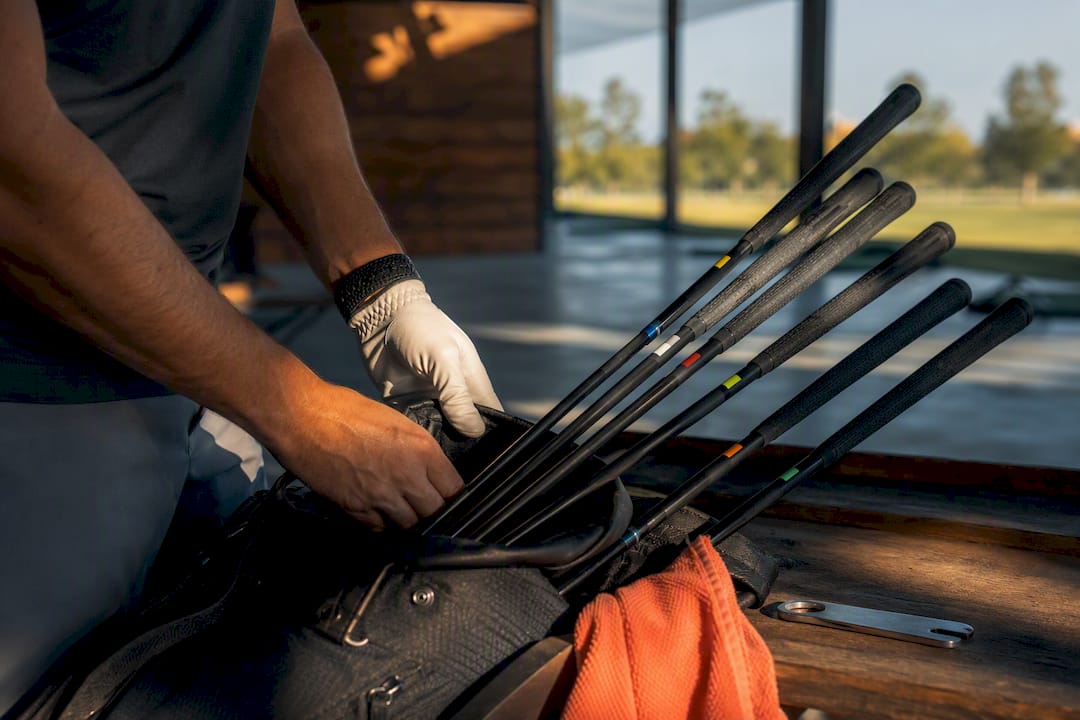
Color coded golf clubs are personalized colored labels or tags applied to your shafts to identify, organize, and personalize your set. The fastest, most reliable starting point is waterproof vinyl labels placed just below the grip, with your wedges and putter labeled first as these clubs are commonly left behind near the green.


TL;DR:

  • Color-coded labels should be waterproof vinyl for durability, especially if you play frequently or in humid conditions.
  • Using no more than four to six color categories helps prevent confusion and maintains quick club identification during play.
  • Applying labels properly requires thorough cleaning and drying of the shaft with isopropyl alcohol to prevent peeling and ensure longevity.
  • Including contact information or QR codes on labels can greatly increase the likelihood of retrieving lost clubs, but consider privacy and speed tradeoffs.
  • Full set packs are usually more cost-effective than individual labels, and keeping a simple reference card helps you remember your color system over time.

Table of Contents

Why Color Coding Your Golf Clubs Actually Helps Your Game

A bag full of matte black shafts is a bag full of guesswork. Color coding solves that problem in two directions at once: speed on the course and protection off it. When your 7 iron wears a distinct color, you glance down instead of squinting at the number stamped near the hosel, shaving real seconds off pre-shot routines during a round with a foursome breathing down your neck.

  • Faster club recognition mid round, especially in low light or when clubs are jumbled in a cart bag
  • Labels that include contact information dramatically improve the odds a lost club finds its way home, and a short “reward if found” line on the label gives a good Samaritan a reason to actually make the call
  • Custom colors turn a set of clubs into a personal statement, which is exactly why labels have become a favorite golf gift
  • Visible phone numbers get you the fastest return path, while QR codes trade a little speed for privacy since the finder has to scan before seeing anything

That tradeoff between speed and privacy is worth thinking through before you order, not after a club goes missing at a public course you’ll never play again.

Four Color Coding Systems You Can Copy Today

Every golfer organizes differently, so pick the system that matches how you actually think about your bag, not the one that looks best on Instagram.

  1. By club type. Woods get one color, irons another, wedges a third, and the putter its own signature shade. This is the simplest system to maintain and the easiest for a playing partner to understand at a glance.
  2. By distance tier. Group clubs into “long” (driver, 3 wood, hybrids), “mid” (5 through 8 iron), and “short” (9 iron through wedges), assigning a color band to each tier. Great for players who think in yardage gaps rather than club names.
  3. By loft. Similar to distance tiers but built around actual loft numbers, useful if you carry an unconventional mix of hybrids and irons that don’t follow standard gapping.
  4. By role. Color-code around shot function instead of club category: approach clubs, scoring clubs, and recovery clubs each get a color, which suits players who think in shot shapes more than yardages.

If you swap a club mid season, relabel it into the matching category immediately rather than leaving it colorless. A half-finished system creates more confusion than no system at all.

Pro Tip: Keep a small reference card in your bag pocket listing your color key. It takes ten seconds to make and saves you from forgetting your own system three months later.

Vinyl, Laminate, or Metal: Choosing the Right Label Material

Material choice comes down to how hard you play and how much you care about the label disappearing into the shaft’s finish. Waterproof vinyl remains the default recommendation for most golfers because it’s inexpensive, easy to apply, and holds up fine through a normal season of play.

  • Waterproof vinyl: best overall value, ideal for full sets and easy replacement when styles change
  • Laminated thermal-transfer labels: built for heavier use, with stronger UV and moisture resistance for golfers who play year round or in humid climates
  • Metal tags: engraved brass or metallic finishes give a premium look, though they’re less subtle than vinyl and can stand out against modern matte shafts
  • QR code vs. visible phone number labels: QR protects your number from public view but requires an extra step from the finder; a printed number skips that step and gets a faster call
  • Bag-level trackers pair well with club labels for golfers who travel by air often, since a tracker covers the whole bag while labels identify each individual club inside it

How to Apply Club Labels Without Bubbles or Peeling

Clean prep is the difference between a label that lasts a season and one that curls up by the third round.

  1. Wipe the shaft with isopropyl alcohol and let it dry completely. Any residue from grip solvent or sunscreen will undercut the adhesive before it ever bonds.
  2. Position the label roughly an inch below the grip cap, where it’s visible during your setup but won’t interfere with your hands.
  3. Apply from one edge and smooth toward the other with steady pressure, pushing out air as you go rather than pressing the center first.
  4. For adhesives that call for it, a brief application of gentle heat with a hair dryer on low can improve the bond, particularly on cooler days.
  5. Check labels every few weeks for lifting edges. Catching a curling corner early means a quick reseal instead of a full replacement.

Pro Tip: Apply labels indoors at room temperature. Cold shafts and humid air are the two most common reasons a fresh label fails to grip on the first try.

What to Check Before You Order Custom Golf Club Labels

Not every label supplier is built the same, and a few overlooked specs separate a set that lasts from one you’re reordering by summer.

  • Confirm the adhesive is rated waterproof and UV resistant, not just water resistant, and check whether a laminate overlay is included
  • Look at the customization fields: how many characters fit, how many lines of text, and how many color combinations are actually available
  • Compare quantity pricing since full-set packs (typically 13 to 14 labels) usually cost less per label than ordering replacements one at a time
  • Check the supplier’s return or reorder policy in case a size doesn’t fit your shaft diameter
  • Confirm shipping timelines to your region before ordering ahead of a trip or a gift deadline

Buying a full-set pack up front is almost always smarter than ordering piecemeal, but keep the supplier’s reorder process in mind for the inevitable day a wedge takes a hard bounce off a cart path and the label doesn’t survive.

Fixing Peeling Labels, Fading Colors, and Mixed-Up Clubs

Peeling almost always traces back to surface prep, not the label itself. If a label lifts at the corner within the first few rounds, the shaft likely wasn’t fully dry or still had residue from grip solvent when it was applied. Strip it off, clean the shaft again with isopropyl alcohol, and let it air dry fully before reapplying. A label that peels repeatedly in the same spot on a graphite shaft may be running into a factory coating that resists adhesive. Try shifting placement an inch higher or lower to find a cleaner bonding surface.

Custom Golf Club Labels

Fading is a UV story more than a wear story. Cheaper printed vinyl without a laminate layer will dull noticeably within a season of regular play in direct sun, while laminated thermal-transfer labels hold their color far longer. If your colors are fading fast, that’s a signal to upgrade material on your next order rather than just reordering the same label.

Misidentification usually means the color system broke down somewhere, often after a mid season club swap. The fix isn’t more colors. It’s fewer categories, applied consistently. Four to six color groups is plenty for almost any bag. Beyond that, players start second guessing their own key, which defeats the purpose of color coding in the first place. When in doubt, simplify the system before you add another shade to it.

An Editorial Take on the Custom Label Boom

Most advice on golf club labels treats them purely as a lost and found tool, and that undersells what’s actually happening in golf right now. The clubs in your bag have quietly become one of the few pieces of sporting equipment a player can make entirely their own, and the personalization trend reflects something bigger than convenience. Golfers want their equipment to say something about them, the same way a custom headcover or a monogrammed glove does.

Where I’d push back on conventional wisdom is the idea that color coding is only worth the effort for competitive players tracking yardages with obsessive precision. The bigger use case is the casual golfer who just wants to stop hunting for the right wedge on a windy back nine, or the gift buyer who wants something more personal than another sleeve of balls. A curated label, cut cleanly and color matched with intention, beats a hand written Sharpie mark every time, not because the Sharpie fails functionally, but because it fails at the identity piece entirely.

The DIY route works fine if all you want is identification. But once personalization and durability both matter, a purpose built label with real adhesive engineering and a defined color palette earns its cost difference fast.

— Michael Marini

Where to Get Custom Color Coded Labels and Golf Gifts

Golf Blab’s Custom Golf Club Labels check every box this guide covers: waterproof vinyl construction, a wide color palette, and full customization down to the text and layout on each label. Ordering typically involves picking label size, choosing colors, entering text or contact details, and checking out. Full sets are usually designed to cover an entire bag, wedges and putter included.

If you’re shopping for someone else, pair labels with a Golf Blab E-Gift Card so the recipient can pick their own colors, or round out the gift with a piece from the apparel lineup. Labels are made to last through a normal season of play, and replacements are generally easy to reorder if needed.

Where to Get Custom Color Coded Labels and Golf Gifts — overview diagram

Sources

For deeper comparisons of label materials and application techniques, Great Results Golf’s roundup covers premium options like laminated and metal tags in more detail, while Cut Sheet Labels breaks down customization specs worth comparing before you order. Both are useful next stops if you want to see application photos before committing to a system.