Posted on

Short game in golf: skills and strategies explained

Golfer reading short putt on practice green


TL;DR:

  • Most golf scores are determined by the short game, which includes shots from 100 yards and in, such as putting, chipping, pitching, bunker shots, and flop shots. Mastering shot selection, technique, and practice scenarios in this area allows for significant stroke reduction and overall improvement. Focusing on realistic practice and smart decisions on the course is the fastest way to lower scores effectively.

Most golfers dump serious time and money into swing lessons and new drivers, then wonder why their scores stay stubbornly high. Here’s the real story: the short game, everything from about 100 yards and in, is where rounds are actually won or lost. It’s not just putting. It’s not just a little chip here and there. The short game is a complete system of shots, decisions, and skills that can shave more strokes off your card than any other part of the game. Get this right, and everything changes.

Table of Contents

Key Takeaways

Point Details
Short game redefined The short game includes all shots from 100 yards in, not just putting and chipping.
Choose shots wisely Use putting when possible, chip for low, predictable rollout, and pitch for carry and stopping power.
Practice like a pro Focus on up-and-downs and realistic, varied practice for best score improvements.
Mindset matters Embrace mistakes as learning; results-focused practice drives progress faster than technical perfection.

Defining the short game: more than just putting and chipping

Now that we’ve previewed the big picture, let’s dig into what the short game really means and why it matters.

Most amateur golfers think of the short game as a couple of chips and a few putts at the end of a hole. That’s a narrow view, and it’s costing them strokes every single round. The short game officially covers all shots played from approximately 100 yards and in. That includes putting, chipping, pitching, bunker shots, and high-loft specialty shots like the flop shot. Each one demands different technique, different club selection, and a different mindset.

Infographic comparing chip and pitch shots

Here’s why this matters so much. Statistically, the majority of shots in any given round happen within that 100-yard range. A mid-handicap golfer playing 90 shots might take 36 or more of those shots from inside 100 yards, including putts. That’s nearly half the round. If you’re only focusing on your driver or your iron play, you are ignoring the biggest opportunity on the scorecard.

The key shot categories you need to own:

  • Putting: Rolling the ball on the green toward the hole, the most frequently played shot in golf
  • Chipping: A low-running shot played from just off the green, designed to get the ball rolling quickly
  • Pitching: A higher, lofted shot meant to carry an obstacle or stop the ball faster with backspin
  • Bunker play: Sand shots that require an open clubface and a specific swing path to lift the ball out
  • Flop shots: High-risk, high-loft specialty shots for tight situations around the green

Understanding chipping in golf as its own skill set, separate from pitching and putting, is the first step toward real improvement. A lot of players also don’t realize how often golf rules basics come into play around the green, especially regarding relief, lie conditions, and penalty areas. And your club choices matter enormously, so knowing your golf wedge choices can make or break how well you execute these shots.

“Chips are designed to get the ball onto the green quickly and let it roll out, while pitches are designed to carry farther and stop quickly using loft and backspin.” According to 36holes.com, these are fundamentally different shots requiring different techniques, not variations of the same move.

The backbone of scoring in golf is your short game. Pros know this. Top amateurs know this. Now you do too.

Shot types explained: chipping vs. pitching vs. putting

With the categories clear, it’s time to sharpen your understanding of each type of short game shot and how to use them.

Each shot type has a specific job. Mixing them up, trying to chip when you should putt, or pitching when a chip would do, is one of the most common ways recreational players add unnecessary strokes. Let’s break these down clearly.

Shot type Trajectory Primary goal Typical loft Best used when
Putt Ground level Roll to hole Putter (low) On or very near the green
Chip Low and running Get ball rolling fast 7-iron to 9-iron or PW Just off the green, clear path
Pitch Mid to high Carry and stop quickly Sand wedge, lob wedge Obstacle in the way, need backspin
Flop shot Very high Soft landing 60-degree wedge Tight pin, bunker edge, rough

As 36holes.com shows, the chip and the pitch are fundamentally different shots. A chip keeps the ball low and lets it run out to the hole, much like a putt with a little loft. A pitch uses the club’s loft and a more active swing to carry the ball higher and land it softly with backspin. Mixing these up under pressure is a recipe for disaster.

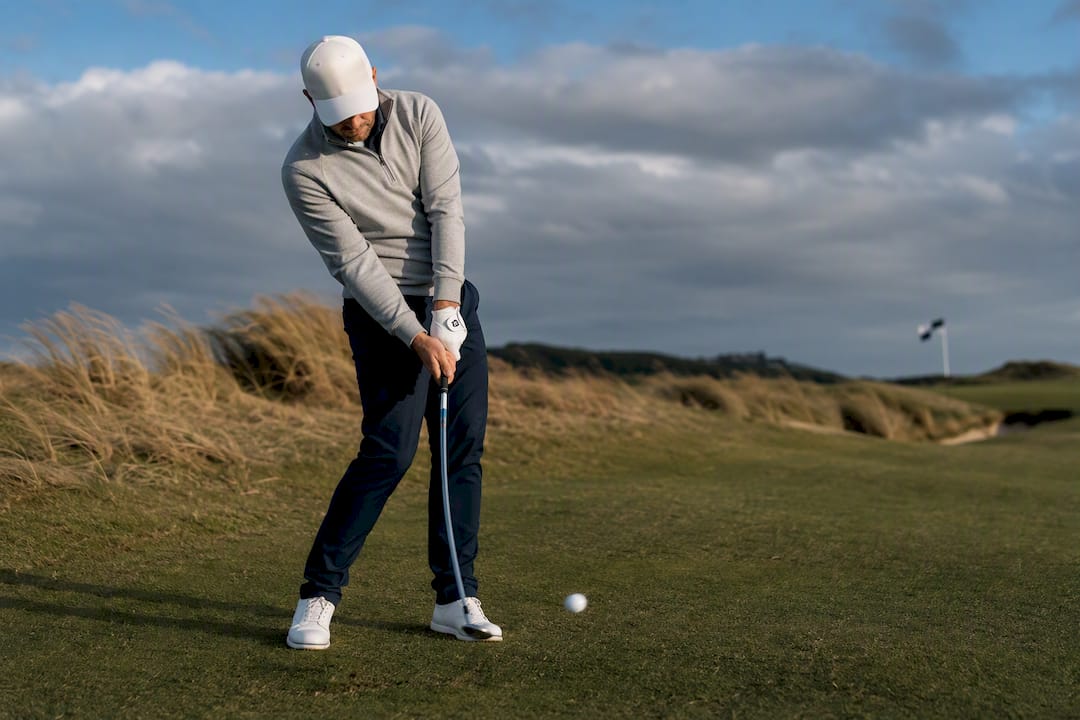
For mastering chipping specifically, the key is a quiet lower body, a forward-leaning shaft at address, and contact with the ball first. You want a “bump and run” feel. Keep your hands ahead of the clubhead, take a narrow stance, and let the ball pop off the face with minimal wrist action.

Golfer practicing chip shot off green

Putting is its own world entirely. Controlled speed, consistent stroke mechanics, and reading the green are everything. The number one mistake amateur putters make is not managing pace on long putts, leading directly to those dreaded three-putts.

Pro Tip: When in doubt, putt. Seriously. If there’s a clear, firm path from the fringe to the hole and no real obstacle in the way, grab your putter. The fewer moving parts in your shot, the fewer opportunities for error. A putt from six feet off the green is almost always a better call than a risky chip or pitch.

One stat worth knowing: three-putts account for a massive share of extra strokes for golfers shooting between 90 and 105. Reducing your three-putts even by a few per round can drop your handicap noticeably and fast.

Making smart choices: the short game decision framework

Understanding the differences is just the start. Let’s explore a straightforward framework to select the best shot every time.

The best short game players in the world are not always the most technically gifted. They’re the best decision-makers. Having a reliable process for choosing the right shot under pressure is what separates a 15-handicapper from a 9-handicapper more than raw talent does.

Here’s a simple sequence to follow every time you’re inside 100 yards:

  1. Putt first. Can you putt from where you are? Is the path clear and the surface manageable? If yes, putt. Always take the lowest-risk option.
  2. Chip if you can’t putt. Is there a short fringe or light rough between you and the green? Choose a low-running chip with a less-lofted club. Keep it simple.
  3. Pitch only when required. Is there a bunker, thick rough, or a mound you must carry? Now you need a pitch. Use loft, generate backspin, and commit to the shot.
  4. Reserve the flop shot for last. It’s a high-skill, high-risk shot. Use it sparingly and only when nothing else will work.

As Golf Digest advises, a practical decision framework is to putt when you can, and when you cannot, choose the shot that best matches the required carry-to-roll ratio and contact needed for that specific situation. This is not complicated. It’s just a matter of asking the right questions before you pull a club.

Here’s a quick reference for club selection based on your situation:

Situation Recommended club Expected shot shape
Just off the fringe, smooth path 7-iron or 8-iron Low chip, lots of roll
10-15 yards from pin, no obstacles Pitching wedge Mid chip, moderate roll
Obstacle to carry, tight pin Sand or lob wedge Higher pitch, quick stop
Greenside bunker Sand wedge (open face) Explosion out of sand
Long fringe, direct path Putter Putt, no carry needed

Check out golf strategy tips for a deeper look at how shot selection fits into your overall on-course decision-making process.

Pro Tip: More moving parts equal more mistakes. This is especially true in the short game. Fewer moving parts, a shorter swing, a simpler club choice, and a clearer target mean more consistent contact and better results when it actually counts.

Practicing for real results: how pros approach short game training

Making smart shot choices on the course is vital, but how you practice the short game off the course is just as important.

Here’s the honest truth about most golfers’ practice habits: they go to the chipping green, drop five balls in perfect lies near the fringe, hit some easy chips, and call it a session. That feels productive, but it’s barely scratching the surface of what real short game training looks like.

The pros focus their short game practice on a completely different set of priorities. They don’t just hit shots. They practice scenarios. They practice pressure. And above all else, they track meaningful results.

What high-quality short game practice actually looks like:

  • Varied lies. Practice from tight lies, fluffy rough, bare hardpan, and awkward slopes. Real rounds throw all of these at you.
  • Up-and-down drills. Set a specific target and track how often you get up and down in two shots from inside 30 yards. Log it. Improve it.
  • Lag putting focus. Most golfers waste time on six-foot putts they’d rarely make anyway. Train your distance control on 25-to-40-foot lag putts to eliminate three-putts.
  • Pressure simulation. Give yourself a goal: make 8 out of 10 chips within a club-length of the hole. Miss one and start over. This creates real consequences in practice.
  • Short-sided scenarios. Practice from spots where you have little green to work with. These are the situations most likely to cause big numbers on the scorecard.

“Pro-style short-game practice emphasizes up-and-down improvement and reducing avoidable problems, especially three-putts, rather than only adding more shots or always trying for ‘makeable’ proximity.” This insight from Neal Shipley is worth reading twice.

The real shift here is from mindless repetition to intentional practice. Every ball you hit on the practice green should have a purpose: a specific target, a specific lie, and a specific skill you’re building. That’s how you translate range work into real round improvement.

Use practice routines for consistency to build a structured session plan that supports your short game work. And when you’re ready to measure real-round results, golf score improvement tips can help you track the right numbers.

Pro Tip: Keep a simple short game log. After every round, note how many times you got up and down from inside 30 yards, and how many three-putts you had. Two to three weeks of tracking this will reveal exactly where your practice time should go.

Why the short game is the fastest way to lower your scores, if you practice the right way

We need to have an honest conversation here, because most short game advice misses the point entirely.

Every guide you read tells you to practice your short game. Fine. But they almost never tell you how to practice it in a way that actually moves the needle. The obsession with “perfect technique” in the short game is just as misguided as the obsession with a perfect full swing. You can have a textbook chip and still card a double bogey because you made the wrong choice, hit from a bad lie you weren’t practiced for, or fell apart when the pressure was real.

Here’s what we’ve seen time and time again: golfers who stop chasing the perfect technique and start managing results improve faster. Period. They learn to get the ball somewhere close from bad spots. They learn to keep their composure when a chip doesn’t go exactly where they wanted. They forgive themselves, reset, and focus on the next shot.

Quality reps under pressure beat endless reps from perfect lies every single time. Think about it this way: if you only practice chips from a flat, clean lie six feet off the green, you’ll get good at that exact scenario. But when do you ever get that perfect scenario on the course? You don’t. You get uneven ground, funky lies, tight grass, and the pressure of a score on the line. Practice has to match reality.

The other big thing most guides get wrong is ignoring the mental side of short game improvement. Accepting that you’re going to mis-hit shots, that some chips will roll past the hole, that some pitches won’t stop as fast as you wanted, is actually part of getting better. The golfers who improve the fastest are the ones who treat each bad shot as information, not catastrophe.

Use proven practice routines to build sessions that mirror real-course conditions. Stop hitting from the same perfect spot. Embrace the messy practice. Your scorecard will thank you.

Take your short game further with Golf Blab resources

Ready to accelerate your progress? Here’s how Golf Blab can support your short game and entire golf journey.

If this article sparked something for you, that feeling that you’ve been leaving serious strokes on the table, then you’re in the right place. At Golf Blab, we build educational content and resources specifically for golfers who are serious about getting better without overcomplicating it.

https://golf-blab.com

From lower your scores fast strategy guides to personalized gear that keeps you sharp and confident on the course, we’ve got you covered at every stage of the game. Browse the Golf Blab Learning Center for in-depth lessons, club guides, rules breakdowns, and practice frameworks built for real golfers who want real results. Whether you’re chasing your first single-digit handicap or just trying to stop blading chips across the green, we have the tools and the content to move you forward.

Frequently asked questions

What distances are considered the short game in golf?

Shots played from 100 yards and in, including chips, pitches, and putts, are generally considered the short game. This zone covers the majority of shots played in any typical round.

How do I decide whether to chip or pitch?

Chip when you can keep the ball low and rolling toward the hole with a clear path. Pitch when you need to carry an obstacle or stop the ball quickly using loft and backspin.

What should I focus on when practicing my short game?

Prioritize realistic scenarios: varied lies, up-and-down drills, and lag putting to reduce three-putts. Pro-style practice focuses on eliminating avoidable mistakes, not just accumulating reps.

Can practicing the short game really lower my scores quickly?

Yes, and probably faster than any other area of the game. Research backs up short game improvement as one of the most efficient ways to drop strokes, because it directly targets the highest-frequency shots in your round.

Posted on

Descubre el verdadero rol del putter en el golf y mejora

Un jugador de golf se prepara para ejecutar su putt, concentrado en el green mientras alinea cuidadosamente el golpe.

La mayoría de los golfistas amateur pasan horas en el campo de prácticas perfeccionando su driver o trabajando el hierro largo. Luego llegan al green y simplemente esperan que “los putts caigan solos.” Eso es un error que te está costando golpes cada ronda. El putter es, sin exageración, el palo más decisivo que tienes en tu bolsa. Las métricas del PGA Tour confirman que el putting representa cerca del 40% de los golpes totales en una ronda estándar. Si no le prestas atención, estás dejando el resultado de tu juego al azar.

Tabla de contenidos

Puntos Clave

Punto Detalles
El putter es clave El putter interviene en más del 40% de los golpes de una ronda y es el palo más determinante en el green.
Cumple las reglas Evita penalizaciones aprendiendo lo que está autorizado respecto al uso y alineación del putter.
Entrena de forma específica Dedica tiempo a ejercicios y rutinas enfocadas en putt para mejorar tu puntuación rápidamente.
Cambia tu enfoque mental Valorar y practicar más con el putter puede marcar la diferencia entre perder o ganar una ronda.

Entendiendo el putter: más que un palo en el green

El putter no es simplemente el palo que usas cuando ya estás cerca del hoyo. Es el instrumento que define si toda la estrategia previa tuvo sentido o no. Puedes jugar un par-5 perfectamente, llegar al green en dos golpes y luego necesitar tres putts para terminar el hoyo. Ahí, de nada sirvió tu drive perfecto.

Entonces, ¿qué es exactamente el putter? A diferencia de los irones o el driver, el putter está diseñado para hacer rodar la pelota de forma controlada sobre la superficie del green, sin elevarla en el aire. Tiene una cara casi plana, muy poca inclinación (loft), y un diseño especialmente pensado para dar precisión y control de distancia. Hay tres tipos principales:

  • Putter blade: Diseño clásico y delgado, muy popular entre jugadores con stroke recto.
  • Putter mallet: Cabeza grande y redondeada, más estable y perdonador en el impacto.
  • Putter de cuello largo o belly: Diseñados para jugadores que buscan más estabilidad en el movimiento del brazo.

La longitud estándar oscila entre 32 y 36 pulgadas, aunque el fitting personalizado es cada vez más común. El peso de la cabeza también varía según el green donde se juegue: greens rápidos piden putters más ligeros, greens lentos requieren más peso para generar velocidad suficiente.

“El Strokes Gained: Putting permite comparar con precisión cuántos golpes ganas o pierdes en el green respecto al promedio del campo, haciendo visible lo que antes era invisible en el análisis del juego.”

El impacto en la puntuación es brutal. Un jugador que promedia 36 putts por ronda versus otro que promedia 28 tendrá una diferencia de 8 golpes antes de tocar cualquier otro palo. Eso es más impacto que cualquier mejora en el driver. Si quieres profundizar en los fundamentos desde cero, nuestra guía práctica para principiantes es el mejor punto de partida.

Ahora que sabes por qué el putter no es un simple accesorio, profundicemos en su uso en el conjunto de tu juego.

El putter en acción: comparación con otros palos

Cuando analizamos la acción del putter frente a otros palos, el panorama se aclara y revela prioridades de entrenamiento que la mayoría ignora por completo.

Aquí te presento una tabla comparativa que ilustra la realidad de una ronda de golf estándar de 18 hoyos:

Palo Uso típico por ronda Porcentaje del total
Putter 28 a 36 golpes 38% a 43%
Driver 10 a 14 golpes 13% a 17%
Hierros 12 a 18 golpes 16% a 22%
Wedges 8 a 14 golpes 10% a 17%
Madera de fairway 2 a 6 golpes 3% a 7%

Los números no mienten. El putter decide más golpes que cualquier otro palo en una ronda, y aun así es el palo al que menos tiempo de práctica se le dedica. Esto no tiene ningún sentido si tu objetivo es bajar el hándicap.

Infografía con los datos más destacados sobre el uso y rendimiento del putter

Piénsalo de esta forma: si mejoras tu driver un 10%, recuperas quizás 1 o 2 golpes por ronda. Si mejoras tu putting un 10%, puedes recuperar 3 o 4 golpes inmediatamente. La relación esfuerzo/resultado es claramente superior en el putter.

Para entender cómo el putter se integra dentro del flujo completo de una ronda, revisa los pasos para jugar golf de manera efectiva. Y si quieres conectar la mejora del putter con una técnica general más sólida, aprender a mejorar tu swing complementará perfectamente tu trabajo en el green.

Consejo profesional: Los jugadores con hándicap alto que dedican el 50% de su tiempo de práctica al putter ven mejoras medibles en sus marcas en tan solo 4 a 6 semanas. La diferencia entre un amateur de 25 de hándicap y uno de 15 muchas veces no está en el swing, sino en la cantidad de tres-putts que comete en cada ronda.

Aficionados al golf practicando el putt y mejorando su alineación

Reglas esenciales del putter: lo que debes y no debes hacer

Saber usar el putter correctamente también implica conocer las reglas para evitar penalizaciones innecesarias. Y créeme, muchos jugadores cometen infracciones sin saberlo.

La regla 10.2b del Reglamento de Golf establece restricciones específicas sobre cómo un caddie o el propio jugador pueden usar objetos para establecer la línea de juego antes de un golpe. En términos simples: no puedes colocar tu putter, ni ningún otro objeto, en el suelo para indicar la dirección de tu putt mientras tomas posición. Esto incluye las actualizaciones recientes de las aclaraciones reglamentarias vigentes desde 2026.

Las acciones que se permiten son:

  1. Pedir a tu caddie que se coloque a un lado de la línea para señalarte visualmente la dirección, pero este debe retirarse antes de que ejecutes el golpe.
  2. Marcar la pelota con un marcador plano en el green.
  3. Limpiar la pelota cuando la levantas dentro del green.
  4. Solicitar información sobre la línea de putt sin tocar el green.

Las acciones que NO se permiten son:

  1. Apoyar el putter en el suelo apuntando hacia el hoyo mientras tomas tu stance.
  2. Usar un “auto-stand putter” (un putter diseñado para quedar parado por sí solo) como guía de alineación.
  3. Que el caddie permanezca detrás del jugador durante la ejecución del golpe.
  4. Tocar la línea de putt con cualquier objeto antes de golpear, salvo en las excepciones permitidas.

“Las reglas de aclaraciones 2026 confirman que no está permitido.pdf) colocar un putter en posición de alineación de ninguna forma que viole la regla 10.2b.”

La penalización por violar esta regla es de dos golpes en stroke play o pérdida de hoyo en match play. Dos golpes por un error evitable con solo conocer la norma. Para no tener sorpresas en competición, consulta nuestra guía sobre reglas del golf donde cubrimos las situaciones más comunes que confunden a los jugadores amateur.

Consejo profesional: Antes de cada ronda, practica tu rutina de alineación sin ningún apoyo externo. Usa únicamente tus ojos y la línea impresa en tu pelota para orientarte. Esto no solo te mantiene dentro de las reglas, sino que también desarrolla tu percepción espacial natural, que es lo que realmente marca la diferencia en putts de presión.

Ejercicios y consejos para mejorar tu putting

Equipado con las reglas claras, pasamos a los consejos y entrenamientos que harán la diferencia real en tu putt. La técnica del putter no se improvisa. Se construye con práctica deliberada y con foco en los elementos correctos.

Aquí están los ejercicios más efectivos que puedes empezar a aplicar hoy mismo:

  • Ejercicio de la puerta: Coloca dos tees en el suelo formando una puerta apenas más ancha que tu putter. Practica el stroke pasando el putter exactamente por esa puerta sin tocar los tees. Esto entrena la trayectoria recta del movimiento.
  • Ejercicio del círculo: Coloca cinco pelotas alrededor del hoyo a un metro de distancia en diferentes ángulos. Intenta embocar todas antes de avanzar. Desarrolla confianza en putts cortos bajo presión.
  • Ejercicio de control de distancia: Coloca una tira de cinta adhesiva en el green a diferentes distancias (1, 2, 3, 4 y 5 metros). Practica dejar la pelota dentro de 30 centímetros de cada marca. Esto afina tu velocidad de golpe.
  • Ejercicio de un ojo cerrado: Cierra el ojo dominante durante el putt. Esto activa tu sentido kinestésico (percepción del movimiento propio) y mejora la consistencia del stroke sin depender únicamente de la visión.
  • Ejercicio de la línea: Usa un rotulador para trazar una línea en tu pelota. Al alinearla con tu objetivo, ves claramente si tu setup es correcto. Luego observa si la pelota rueda siguiendo esa línea.

La técnica de putting tiene una relación directa con los resultados en el green. Practicar con foco específico acelera la mejora más que horas de práctica sin estructura.

Ejercicio Objetivo Frecuencia sugerida
La puerta Trayectoria del stroke 3 veces por semana, 10 minutos
El círculo Confianza en distancias cortas Antes de cada ronda, 5 minutos
Control de distancia Velocidad y tacto 2 veces por semana, 15 minutos
Un ojo cerrado Consistencia del movimiento 1 vez por semana, 10 minutos
La línea Alineación del setup Cada sesión, 5 minutos

Para profundizar en la parte técnica de tu juego de forma más amplia, estos recursos te ayudarán mucho: aprende a mejorar técnica de golf con una guía paso a paso, y domina específicamente el juego corto en golf para bajar tu puntuación de manera sostenida.

Consejo profesional: Antes de cada ronda, dedica 5 minutos a visualizar tus putts en el green de práctica. No se trata de golpear pelotas al azar. Elige un objetivo, imagina la trayectoria de la pelota y ejecuta el golpe con esa imagen clara en la mente. Esta rutina mental reduce los errores por tensión y mejora la concentración desde el primer hoyo.

Lo que casi nadie te dice sobre el putter en el golf

Voy a ser directo contigo: la industria de la enseñanza del golf tiene un problema serio. Está obsesionada con el swing, el driver, los irones largos y la mecánica del cuerpo. Toda la glamour está en el golpe largo y espectacular. Pero los jugadores que realmente bajan sus marcas, los que pasan de un hándicap 20 a un 10, lo hacen principalmente mejorando en el green.

Nadie quiere hablar de eso porque no es “emocionante” trabajar el putter. No hay video viral de un putt de metro y medio. No se venden tantos cursos de putting como de swing. Y eso es frustrante, porque los datos son absolutamente claros.

La verdad es esta: el putter define más rondas que cualquier otro palo. No es debatible. Es matemática pura. Si eliminas dos tres-putts por ronda, ya bajaste dos golpes sin cambiar nada más de tu juego. ¿Cuánto tiempo te tomaría eliminar dos golpes mejorando tu driver? Meses. Años.

Los jugadores amateur también cometen un error mental costoso: asumen que el putt es “suerte.” Que los greens cambian, que hay factores impredecibles, que si fallas no es tu culpa. Esa mentalidad es exactamente la que te mantiene estancado en el mismo hándicap año tras año.

Lo que yo te prometo es esto: si cambias tu forma de ver el putter y le das el lugar que merece en tu entrenamiento, los resultados llegan rápido. Más rápido que con cualquier otro cambio técnico. El putter es el camino corto hacia la mejora, y está literalmente frente a ti en cada ronda.

Consulta los consejos de profesionales para entender cómo los jugadores de tour priorizan el putting en sus rutinas de entrenamiento. La diferencia entre un amateur promedio y un jugador de nivel scratch está, más que en ningún otro lugar, en el green.

Mejora tu experiencia con soluciones innovadoras de Golf Blab

Si te tomas en serio mejorar tu putt, existen herramientas y recursos que pueden acelerar tu progreso de manera significativa. En Golf Blab tenemos exactamente lo que necesitas para dar el siguiente paso.

https://golf-blab.com

Desde consejos de alineación en golf para asegurarte de que tu setup sea correcto en cada putt, hasta opciones de personalización de palos que hacen que tu putter se adapte a tu estilo de juego, tenemos recursos y productos pensados específicamente para golfistas como tú. Y si quieres llevar todo tu juego al siguiente nivel con una metodología que realmente funciona, prueba Golf Blab Swing Like a Pro y empieza a ver la diferencia desde la primera sesión.

Preguntas frecuentes

¿Qué significa “Strokes Gained: Putting” y por qué es importante?

Es una métrica utilizada en el PGA Tour para medir la efectividad de tu putt en comparación con el promedio del campo, siendo clave para identificar áreas de mejora rápida. El PGA Tour la publica oficialmente y permite comparar el desempeño relativo en el green entre jugadores de cualquier nivel.

¿Está permitido usar objetos de alineación con el putter en competición?

No, las reglas aclaran que no puedes usar el putter ni otro objeto para ayudarte en la alineación o stance, incluida la prohibición de “auto-stand putter.” La regla 10.2b actualizada.pdf) en 2026 confirma estas restricciones de forma explícita.

¿Cuántos golpes suele realizarse con el putter en una ronda estándar de golf?

Aproximadamente el 40% de los golpes en una ronda se hacen con el putter, lo que muestra su importancia estratégica dentro del juego completo.

¿Cuál es el error más común con el putter entre principiantes?

La alineación incorrecta es el error más frecuente, provocando fallos aunque la técnica del stroke sea correcta. Muchos jugadores alinean los pies en lugar de alinear la cara del putter hacia el objetivo real.

Recomendación

Posted on

Find the best golf lessons for kids: types, benefits, and tips

Kids practicing golf on sunny park green


TL;DR:

  • Choosing the right golf lesson format depends on your child’s personality, goals, and learning style to foster confidence and skill. Private lessons offer personalized feedback, while group sessions promote social interaction and fun, and camps provide immersive skill-building experiences. Understanding your child’s needs and preferences ensures a positive, engaging golf journey that encourages ongoing love for the game.

There are more ways to teach a kid golf than most parents ever realize, and that variety is exactly what makes picking the right format so important. Walk into any golf facility and you might see private one-on-one coaching, lively group clinics, week-long summer camps, and even virtual sessions on a screen. Each one shapes your child’s experience, confidence, and love for the game in completely different ways. The format you choose matters just as much as the instructor’s credentials. Get it right, and your child will be begging to go back. Get it wrong, and golf feels like a chore before they’ve even hit their third bucket of balls.

Table of Contents

Key Takeaways

Point Details
Understand lesson formats Private, group, camp, and specialty formats each offer unique benefits for junior golfers.
Match the lesson to your child Choosing a lesson type that fits your child’s personality and goals leads to better outcomes and more enjoyment.
Sample before you commit Many programs offer trial lessons—use them to find the right teaching style without long-term commitment.
Skills and confidence grow together The right lesson supports both improvement in golf skills and boosts self-esteem in young players.

How to choose the right golf lessons for kids

Now that you understand why the lesson type matters, let’s look at what to consider before making a choice.

The most common mistake parents make is picking lessons based on price or convenience alone. Those things matter, sure. But if the format doesn’t match your child’s personality and goals, you’re going to hit a wall fast. Golf lessons help build confidence and key athletic skills in juniors, but only when the environment feels right to the child.

Here’s what to honestly evaluate before you sign your kid up for anything:

  • Skill level and age: A 6-year-old needs a completely different structure than a 12-year-old who has been swinging clubs for two years. Younger kids need short, activity-driven sessions. Older beginners can handle more instruction.
  • Learning style: Does your child absorb information by watching, by doing, or by talking it through? Some kids need hands-on repetition. Others respond to visual demonstration or storytelling.
  • Primary goal: Is your child chasing competition? Looking for a fun summer activity? Wanting to play with family? The goal shapes which format delivers the most value.
  • Group size tolerance: Some kids shrink in large groups and bloom one-on-one. Others find private lessons awkward and prefer the energy of peers around them.
  • Instructor experience with juniors: Teaching adults and teaching kids are not the same skill. Ask specifically about the coach’s background with younger learners.
  • Schedule fit: Weekly lessons require consistent commitment. Camps are intensive but short. Virtual sessions offer flexibility. Be honest about what your family can actually maintain.

Take a look at the parents’ guide to junior lessons for a detailed breakdown of how to structure your child’s early golf journey before committing to any program.

Pro Tip: Many facilities offer a single trial session before you buy a package. Take it. Watch how the instructor interacts with your child before spending a dollar more.

Private golf lessons: Individualized attention and rapid improvement

Once you have your child’s needs in mind, let’s explore the first major lesson format: private coaching.

Child receiving hands-on private golf lesson

A private lesson is exactly what it sounds like. One instructor, one child, one focused hour. The coach watches your child swing, identifies what needs work, and builds a plan around their specific patterns. There’s no waiting for other kids to take their turn. No distractions. Just deliberate, personalized feedback from the first minute to the last.

Private lessons allow instructors to tailor feedback and progression to an individual child’s needs. That’s the real power here. If your child has a grip issue, the coach fixes that. If their stance is off, every drill targets that problem. Nothing gets glossed over because there’s no group pace to keep up with.

The honest pros and cons:

  • Pros: Full instructor attention, faster skill correction, flexible scheduling, customized pacing, direct relationship with a mentor figure
  • Cons: Higher cost per session, limited social interaction, can feel pressure-heavy for some kids, relies heavily on instructor-child chemistry

Private lessons work best for kids who have a specific goal in mind, such as making the school team, improving a particular shot, or developing a competitive game. They also suit children who simply learn better in quieter, one-on-one settings. Think of it this way: if your child thrives in smaller academic settings rather than large classrooms, private golf lessons are probably a natural fit.

“The best junior instructors treat private sessions not as a lecture but as a conversation. They ask questions, they observe, and they adapt. A child who feels heard will practice harder.” This is something we hear consistently from experienced junior coaches, and it tracks with what we see on the course.

Understand the role of the golf coach before your first appointment. Knowing what a good coach actually does helps you evaluate whether the person you’re hiring is the real deal or just someone who can hit a pretty shot themselves.

Pro Tip: Ask the instructor to explain their teaching philosophy in plain language before the first session. If they can’t describe their approach simply, that’s a signal worth noting.

Group golf lessons: Social learning and shared fun

After exploring private lessons, let’s see how group sessions stack up for kids.

Group lessons put your child in a class with other juniors, typically ranging from 4 to 10 students. The instructor moves through the group, giving feedback to each player while the others practice what was just taught. It’s livelier, more social, and for many kids, just flat-out more fun.

Group formats can make golf more fun and affordable for kids while developing peer relationships. That social layer is not a small thing. When kids see their peers struggling with the same swing problem and then nailing it, it builds collective motivation. They cheer each other on. They laugh. They come back next week because their friends are there.

What to expect in a typical group lesson:

  • The session usually starts with a warm-up and quick drill explanation
  • Students rotate through stations or practice the same skill simultaneously
  • The instructor circulates to offer brief, targeted feedback
  • The session often ends with a small game or challenge to make it competitive and fun

Quick comparison at a glance:

Feature Private lessons Group lessons
Cost per session Higher Lower
Personalized feedback High Moderate
Social interaction Low High
Pacing Child’s own pace Group average
Best for Goal-focused learners Beginners, social kids
Flexibility High Lower

The lesson package options available through different programs often make group lessons a smart entry point for families who want to keep costs manageable while their child figures out whether golf is really their thing.

Pair group lessons with some fun practice routines for kids at home, and the improvement compounds quickly. Repetition outside of class is where the real growth happens.

Golf camps and clinics: Immersive skill-building for young players

Beyond standard lessons, many parents consider golf camps or clinics for an extra push or summer experience.

A golf camp typically runs for several consecutive days, often during school breaks or summer. Kids arrive in the morning, spend hours on the range, the short game area, and sometimes the course itself, then head home in the evening. Clinics are similar but shorter in duration, sometimes just a single intensive day or a weekend. Both formats pack a significant amount of instruction into a condensed window.

Golf camps and clinics allow kids to learn quickly in a supportive, active environment with peers. The immersive structure forces faster adaptation. Kids don’t have a week between sessions to forget what they learned. They apply it the very next morning.

What a typical golf camp includes:

  1. Full-swing instruction on the driving range
  2. Short game sessions covering chipping, pitching, and putting
  3. On-course play to apply skills in real situations
  4. Rules and etiquette education
  5. Fun competitions and challenges among participants
  6. Occasional guest appearances from local pros or coaches

Camp and clinic vs. weekly lesson comparison:

Factor Weekly lessons Camp or clinic
Time commitment Ongoing, low weekly hours Intensive, short-term burst
Skill retention Builds gradually Rapid initial gain
Social experience Moderate High
Cost structure Per-session or package Upfront flat fee
Best timing Year-round development Summer or school break
Ideal candidate Committed junior golfer Curious kids, rapid learners

The main drawback is that the pace isn’t right for every child. Some kids feel overwhelmed by back-to-back instruction without time to process. If your child is sensitive to overstimulation or needs more time to absorb new movements, a weekly lesson format may serve them better than a five-day camp.

Check the parents’ clinic and camp guide for specific questions to ask organizers before registering your child.

Specialty golf lessons: Adaptive, virtual, and parent-child sessions

For children with unique needs or tech-savvy parents, specialty lesson options are worth exploring.

This is where golf has genuinely evolved. The old model of “show up, hit balls, go home” doesn’t serve every child equally. Newer formats are breaking that mold in meaningful ways.

Types of specialty lessons worth knowing:

  • Virtual lessons: A coach reviews video of your child’s swing and sends back feedback, or conducts a live session over video call. Works surprisingly well for families in rural areas or with scheduling limitations.
  • Adaptive golf programs: Designed specifically for children with physical, cognitive, or developmental differences. These programs use modified equipment, adjusted rules, and patient instructors trained in inclusive teaching. Some programs now offer virtual and adaptive lessons, broadening access and making golf more inclusive for children who otherwise might never get on a course.
  • Parent-child sessions: A coach teaches both parent and child simultaneously. The bonding value alone makes these worth considering. When your child sees you struggling with the same shot they just nailed, it humanizes the game and strengthens your relationship around it.
  • On-course play lessons: Instead of range time, these sessions put the child directly on the course with a coach. Real decisions, real pressure, real feedback. Excellent for kids who are past the basics and need to learn course management.

When specialty lessons make the most sense:

  • Your child has a disability or developmental difference that standard programs don’t accommodate well
  • Your family’s schedule makes consistent weekly visits impossible
  • You want to share the golf experience together rather than just drop your child off
  • Your junior golfer is bored with the range and needs real-course experience to stay motivated

Pro Tip: Before committing to a specialty format, ask for a single trial session. The format might look perfect on paper but feel off in practice. One session tells you more than any brochure.

Comparing golf lesson types: Which is best for your child?

After understanding each type, a side-by-side comparison can make your decision easier.

Each lesson format offers unique strengths depending on your child’s personality, goals, and learning style. No single format wins across the board. The right choice is the one that fits your child right now, with room to evolve as they grow.

Lesson type Best for Cost level Social factor Skill progression speed
Private lessons Goal-driven, focused learners High Low Fast
Group lessons Beginners, social kids Low to moderate High Moderate
Golf camps Summer learners, rapid growth Moderate to high High Very fast, short-term
Clinics Kids wanting a quick skill boost Moderate Moderate to high Fast, short-term
Virtual lessons Remote families, busy schedules Low to moderate Low Moderate
Adaptive programs Kids with special needs Varies Varies Individualized
Parent-child Bonding-focused families Moderate High (family) Moderate

Your final decision checklist:

  • Does this format match how my child learns best?
  • Does my child prefer working alone or with peers?
  • What is the realistic cost I can sustain for 3 to 6 months?
  • Does the instructor have specific experience with kids this age?
  • Is my child’s primary motivation fun, competition, or family connection?
  • Can I trial this format before buying a full package?

Start with what motivates your child. Not what worked for the neighbor’s kid. Not what’s trending at your local club. The format that keeps your child showing up with a smile is always the right one.

A fresh perspective on finding the right lesson for your child

Here’s something the standard golf guides rarely say out loud: skill level is not the most important variable when choosing a lesson format. Personality is.

We’ve seen shy, introverted kids completely shut down in a large group clinic, even when they were technically more advanced than their peers. And we’ve seen outgoing, social kids drag their feet through private lessons because they missed the energy and friendly competition of their group. The instruction was solid in both cases. The fit was wrong.

This is not a small thing. A child who is uncomfortable in their learning environment will not absorb information well, no matter how talented the coach is. Confidence through personalized lessons builds when the child feels safe, engaged, and seen. That’s the foundation everything else rests on.

The golf industry loves to push the latest technology and the trendiest teaching method. But what actually works for kids is much simpler: consistent encouragement, a comfortable environment, and a format that respects who they are. A shy child may absolutely shine in a smaller group of three or four peers. A social butterfly may find their groove in a five-day camp surrounded by kids who share their enthusiasm.

Talk to your child. Ask them what sounds fun. Let them help pick. Kids who have a voice in the decision are far more likely to follow through, practice between sessions, and actually fall in love with the game. That’s the outcome worth chasing.

Take the next step: Set your junior golfer up for success

Once you’ve chosen the right lesson type, Golf Blab is here to support every part of your child’s golf journey. Whether you’re looking to gear up your junior golfer with the right equipment or sharpen your own knowledge as a parent, our golf learning center has resources built for every stage of development. For a fun, personalized touch, check out our personalized golf club labels that help kids identify their clubs and feel a sense of ownership over their gear. And when it’s time to upgrade accessories, browse our selection of junior golf accessories designed to make the game more enjoyable from day one. Because when your child feels equipped and excited, the game takes care of the rest.

Frequently asked questions

What is the best age for kids to start golf lessons?

Most kids can begin simple golf lessons as young as 5 or 6, with activities matched to their attention span and motor skills. Starting early with playful, low-pressure sessions builds a natural comfort with the game before formal mechanics are introduced.

How often should children have golf lessons?

Weekly golf lessons are common, but the ideal frequency depends on your child’s interest level and family schedule. Some families find that bi-weekly lessons with home practice in between produce better results than cramming sessions too close together.

Are group lessons better than private lessons for beginners?

Group lessons are great for beginners who want fun and social interaction, while private lessons offer focused, personalized instruction for faster improvement. Group and private lesson formats each have unique benefits for kids, so the best pick really depends on your child’s personality.

What should my child bring to their first golf lesson?

Kids should bring comfortable clothes, water, sunscreen, and golf clubs if required since many programs provide starter equipment. Arriving a few minutes early gives your child time to get comfortable with the space before the session begins.

Can children with special needs participate in golf lessons?

Yes, many clubs offer adaptive golf programs or specialty lessons designed for children with special needs. Some programs now offer adaptive lessons, broadening access for all children and making golf a genuinely inclusive sport.