Posted on

How consistent practice unlocks better golf scores

Amateur golfer practicing at open-air range


TL;DR:

  • Consistent, structured practice builds muscle memory and transfer to the course, leading to real improvement.
  • Effective practice requires clear goals, focused sessions, feedback, and patience through skill development processes.

Most golfers hit the range a few times a month and wonder why their game stays stuck. The assumption is simple: more swings equal more improvement. But that logic is flawed, and it’s quietly keeping millions of golfers from reaching their real potential. The truth is that consistent, structured practice builds the kind of muscle memory and repeatable motion that actually transfers to the course. In this article, we’ll break down the science behind why purposeful repetition beats raw frequency, and give you a clear roadmap to practice smarter starting today.

Table of Contents

Key Takeaways

Point Details
Consistent practice builds skill Repeating golf fundamentals and structuring sessions fosters better ball striking and helps identify weaknesses.
Quality beats quantity Short, focused, and goal-driven practice delivers more results than long, unfocused repetitions.
Expect progress, not perfection Even pros experience scoring variability, so consistency means steady improvement—not identical performance.
Structure sessions for impact Use well-defined goals, feedback, and sustainable routines to make practice stick week after week.
Bridge practice to course Transfer learned skills by simulating real play scenarios and using feedback to make on-course improvements.

Why consistency is the real game-changer in golf

Let’s get something straight. Showing up at the range and beating a bucket of balls without intention is not practice. It’s exercise. And while there’s nothing wrong with a little stress relief on the range, don’t confuse it with skill development.

Real improvement in golf comes down to motor learning, which is the process by which your brain encodes physical movements through repetition until they become automatic. Think of it like learning to ride a bike. You didn’t improve by cycling faster or harder every single day. You improved because you repeated specific movements, made corrections, and gradually let your body take over. Golf is no different.

Here’s what the evidence says. Consistent practice supports motor learning and helps identify weaknesses for targeted improvement. When you repeat the same fundamental, like your grip or your alignment, your nervous system starts to recognize patterns. Over time, those patterns become reflexes. That’s where real consistency on the course comes from.

And it’s not just teaching theory. A recent motor-learning study on putting found that a practice group with repeated sessions reduced motor errors and improved retention metrics significantly over non-practicing controls. In plain English: showing up consistently, even for short sessions, measurably rewires your movement patterns.

Here’s what consistent practice actually does for your game:

  • Builds automatic muscle memory for grip, stance, and alignment
  • Exposes weak spots in your swing so you can target them directly
  • Reduces mental clutter on the course by making basics feel second nature
  • Strengthens mental confidence under pressure through proven repetition
  • Helps you achieve steady results through regular practice over a full season

The golfers who improve fastest aren’t the ones with the most natural talent. They’re the ones who show up regularly with a plan. It really is that simple, and that hard.

Building a blueprint: Structured vs. mindless repetition

Having established the value of consistency, it’s critical to understand the difference between productive practice and just going through the motions. Because not all repetition is created equal.

Mindless repetition is when you stand on the mat, pull out your 7-iron, and hit shot after shot without a defined target, without measuring results, and without adjusting when something feels off. You might hit 150 balls and walk away feeling productive. But if you weren’t engaging your brain in the process, you’ve mostly just reinforced whatever habits were already there, good or bad.

Structured practice is different. It starts with a specific goal for the session. Maybe today you’re working on keeping your trail elbow tucked during the downswing. Or you’re practicing lag putts from 40 feet. Whatever the focus, measurable, structured practice and feedback are the real keys. Short, focused, quality sessions consistently outperform long and unfocused work.

Notebook with handwritten golf practice notes

Here’s a practical comparison to help visualize this:

Practice type Session length Focus level Improvement rate
Mindless repetition 90+ minutes Low Slow or plateaued
Structured, goal-driven 30 to 45 minutes High Measurable and consistent
Random drill mixing 60 minutes Medium Moderate with gaps
Feedback-integrated 30 to 60 minutes Very high Fastest improvement

Notice something? Longer sessions don’t win. Smarter sessions do. Top teachers confirm that session design and quality matter as much or more than sheer duration. Mental fatigue sets in fast on the range, usually around the 45-minute mark for most recreational golfers, and after that point your swing becomes more erratic, not more refined.

Here’s a simple framework for structuring a productive session:

  1. Set one primary goal for the session, not five. One thing you want to improve or reinforce.
  2. Warm up deliberately with easy chips or putting strokes, not a full power drive.
  3. Work in blocks of 15 to 20 minutes with a short mental break between each.
  4. Measure your results on every block. Count makes, track dispersion, or use a training aid.
  5. Adjust based on feedback. If something isn’t working after 10 attempts, change your approach.
  6. End with a simulation. Play a few “course holes” mentally and execute the shot under pressure.

Pro Tip: Keep a small notebook or use your phone to log what you worked on, how it felt, and what you noticed. This turns each session into data you can act on next time.

Want to take this further? Learning to build effective practice routines around your real schedule is where the gains compound. And if you’re limited on range time, you can also practice golf at home with simple drills that reinforce the same fundamentals.

What golfers miss: The nuance of real consistency

As you shape your practice strategy, it’s important to avoid common pitfalls and understand what consistency really delivers for your golf performance. Here’s the part most instruction content won’t tell you openly.

Consistent practice does not mean consistent scores. That’s the expectation trap, and it catches a lot of well-intentioned golfers off guard. You spend three weeks grinding on your short game, you go out to play, and you still shoot a frustrating round. Suddenly the practice feels pointless.

But here’s what’s really happening. Skill development is not linear. There are periods of invisible progress where your brain is integrating the new patterns, and your on-course results haven’t caught up yet. Pro golfers understand this. Repeatable processes are the foundation of improved scoring, even when week-to-week results vary. They don’t chase perfect rounds. They chase better processes.

Infographic comparing structured and mindless golf practice

Here’s how the mindset differs between reactive and process-based golfers:

Reactive golfer Process-focused golfer
Judges practice by last round’s score Judges practice by execution of fundamentals
Switches methods after one bad round Stays the course through natural variance
Skips practice after a good round Maintains routine regardless of result
Expects immediate payoff from drills Understands skill integration takes time

The goal is not to eliminate variance in your game. Even the best players in the world hit bad shots. The goal is to narrow your window of variability so that your worst rounds get closer to your best ones.

Here’s what real consistency actually looks like in practice:

  • Your ball striking feels more repeatable even when it’s not perfect
  • You recover more quickly from mistakes because your fundamentals are anchored
  • Your mental state on the course becomes more stable because you trust your work
  • You stop second-guessing your swing mid-round because you’ve put in the deliberate reps
  • Your scoring average trends downward over a season, even if individual rounds vary

Pro Tip: Track your rolling 10-round average instead of obsessing over individual scores. That number tells you the real story about whether your practice is working.

To actually transfer skills from practice to play, you have to connect your range work to real course situations. That’s the bridge most golfers skip.

Practical strategies: Making consistent practice work for you

With clear expectations set, here’s how to put consistency into action for real, everyday gains.

The biggest reason golfers don’t practice consistently isn’t laziness. It’s that they don’t have a simple, repeatable system. When you have to plan a session from scratch every time, it’s easy to skip it. So the first job is to remove the friction.

Here’s a step-by-step approach that works for beginners all the way to competitive amateurs:

  1. Pick your practice days in advance. Decide at the start of each week exactly when you’re going to practice, not just that you might. Calendar it.
  2. Match session length to your schedule. A focused 25-minute session at home beats a distracted 90-minute range visit. Short, sustainable segments work better for skill retention.
  3. Choose one focus area per week. Spreading attention across five fundamentals at once leads to improvement in none of them. Master one thing, then layer the next.
  4. Use a feedback mechanism every single session. A mirror, a training stick, a phone video, or even just a target line on the mat counts. The feedback loop is the engine of improvement.
  5. Set tangible, measurable targets. Not “I want to putt better.” Instead: “I want to make 7 out of 10 putts from 6 feet by the end of this week.”
  6. Practice bridge work. This means simulating course conditions at the range. Change clubs between every shot, visualize real holes, and add a small consequence to each shot to activate your attention.
  7. Review and adjust weekly. Look at your notes, check your progress on the tangible goal, and decide whether to continue or shift focus.

These steps for steady results are not complicated, but they require commitment to the system rather than motivation in the moment.

Pro Tip: If you only have 15 minutes, make it a putting session. Putting is the easiest skill to practice anywhere and often has the fastest measurable impact on your scorecard.

One often-overlooked piece is accountability. Find a practice partner, post your goals in a golf community, or keep a simple weekly log. Accountability turns intention into action. If you want to boost performance and consistency across a full season, building an accountability structure around your practice is just as important as the drills themselves.

The bottom line is that great golfers are not born with better practice habits. They built them, usually with help, usually with some trial and error, and always with a willingness to stay the course.

The uncomfortable truth: Why most golfers struggle to practice consistently

Here’s what we don’t say enough, even though we’ve seen it play out over and over. Most golfers never build consistent practice habits because the system around them makes it unnecessarily hard.

The traditional golf teaching world is full of information, drills, tips, and swing thoughts. But very little of it is organized into a framework that actually accounts for how a real golfer lives. You’ve got a job. A family. Maybe 6 hours a week you can realistically dedicate to the game. And yet the standard advice is to go to the range three times a week, take weekly lessons, and practice your putting at home. That’s four or five separate obligations. No wonder people fall off.

Motivation is also wildly overrated as a driver of consistency. The days you feel like practicing are not the days you need the most practice. The days when life is busy, when your swing felt awful last round, when nothing seems to click, those are the exact days where showing up anyway builds real resilience in your game. But willpower alone doesn’t get you there.

What does work is system design. Pre-plan your sessions. Lower the barrier to entry. Make it almost impossible to skip by making it ridiculously easy to start. Set a ten-minute timer and just chip into a practice net. You’ll almost always keep going.

The other silent killer is information overload. We’ve talked to golfers who are consuming swing content daily but haven’t built one stable fundamental in years because they keep changing approaches. That’s not learning. That’s spinning.

Understanding the benefits of coaching and feedback is part of this conversation. A good coach doesn’t just fix your swing. They cut through the noise and give you one clear thing to work on. That clarity is worth more than any single swing tip you’ll find on the internet.

Less really is more in golf practice. Pick fewer things, repeat them more, measure the results honestly, and trust the process. That’s not a shortcut. That’s actually the fastest path.

Level up your golf game with the right tools and guidance

Knowing what to practice is one thing. Having the right setup around you to actually do it consistently is another challenge entirely. At Golf Blab, we’ve built resources designed to close that gap for golfers at every level.

https://golf-blab.com

Whether you’re looking to sharpen your skills directly with a professional or just want to feel more dialed in every time you step on the course, we’ve got you covered. You can play golf with a Tour pro for a firsthand experience that accelerates your understanding of what consistent, elite practice actually looks like up close. And when it comes to your gear, small details make a real difference in how connected you feel to your clubs. Take a moment to personalize your clubs or pick up a set of custom club labels that make your bag feel like yours. When you’re invested in your setup, you practice with more intention.

Frequently asked questions

How many days a week should I practice to see real improvement?

Practicing at least 2 to 3 times a week with focused, structured sessions is usually enough to build progress and retention in your golf skills. Empirical research shows meaningful improvement in skill retention over three consistent sessions per week.

Does longer practice time always equal better results?

No. Short, high-quality, goal-driven practice sessions are more effective than long, unfocused ones, especially when you risk mental fatigue. Golf instructors consistently advise shorter, quality sessions over extended, wandering range work.

What should I focus on during every practice session?

Target a specific fundamental or shot type, measure your results, and make adjustments based on feedback for the most gains. Top teachers recommend measurable and structured practice focused on one key fundamental per session.

How do I know if my practice is helping my game?

Look for measurable improvements in repeatability, fewer mistakes, and results that hold up under pressure on the course. Consistent practice improves repeatable movement patterns and ball striking over time.

Can I still improve if I practice alone without a coach?

Yes. Self-directed, structured practice with clear feedback can drive real progress, though occasional expert advice can accelerate improvement significantly. Structured practice with specific goals and tracking supports real skill improvement even for self-taught players.
Posted on

Descubre la función de los balones de golf para mejorar tu juego

Un golfista se prepara para golpear la bola mientras amanece en el campo

La mayoría de los golfistas aficionados pasan meses perfeccionando su swing, invirtiendo en palos nuevos y buscando el campo perfecto, pero ignoran por completo uno de los factores que más impacta cada tiro: el balón. No todas las bolas de golf son iguales. De hecho, pequeños detalles como el número de hoyuelos, su forma y el material del núcleo pueden cambiar radicalmente la distancia, el vuelo y el control que obtienes en cada golpe. Este artículo va a mostrarte exactamente cómo funciona un balón de golf, qué dice la ciencia al respecto y cómo elegir el modelo que realmente se adapta a tu juego.


Tabla de contenidos

Puntos Clave

Punto Detalles
Hoyuelos clave para el vuelo La forma y disposición de los hoyuelos en el balón determinan su trayectoria y distancia.
Pruebas robotizadas orientan la elección Datos de spin, distancia y ángulo ayudan a encontrar el modelo adecuado para cada jugador.
Evitar errores comunes Conocer los factores técnicos previene malas decisiones y mejora el rendimiento en el campo.
Personaliza la selección Adaptar el balón a tu tipo de juego puede marcar la diferencia en tu avance como golfista.

¿Qué diferencia a una bola de golf de una simple esfera?

Seamos honestos: a primera vista, una bola de golf parece simplemente una esfera blanca con hoyuelos. Pero esos hoyuelos no son decorativos. Son ingeniería pura, y su presencia cambia completamente cómo se comporta la bola en el aire.

Mano sosteniendo una pelota de golf con hoyuelos visibles

Cuando un balón liso vuela a alta velocidad, el aire que lo rodea se separa rápidamente de su superficie y crea una zona de baja presión detrás que frena el vuelo. Esto se llama arrastre. Los hoyuelos interrumpen ese flujo de aire de forma controlada, haciendo que el aire se adhiera más a la superficie durante más tiempo. El resultado es una reducción drástica del arrastre y un aumento considerable de la sustentación, que es la fuerza que mantiene la bola en el aire.

Los estudios en aerodinámica demuestran que los hoyuelos reducen el arrastre induciendo un comportamiento crítico del flujo de aire a velocidades menores que las de una esfera lisa. Además, los hoyuelos hexagonales pueden aumentar la sustentación de manera más eficiente que los redondos tradicionales. Esto no es opinión: son datos experimentales.

Tipo de hoyuelo Coeficiente de arrastre Coeficiente de sustentación Distancia relativa
Esfera lisa Alto Bajo Muy corta
Hoyuelos redondos Medio Medio Media
Hoyuelos hexagonales Bajo Alto Mayor

“Las hendiduras de los balones inducen comportamiento crítico a Reynolds menor que el de una esfera lisa, y los hoyuelos hexagonales pueden aumentar la sustentación significativamente.”

Esto tiene implicaciones directas para ti como jugador. Dependiendo del modelo de bola que uses, la trayectoria de la bola puede variar en altura, en distancia y en estabilidad frente al viento. No es un mito. Es física aplicada al golf.

Ahora bien, no solo importa la forma de los hoyuelos. El número también cuenta. La mayoría de los balones de golf modernos tienen entre 300 y 500 hoyuelos. Más hoyuelos no siempre equivalen a más distancia. Lo importante es la combinación entre profundidad, diámetro y patrón de distribución. Los fabricantes dedican millones en investigación a este punto, y los resultados varían significativamente entre modelos.

Los puntos clave que debes recordar sobre los hoyuelos:

  • Reducen el arrastre hasta un 50% en comparación con una esfera lisa
  • Aumentan la sustentación, lo que alarga el tiempo en el aire
  • El patrón hexagonal ofrece ventajas aerodinámicas comprobadas
  • El número óptimo de hoyuelos depende del balón completo, no de una sola variable

Consejo profesional: cuando vayas a comprar bolas nuevas, investiga el patrón de hoyuelos del modelo. Los fabricantes de calidad incluyen esta información en sus fichas técnicas. Un balón con hoyuelos hexagonales puede darte esa distancia extra que llevas meses buscando con ajustes en el swing.


Cómo influye la tecnología de balones en tu rendimiento

Ahora que hemos visto el impacto global de la forma, es importante entender cómo la tecnología y las pruebas científicas pueden orientar tu elección. Porque el mundo de los balones de golf ya no se reduce a “blando o duro.” Hoy existen pruebas robotizadas que miden con precisión quirúrgica las diferencias entre modelos.

Guía visual para distinguir los diferentes tipos de pelotas de golf

Un estudio de rendimiento evaluó 62 bolas en 2.232 tiros controlados con robot para medir variables como spin (rotación de la bola), distancia total y ángulo de lanzamiento. Los resultados fueron reveladores: diferencias de hasta 15 metros en distancia entre modelos supuestamente similares, y variaciones de más del 20% en la tasa de spin con el mismo golpe.

¿Qué significa esto para ti? Que la bola que estás usando ahora mismo puede estar costándote metros y control, sin que tú hagas nada mal.

Las tres variables que más importan al elegir un balón:

  1. Spin: Una bola con alto spin da más control en los golpes cortos y alrededor del green, pero puede ser difícil de manejar para principiantes porque magnifica los errores.
  2. Distancia: Los modelos de baja compresión favorecen la distancia para jugadores con velocidades de swing más bajas, generalmente por debajo de 85 mph.
  3. Ángulo de lanzamiento: Un ángulo más alto favorece la distancia en fairway; uno más bajo da más control en condiciones de viento fuerte.
Variable Balón para principiante Balón para aficionado avanzado
Compresión Baja (50 a 70) Media a alta (80 a 100)
Capas 2 capas 3 a 5 capas
Spin en driver Bajo Medio a alto
Control en green Limitado Alto
Durabilidad Alta Media

Si tu velocidad de swing con el driver está por debajo de 85 mph, una bola de alta compresión simplemente no se deforma lo suficiente con tu golpe, y eso se traduce en pérdida de energía y distancia. Es como intentar comprimir un ladrillo con la mano. No funciona.

Conocer los tipos de bolas profesionales disponibles en el mercado te ayuda a ubicar tu nivel y necesidades actuales. Y si alguna vez has pensado que personalizar tus bolas es solo para los pros, las pelotas personalizadas también pueden ser una opción práctica para identificar tu bola en el campo y generar motivación extra.

Dato importante: En pruebas robotizadas con 2.232 tiros, las diferencias de rendimiento entre modelos de balones demostraron ser consistentes y significativas, lo que confirma que elegir bien no es un lujo, es una necesidad.

Consejo profesional: si tienes acceso a una sesión de fitting o a un simulador, prueba al menos tres modelos diferentes con tu swing real antes de decidir cuál comprar. Esos 30 minutos pueden ahorrarte meses de frustración en el campo.


¿Qué modelo de bola se adapta mejor a cada tipo de jugador?

Con modelos diferenciados y variables definidas, toca aterrizar cómo se traduce todo esto en la elección perfecta para cada jugador. Porque aquí está la verdad que muy pocos te dicen: no existe la bola “mejor” en términos absolutos. Existe la bola mejor PARA TI.

Los ensayos controlados permiten adaptar la elección del balón según el nivel y estilo de juego de cada golfista, y los resultados muestran patrones claros según el perfil del jugador.

Perfil del principiante:

  • Velocidad de swing baja (menos de 80 mph con driver)
  • Control inconsistente en todos los golpes
  • Necesita distancia sin sacrificar perdón en golpes descentrados
  • Recomendación: bolas de 2 capas con baja compresión

Perfil del aficionado intermedio:

  • Velocidad de swing media (80 a 95 mph)
  • Busca más control en golpes cortos y approach
  • Puede manejar cierto nivel de spin sin magnificar errores
  • Recomendación: bolas de 3 capas con compresión media

Perfil del aficionado avanzado:

  • Velocidad de swing alta (más de 95 mph)
  • Requiere máximo control en todos los segmentos del juego
  • Capaz de trabajar la bola en distintas trayectorias
  • Recomendación: bolas de 4 o 5 capas con alta compresión y alto spin

Si recién estás empezando, la guía para principiantes es un punto de partida excelente para entender no solo qué balón usar, sino cómo estructurar tu aprendizaje completo. A medida que avances, querrás también trabajar en mejorar tu técnica de golf para sacarle el máximo provecho a cada modelo.

Un error muy común es que los principiantes compran las mismas bolas que usan sus jugadores favoritos del tour. Eso es un error costoso. Un balón diseñado para velocidades de swing de 110 mph simplemente no rinde igual con un swing de 70 mph. No te estás ayudando; te estás complicando.

Consejo profesional: los principiantes se benefician enormemente de las bolas de baja compresión. Ofrecen más distancia con menos velocidad de swing, y su mayor perdón en golpes descentrados reduce la penalización por errores. Cuando tu nivel mejore, ya tendrás tiempo de experimentar con modelos más avanzados.


Errores comunes al elegir y usar balones de golf

Después de ejemplificar la elección ideal, conviene advertir sobre los errores frecuentes para mayor claridad y aplicación. Porque conocer la teoría está bien, pero evitar los errores más comunes es lo que realmente te hace mejorar más rápido.

“Muchos golfistas no consideran la tasa de spin ni el ángulo de lanzamiento en su elección de balón, lo que lleva a decisiones basadas únicamente en precio o en lo que usan otros.”

Esto es más común de lo que crees. Estos son los cinco errores que más veo repetirse:

  1. No comparar modelos por spin y ángulo de lanzamiento. La mayoría de los golfistas elige por precio o marca. Las pruebas robotizadas demuestran que el modelo correcto puede darte 10 a 15 metros adicionales con el mismo swing. Eso no lo consigues cambiando el grip.

  2. Ignorar tu velocidad de swing. Si no sabes cuántos mph generas con el driver, no puedes elegir bien. Medir tu velocidad de swing es el primer paso. Es sencillo y puedes hacerlo en casi cualquier academia o tienda especializada.

  3. Elegir bolas por precio y no por perfil de juego. Una bola barata puede ser la correcta para un principiante. Una bola cara puede ser la equivocada para ese mismo jugador. El precio no es el criterio.

  4. No aprovechar las pruebas robotizadas ni los datos disponibles. Estamos en 2026 y hay información detallada sobre rendimiento de balones en pruebas reales. No usarla es desperdiciar una ventaja enorme. Revisa las alternativas de balones disponibles en recursos como alternativas de balones para tomar decisiones más informadas.

  5. Subestimar el impacto de los hoyuelos. Ya hemos visto la ciencia. Los hoyuelos no son estética. Son funcionales. Ignorar este factor es como comprar ruedas de coche sin fijarte en el tipo de neumático para el terreno donde vas a rodar.

Evitar estos cinco errores puede darte un avance equivalente a meses de práctica intensiva. No exagero.


La realidad que muchos golfistas ignoran sobre los balones

Aquí va algo que pocos artículos de golf se atreven a decir con claridad: la industria del golf lleva décadas vendiendo la idea de que el swing lo es todo. Los instructores, las academias, los vídeos de YouTube. Todo gira en torno al swing. Y sí, el swing importa. Mucho. Pero ese enfoque obsesivo ha desviado la atención de algo igualmente importante: el equipamiento con el que golpeas.

He visto golfistas que llevan años trabajando en mejorar el swing sin avanzar tan rápido como podrían, simplemente porque nunca han probado un balón diferente al que compraron por primera vez. Eso es absurdo. Es como culpar a tus pies de no correr más rápido cuando el problema son los zapatos.

La verdad incómoda es esta: probar activamente diferentes balones en el campo real es una de las herramientas de mejora más efectivas y baratas que existen, y la mayoría de los golfistas nunca lo hace de forma sistemática. Compran una caja, la usan hasta que se acaba y repiten el mismo modelo sin siquiera comparar.

Mi recomendación directa: durante las próximas cuatro salidas al campo, prueba un modelo de balón diferente en cada una. Anota distancias, sensación en el green y control en golpes de approach. No necesitas ser científico para notar la diferencia. La vas a sentir.

El conocimiento sobre los balones puede ser el factor diferencial que te haga avanzar más rápido que otros jugadores de tu nivel. No porque seas más talentoso, sino porque eres más inteligente con tu equipamiento. Y eso es algo que está completamente en tu mano.

Consejo profesional: a medida que tu nivel mejora, cambia también tu criterio de selección de balón. Lo que funcionaba cuando empezabas probablemente ya no es lo óptimo para el jugador que eres hoy. Personaliza tu selección según tu evolución real en el juego.


Encuentra balones y soluciones ideales para potenciar tu rendimiento

Una vez descubierta la clave de la selección de balones, llevar ese conocimiento al siguiente nivel con recursos especializados marca la diferencia entre seguir adivinando y empezar a decidir con criterio.

https://golf-blab.com

En Golf Blab encontrarás opciones diseñadas para distintos perfiles de golfista, desde principiantes hasta aficionados avanzados. Los balones de golf Tour Performance están pensados para quienes quieren rendimiento real sin tener que adivinar qué modelo usar. Y si quieres ir un paso más allá, nuestra tienda de golf tiene todo lo que necesitas para equiparte bien, desde balones hasta accesorios personalizados que hacen tu experiencia en el campo más personal y más eficiente. El equipo correcto no lo cambia todo, pero te acerca mucho más a donde quieres llegar.


Preguntas frecuentes

¿Por qué los balones de golf tienen hoyuelos y no son lisos?

Los hoyuelos disminuyen el arrastre y aumentan la sustentación, facilitando trayectorias más largas y estables. Las hendiduras mejoran la sustentación frente a una esfera lisa de manera comprobada experimentalmente.

¿Cómo afecta el modelo de balón a la distancia final?

Modelos con hoyuelos adecuados y baja compresión pueden aumentar la distancia si se eligen según la velocidad de swing. Las pruebas robotizadas muestran variaciones en distancia y spin según el modelo y velocidad del swing.

¿Qué factores debería considerar un principiante para elegir su balón de golf?

Conviene analizar el nivel de compresión, el tipo de hoyuelos y los resultados de pruebas controladas para seleccionar el balón más apropiado. Los ensayos controlados permiten adaptar la elección según el nivel y estilo de juego de cada golfista.

¿Cuáles son los errores más comunes al seleccionar balones de golf?

Ignorar la tasa de spin, la velocidad propia y el perfil de juego son errores frecuentes entre golfistas no profesionales. Muchos golfistas no consideran la tasa de spin ni el ángulo de lanzamiento en su decisión de compra.

Recomendación

Posted on

Golf stretching: Unlock better performance and prevent injury

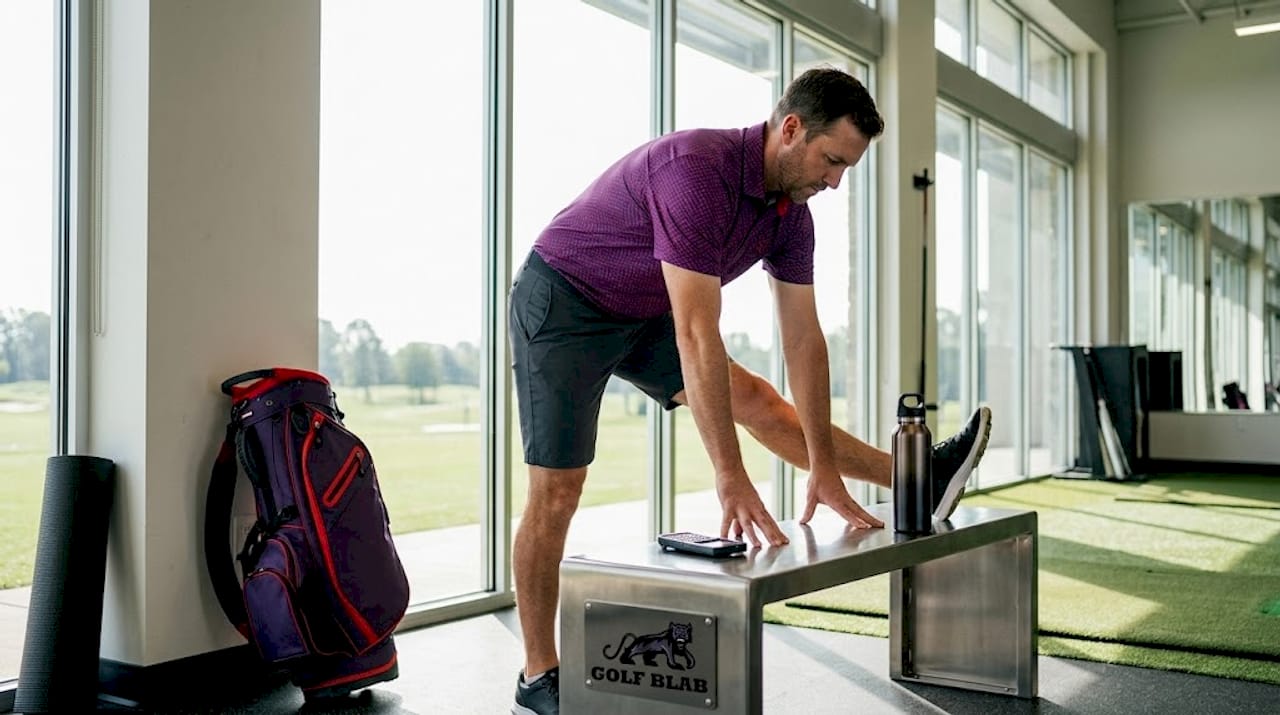
Golfer stretching in locker room before round


TL;DR:

  • Skipping golf-specific stretching can reduce swing power, consistency, and increase injury risk over time. Targeted flexibility routines for hips, thoracic spine, and shoulders improve mobility, enhance swing mechanics, and help prevent common golf injuries. Consistent stretching, combined with practice and strength training, is essential for long-term performance and injury prevention.

Most golfers spend hours working on their swing, analyzing their club selection, and obsessing over course management. Then they walk straight to the first tee without a single stretch. Sound familiar? Here’s the naked truth: skipping flexibility work is quietly costing you yards, consistency, and long-term health. Golf-specific stretching can help you get ready for a more fluid, full golf swing by improving range of motion. This guide cuts through the noise, backs the claims with real evidence, and gives you actionable routines that will change how you think about stretching forever.

Table of Contents

Key Takeaways

Point Details
Flexibility fuels your swing Targeted stretching delivers a smoother, fuller golf swing for players of all skill levels.
Stretching reduces injury risk Improved mobility, especially in the spine and shoulders, protects golfers from common injuries.
Key areas matter most Focus your routine on your hips, thoracic spine, and shoulders for maximum performance and safety.
Routine beats intensity Consistent stretching, even if brief, outperforms occasional deep sessions for long-term improvement.

The science: How flexibility impacts your swing

With stretching revealed as vital, let’s uncover what the science actually says about golf and flexibility.

Think about what a golf swing actually demands from your body. You’re rotating through multiple planes of motion at a blistering rate of speed, loading power through your hips, transferring energy up through your spine, and releasing through your shoulders and arms. All of this happens in under two seconds. If any link in that chain is tight or restricted, the whole movement suffers.

The body regions that matter most for golf flexibility include:

  • Hips: Tight hips limit your ability to rotate fully on the backswing and create a powerful downswing. Many golfers compensate with their lower back, which is a fast track to pain.
  • Thoracic spine: This is the mid-back section of your spine, and it’s the engine of your rotational power. Poor thoracic mobility is one of the most overlooked reasons golfers lose distance as they age.
  • Shoulders: Restricted shoulder mobility reduces your backswing arc and forces your arms and wrists to do the heavy lifting, which destroys consistency.

“Golf-specific stretching can help you get ready for a more fluid, full golf swing by improving range of motion.” — Mayo Clinic

The connection between flexibility and swing efficiency is not just theoretical. When your hips and thoracic spine rotate freely, your body can naturally sequence power from the ground up. Your golf swing fundamentals depend on that sequence working correctly. Flexibility is not a bonus feature. It’s a foundational pillar alongside strength and technique, and you cannot fully develop the other two without it.

Pro Tip: Think of flexibility as the container that holds your swing mechanics. You can perfect your grip and stance all you want, but a tight body will always leak power and invite compensation patterns that undo your technique work.

One more thing worth understanding: flexibility is not just about how far you can stretch. It’s about how well you can move through the ranges of motion you actually use during a golf swing. That’s a crucial distinction. You don’t need to be a yoga instructor. You need mobile, functional movement in the right places.

Prevention first: Flexibility and injury risk in golfers

While flexibility powers your swing, it also plays a crucial defensive role in keeping golfers healthy and resilient.

Here’s something that might surprise you. Golf injuries are more common than most casual players realize. The spine, shoulders, and lower back absorb enormous stress across an 18-hole round, especially if your flexibility is poor and your body has to compensate on every single swing. A 2025 study confirmed that flexibility relates to spinal injury risk patterns in professional golfers. If it’s an issue at the professional level, you can bet it affects everyday players too.

Injury type Common cause Flexibility connection
Lower back strain Excessive lumbar compensation Poor hip and thoracic mobility
Shoulder impingement Restricted shoulder rotation Limited shoulder and upper-back flexibility
Golfer’s elbow Arm overuse from poor body turn Tight hips and torso limiting power transfer
Knee stress Rotation absorbed into knee joint Insufficient hip mobility
Wrist strain Overactive wrist action Limited shoulder and thoracic range

The most vulnerable areas for golfers who skip flexibility work are the spine, shoulders, and lower back. And the frustrating part? Most of these injuries are preventable. They’re the result of the body rerouting movement through joints that were never designed to take that load.

Common golf injuries directly tied to poor flexibility:

  • Lumbar disc stress from compensating with the lower back when hips won’t rotate
  • Rotator cuff irritation caused by reduced shoulder arc
  • Thoracic facet compression from forcing rotation through a stiff mid-back
  • SI joint dysfunction resulting from asymmetrical hip mobility

The good news is that improving your flexibility doesn’t require a complete lifestyle overhaul. Even modest, consistent gains in hip and thoracic mobility reduce the mechanical stress your body absorbs on every shot. Consider pairing your stretching routine with quality adult golf lessons to ensure better mechanics reinforce your improved mobility. And don’t underestimate the role that golf posture plays in both injury prevention and swing quality.

The bottom line: Injury prevention isn’t just a concern for Tour players grinding out 150 rounds a year. If you play 30 rounds a season and skip your pre-round stretching, that’s 30 rounds of your body taking unnecessary stress. It adds up faster than you think.

Where stretching matters most: Key areas every golfer should target

Understanding that flexibility matters, let’s get specific about which parts of your body deserve the most attention for real golf benefits.

Hierarchy pyramid of golf flexibility focus areas

Not all stretching delivers equal returns for golfers. Generic full-body flexibility routines are better than nothing, but stretching is most valuable when it restores the specific motion you need for the swing, which centers on the hips, thoracic rotation, and shoulders. Here’s how each area affects your game and what goes wrong when they’re tight.

Body area What tightness causes Primary swing benefit when mobile
Hips Reduced backswing, lower back strain Full rotation, power generation
Thoracic spine Loss of shoulder turn, spine angle issues Torque production, consistent plane
Shoulders Narrow swing arc, arm-dominated swing Wide arc, natural release
Hip flexors Early extension, loss of posture Maintained spine angle throughout swing
Lats and side body Restricted backswing depth Full turn without tension

Hips: This is where most amateur golfers lose the most power without realizing it. When your hips are tight, you physically cannot complete a full backswing rotation. Your body wants to protect itself, so instead of letting the hips resist while the torso turns, it collapses the whole structure. The result is a short, weak backswing and a swing that has nowhere to go but steep and over-the-top.

Thoracic spine: The thoracic spine is your rotational powerhouse, sitting between your neck and lower back. When it moves freely, you can wind up with a full shoulder turn even with moderate hip turn. When it’s stiff, and for many desk workers and older golfers it absolutely is, your swing turn becomes shallow and your swing plane suffers. You can work on your golf swing posture endlessly, but a locked thoracic spine will undermine all of it.

Golfer doing thoracic spine stretch at home

Shoulders: Tight shoulders don’t just reduce your backswing arc. They create a chain reaction that affects your wrists, elbows, and even your neck. A golfer with restricted shoulder mobility often compensates by overusing the hands, which destroys clubface control and timing. Shoulder flexibility stretches are some of the fastest wins you can get for your golf game.

Key flexibility work by priority for golfers:

  • Hip flexor and piriformis stretches (unlock rotation and protect the lower back)
  • Thoracic rotation drills (restore mid-back mobility critical for swing power)
  • Shoulder cross-body and sleeper stretches (protect the rotator cuff and widen your arc)
  • Lat and side-body stretches (allow a full, tension-free backswing)
  • Ankle mobility work (often ignored, but it affects your hip rotation from the ground up)

Smart stretching: Building routines that stick

It’s clear where and why to stretch. Now let’s make it actionable with simple routines everyone can follow.

The most common mistake golfers make with stretching is treating it like a one-time fix. You stretch before a round, feel better that day, and then skip it for two weeks. That’s not how flexibility gains work. Consistency wins every time. Here’s a framework that actually sticks:

  1. Warm up first, then stretch. Cold muscles don’t respond well to stretching. Do 5 minutes of light movement, like walking briskly or doing gentle torso rotations, before you stretch. This primes your muscles and connective tissue to respond.
  2. Use dynamic stretches before you play. Dynamic stretches, which involve controlled movement through a range of motion, are ideal before hitting balls. Think leg swings, hip circles, and arm crosses. These warm the body up while improving mobility.
  3. Save static stretches for after your round. Static stretches, where you hold a position for 20 to 30 seconds, are better suited to post-round recovery. They lengthen muscles that have been working and help reduce next-day soreness.
  4. Build a dedicated flexibility session 3 times per week. On days you’re not playing, spend 15 to 20 minutes on targeted golf stretches. Prioritize hips, thoracic spine, and shoulders based on what you learned above.
  5. Track your progress with simple benchmarks. Can you complete a full shoulder turn in a mirror check? Can you sit in a deep squat comfortably? Simple self-tests tell you if your flexibility is improving and where you still need work.
  6. Integrate stretching with your overall practice plan. Flexibility work pairs naturally with skill drills and fitness routines. Combine it with controlled practice for best results, because long-term improvement depends on controlled practice and strength, not stretching alone.

Pair your stretching habit with solid golf practice routines to see the fastest real-world gains. Flexibility without skill refinement leaves you with a mobile body that still doesn’t know how to swing well. Both go hand in hand.

Pro Tip: Keep a simple log of how you feel before and after rounds. Note your energy, back comfort, and swing feel. After 4 weeks of consistent stretching, most golfers are surprised by how clear the improvement trend becomes in their own records.

Why conventional golf stretching advice often falls short

After building a smart routine, it’s worth re-evaluating the standard advice golfers hear on stretching.

Here’s something we see constantly at Golf Blab, and frankly it drives us a little crazy. Most stretching advice handed to golfers is recycled from general fitness content. Sit-and-reach for the hamstrings. Generic shoulder rolls. A quad stretch that barely touches what your golf swing actually demands. These routines are not wrong exactly, but they’re solving the wrong problem for the wrong person.

The real issue is that most generic stretching advice completely ignores thoracic mobility and shoulder health, which happen to be the two most critical areas for swing longevity and injury prevention. You can have the loosest hamstrings in your foursome and still have a locked thoracic spine that kills your shoulder turn. Sound frustrating? It is. But it’s fixable once you know where to focus.

There’s also a tendency in the traditional instruction world to treat stretching as separate from everything else. You stretch, then you practice, then you lift weights. These are treated as three isolated activities. That approach misses the point. Real improvement happens when your mobility work directly feeds into your technique drills, and your strength work reinforces the ranges your stretching opens up. It’s a system, not a checklist.

We’d also push back on the idea that stretching is just a warm-up ritual. When done consistently and intelligently, targeted flexibility work reshapes how your body moves under pressure on the course. A tighter body compensates. A mobile body expresses your swing freely. That’s the difference between a golfer who falls apart on the back nine and one who finishes strong. Explore golf pro tips that address the full picture of your game, not just one isolated element.

Next steps: Improve your flexibility and total golf game

Ready to go further? Here’s how you can take actionable next steps and make flexibility a cornerstone of your golf improvement.

At Golf Blab, we’re not here to give you generic advice and send you on your way. We’ve built a platform specifically for golfers who are serious about getting better, whether you’re picking up the game as an adult or you’re a seasoned player looking to add 20 yards back to your driver. Flexibility is just the beginning.

https://golf-blab.com

Pair your new stretching knowledge with structured adult golf lessons that reinforce your improved mobility with better swing mechanics. A more flexible body deserves a technically sound swing to go with it. And while you’re at it, check out golf club personalization options that make your gear feel as sharp as your game. When your body moves better and your equipment is dialed in, everything on the course starts to click.

Frequently asked questions

How often should I stretch for golf?

Aim to stretch before every round and incorporate focused flexibility work at least 3 times a week, since consistent stretching is what produces lasting range-of-motion gains rather than occasional sessions.

Which stretches are best for golfers with back pain?

Focus on gentle hip flexor, thoracic rotation, and shoulder stretches, because spinal injury risk patterns in golfers are directly linked to flexibility deficits in surrounding areas that compensate for the spine.

Can I skip stretching if I already lift weights?

Strength training is valuable but it doesn’t replace targeted mobility work, because long-term golf improvement requires controlled practice and strength working alongside flexibility, not instead of it.

What are the signs that my flexibility is hindering my golf swing?

A short backswing, loss of power through impact, and recurring shoulder or back aches are clear warning signs, and reduced shoulder or upper-back mobility specifically puts golfers at higher risk for certain spinal injury outcomes.