
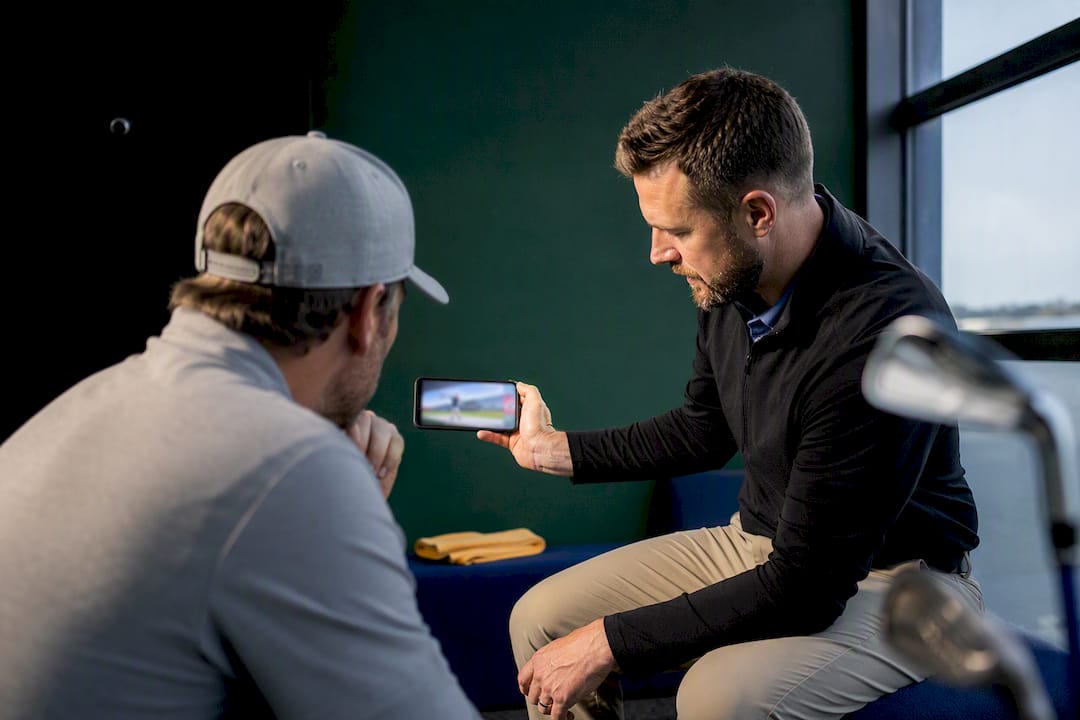
Before you shake hands with your instructor, decide on one priority for the session, bring real ball-flight evidence (not a guess about what caused it), and show up with your current clubs and an honest account of how much you actually practice. Leave with five documented takeaways. That single shift, treating the appointment as a diagnosis rather than a pep talk, is what separates golfers who improve from golfers who just enjoy the conversation.
TL;DR:
- Asking targeted questions before a lesson about data tools, practice expectations, and specific goals helps tailor the session to your skill level and needs.
- Reporting actual ball flight details provides far more useful feedback to your instructor than guessing swing mechanics or vague descriptions.
- Documenting five specific takeaways at each lesson, including priorities, cues, and practice volume, increases the chances of measurable improvement.
- A good club fitting focuses on solving specific issues like yardage gaps and shot shape, with direct comparisons and budget considerations guiding recommendations.
- Choosing an instructor who documents progress and aligns their teaching style with your learning preferences enhances long-term improvement.
Table of Contents
- Questions for Golf Pro Before You Book the Lesson
- What to Ask During the Lesson for Real Feedback
- Essential Questions for a Club Fitting
- How to Turn a Lesson Into a Five-Point Practice Plan
- How to Choose the Right Pro or Fitter for Your Goals
- Why Bringing Evidence Changes Everything
- How Golf Blab Supports Your Next Lesson or Fitting
- Sources
Questions for Golf Pro Before You Book the Lesson
The best lessons are won before you ever touch a club. A short exchange with the pro when you book, whether by phone, email, or a quick form, sets up a session built around your game instead of a generic hour on the range.
Ask these when you schedule:
- What is your teaching philosophy, and have you worked with players around my handicap or skill level?
- Will the session use video, a launch monitor, or both, and will I get a copy of that data afterward?
- What’s the ideal way to describe my single biggest goal so you can plan the hour around it?
- How much should I expect to practice between now and our next session, realistically?
- What should I bring, my own clubs, a preferred ball, a glove, and is there a warm-up you’d like me to do beforehand?
That last point matters more than golfers assume. Preparing with a short conversation before the lesson and being upfront about how often you actually get to the range lets a pro build a plan you can sustain, not one that assumes daily practice you won’t do. If you’re still narrowing down which questions matter most for your situation, Golf Blab’s guide to essential lesson questions breaks the list down further by skill level.
What to Ask During the Lesson for Real Feedback
Here’s where most golfers waste their money. They describe what they think is wrong, “I think I’m coming over the top,” instead of what actually happened to the ball. Instructors can only diagnose what you show them. Reporting the ball flight itself, start direction, curve, and where it finished, gives a coach far more to work with than a guess about swing mechanics ever could.
Once you’ve described the shot honestly, these questions turn observation into action:
- “What is the primary root cause of my most frequent miss?”
- “Of everything we could work on, what’s the one priority for today?”
- “Can you give me one drill I can do alone, and what should I feel or see when I’m doing it right?”
- “What’s the practice dose, how many reps, how often, before I revisit this?”
- “What should I ignore for now, and how will I know I’m improving between lessons?”
A first lesson is primarily a diagnostic visit, not a full rebuild. A pro who tries to fix everything in sixty minutes is doing you a disservice. Video comparison and a single swing thought that bridges range and course tend to produce far better carryover than a laundry list of corrections.
Pro Tip: Record your swing on your phone before the lesson starts. Handing your pro thirty seconds of video alongside your description of the miss turns a guessing game into a fast, accurate diagnosis.
Essential Questions for a Club Fitting
A fitting session isn’t a product demo, it’s a working meeting where you and a fitter solve a specific problem. Start by naming exactly what your current set fails to do: not enough carry distance, ugly gaps between clubs, or too little forgiveness on off-center strikes.
From there, work through these:
- Where are my current yardage gaps, and which clubs in a new set would close them?
- Should I be playing a hybrid, a fairway wood, or a long iron in that gap, and why?
- Can you show me a direct comparison, launch angle, spin, and dispersion, between my current clubs and what you’re proposing?
- What shaft flex and weight fit my swing speed, and how does grip size affect my shot pattern?
- Given how I interact with the turf, what bounce and grind should my wedges have?
Gapping, hybrid versus long-iron decisions, shaft selection, and wedge bounce are the backbone of any fitting worth paying for. A good fitter will also ask about your most haunting shot, the one that ruins a scorecard, because that miss pattern shapes every recommendation that follows. And don’t skip the money conversation: asking how proposed clubs fit your budget and performance goals keeps the fitting grounded in what you’ll actually buy, not just what performs best on a monitor.
How to Turn a Lesson Into a Five-Point Practice Plan
Knowing what’s wrong with your swing and actually fixing it are two different skills, and the gap between them is where most golfers get stuck. A documented five-takeaway system closes that gap by forcing every lesson to end with something you can execute alone.
Write down these five things before you leave, using tools like an Indoor Golf Tee Set | Kids Ball Return Trainer & Clubs – Best Kids Toys for at-home practice to support your progress:
- The priority: the single change you’re working on, nothing else.
- The feel or cue: the physical sensation or thought that produces the change.
- The feedback method: how you’ll know, in real time, if a rep was correct (a launch monitor number, a video frame, a ball flight cue).
- The practice dose: a specific volume, for example three sets of eight reps with a short rest between sets.
- The transfer test: a way to prove it on the course, such as five real shots to a target using your normal pre-shot routine.
Statistic Callout: A practice dose paired with a transfer test, consisting of a volume of practice followed by on-course targets, gives coaches a practical threshold for judging whether a new move is actually embedding into your game rather than staying a range-only skill.
Track progress with whatever data your pro used in the session. Video feedback and launch monitor numbers (start direction, spin rate, carry distance) turn “I feel better” into something measurable. If you’re only practicing sparingly, book a follow-up within a month; golfers who practice consistently often stretch that to a monthly rhythm without losing momentum.
How to Choose the Right Pro or Fitter for Your Goals
Not every instructor fits every golfer, and that mismatch costs more in wasted lessons than any single swing flaw ever will. Look for a pro who documents sessions with video or launch monitor data, commits to a specific follow-up plan, and teaches in a style that matches how you actually learn, whether that’s visual, verbal, or feel-based.
On first contact, ask these three questions:
- “How would you describe your teaching approach for someone at my level?”
- “How will you measure and share my progress after the session?”
- “What follow-up schedule do you recommend based on how often I can practice?”
Vague answers are a warning sign. A pro who won’t commit to documenting takeaways, or who dodges questions about measurement, probably isn’t set up to track your improvement over time. Cost matters, but it should never outweigh whether a pro can show you concrete, measurable progress between sessions.
Why Bringing Evidence Changes Everything
The golfers who improve fastest aren’t the most talented, they’re the ones who show up with proof instead of theories. A pro can work miracles with an accurate description of a ball flight and a clear priority. They can’t do much with “my slice is back” and no further detail.
Golf Blab’s practice routine resources exist because the five-takeaway system only works if you actually revisit it, and our partnerships with pros reinforce that lessons should produce homework, not just a good feeling for an hour. Label your clubs, track your sessions, and treat every lesson like a diagnosis you’re responsible for following through on.
— Michael Marini
How Golf Blab Supports Your Next Lesson or Fitting
Golf Blab gives you the tools to walk into any lesson or fitting looking, and playing, like you mean business, without the cost or commitment of a full-time coaching contract. Our Custom Golf Club Labels let you tag exactly which club produced which shot during a fitting, so your notes match your bag instead of relying on memory. Pair that with the Under Armour golf hat or the Adidas Sport Polo and Space Dyed Polo for a presentable look at your next appointment, and put Innovate Tour Performance Golf Balls in play so your ball-flight evidence stays consistent from lesson to lesson.
If you want more than a one-hour diagnosis, Play Golf with a Tour Pro puts you on-course with real coaching feedback in a live setting, and our online lessons with a money-back guarantee give you a structured follow-up between in-person sessions. Not sure what to get a golfer who’s working on their game? A Golf Blab E-Gift Card lets them choose. Ready to prep for your next session? Shop custom labels now and walk in with your bag as organized as your question list.
Sources
- What I Wish More Golfers Knew Before Taking A Lesson | MyGolfSpy
- Golf
- GolfWRX forum: Launch monitors (thread)
- Golf Monthly: The secret to a good club fitting — five questions