
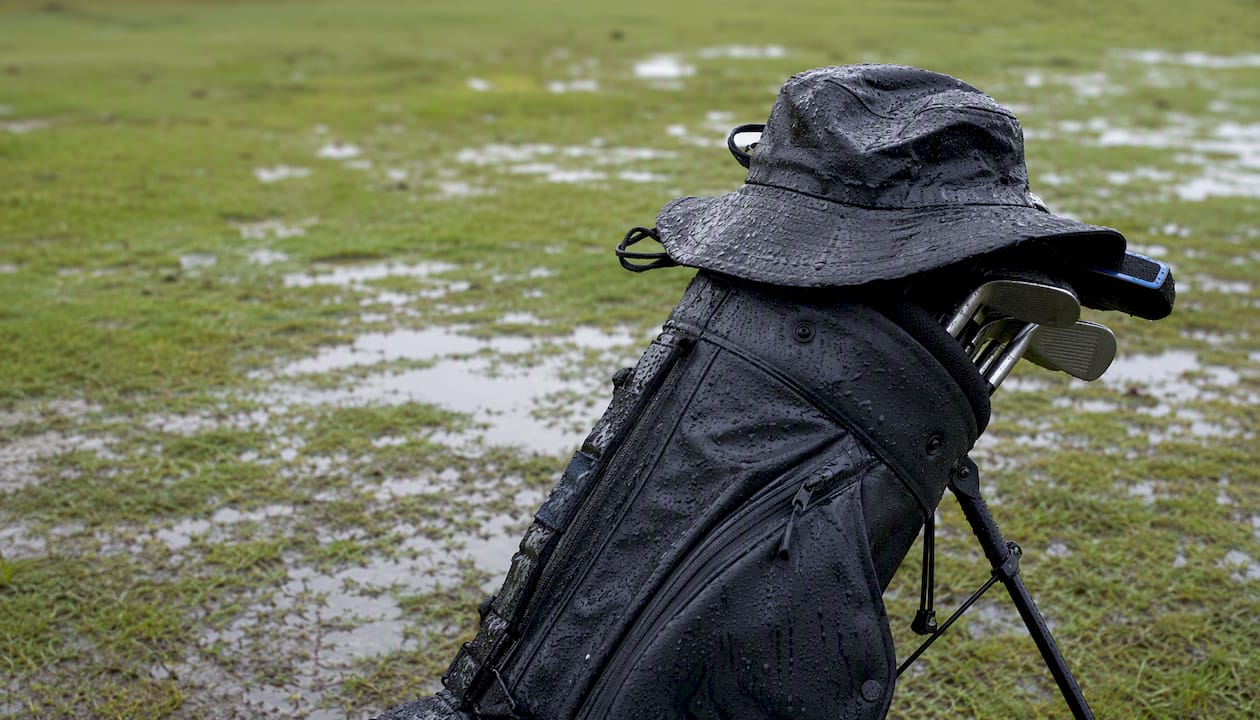
Playing well in the rain comes down to three priorities, in order: keep your grips and hands dry, treat every yardage as a carry number, and manage your footing and tempo before anything else. Master those three, and the rest of your rain golf strategy is just refinement.
Do this right now: towel off and check your umbrella clip, take one extra club than you think you need, and widen your stance while shortening your swing by about a quarter.
- Dry towel under the umbrella canopy, cleaning towel outside it
- Club up before you even see your lie
- Wider base, shorter backswing, smoother tempo
Pro Tip: Dry your grip immediately before you address the ball, not two shots earlier. Rain finds its way back onto leather and rubber faster than golfers expect.
Key Takeaways
A sound rain golf strategy rests on three pillars: dry grips through disciplined towel rotation, carry-first club selection, and a shortened, centered swing.
| Point | Details |
|---|---|
| Dry grip routine | Keep one towel dry under the umbrella exclusively for grips and gloves. |
| Club up early | Add one club in steady rain, two in heavy cold rain, and treat yardages as carry numbers. |
| Firmer putting stroke | Wet greens reduce break and roll, so hit putts more assertively than usual. |
| Know your relief options | Casual water grants free relief, and you can always clean your ball on the green. |
| Gear that supports the plan | The Golf Blab Under Armor Golf Hat and custom club labels keep vision clear and gear organized on soaked rounds. |
Table of Contents
- Preparing for Rain: The Gear That Actually Matters
- What Shoes Give You the Best Traction in Wet Turf?
- How Do You Keep Your Grip From Slipping in the Rain?
- How Many Extra Clubs Should You Take in the Rain?
- How Should You Adjust Your Short Game in Wet Conditions?
- What Swing Changes Help You Stay Balanced on Soggy Ground?
- How Do You Manage Course Strategy and Claim Relief in the Rain?
- Why Do Wet Greens Slow Down and Change Your Reads?
- What Should You Pack Before a Rainy Round?
- What I’ve Learned From Playing Dozens of Rainy Rounds
- Gear That Makes Rainy Rounds Easier to Play
- Frequently Asked Questions
- Sources
Preparing for Rain: The Gear That Actually Matters
A quality rain jacket built with a waterproof, breathable membrane (the kind of technology behind Gore-Tex) is worth more than any swing tip in a downpour. Look for taped seams and stretch panels at the shoulders so your swing plane doesn’t feel restricted. Rain pants matter just as much as the jacket, and the biggest mistake amateurs make is waiting for the first drops to put them on. Long-time coaches, including Tom Watson, advise dressing in full rain gear before you even warm up, so your body stays warm and your feel for the club stays consistent from the first swing.
Carry a large golf umbrella and clip a dry towel to its underside. Cover your bag with a rain hood or seal your phone, scorecard, and spare glove in a plastic bag before you leave the cart.
- Waterproof jacket and pants, sized to layer without restricting your turn
- Golf umbrella large enough to cover both you and your bag opening
- Bag rain hood or sealed plastic for valuables and spares
- A high-visibility, durable-cover ball, useful once the ground turns gray and standing water pools in the rough
Headwear matters more than golfers admit. A brimmed piece like the Golf Blab Under Armor Golf Hat keeps water off your glasses and your line of sight clear on longer approaches. And once your clubs go through a wet round and an inevitable toweling-off at the car, custom club labels keep your set identifiable, since rain-soaked bags in a crowded cart barn tend to look identical.
Pro Tip: Pack your rain gear at the bottom of the bag on dry days too, so it becomes a habit, not a last-minute scramble when the forecast turns.
What Shoes Give You the Best Traction in Wet Turf?
Waterproof shoes with an aggressive outsole pattern matter more than style points once fairways turn spongy. Soft spikes generally out-grip spikeless soles on saturated turf, though spikeless models still work fine on firmer, well-drained courses.
- Press your toe and heel into the turf before you set up on any sloped or slick lie
- Widen your stance a couple of inches whenever the ground feels unstable
- Wear shoes you have already broken in. Novelty blisters from stiff new rain shoes will wreck your focus faster than the weather does
Pro Tip: Test your grip on the practice green before your tee time. If your back foot slides during a warm-up putt, it will slide on the course too.
How Do You Keep Your Grip From Slipping in the Rain?
Wet grips cause more mishits in the rain than bad swings do. A soaked grip forces you to squeeze harder, which tightens your forearms and kills clubhead feel exactly when you need it most.
Rain gloves, which get tackier as they absorb moisture rather than slicker, are worth the investment over a standard glove. Keep at least one spare sealed in a plastic bag in your bag’s dry compartment. Coaches recommend a simple towel choreography: one towel lives under the umbrella canopy strictly for grips and gloves, and a second, wetter towel handles club and ball cleaning.
- Dry towel for grips and hands only, kept under the umbrella
- Second towel for cleaning clubheads and golf balls
- Spare glove sealed and swapped once the current one saturates
Pro Tip: Clip a small microfiber towel inside your bag’s rain hood. It stays bone dry all round, even when everything else gets soaked.
How Many Extra Clubs Should You Take in the Rain?
Take one extra club in steady rain and two in heavy, cold rain, because wet conditions consistently shorten carry distance and every number on your rangefinder needs to be read as a pure carry yardage, not a total distance. Rainwater on the clubface and ball reduces friction at impact, which strips spin and flattens your trajectory whether you want it flattened or not.

That loss of spin cuts both ways. On approach shots, a lower, more penetrating flight actually helps you fight through wind and rain rather than ballooning a high shot that gets knocked down anyway. But from wet, thick rough, watch for the flyer effect: grass between the clubface and ball can reduce backspin enough that the shot jumps and rolls farther than expected, so favor the front of the green rather than firing at a back pin.
A few scenarios worth rehearsing mentally before you’re standing over the ball:
- Downwind tee shots: expect less roll after landing, so aim your carry number at the fairway’s true landing zone
- Approaches to firm-looking greens: they will play softer than they look, so a shot that lands pin-high often stays there
- Shots from soaked rough: assume extra distance and take one less club than the flyer math suggests
Swing with a controlled three-quarter backswing and smooth acceleration rather than trying to power through the conditions. Golf points out that shortening the swing and staying balanced beats overswinging every time turf gets slick.
Pro Tip: Use your first approach shot or a range ball before the round to calibrate real carry distance. That single data point recalibrates every club decision for the next seventeen holes.
How Should You Adjust Your Short Game in Wet Conditions?
Clubs with more bounce resist digging into saturated turf, so a 56 or 58 degree wedge with generous bounce will save you more strokes than a low bounce grinder on soft ground. Use a shallower attack angle around the greens; steep, digging strikes plug into wet turf and produce inconsistent contact.

Bunkers behave differently too. The top layer of sand plugs while the layer beneath compacts, so square the clubface, take slightly less sand than usual, and commit fully through rotation rather than deceleration.
Putting requires the biggest mental shift. PGA coaching consistently recommends a firmer, more assertive stroke on wet greens, because damp turf resists roll and mutes break more than golfers expect. A putt that would break two feet on a dry, fast green might only move six inches on a soaked one.
- Run a quick three-putt distance test on the practice green to feel actual speed before your round starts
- Chip a few balls onto wet fringe grass to feel the difference between a shot that checks and one that plugs
- From the fringe, a putter often beats a chipper because it removes the guesswork of a soft, inconsistent turf transition
Pro Tip: When in doubt on a borderline fringe shot, putt it. You eliminate an entire category of mishit that only shows up on soaked collars.
What Swing Changes Help You Stay Balanced on Soggy Ground?
Shorten your swing length and widen your stance slightly, keeping weight centered over the middle of your feet rather than on your toes. On genuinely soft lies, choke up half an inch for a tighter, more controlled feel as the turf gives slightly under your back foot.
- Take two practice swings beside the ball, not over it, to sense how much the turf gives and where your low point actually sits
- Deliver the club on a shallower path than usual to avoid a deep divot that costs you distance and control
- Commit to the shortened swing fully. A half-hearted three-quarter swing with full-power intent causes more mishits than a properly compact one
- Widen your stance two to three inches on any lie that feels unstable
- Keep your weight centered, never shifted toward your toes on a slick slope
How Do You Manage Course Strategy and Claim Relief in the Rain?
Play toward the center of the green more often, and let go of aggressive pin hunting once the ground stops offering any runout. Water runs downhill, so hollows and low-side collection areas flood first. Aim your misses toward the high side of any green or fairway rather than the low side where casual water tends to pool.
Under the Rules of Golf, you get free relief from casual water anywhere outside a penalty area, and you’re entitled to clean your ball on the putting green whenever mud or water clings to it. Roughly a third of a soggy round’s bad breaks come from balls sitting in standing water that golfers play as-is simply because they don’t know the relief rule exists.
- Take free relief from standing water outside penalty areas rather than playing a submerged lie
- Clean your ball every time it reaches the green, without exception
- Mark and repair your pitch marks immediately; wet greens bruise and scar far more easily than firm, dry ones
Pro Tip: When you’re unsure whether standing water qualifies as casual water or a penalty area, ask your group before you drop. A thirty-second conversation beats a two-stroke penalty every time.
Why Do Wet Greens Slow Down and Change Your Reads?
Launch monitor testing on wet wedge shots has recorded roughly 3,000 rpm less spin and about seven yards shorter carry compared to dry conditions, with launch angle climbing several degrees higher. That drop in spin doesn’t just affect approach shots. It’s part of the same physics that slows greens: water on the putting surface adds resistance to the ball’s roll, and softer, saturated soil beneath the surface absorbs energy that a firm green would return.
Because the ball decelerates faster, break reads shrink. A putt that breaks hard on a firm, dry green tracks straighter on a soaked one, since gravity has less time to pull it sideways before it stops rolling.
- Roll a few putts on the first green specifically to gauge speed before you commit to a read
- Trust a firmer stroke over a longer backswing. Distance control in the rain comes from pace, not length
- Assume less break than your eyes tell you, especially on anything inside fifteen feet
Pro Tip: If your practice putt on the first green comes up short, add that exact deficit to every read for the rest of the front nine.
What Should You Pack Before a Rainy Round?
Print this or save it to your phone before you leave the house:
- Full rain suit (jacket and pants), waterproof shoes, and a large golf umbrella
- Two towels, one kept strictly dry, and two gloves rotated as they saturate
- Sealed bag for spare gear, a ball marker, a ziplock for your scorecard, hand warmers, and a bag rain hood
Check the forecast for timing gaps and note which holes tend to flood on your home course. Calibrate your real carry distance on the range or your first long approach, and adjust from there.
Want a quick, real-world read on how these adjustments feel in practice? A first-person perspective follows below.
What I’ve Learned From Playing Dozens of Rainy Rounds
The single habit that gains the most strokes isn’t equipment. It’s the dry-grip choreography: dressing in full rain gear before the first tee, rotating a spare glove the moment the current one saturates, and treating the towel-under-umbrella routine as non-negotiable rather than optional.
Groups that keep moving stay warmer, sharper, and noticeably more patient than groups that huddle under trees waiting out every passing shower. Staying loose and keeping a brisk pace does more for a rainy scorecard than any single swing thought.
Gear That Makes Rainy Rounds Easier to Play
Rain golf strategy starts with mindset and shot discipline, but the right gear removes friction you don’t need to manage mid round. A brimmed piece like the Golf Blab Under Armor Golf Hat keeps rain out of your eyes on longer approach shots, and personalized club labels mean a soaked, muddy bag never leaves you second-guessing which iron you just pulled.
If the swing adjustments in this guide feel like something you’d rather build under real supervision, Play Golf with a Tour Pro pairs hands-on coaching with actual on-course conditions, rain included, so the shortened swing and wider stance become second nature before you need them in a tournament round. None of this replaces course sense or knowing the Rules of Golf cold. Gear and coaching sharpen your execution; judgment on a soaked course still comes from you. Check available dates and book a session while the forecast is still working in your favor.
Frequently Asked Questions
What is the single most important rain golf strategy for beginners?
Keep your grip dry. Every other adjustment, from club selection to swing length, matters less if your hands can’t control the club through impact.
How much extra club should I take in the rain?
Add one club in steady rain and two in heavy, cold rain, since wet conditions shorten carry distance and reduce spin more than most golfers expect.
Do I really get free relief from puddles on the course?
Yes. The Rules of Golf grant free relief from casual water outside penalty areas, and you can clean your ball on the green at any time.
Should I putt harder in the rain?
Yes. Wet, slower greens absorb pace and reduce break, so a firmer, more committed stroke keeps putts from coming up short.
Sources
- Rules of Golf — USGA
- How to Play Golf in the Rain: Eight Keys for Success — PGA
- Golf
- Tom Watson’s best golf tips for playing in the rain, wind and cold — Golf Digest
- Playing golf in the rain: strategy, technique & safety — GongGolf