
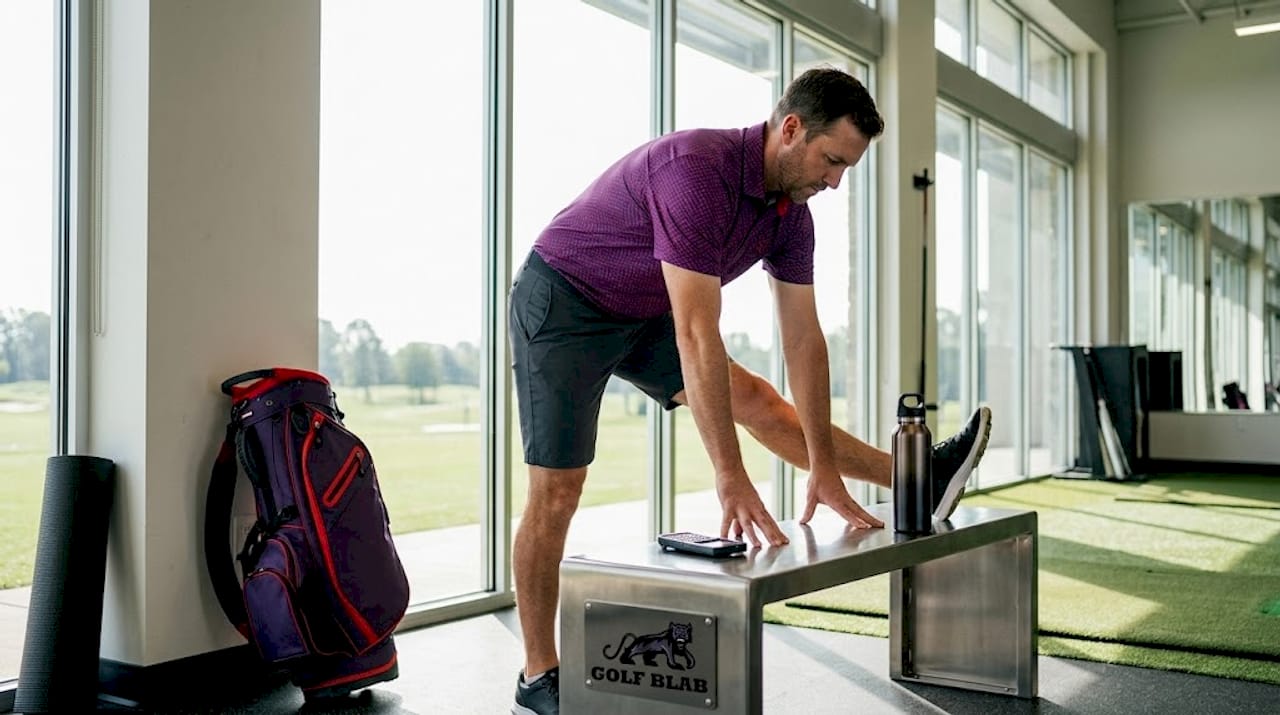
TL;DR:
- Skipping golf-specific stretching can reduce swing power, consistency, and increase injury risk over time. Targeted flexibility routines for hips, thoracic spine, and shoulders improve mobility, enhance swing mechanics, and help prevent common golf injuries. Consistent stretching, combined with practice and strength training, is essential for long-term performance and injury prevention.
Most golfers spend hours working on their swing, analyzing their club selection, and obsessing over course management. Then they walk straight to the first tee without a single stretch. Sound familiar? Here’s the naked truth: skipping flexibility work is quietly costing you yards, consistency, and long-term health. Golf-specific stretching can help you get ready for a more fluid, full golf swing by improving range of motion. This guide cuts through the noise, backs the claims with real evidence, and gives you actionable routines that will change how you think about stretching forever.
Table of Contents
- The science: How flexibility impacts your swing
- Prevention first: Flexibility and injury risk in golfers
- Where stretching matters most: Key areas every golfer should target
- Smart stretching: Building routines that stick
- Why conventional golf stretching advice often falls short
- Next steps: Improve your flexibility and total golf game
- Frequently asked questions
Key Takeaways
| Point | Details |
|---|---|
| Flexibility fuels your swing | Targeted stretching delivers a smoother, fuller golf swing for players of all skill levels. |
| Stretching reduces injury risk | Improved mobility, especially in the spine and shoulders, protects golfers from common injuries. |
| Key areas matter most | Focus your routine on your hips, thoracic spine, and shoulders for maximum performance and safety. |
| Routine beats intensity | Consistent stretching, even if brief, outperforms occasional deep sessions for long-term improvement. |
The science: How flexibility impacts your swing
With stretching revealed as vital, let’s uncover what the science actually says about golf and flexibility.
Think about what a golf swing actually demands from your body. You’re rotating through multiple planes of motion at a blistering rate of speed, loading power through your hips, transferring energy up through your spine, and releasing through your shoulders and arms. All of this happens in under two seconds. If any link in that chain is tight or restricted, the whole movement suffers.
The body regions that matter most for golf flexibility include:
- Hips: Tight hips limit your ability to rotate fully on the backswing and create a powerful downswing. Many golfers compensate with their lower back, which is a fast track to pain.
- Thoracic spine: This is the mid-back section of your spine, and it’s the engine of your rotational power. Poor thoracic mobility is one of the most overlooked reasons golfers lose distance as they age.
- Shoulders: Restricted shoulder mobility reduces your backswing arc and forces your arms and wrists to do the heavy lifting, which destroys consistency.
“Golf-specific stretching can help you get ready for a more fluid, full golf swing by improving range of motion.” — Mayo Clinic
The connection between flexibility and swing efficiency is not just theoretical. When your hips and thoracic spine rotate freely, your body can naturally sequence power from the ground up. Your golf swing fundamentals depend on that sequence working correctly. Flexibility is not a bonus feature. It’s a foundational pillar alongside strength and technique, and you cannot fully develop the other two without it.
Pro Tip: Think of flexibility as the container that holds your swing mechanics. You can perfect your grip and stance all you want, but a tight body will always leak power and invite compensation patterns that undo your technique work.
One more thing worth understanding: flexibility is not just about how far you can stretch. It’s about how well you can move through the ranges of motion you actually use during a golf swing. That’s a crucial distinction. You don’t need to be a yoga instructor. You need mobile, functional movement in the right places.
Prevention first: Flexibility and injury risk in golfers
While flexibility powers your swing, it also plays a crucial defensive role in keeping golfers healthy and resilient.
Here’s something that might surprise you. Golf injuries are more common than most casual players realize. The spine, shoulders, and lower back absorb enormous stress across an 18-hole round, especially if your flexibility is poor and your body has to compensate on every single swing. A 2025 study confirmed that flexibility relates to spinal injury risk patterns in professional golfers. If it’s an issue at the professional level, you can bet it affects everyday players too.
| Injury type | Common cause | Flexibility connection |
|---|---|---|
| Lower back strain | Excessive lumbar compensation | Poor hip and thoracic mobility |
| Shoulder impingement | Restricted shoulder rotation | Limited shoulder and upper-back flexibility |
| Golfer’s elbow | Arm overuse from poor body turn | Tight hips and torso limiting power transfer |
| Knee stress | Rotation absorbed into knee joint | Insufficient hip mobility |
| Wrist strain | Overactive wrist action | Limited shoulder and thoracic range |
The most vulnerable areas for golfers who skip flexibility work are the spine, shoulders, and lower back. And the frustrating part? Most of these injuries are preventable. They’re the result of the body rerouting movement through joints that were never designed to take that load.
Common golf injuries directly tied to poor flexibility:
- Lumbar disc stress from compensating with the lower back when hips won’t rotate
- Rotator cuff irritation caused by reduced shoulder arc
- Thoracic facet compression from forcing rotation through a stiff mid-back
- SI joint dysfunction resulting from asymmetrical hip mobility
The good news is that improving your flexibility doesn’t require a complete lifestyle overhaul. Even modest, consistent gains in hip and thoracic mobility reduce the mechanical stress your body absorbs on every shot. Consider pairing your stretching routine with quality adult golf lessons to ensure better mechanics reinforce your improved mobility. And don’t underestimate the role that golf posture plays in both injury prevention and swing quality.
The bottom line: Injury prevention isn’t just a concern for Tour players grinding out 150 rounds a year. If you play 30 rounds a season and skip your pre-round stretching, that’s 30 rounds of your body taking unnecessary stress. It adds up faster than you think.
Where stretching matters most: Key areas every golfer should target
Understanding that flexibility matters, let’s get specific about which parts of your body deserve the most attention for real golf benefits.

Not all stretching delivers equal returns for golfers. Generic full-body flexibility routines are better than nothing, but stretching is most valuable when it restores the specific motion you need for the swing, which centers on the hips, thoracic rotation, and shoulders. Here’s how each area affects your game and what goes wrong when they’re tight.
| Body area | What tightness causes | Primary swing benefit when mobile |
|---|---|---|
| Hips | Reduced backswing, lower back strain | Full rotation, power generation |
| Thoracic spine | Loss of shoulder turn, spine angle issues | Torque production, consistent plane |
| Shoulders | Narrow swing arc, arm-dominated swing | Wide arc, natural release |
| Hip flexors | Early extension, loss of posture | Maintained spine angle throughout swing |
| Lats and side body | Restricted backswing depth | Full turn without tension |
Hips: This is where most amateur golfers lose the most power without realizing it. When your hips are tight, you physically cannot complete a full backswing rotation. Your body wants to protect itself, so instead of letting the hips resist while the torso turns, it collapses the whole structure. The result is a short, weak backswing and a swing that has nowhere to go but steep and over-the-top.
Thoracic spine: The thoracic spine is your rotational powerhouse, sitting between your neck and lower back. When it moves freely, you can wind up with a full shoulder turn even with moderate hip turn. When it’s stiff, and for many desk workers and older golfers it absolutely is, your swing turn becomes shallow and your swing plane suffers. You can work on your golf swing posture endlessly, but a locked thoracic spine will undermine all of it.

Shoulders: Tight shoulders don’t just reduce your backswing arc. They create a chain reaction that affects your wrists, elbows, and even your neck. A golfer with restricted shoulder mobility often compensates by overusing the hands, which destroys clubface control and timing. Shoulder flexibility stretches are some of the fastest wins you can get for your golf game.
Key flexibility work by priority for golfers:
- Hip flexor and piriformis stretches (unlock rotation and protect the lower back)
- Thoracic rotation drills (restore mid-back mobility critical for swing power)
- Shoulder cross-body and sleeper stretches (protect the rotator cuff and widen your arc)
- Lat and side-body stretches (allow a full, tension-free backswing)
- Ankle mobility work (often ignored, but it affects your hip rotation from the ground up)
Smart stretching: Building routines that stick
It’s clear where and why to stretch. Now let’s make it actionable with simple routines everyone can follow.
The most common mistake golfers make with stretching is treating it like a one-time fix. You stretch before a round, feel better that day, and then skip it for two weeks. That’s not how flexibility gains work. Consistency wins every time. Here’s a framework that actually sticks:
- Warm up first, then stretch. Cold muscles don’t respond well to stretching. Do 5 minutes of light movement, like walking briskly or doing gentle torso rotations, before you stretch. This primes your muscles and connective tissue to respond.
- Use dynamic stretches before you play. Dynamic stretches, which involve controlled movement through a range of motion, are ideal before hitting balls. Think leg swings, hip circles, and arm crosses. These warm the body up while improving mobility.
- Save static stretches for after your round. Static stretches, where you hold a position for 20 to 30 seconds, are better suited to post-round recovery. They lengthen muscles that have been working and help reduce next-day soreness.
- Build a dedicated flexibility session 3 times per week. On days you’re not playing, spend 15 to 20 minutes on targeted golf stretches. Prioritize hips, thoracic spine, and shoulders based on what you learned above.
- Track your progress with simple benchmarks. Can you complete a full shoulder turn in a mirror check? Can you sit in a deep squat comfortably? Simple self-tests tell you if your flexibility is improving and where you still need work.
- Integrate stretching with your overall practice plan. Flexibility work pairs naturally with skill drills and fitness routines. Combine it with controlled practice for best results, because long-term improvement depends on controlled practice and strength, not stretching alone.
Pair your stretching habit with solid golf practice routines to see the fastest real-world gains. Flexibility without skill refinement leaves you with a mobile body that still doesn’t know how to swing well. Both go hand in hand.
Pro Tip: Keep a simple log of how you feel before and after rounds. Note your energy, back comfort, and swing feel. After 4 weeks of consistent stretching, most golfers are surprised by how clear the improvement trend becomes in their own records.
Why conventional golf stretching advice often falls short
After building a smart routine, it’s worth re-evaluating the standard advice golfers hear on stretching.
Here’s something we see constantly at Golf Blab, and frankly it drives us a little crazy. Most stretching advice handed to golfers is recycled from general fitness content. Sit-and-reach for the hamstrings. Generic shoulder rolls. A quad stretch that barely touches what your golf swing actually demands. These routines are not wrong exactly, but they’re solving the wrong problem for the wrong person.
The real issue is that most generic stretching advice completely ignores thoracic mobility and shoulder health, which happen to be the two most critical areas for swing longevity and injury prevention. You can have the loosest hamstrings in your foursome and still have a locked thoracic spine that kills your shoulder turn. Sound frustrating? It is. But it’s fixable once you know where to focus.
There’s also a tendency in the traditional instruction world to treat stretching as separate from everything else. You stretch, then you practice, then you lift weights. These are treated as three isolated activities. That approach misses the point. Real improvement happens when your mobility work directly feeds into your technique drills, and your strength work reinforces the ranges your stretching opens up. It’s a system, not a checklist.
We’d also push back on the idea that stretching is just a warm-up ritual. When done consistently and intelligently, targeted flexibility work reshapes how your body moves under pressure on the course. A tighter body compensates. A mobile body expresses your swing freely. That’s the difference between a golfer who falls apart on the back nine and one who finishes strong. Explore golf pro tips that address the full picture of your game, not just one isolated element.
Next steps: Improve your flexibility and total golf game
Ready to go further? Here’s how you can take actionable next steps and make flexibility a cornerstone of your golf improvement.
At Golf Blab, we’re not here to give you generic advice and send you on your way. We’ve built a platform specifically for golfers who are serious about getting better, whether you’re picking up the game as an adult or you’re a seasoned player looking to add 20 yards back to your driver. Flexibility is just the beginning.

Pair your new stretching knowledge with structured adult golf lessons that reinforce your improved mobility with better swing mechanics. A more flexible body deserves a technically sound swing to go with it. And while you’re at it, check out golf club personalization options that make your gear feel as sharp as your game. When your body moves better and your equipment is dialed in, everything on the course starts to click.
Frequently asked questions
How often should I stretch for golf?
Aim to stretch before every round and incorporate focused flexibility work at least 3 times a week, since consistent stretching is what produces lasting range-of-motion gains rather than occasional sessions.
Which stretches are best for golfers with back pain?
Focus on gentle hip flexor, thoracic rotation, and shoulder stretches, because spinal injury risk patterns in golfers are directly linked to flexibility deficits in surrounding areas that compensate for the spine.
Can I skip stretching if I already lift weights?
Strength training is valuable but it doesn’t replace targeted mobility work, because long-term golf improvement requires controlled practice and strength working alongside flexibility, not instead of it.
What are the signs that my flexibility is hindering my golf swing?
A short backswing, loss of power through impact, and recurring shoulder or back aches are clear warning signs, and reduced shoulder or upper-back mobility specifically puts golfers at higher risk for certain spinal injury outcomes.