
TL;DR:
- Choosing the right golf lesson format depends on your child’s personality, goals, and learning style to foster confidence and skill. Private lessons offer personalized feedback, while group sessions promote social interaction and fun, and camps provide immersive skill-building experiences. Understanding your child’s needs and preferences ensures a positive, engaging golf journey that encourages ongoing love for the game.
There are more ways to teach a kid golf than most parents ever realize, and that variety is exactly what makes picking the right format so important. Walk into any golf facility and you might see private one-on-one coaching, lively group clinics, week-long summer camps, and even virtual sessions on a screen. Each one shapes your child’s experience, confidence, and love for the game in completely different ways. The format you choose matters just as much as the instructor’s credentials. Get it right, and your child will be begging to go back. Get it wrong, and golf feels like a chore before they’ve even hit their third bucket of balls.
Table of Contents
- How to choose the right golf lessons for kids
- Private golf lessons: Individualized attention and rapid improvement
- Group golf lessons: Social learning and shared fun
- Golf camps and clinics: Immersive skill-building for young players
- Specialty golf lessons: Adaptive, virtual, and parent-child sessions
- Comparing golf lesson types: Which is best for your child?
- A fresh perspective on finding the right lesson for your child
- Take the next step: Set your junior golfer up for success
- Frequently asked questions
Key Takeaways
| Point | Details |
|---|---|
| Understand lesson formats | Private, group, camp, and specialty formats each offer unique benefits for junior golfers. |
| Match the lesson to your child | Choosing a lesson type that fits your child’s personality and goals leads to better outcomes and more enjoyment. |
| Sample before you commit | Many programs offer trial lessons—use them to find the right teaching style without long-term commitment. |
| Skills and confidence grow together | The right lesson supports both improvement in golf skills and boosts self-esteem in young players. |
How to choose the right golf lessons for kids
Now that you understand why the lesson type matters, let’s look at what to consider before making a choice.
The most common mistake parents make is picking lessons based on price or convenience alone. Those things matter, sure. But if the format doesn’t match your child’s personality and goals, you’re going to hit a wall fast. Golf lessons help build confidence and key athletic skills in juniors, but only when the environment feels right to the child.
Here’s what to honestly evaluate before you sign your kid up for anything:
- Skill level and age: A 6-year-old needs a completely different structure than a 12-year-old who has been swinging clubs for two years. Younger kids need short, activity-driven sessions. Older beginners can handle more instruction.
- Learning style: Does your child absorb information by watching, by doing, or by talking it through? Some kids need hands-on repetition. Others respond to visual demonstration or storytelling.
- Primary goal: Is your child chasing competition? Looking for a fun summer activity? Wanting to play with family? The goal shapes which format delivers the most value.
- Group size tolerance: Some kids shrink in large groups and bloom one-on-one. Others find private lessons awkward and prefer the energy of peers around them.
- Instructor experience with juniors: Teaching adults and teaching kids are not the same skill. Ask specifically about the coach’s background with younger learners.
- Schedule fit: Weekly lessons require consistent commitment. Camps are intensive but short. Virtual sessions offer flexibility. Be honest about what your family can actually maintain.
Take a look at the parents’ guide to junior lessons for a detailed breakdown of how to structure your child’s early golf journey before committing to any program.
Pro Tip: Many facilities offer a single trial session before you buy a package. Take it. Watch how the instructor interacts with your child before spending a dollar more.
Private golf lessons: Individualized attention and rapid improvement
Once you have your child’s needs in mind, let’s explore the first major lesson format: private coaching.

A private lesson is exactly what it sounds like. One instructor, one child, one focused hour. The coach watches your child swing, identifies what needs work, and builds a plan around their specific patterns. There’s no waiting for other kids to take their turn. No distractions. Just deliberate, personalized feedback from the first minute to the last.
Private lessons allow instructors to tailor feedback and progression to an individual child’s needs. That’s the real power here. If your child has a grip issue, the coach fixes that. If their stance is off, every drill targets that problem. Nothing gets glossed over because there’s no group pace to keep up with.
The honest pros and cons:
- Pros: Full instructor attention, faster skill correction, flexible scheduling, customized pacing, direct relationship with a mentor figure
- Cons: Higher cost per session, limited social interaction, can feel pressure-heavy for some kids, relies heavily on instructor-child chemistry
Private lessons work best for kids who have a specific goal in mind, such as making the school team, improving a particular shot, or developing a competitive game. They also suit children who simply learn better in quieter, one-on-one settings. Think of it this way: if your child thrives in smaller academic settings rather than large classrooms, private golf lessons are probably a natural fit.
“The best junior instructors treat private sessions not as a lecture but as a conversation. They ask questions, they observe, and they adapt. A child who feels heard will practice harder.” This is something we hear consistently from experienced junior coaches, and it tracks with what we see on the course.
Understand the role of the golf coach before your first appointment. Knowing what a good coach actually does helps you evaluate whether the person you’re hiring is the real deal or just someone who can hit a pretty shot themselves.
Pro Tip: Ask the instructor to explain their teaching philosophy in plain language before the first session. If they can’t describe their approach simply, that’s a signal worth noting.
Group golf lessons: Social learning and shared fun
After exploring private lessons, let’s see how group sessions stack up for kids.
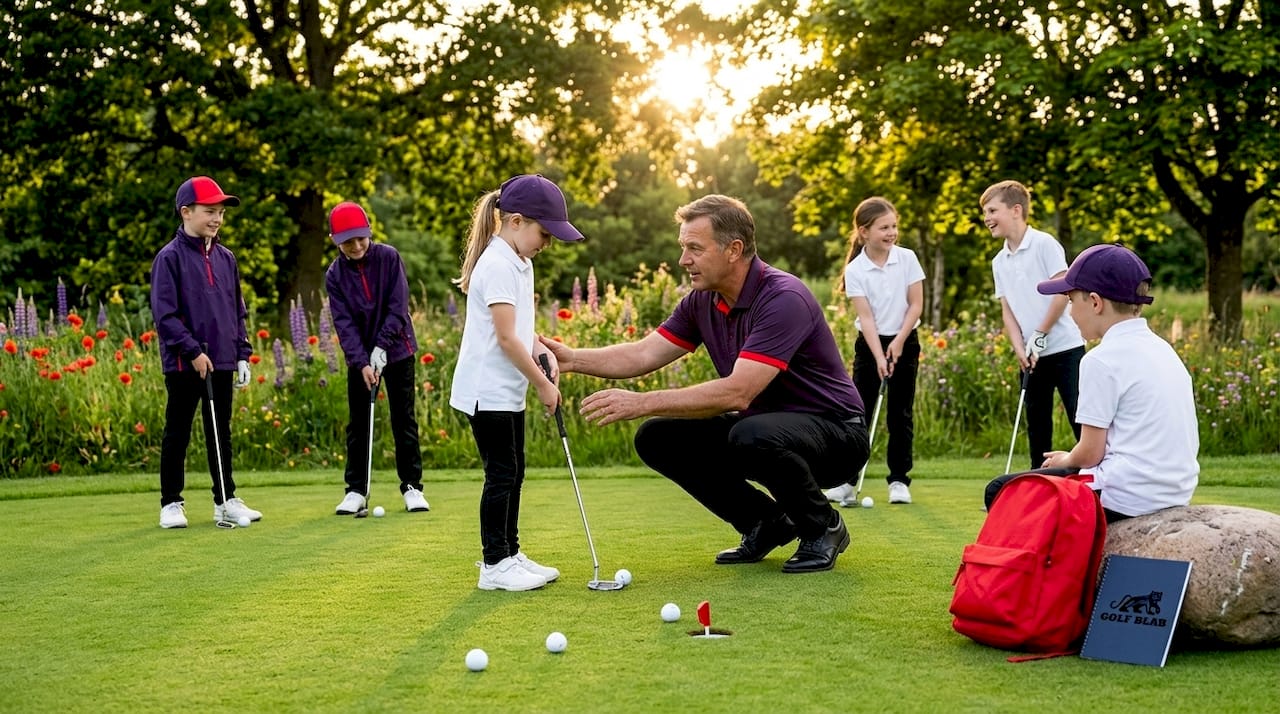
Group lessons put your child in a class with other juniors, typically ranging from 4 to 10 students. The instructor moves through the group, giving feedback to each player while the others practice what was just taught. It’s livelier, more social, and for many kids, just flat-out more fun.
Group formats can make golf more fun and affordable for kids while developing peer relationships. That social layer is not a small thing. When kids see their peers struggling with the same swing problem and then nailing it, it builds collective motivation. They cheer each other on. They laugh. They come back next week because their friends are there.
What to expect in a typical group lesson:
- The session usually starts with a warm-up and quick drill explanation
- Students rotate through stations or practice the same skill simultaneously
- The instructor circulates to offer brief, targeted feedback
- The session often ends with a small game or challenge to make it competitive and fun
Quick comparison at a glance:
| Feature | Private lessons | Group lessons |
|---|---|---|
| Cost per session | Higher | Lower |
| Personalized feedback | High | Moderate |
| Social interaction | Low | High |
| Pacing | Child’s own pace | Group average |
| Best for | Goal-focused learners | Beginners, social kids |
| Flexibility | High | Lower |
The lesson package options available through different programs often make group lessons a smart entry point for families who want to keep costs manageable while their child figures out whether golf is really their thing.
Pair group lessons with some fun practice routines for kids at home, and the improvement compounds quickly. Repetition outside of class is where the real growth happens.
Golf camps and clinics: Immersive skill-building for young players
Beyond standard lessons, many parents consider golf camps or clinics for an extra push or summer experience.
A golf camp typically runs for several consecutive days, often during school breaks or summer. Kids arrive in the morning, spend hours on the range, the short game area, and sometimes the course itself, then head home in the evening. Clinics are similar but shorter in duration, sometimes just a single intensive day or a weekend. Both formats pack a significant amount of instruction into a condensed window.
Golf camps and clinics allow kids to learn quickly in a supportive, active environment with peers. The immersive structure forces faster adaptation. Kids don’t have a week between sessions to forget what they learned. They apply it the very next morning.
What a typical golf camp includes:
- Full-swing instruction on the driving range
- Short game sessions covering chipping, pitching, and putting
- On-course play to apply skills in real situations
- Rules and etiquette education
- Fun competitions and challenges among participants
- Occasional guest appearances from local pros or coaches
Camp and clinic vs. weekly lesson comparison:
| Factor | Weekly lessons | Camp or clinic |
|---|---|---|
| Time commitment | Ongoing, low weekly hours | Intensive, short-term burst |
| Skill retention | Builds gradually | Rapid initial gain |
| Social experience | Moderate | High |
| Cost structure | Per-session or package | Upfront flat fee |
| Best timing | Year-round development | Summer or school break |
| Ideal candidate | Committed junior golfer | Curious kids, rapid learners |
The main drawback is that the pace isn’t right for every child. Some kids feel overwhelmed by back-to-back instruction without time to process. If your child is sensitive to overstimulation or needs more time to absorb new movements, a weekly lesson format may serve them better than a five-day camp.
Check the parents’ clinic and camp guide for specific questions to ask organizers before registering your child.
Specialty golf lessons: Adaptive, virtual, and parent-child sessions
For children with unique needs or tech-savvy parents, specialty lesson options are worth exploring.
This is where golf has genuinely evolved. The old model of “show up, hit balls, go home” doesn’t serve every child equally. Newer formats are breaking that mold in meaningful ways.
Types of specialty lessons worth knowing:
- Virtual lessons: A coach reviews video of your child’s swing and sends back feedback, or conducts a live session over video call. Works surprisingly well for families in rural areas or with scheduling limitations.
- Adaptive golf programs: Designed specifically for children with physical, cognitive, or developmental differences. These programs use modified equipment, adjusted rules, and patient instructors trained in inclusive teaching. Some programs now offer virtual and adaptive lessons, broadening access and making golf more inclusive for children who otherwise might never get on a course.
- Parent-child sessions: A coach teaches both parent and child simultaneously. The bonding value alone makes these worth considering. When your child sees you struggling with the same shot they just nailed, it humanizes the game and strengthens your relationship around it.
- On-course play lessons: Instead of range time, these sessions put the child directly on the course with a coach. Real decisions, real pressure, real feedback. Excellent for kids who are past the basics and need to learn course management.
When specialty lessons make the most sense:
- Your child has a disability or developmental difference that standard programs don’t accommodate well
- Your family’s schedule makes consistent weekly visits impossible
- You want to share the golf experience together rather than just drop your child off
- Your junior golfer is bored with the range and needs real-course experience to stay motivated
Pro Tip: Before committing to a specialty format, ask for a single trial session. The format might look perfect on paper but feel off in practice. One session tells you more than any brochure.
Comparing golf lesson types: Which is best for your child?
After understanding each type, a side-by-side comparison can make your decision easier.
Each lesson format offers unique strengths depending on your child’s personality, goals, and learning style. No single format wins across the board. The right choice is the one that fits your child right now, with room to evolve as they grow.
| Lesson type | Best for | Cost level | Social factor | Skill progression speed |
|---|---|---|---|---|
| Private lessons | Goal-driven, focused learners | High | Low | Fast |
| Group lessons | Beginners, social kids | Low to moderate | High | Moderate |
| Golf camps | Summer learners, rapid growth | Moderate to high | High | Very fast, short-term |
| Clinics | Kids wanting a quick skill boost | Moderate | Moderate to high | Fast, short-term |
| Virtual lessons | Remote families, busy schedules | Low to moderate | Low | Moderate |
| Adaptive programs | Kids with special needs | Varies | Varies | Individualized |
| Parent-child | Bonding-focused families | Moderate | High (family) | Moderate |
Your final decision checklist:
- Does this format match how my child learns best?
- Does my child prefer working alone or with peers?
- What is the realistic cost I can sustain for 3 to 6 months?
- Does the instructor have specific experience with kids this age?
- Is my child’s primary motivation fun, competition, or family connection?
- Can I trial this format before buying a full package?
Start with what motivates your child. Not what worked for the neighbor’s kid. Not what’s trending at your local club. The format that keeps your child showing up with a smile is always the right one.
A fresh perspective on finding the right lesson for your child
Here’s something the standard golf guides rarely say out loud: skill level is not the most important variable when choosing a lesson format. Personality is.
We’ve seen shy, introverted kids completely shut down in a large group clinic, even when they were technically more advanced than their peers. And we’ve seen outgoing, social kids drag their feet through private lessons because they missed the energy and friendly competition of their group. The instruction was solid in both cases. The fit was wrong.
This is not a small thing. A child who is uncomfortable in their learning environment will not absorb information well, no matter how talented the coach is. Confidence through personalized lessons builds when the child feels safe, engaged, and seen. That’s the foundation everything else rests on.
The golf industry loves to push the latest technology and the trendiest teaching method. But what actually works for kids is much simpler: consistent encouragement, a comfortable environment, and a format that respects who they are. A shy child may absolutely shine in a smaller group of three or four peers. A social butterfly may find their groove in a five-day camp surrounded by kids who share their enthusiasm.
Talk to your child. Ask them what sounds fun. Let them help pick. Kids who have a voice in the decision are far more likely to follow through, practice between sessions, and actually fall in love with the game. That’s the outcome worth chasing.
Take the next step: Set your junior golfer up for success
Once you’ve chosen the right lesson type, Golf Blab is here to support every part of your child’s golf journey. Whether you’re looking to gear up your junior golfer with the right equipment or sharpen your own knowledge as a parent, our golf learning center has resources built for every stage of development. For a fun, personalized touch, check out our personalized golf club labels that help kids identify their clubs and feel a sense of ownership over their gear. And when it’s time to upgrade accessories, browse our selection of junior golf accessories designed to make the game more enjoyable from day one. Because when your child feels equipped and excited, the game takes care of the rest.
Frequently asked questions
What is the best age for kids to start golf lessons?
Most kids can begin simple golf lessons as young as 5 or 6, with activities matched to their attention span and motor skills. Starting early with playful, low-pressure sessions builds a natural comfort with the game before formal mechanics are introduced.
How often should children have golf lessons?
Weekly golf lessons are common, but the ideal frequency depends on your child’s interest level and family schedule. Some families find that bi-weekly lessons with home practice in between produce better results than cramming sessions too close together.
Are group lessons better than private lessons for beginners?
Group lessons are great for beginners who want fun and social interaction, while private lessons offer focused, personalized instruction for faster improvement. Group and private lesson formats each have unique benefits for kids, so the best pick really depends on your child’s personality.
What should my child bring to their first golf lesson?
Kids should bring comfortable clothes, water, sunscreen, and golf clubs if required since many programs provide starter equipment. Arriving a few minutes early gives your child time to get comfortable with the space before the session begins.
Can children with special needs participate in golf lessons?
Yes, many clubs offer adaptive golf programs or specialty lessons designed for children with special needs. Some programs now offer adaptive lessons, broadening access for all children and making golf a genuinely inclusive sport.