
TL;DR:
- Upgrading shafts and grips can add 10 to 15 yards and increase accuracy by 20 to 30%. Routine maintenance like grip replacement and shaft fitting offers significant performance improvements at a lower cost than buying new clubs. Regular assessment and personalized gear ensure ongoing performance and boost golfer confidence.
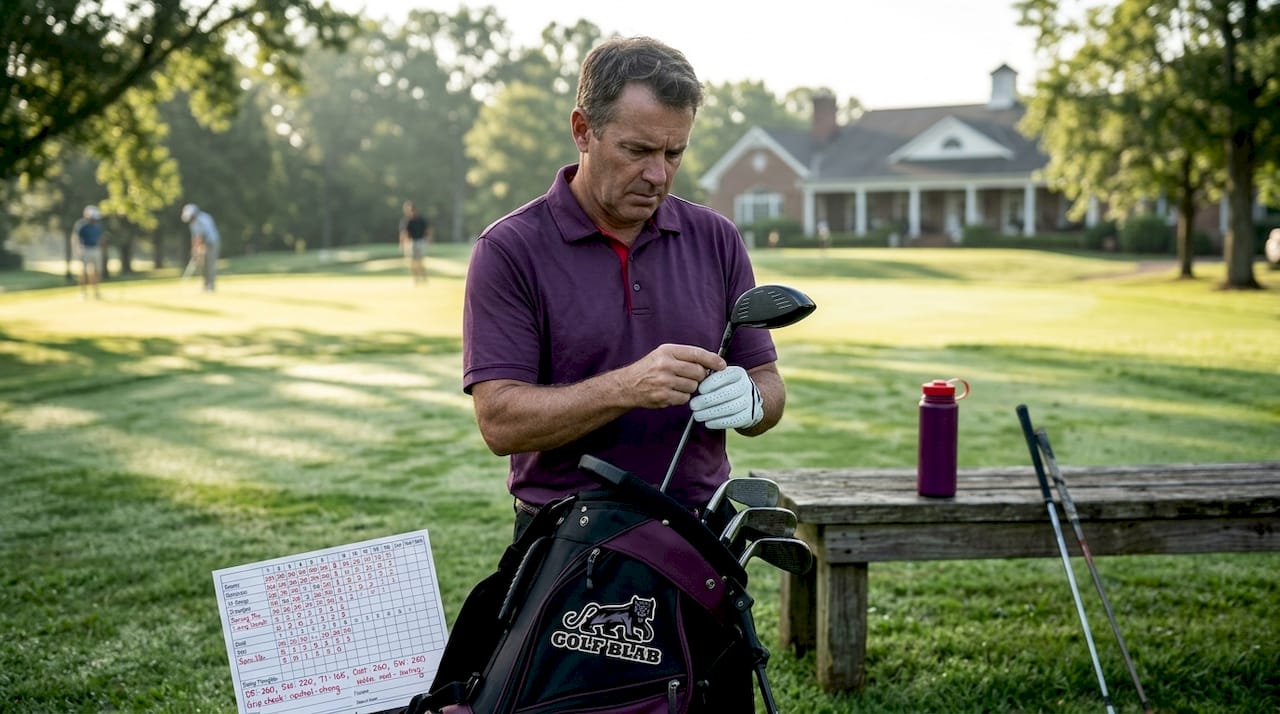
Most golfers spend years blaming their swing when the real culprit is sitting in their bag. Here’s a number that should stop you cold: shaft optimization and grip replacements on existing clubs can add 10 to 15 yards and tighten accuracy by 20 to 30%, costing 60 to 80% less than buying an entirely new set. That means you could be leaving real, measurable performance on the table every single round, not because your technique is broken, but because your equipment has quietly stopped working for you. In this article, we’ll break down exactly what updating your golf gear can do for your distance, accuracy, and confidence, and how to make smart choices at every budget level.
Table of Contents
- Performance gains from updating golf equipment
- Types of upgrades: Routine tweaks vs. major overhauls
- Customization and personalization: Making your gear fit your game
- When should you update your golf equipment?
- The real reasons golfers hesitate and how to overcome them
- Ready to upgrade? Get expert help and unique gear options
- Frequently asked questions
Key Takeaways
| Point | Details |
|---|---|
| Upgrade benefits | Modern upgrades can add significant yardage and accuracy without buying new clubs. |
| Cost efficiency | Optimizing shaft and grip deliver most gains at a fraction of the price. |
| Customization impact | Personalized gear boosts confidence and consistency for golfers of all skill levels. |
| Update timing | Regular maintenance and updating prevent performance loss and injury. |
Performance gains from updating golf equipment
Let’s be honest about something. The golf industry loves to sell you the idea that only a brand-new set can fix your game. That’s good for their sales numbers, but it’s not always the truth. In fact, some of the most meaningful performance gains you’ll ever experience on the course can come from surprisingly affordable upgrades.
The numbers speak for themselves. Shaft optimization and grip replacements can add 10 to 15 yards to your shots and tighten your accuracy by 20 to 30%, and you’re spending 60 to 80% less than you would on a full new set. That is not a minor improvement. That’s the kind of performance shift that changes how you feel walking onto a tee box.
Here’s what real performance gains look like in practice:
- Distance: A shaft that’s too stiff or too flexible for your swing speed will rob you of energy transfer. Getting the flex right means the clubhead arrives at the ball with more power, consistently.
- Accuracy: Worn grips force you to grip tighter, which tenses up your forearms and kills your release. Fresh grips actually make improving swing trajectory more achievable because your hands can work naturally through the ball.
- Consistency: When your equipment responds predictably, your muscle memory has something reliable to build on. You stop compensating for gear that’s fighting you.
- Confidence: There’s a psychological element here that’s very real. Knowing your clubs are dialed in removes doubt before you even start your backswing.
Think about what a 15-yard gain off the tee actually means for your scorecard. Suddenly you’re hitting shorter approach shots. You’re reaching par fives in two more often. You’re leaving yourself better angles into greens. The ripple effect of that single improvement is substantial, and it directly connects to lowering golf scores without changing a single thing about how you swing.
The financial picture matters too. A full set replacement can run anywhere from $500 to well over $2,000 depending on the brand and model. A grip replacement across your full set typically costs under $100 with installation. A shaft upgrade for your driver might run $75 to $200. The return on that investment, measured in yards and accuracy, is genuinely hard to beat.
Types of upgrades: Routine tweaks vs. major overhauls
Understanding performance gains leads to deciding which equipment updates actually make sense for you. And that’s where a lot of golfers get stuck. They think it’s all or nothing. Either they buy a new set, or they do nothing. The truth is there’s a whole spectrum of smart decisions in between.

Let’s break it down clearly.
Routine upgrades are the affordable maintenance choices that most golfers overlook entirely:
- Grip replacement: Grips wear out every 30 to 40 rounds or once a year, whichever comes first. Old grips become slick and compressed, which directly hurts your control.
- Shaft reassessment: As your swing speed and tempo change, so does your ideal shaft flex. Getting a quick fitting to check your current shafts costs little and reveals a lot.
- Clubface cleaning and groove maintenance: Worn grooves on irons and wedges dramatically reduce spin and control on approach shots. A groove sharpener or a professional cleaning session restores performance.
- Loft and lie adjustments: Your irons can be bent to better match your swing path and posture. This is often done for $5 to $10 per club and can transform ball striking.
Major overhauls are the bigger decisions:
- Full custom fitting for a new set: When your swing has genuinely changed or evolved, a full fitting at a launch monitor facility can match you to the right equipment from scratch.
- Complete driver replacement: Driver technology has advanced significantly over the past five years. If your driver is more than seven years old, a new one with modern face technology may offer a legitimate upgrade.
- Wedge system overhaul: Wedges wear faster than any other club. Replacing a full wedge set every three to four years is reasonable for regular players.
Here’s a side-by-side comparison to put it in perspective:
| Upgrade type | Typical cost | Performance impact | Best for |
|---|---|---|---|
| Grip replacement (full set) | $60 to $100 | High: better feel and control | All golfers, annually |
| Shaft fitting and replacement | $75 to $250 | High: distance and accuracy | Golfers with swing changes |
| Loft and lie adjustment | $40 to $80 | Medium to high: ball flight | Iron players |
| Groove sharpening | $10 to $30 | Medium: wedge spin | Approach and short game focus |
| New driver | $300 to $600 | Medium to high: distance | Clubs 7+ years old |
| Full new set | $800 to $2,500+ | Variable: depends on fit | Major skill level change |
Pro Tip: Before you spend a dollar on new clubs, invest in a proper fitting session and try grip and shaft upgrades first. In most cases, those two changes alone will deliver more than you expect from a new set, at a fraction of the price.
When choosing golf clubs becomes necessary, knowledge about the types of golf clubs at your disposal will help you make smarter, more targeted decisions rather than just buying what looks good in the pro shop. And when your equipment is dialed in, consistent golf play becomes far more achievable because you’re not fighting unpredictable gear.
Customization and personalization: Making your gear fit your game
Deciding between routine updates and major overhauls also opens the door to something players often underestimate: personalization. This isn’t just about making your bag look cool, though that’s a real bonus. It’s about building gear that genuinely fits the way you play, your tempo, your grip pressure, your ball flight tendencies.
Off-the-rack clubs are built for an imaginary average golfer. You’re not average. You’re a specific person with a specific swing, specific physical dimensions, and specific tendencies on the course. The more your equipment is shaped around those realities, the better it performs.
Here’s what the data looks like when you match customization features to performance outcomes:
| Customization feature | Performance benefit | Approximate cost |
|---|---|---|
| Custom shaft flex and weight | Optimized energy transfer, more distance | $75 to $200 per club |
| Grip size fitting | Better pressure control, reduced tension | $5 to $15 per grip |
| Loft and lie angle bending | Improved ball flight consistency | $5 to $10 per club |
| Custom club labels | Confidence boost, club identification | $15 to $40 for a set |
| Swing weight adjustment | Better feel and tempo during swing | $20 to $50 per club |
Beyond the numbers, personalization does something powerful for your mindset. When you walk onto the course with gear that’s been fitted to you, labeled with your name, and set up to match your game, there’s a quiet confidence that comes with it. You’re not borrowing someone else’s tools. You’re using yours.

The club personalization trend has exploded in recent years for exactly this reason. Players at every level are realizing that ownership and identity matter on the golf course. And when you feel connected to your equipment, you commit to shots more fully.
Here are the top personalization benefits worth knowing:
- Shaft customization directly impacts shaft optimization and grip replacements performance, since a shaft matched to your actual swing speed produces measurably more distance and better accuracy.
- Grip color and texture let you choose feel and visual appeal, which matters more than people admit when it comes to setup and pre-shot routine.
- Custom club labels make your clubs uniquely yours and double as a practical identification tool in busy club environments.
- Lie angle adjustments correct directional issues by ensuring the club sole sits flat at impact, reducing pulls and pushes.
Pair proper customization with solid practice routines and you create a feedback loop. Your gear responds correctly. Your body learns what correct feels like. Your game improves faster than it would with mismatched equipment pulling you in the wrong direction.
When should you update your golf equipment?
Customizing your gear is important, but knowing when to update is critical for ongoing performance. A lot of players wait until something breaks or until frustration hits a boiling point. That’s not a strategy. That’s reactive, and it costs you rounds you didn’t have to struggle through.
Here are the clearest signs your equipment is holding you back right now:
- Your grips feel slick even when dry. Grips degrade from sunlight, sweat, and general use. If you’re gripping harder to compensate, your whole swing mechanics suffer.
- Your distance has dropped without a clear swing reason. Clubface wear, compressed grips, or shaft fatigue can all bleed distance over time, so gradually you barely notice until it’s significant.
- You’re experiencing wrist, elbow, or shoulder discomfort. Ill-fitted equipment forces compensations that create physical strain. The wrong shaft flex or grip size is a common and overlooked cause.
- Your wedge shots lack the spin they used to. Wedge grooves dull faster than any other club. If your ball is running out on approach, the grooves may be telling you something.
- Your clubs are more than six to eight years old without any professional assessment. Technology changes, but more importantly, your game has changed. What fit you then likely doesn’t fit you now.
The good news is that staying ahead of these issues is simple when you build a routine around it.
- Annually: Replace grips, inspect shafts for cracks or damage, and clean grooves on irons and wedges.
- Every two to three years: Schedule a professional fitting to verify your shaft flex, lie angles, and swing weight still match your current game.
- Every four to five years: Evaluate your wedge set for groove wear and consider replacement based on how frequently you play.
- As needed: Address any recurring pain or discomfort by having a fitter assess your grip size and shaft profile immediately.
Pro Tip: Schedule an annual gear check-up at the start of each season, before you’ve played a round that counts. Think of it like a tune-up for your car. You wouldn’t drive a full season on worn tires, and you shouldn’t play a full season on worn grips. Staying ahead of equipment wear directly supports boosting performance throughout the year rather than chasing it.
The real reasons golfers hesitate and how to overcome them
We’ve covered timing, so let’s get into something that doesn’t get said enough: the mental barriers that stop perfectly capable golfers from making changes they know would help them.
The most common myth we hear is that equipment doesn’t really matter. “It’s the golfer, not the gear.” There’s a grain of truth there in that no shaft will fix a fundamentally broken swing. But that logic gets stretched way too far. You wouldn’t tell a carpenter that their tools don’t matter, so why do golfers accept gear that’s working against them?
The second myth is that upgrades are too expensive. That one gets shattered pretty quickly when you look at the reality: shaft and grip replacements cost 60 to 80% less than a new set while delivering comparable performance improvements. The expensive option is doing nothing and continuing to play underperforming rounds.
Here’s the uncomfortable truth we’ve observed over years of watching golfers operate: most people resist upgrades because they fear it will expose the fact that their equipment was never the only problem. They’d rather not know. It’s a strange psychology, but it’s real. Upgrading means committing to improvement, and that feels vulnerable.
The seasoned players we admire most share a common attitude. They treat their equipment like a professional treats their tools. They assess regularly, upgrade strategically, and never wait for dramatic failure before acting. They check strategy tips for lower scores and they check their gear with equal intention.
The smartest move you can make right now is to stop waiting for your game to collapse before you take equipment seriously. Small, affordable upgrades done consistently will outperform one expensive reactive purchase every single time. That’s not opinion. That’s the experience of golfers who’ve been doing this the right way for decades.
Ready to upgrade? Get expert help and unique gear options
At Golf Blab, we’ve built a place where the upgrade conversation doesn’t have to be overwhelming or expensive.

Whether you’re chasing extra yards off the tee, looking to sharpen your short game, or simply want your bag to reflect the golfer you’re becoming, we have resources and products that fit where you are right now. Dive into the club personalization trend that’s reshaping how players think about their gear, or pick up a set of custom club labels to start building an identity on the course that matches your game. And when you’re ready to explore affordable gear options across the board, our full golf gear shop has you covered with products designed for real players who take their game seriously.
Frequently asked questions
How often should golf equipment be updated?
Most golfers benefit from routine upgrades every two to three years, but annual maintenance like grip and shaft checks is recommended for best performance, since worn grips and shaft fatigue silently cost you yards and accuracy long before you notice.
What’s the most cost-effective way to improve golf equipment?
Grip and shaft upgrades typically deliver the biggest return at a fraction of the cost compared to buying a new set, with shaft optimization and grip work costing 60 to 80% less while adding real distance and accuracy gains.
Can old clubs still compete after upgrades?
Yes, upgraded older clubs often deliver similar performance and accuracy improvements as new sets, especially with optimized shafts and grips, since the core club structure often has plenty of life left when properly maintained.
How do custom club labels impact performance?
While primarily aesthetic, custom labels foster greater confidence and ownership, which translates to more committed pre-shot routines and a stronger mental connection to your equipment on the course.