Posted on

Golf rules explained: master the basics for better play

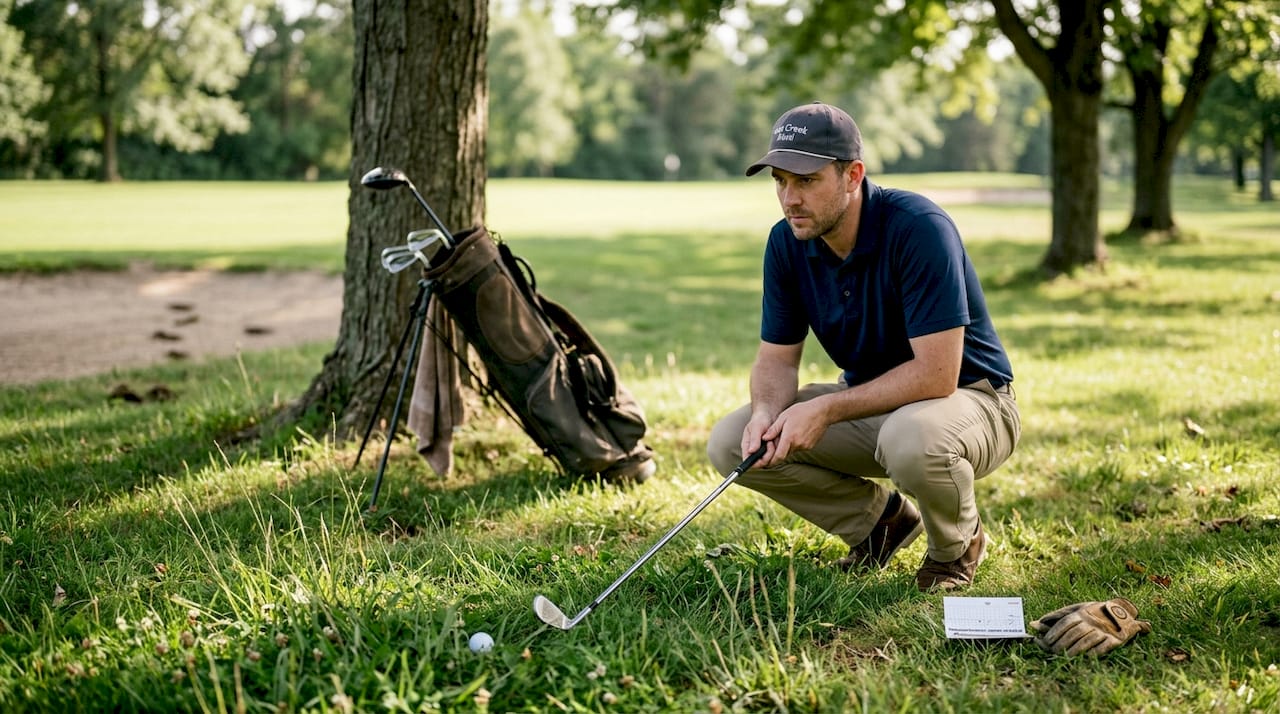
Golfer studies ball as it lies off fairway


TL;DR:

  • Golfers often misunderstand the rules, leading to unnecessary penalties and errors.
  • Understanding core principles like playing the ball as it lies and area-specific rules offers a strategic advantage.
  • Knowing when and how to take relief, along with pace-of-play rules, enhances fairness and improves scores.

Most golfers walk onto the course with a vague idea of the rules and hope for the best. That’s a costly strategy. Governed by the USGA and The R&A, the Rules of Golf are more detailed than most beginners expect, and misunderstanding them leads to avoidable penalties, awkward moments with playing partners, and strokes you didn’t need to lose. Here’s the thing though: once you understand even the core principles, you stop fearing the rules and start using them. This guide breaks down the essentials in plain language so you can walk onto any course with real confidence.

Table of Contents

Key Takeaways

Point Details
Know the basics Understanding core principles like playing the ball as it lies prevents costly mistakes.
Course areas matter Rules change depending on tee, fairway, penalty area, bunker, or green.
Relief can help Knowing how and when to take relief can give you genuine advantages.
Pace prevents penalties Stick to timing rules to avoid strokes added for slow play or delays.
Rules are resources Using rule knowledge turns penalties into play opportunities.

Core principles: Play the ball as it lies

Golf is one of the few sports where you call penalties on yourself. There’s no referee watching every shot. That means the entire game runs on honesty and self-policing, and that’s actually something to be proud of. It’s a culture of integrity that separates golf from almost every other sport out there.

The foundational principle is simple. As the USGA puts it, you play the ball as it lies, play the course as you find it, and only take relief when the rules specifically allow it for fairness. That’s the whole philosophy in one sentence.

“The Rules of Golf are designed to be fair to all players. The core idea is simple: play the ball as it lies and the course as you find it.”

What does that mean in practice? It means if your ball rolls into a divot, you play it from the divot. If it lands behind a tree, you play it from behind the tree. You don’t get to move it just because you don’t like where it ended up. That’s the game.

Here’s where most beginners go wrong. They assume that certain situations automatically grant relief. They move the ball, improve their lie, or ground their club in a hazard without realizing those actions carry penalties. Common misconceptions include:

  • Thinking you can always move loose impediments near your ball (you can in most areas, but not always in bunkers)
  • Assuming a ball near a fence or cart path always gives you free relief (it depends on whether the obstruction is immovable)
  • Believing you can re-tee a ball that falls off the tee peg after a swing (no penalty, but only if you hadn’t yet made a stroke)
  • Thinking a provisional ball is the same as a lost ball ruling (it’s not, and the difference matters)

Golf rewards sportsmanship and fair play above all else. Once you internalize that the rules exist to protect everyone’s experience, including yours, they stop feeling like obstacles and start feeling like a framework you can work with.

Course areas and their unique rules

Here’s something that surprises a lot of new golfers: the rules don’t apply the same way everywhere on the course. Where your ball lands changes what you’re allowed to do with it. The five defined course areas each carry their own set of rules for play and relief.

Infographic of course areas and key golf rules

Course area Key rule highlights
Teeing area You may tee up the ball anywhere between the markers; re-tee if ball falls before stroke
General area Covers most of the course; standard rules apply for play and relief
Penalty areas Red or yellow stakes; stroke-and-distance or lateral relief options apply
Bunkers Can’t ground club before stroke; limited removal of loose impediments
Putting green May mark, lift, and clean ball; can repair spike marks and damage

Each area has a personality, so to speak. The putting green gives you the most flexibility. Bunkers give you the least. Understanding this breakdown alone will save you from making costly errors.

When your ball lands in a penalty area (marked by red or yellow stakes), here’s how to proceed:

  1. Identify the color of the stakes. Red allows lateral relief; yellow requires stroke-and-distance or back-on-the-line relief.
  2. Decide whether to play the ball as it lies (allowed even in penalty areas, if possible).
  3. If taking relief, add one penalty stroke to your score.
  4. For red stakes, drop within two club-lengths of where the ball crossed the boundary, no nearer the hole.
  5. For yellow stakes, go back as far as you like on the line between the hole and where the ball crossed, then drop.

Pro Tip: Learn the color of the stakes before your round starts. Red and yellow mean very different things, and knowing the difference in the moment will save you time and strokes.

Browsing the right golf gear for every area of the course can also make a real difference in how comfortable and prepared you feel during play.

Relief and penalty mechanics: When and how to take relief

This is where a lot of golfers leave strokes on the table. They either take relief they’re not entitled to (adding penalties they don’t know about) or they fail to take relief they’re fully allowed (suffering unnecessarily). Let’s fix both.

Free relief means no penalty stroke. You get it when your ball is affected by abnormal course conditions. These include:

  • Ground under repair (GUR), usually marked with white lines
  • Immovable obstructions like cart paths, sprinkler heads, or permanent structures
  • Temporary water (casual water) that you can see before or after you take your stance
  • Animal holes

When you qualify for free relief from abnormal conditions, here’s the process: find the nearest point of complete relief, then drop the ball from knee height within one club-length of that point, making sure it’s no nearer the hole. That’s it.

Situation Relief type Penalty stroke?
Ball on cart path Free relief (immovable obstruction) No
Ball in GUR Free relief No
Ball in penalty area Stroke-and-distance or lateral Yes (1 stroke)
Unplayable lie Player’s choice of three options Yes (1 stroke)
Lost ball Stroke-and-distance Yes (1 stroke)

Pro Tip: Relief can actually improve your position. If a cart path runs along the rough and your nearest relief point puts you on the fairway, that’s perfectly legal. Knowing this is the difference between a bogey and a par.

Golfer marks relief spot beside cart path

For penalty relief situations, like an unplayable lie, you have three options: go back to where you played the last shot, drop within two club-lengths of the ball’s spot, or go back on the line keeping the ball between you and the hole. All cost one stroke. Choosing the right option takes practice, but easy golf lessons can help you build that decision-making instinct faster than trial and error on the course.

Essential timing and search rules: Avoiding penalties on the course

Let’s talk about something that affects every single round: time. Specifically, how long you’re allowed to search for a lost ball and how quickly you’re expected to play. These rules trip up beginners constantly, and they affect not just your score but the enjoyment of everyone in your group.

The search rule is clear. You have three minutes maximum to search for a lost ball. After that, it’s officially lost. No exceptions. If the ball isn’t found within three minutes, you must return to where you played the last shot, add a penalty stroke, and play again. That’s stroke-and-distance relief.

Here’s what to do if you accidentally move your ball while searching:

  1. Stop searching and note where the ball came to rest.
  2. Replace the ball as close as possible to its original spot.
  3. No penalty stroke is added for accidentally moving it during a search.
  4. Continue play normally from the replaced position.

That’s a relief rule most golfers don’t know, and it matters.

On pace of play, ready golf is actively encouraged in recreational rounds. That means you play when you’re ready, not strictly in the traditional order of who’s furthest from the hole. It keeps things moving and keeps your group from getting that uncomfortable tap on the shoulder from the group behind you.

Undue delay is an actual penalty. In stroke play, the first offense results in a one-stroke penalty. Repeated delays can lead to two-stroke penalties. Most recreational rounds won’t enforce this formally, but the spirit of the rule matters. Slow play is the number one complaint among golfers, and nobody wants to be that person.

If you’re curious about what it feels like to play at a higher level of pace and precision, playing with a tour pro can give you a real-world sense of how the game flows when everyone knows the rules cold.

Why knowing the rules is your hidden weapon on the course

Here’s the honest truth that most golfers never figure out: the rules aren’t just boundaries. They’re tools. And most recreational golfers walk right past opportunities to use them.

Conventional wisdom says the rules are there to penalize you. That’s backwards. As the USGA points out, rules often provide real advantages, like taking free relief from rough to fairway via an obstruction, re-teeing in the teeing area, or finding a better stance through a left-handed relief option. These aren’t loopholes. They’re built-in features.

I’ve seen golfers take a penalty drop when they were entitled to free relief. I’ve seen players play from terrible lies next to cart paths because they didn’t know they could move. Every one of those situations cost strokes that didn’t need to be lost.

The moment you start treating the rules as a resource, your whole relationship with the game shifts. You stop feeling like the rules are happening to you and start feeling like you’re working with them. That’s a real competitive edge, even in a casual Saturday round.

Pro Tip: When you’re unsure about a ruling on the course, play two balls and sort it out after the hole. It keeps pace and protects your score. Pair that habit with easy golf lessons that build your rule awareness alongside your swing, and you’ll improve faster than you think.

Take your golf game further with expert support

Understanding the rules is a great start. But rules knowledge alone won’t lower your handicap. That takes real instruction, and that’s exactly what we built Golf Blab to deliver.

https://golf-blab.com

At Golf Blab, we offer a complete golf lesson experience unlike anything else out there. We’re the only company that backs every lesson with a money-back guarantee, because we’re that confident in the results. Whether you want easy golf lessons that fit your schedule or the once-in-a-lifetime experience of playing golf with a tour pro, we have the resources to take your game to the next level. Come learn with us.

Frequently asked questions

What is the basic rule for playing the ball in golf?

The main rule is to play the ball as it lies and play the course as you find it, only taking relief when the rules specifically allow it for fairness.

How are penalties handled for lost balls or delays?

You get three minutes to search for a lost ball before it’s officially lost, and ready golf is encouraged to keep pace, with undue delay carrying stroke penalties in formal play.

Where can I check the latest rules while on the course?

The USGA Rules 101 free course, the R&A Quick Guide video, and official apps give you instant access to rulings right from your phone during a round.

Article generated by BabyLoveGrowth

Posted on

How to choose golf clubs: beginner guide to smart investments

Beginner golfer choosing golf club on practice green


TL;DR:

  • Mismatched or poorly fitted clubs can hinder beginner golf performance and progress.
  • Professional club fitting enhances distance, accuracy, and consistency for new players.
  • Starter sets from reputable brands offer better value, forgiveness, and ease for beginners.

You sign up for golf lessons, drop a few hundred dollars on a shiny new set of clubs, and head out to the course full of excitement. Then nothing clicks. Your shots spray everywhere, your progress crawls, and the whole experience feels like a waste of time and money. Here’s the naked truth: the problem often isn’t your swing or your lessons. It’s your clubs. Mismatched, ill-fitted, or cheaply made clubs can quietly sabotage everything you’re trying to learn. This guide walks you through exactly how to choose the right clubs as a beginner, so your investment in the game actually pays off.

Table of Contents

Key Takeaways

Point Details
Fitting matters early Getting fitted for clubs from the start boosts improvement and makes golf more enjoyable.
Start with a package set Beginner sets save money, simplify your choices, and give you everything you need to play.
Avoid common mistakes Cheap, mismatched or no-name clubs hurt your progress much more than they help.
Plan to upgrade Most golfers outgrow their first set in 1-2 years—focus on learning before customizing your bag.

Understanding the basics: Golf club types and their purpose

With the importance of equipment in mind, let’s clarify what types of clubs you’ll actually need and what each one is for. Golf can feel overwhelming when you’re staring at a wall of clubs in a pro shop. But once you understand what each type does, the whole picture gets a lot simpler.

Every golfer carries a mix of five main club categories. Here’s a quick breakdown:

  • Driver: The big-headed club used for tee shots on long holes. It’s built for distance, not precision.
  • Fairway woods: Numbered 3 and 5 most commonly, these are used for long shots from the fairway or rough.
  • Hybrids: A cross between a wood and an iron. Easier to hit than long irons, and a lifesaver for beginners.
  • Irons: Numbered 4 through 9, these are your workhorses for approach shots. Higher numbers mean shorter distances and more loft.
  • Wedges: Specialized irons for short shots, chips, and bunker play. The pitching wedge and sand wedge are must-haves.
  • Putter: Used on the green to roll the ball into the hole. You’ll use this more than any other club.

Here’s a simple reference table to keep things straight:

Club type Typical use Skill required
Driver Tee shots, max distance Moderate to high
Fairway wood Long fairway shots Moderate
Hybrid Versatile mid-range shots Low to moderate
Iron (4-9) Approach shots Moderate
Wedge Short game, chipping Low to moderate
Putter Putting on the green Low

Now, you might be wondering how many clubs you actually need to start. The answer is simpler than you think. Complete beginner golf sets usually include 10 to 13 clubs, covering drivers, irons, hybrids, wedges, and a putter. That range covers every situation you’ll encounter on the course without burying you in options. Starting with a well-rounded set means you spend less time guessing which club to grab and more time actually learning to swing.

Get fitted: Why professional club fitting matters, even for beginners

Once you know your club basics, the next step is making sure your clubs suit your body and swing. This is where most beginners make a costly mistake: they skip the fitting and just grab whatever’s on sale. Don’t do that.

A professional club fitting session measures several key factors about you specifically:

  1. Height and wrist-to-floor distance to determine the correct shaft length
  2. Grip size to match the width of your hands for better control
  3. Swing speed to identify the right shaft flex (how much the shaft bends during your swing)
  4. Launch angle and ball flight using a launch monitor, a device that tracks ball and club data in real time
  5. Lie angle to ensure the club face sits correctly at impact

Think of it this way. Handing a beginner a set of clubs that don’t fit their body is like telling someone they walk wrong and then micro-managing every step they take. You’re fighting the equipment before the swing even starts.

Statistic callout: Professional club fitting can add 9 to 21 yards to your shots, boost consistency, and speed up improvement by 5 or more strokes. That’s not a small edge. That’s the difference between sticking with the game and quitting in frustration.

Pro Tip: Many golf retailers offer free or low-cost fitting sessions when you purchase a set. Ask before you buy. A 30-minute fitting can save you years of frustration.

Fitted clubs make better contact feel natural rather than accidental. When your club is the right length, weight, and flex for your body, you stop fighting your equipment and start actually learning. That’s the whole point.

Pro golfer fitting a club for a beginner

Complete set or individual clubs: Making the smart buy

After fitting, it’s time to decide how to actually purchase your first set: as a pre-matched package or one club at a time. Both options have their place, but for most beginners, the answer is pretty clear.

Package sets come with all the clubs you need, matched to work together. They’re designed with beginners in mind, which means forgiving club faces, lighter shafts, and consistent feel across the bag. The biggest advantage? Cost. Buying a package set saves 40 to 60 percent over buying individual clubs and leads to higher retention rates for new golfers. In plain terms, beginners who start with a complete set are more likely to stick with the game.

Individual clubs offer more customization, but that’s a double-edged situation for beginners. You can mix and match brands, shafts, and specs, but without a solid understanding of your own swing, you’re mostly guessing. Save that approach for when your game has developed.

Here’s a side-by-side comparison to help you decide:

Factor Package set Individual clubs
Cost Lower (40-60% savings) Higher
Customization Limited High
Ease of buying Simple, one purchase Complex, time-consuming
Best for Beginners Intermediate to advanced
Club matching Pre-matched Varies

Infographic comparing package sets and individual clubs

Top beginner-friendly sets worth considering in 2026 include the Cobra Fly XL, Callaway Strata and Callaway Edge, and the TaylorMade RBZ. These brands are reputable, widely available, and built with forgiveness in mind. Prices typically range from $250 to $500 for a full set, which is a solid investment when you’re just starting out.

Pro Tip: Pair your new clubs with golf lessons that come with a money-back guarantee so your equipment investment is backed by real instruction. Clubs without lessons are just expensive sticks.

Avoid common pitfalls: Mistakes new golfers make when choosing clubs

Even with the right mindset, beginners often fall into traps that hold back their game and waste money. Let’s talk about the big ones.

Buying cheap, off-brand clubs is the most common mistake. It feels like a smart move when you’re not sure you’ll love the game, but it almost always backfires. Cheap no-name clubs have just a 61 percent retention rate, far lower than complete beginner sets from reputable brands, which sit at 82 percent. The clubs feel inconsistent, the shafts are often poorly made, and you end up blaming your swing for problems that are actually the equipment’s fault.

Here are the most common mistakes to avoid:

  • Skipping club fitting and assuming any clubs will do
  • Buying the same clubs a Tour pro uses (they’re built for elite swing speeds)
  • Purchasing mismatched clubs from different brands without understanding compatibility
  • Ignoring grip size, which affects control more than most beginners realize
  • Overspending on premium brands before you have a consistent swing

Skipping the fitting is particularly painful when you’re also investing in lessons. You’re paying to learn a skill, but if your clubs don’t match your body, you’re learning on broken tools. It slows everything down.

“The best club is the one that fits you, not the one that looks the coolest in the bag.”

Pro Tip: Consider adding custom golf club labels to your set so you always grab the right club quickly. It sounds small, but knowing your clubs at a glance builds confidence and speeds up your round. And while you’re building good habits, check out these swing improvement tips to make sure your technique grows alongside your equipment.

Focus on learning in the early stages, not on brand names. A mid-range set from a trusted brand plus a proper fitting will outperform an expensive set that doesn’t fit you every single time.

Our perspective: Why club fitting and packaged sets give beginners the fastest start

Having worked with newer golfers for years, we’ve seen the same pattern repeat itself constantly. Someone buys the wrong clubs, takes a few lessons, gets frustrated, and walks away from the game. It’s not a talent problem. It’s an equipment problem that was completely avoidable.

Here’s our honest take: fitting isn’t a luxury for beginners. It’s the foundation. When your clubs match your body, every lesson you take builds on a solid base instead of fighting against mismatched gear. That’s not a small thing. That’s the whole game.

Package sets get a bad reputation from golfers who’ve moved past the beginner stage, but for someone just starting out, they’re genuinely the smartest choice. Less confusion, more value, and clubs that are designed to help you make contact and keep going.

When your skills grow, that’s the right time to explore customization. Some golfers even treat themselves to an experience like playing golf with a tour pro once their game reaches a level where they can really absorb that kind of feedback. But right now, in the beginning, simplicity wins. Fit your clubs, buy a reputable set, and invest in good instruction. That combination gives you the fastest path forward.

Upgrade your golf game with expert resources

Now that you’re prepared to choose your first set of clubs, here’s how you can jumpstart your journey with professional help and quality gear.

https://golf-blab.com

At Golf Blab, we believe every beginner deserves a real shot at improving without the guesswork. That’s why we offer online golf lessons backed by the only money-back guarantee in the industry. If you don’t improve, you don’t pay. Simple as that. You can also grab custom club labels to organize your bag from day one, or pick up a Golf Blab gift card for a fellow golfer who’s just getting started. The right clubs plus the right instruction is the combination that actually moves the needle.

Frequently asked questions

How many clubs does a beginner really need?

Most beginners benefit from 10 to 13 clubs that cover all major shots without overwhelming choices. That range handles every situation on the course while keeping your bag manageable.

Is professional club fitting really worth it for new golfers?

Absolutely. Fittings can boost distance by up to 21 yards and make learning more enjoyable from day one. It’s one of the smartest investments a new golfer can make before stepping onto the course.

Top 2026 starter sets include the Cobra Fly XL, Callaway Strata/Edge, and TaylorMade RBZ. All three are built for forgiveness and are widely available at beginner-friendly price points.

Should I avoid used or off-brand golf clubs?

Yes. Off-brand clubs lead to lower retention and inconsistent progress, making it harder to tell if your swing or your equipment is the problem. Stick with reputable brands from the start.

Article generated by BabyLoveGrowth

Posted on

Unlock Your Potential: Easy Golf Lessons with Money-Back Guarantee

Having played and been around the game for 50 years, my take is that golfers deserve more from their golf lessons. The naked truth is that the golf teaching industry cannot take a single golfer from the 90s to the 70s. And this has been going on for far too long. It seems to me that anyone of average physical means ought to be able to swing a stick and hit a ball well, especially since the ball is not even moving.

And it also seems like the information on how to hit a golf ball should be standardized. Golf should not be taught a hundred different ways by a hundred different golf teachers. Each promising everything and guaranteeing nothing. And the story always ends the same. The golfer fails to improve, and the coach sums it up to a lack of talent. “Face it, you just don’t have it. Some were born to play this game. And you weren’t.”

What the world needs is a golf lesson that comes with a money-back guarantee. A golf lesson that teaches you how to make the swing before the swing starts. All golf instruction is based on taking your swing, which happens at blistering rate of speed, and cajoling you to micro-manage the movement from within the movement. It is akin to telling you that you walk wrong, and each time you move your left foot forward you need to “do it this way.”

To me, professional golfers are playing one game, and golf teachers are teaching an entirely different game. And anyone who has listened to the world’s most expensive golf teachers ought to be able to come to the conclusion I have. Professional golfers do not do any of that stuff. If a professional golfer tried to learn golf from the world’s best golf teachers, they would never make it to becoming a professional golfer. As one of Tiger Woods’ former coaches put it…my only real job was to say, “nice shot.”

At Golf Blab, we have a better way. An online golf lesson called Swing Like a Pro. It teaches you the two separate and independent movements that professional golfers make in their swing. It teaches you how to make the movements BEFORE the swing starts. And it is easy. Because let’s face it. If it were not easy, there would be no professional golfers. And we teach you the best information for chipping and putting too. The complete lesson takes just four minutes. And it comes with a money-back guarantee. Now that’s a golf lesson and an offer that everyone can get behind.